Skip to content
The Compass Center

The Compass Center

“The Opportunity to Be”

“The Opportunity to Be”

November 25, 2013

debskinner13by Deb Skinner (Associate Professor of Marketing, College of Business)

One of the reasons I think I’m still hanging around a college campus, oh these 30 plus years after I graduated, is the awesomeness of that whole four year experience of being and becoming me. In retrospect, it was all the trials and tribulations, the joys and disappointments that helped to craft the person I am today.
If I think back to moments and people that had the greatest impact, I find a common thread – it was those moments of intimacy with either individuals or small groups where I was accepted for who and what I was, including the stumbles, faux pas or tantrums. It was the people that asked me the hard questions or encouraged me to keep seeking answers to the questions I asked. Who am I? Where do I belong? How do I get there? It was this amazing blend of pushing me forward, walking beside me, and having my back that helped me to walk forward across the stage at graduation and never look back.
Funny how you never outgrow those same questions even as you are staunchly set and happy in a career like college professor. Who am I? Where do I belong? How do I get there?
Over the last five plus years I’ve had the wonderful opportunity to work with the staff and students associated with the Center of Faith and Vocation. In my initial experience with the Blue House, I was part of an amazing Faculty Workshop composed of a group of faculty from across campus that met throughout the year to explore issues of faith and vocation. I remember sitting in the first meeting and being overwhelmed with a feeling of belonging, a feeling of rightness, a feeling that here too, I could find the support to continue to explore questions of being. I immediately slipped Judith Cebula, the Director of the Center and co-facilitator for the Workshop, a note. “How can I be involved with the Center? I believe in what you are doing here.”
And so, she took me up on my offer. I have been blessed to have been part of three more workshops as a facilitator and in other capacities, pseudo staff member, Center cheerleader, and advocate of the Center. I’ve taken advantage of the quiet solitude that the second floor porch offers on a spring afternoon to grade papers. I’ve sent countless students to the Center for help and nurturing from Judith, Marguerite and the associated clergy at the house.
I’m thankful for the CFV and the opportunities that faculty and staff have to continue our own personal growth and development. I’m thankful that we can continue to discern our developing purpose and meaning as we mature in our professional lives. I’m thankful that Butler students have a designated place to explore those important life questions and that people like Judith and Marguerite open their doors but more importantly their hearts to support the entire campus in our lifelong quest for “The Opportunity to Be.”

On being a Catholic in Alcalá de Henares, Spain

On being a Catholic in Alcalá de Henares, Spain

November 21, 2013

Crossby Lauren Stark

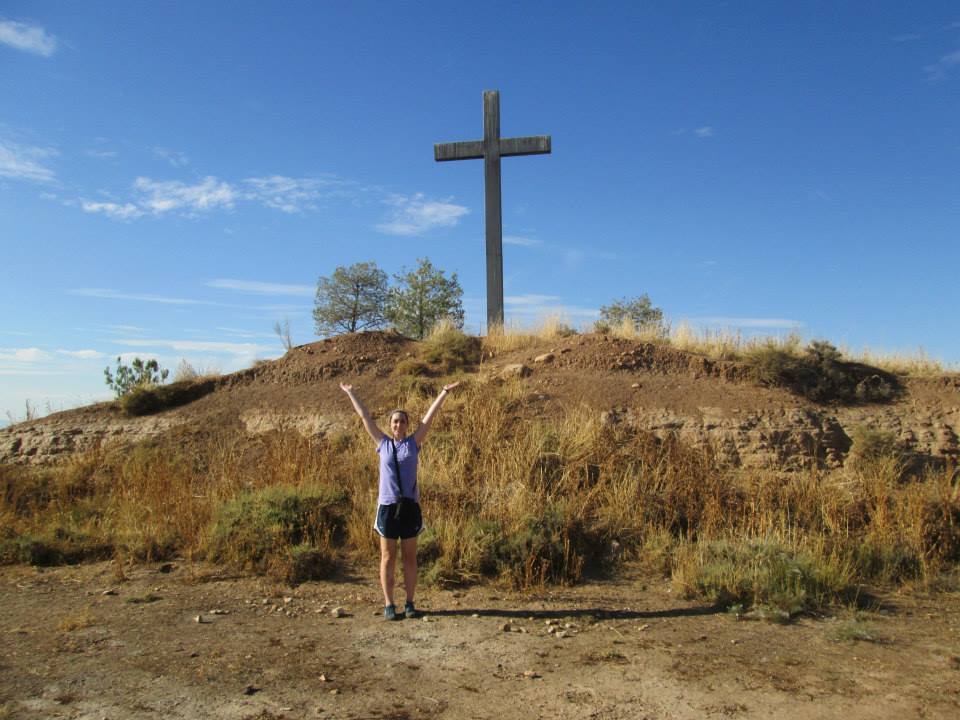
All my life, I’ve been part of a Catholic faith community. From parents to Catholic schools to the Butler Catholic Community, I’ve been blessed with faith-filled people who support me in my journey. This semester, though, I am studying in Alcalá de Henares, Spain, and it’s been quite different.

Before I arrived, I was ready for a booming Catholic presence. But I quickly learned that practicing Catholics are hard to find. Young people especially don’t care about religion here. And that realization scared me. But I knew my faith was important enough and strong enough to survive through this; it would just require a personal approach.

At home, my favorite part of Mass is the community of believers. Here, I focus on the fact that I am part of a universal faith. What an incredible comfort that even though the words are in a different language, I’m still participating in the same rituals, taking the same communion, praying the same prayers!

I also rely greatly on my “God Sightings” journal. Over a year ago, I started writing down one way I saw God each day. Studying abroad is filled with adventures and trials and struggles and triumphs, and I actively search to see God working through every stage.

Finally, I can feel comfort in the Catholic history of Spain. Some of the most beautiful sights here are the cathedrals. I was speechless seeing Gaudi’s Sagrada Familia in Barcelona, and overwhelmed watching the five-foot botafumiero swing at the Santiago de Compostela cathedral. It’s also been a joy explaining the facets of my faith and its churches to my non-Catholic classmates.

In short, my faith has grown tremendously. I feel personally closer to God after these three months. But, of course, I can’t wait to return to my church at home soon!

Big Questions: Exiting the Butler Bubble

Big Questions: Exiting the Butler Bubble

November 5, 2013

by Ellen Larson

This past Friday, we held our second Big Questions event of the semester. The event was called, “Exiting the Butler Bubble: What Comes Next After Graduation.” The end of college approaches quickly and can bring with it some job search anxiety, excitement for the next life milestone and the bittersweet feeling of leaving college and moving onto the real world. This Big Questions focused on creating an environment for seniors to come together and talk about any concerns and excitements they may have for upcoming graduation.

Conversation flowed easily as the seniors in attendance were quick to share their feelings about the topic. We talked about the difficulty of interviewing, finding your passion after Butler, remaining connected to the university and much more. The subject that stuck out to me the most was the dreadful fact that we will have to deal with in the job search process: rejection. Once this topic was brought up, it was clear that everyone had an opinion.

I don’t deal all that well with rejection. I take it personally and I over analyze. I replay everything in my head from the interview to my perfectly crafted resume. It can be debilitating, honestly. Another student that was present gave some perspective on the topic. She said, “ Rejection is something we will always have to deal with. Most of the times it isn’t personal. Most of the time what we are being rejected from isn’t even ours to have in the first place. We just need to trust the process and all will work out.” This is the beauty of group conversation and Big Questions. I was able to walk away with a new outlook on rejection and the scary but comforting saying, “trust the process, it’ll all work out.” Rejection is something we all will have to deal with multiple times in our lives. I learned that it is not about the actual rejection but how we deal with it that really matters.

“10 Years. Center for Faith and Vocation. Founded 2003.”

“10 Years. Center for Faith and Vocation. Founded 2003.”

October 9, 2013

by Judith Cebula, director

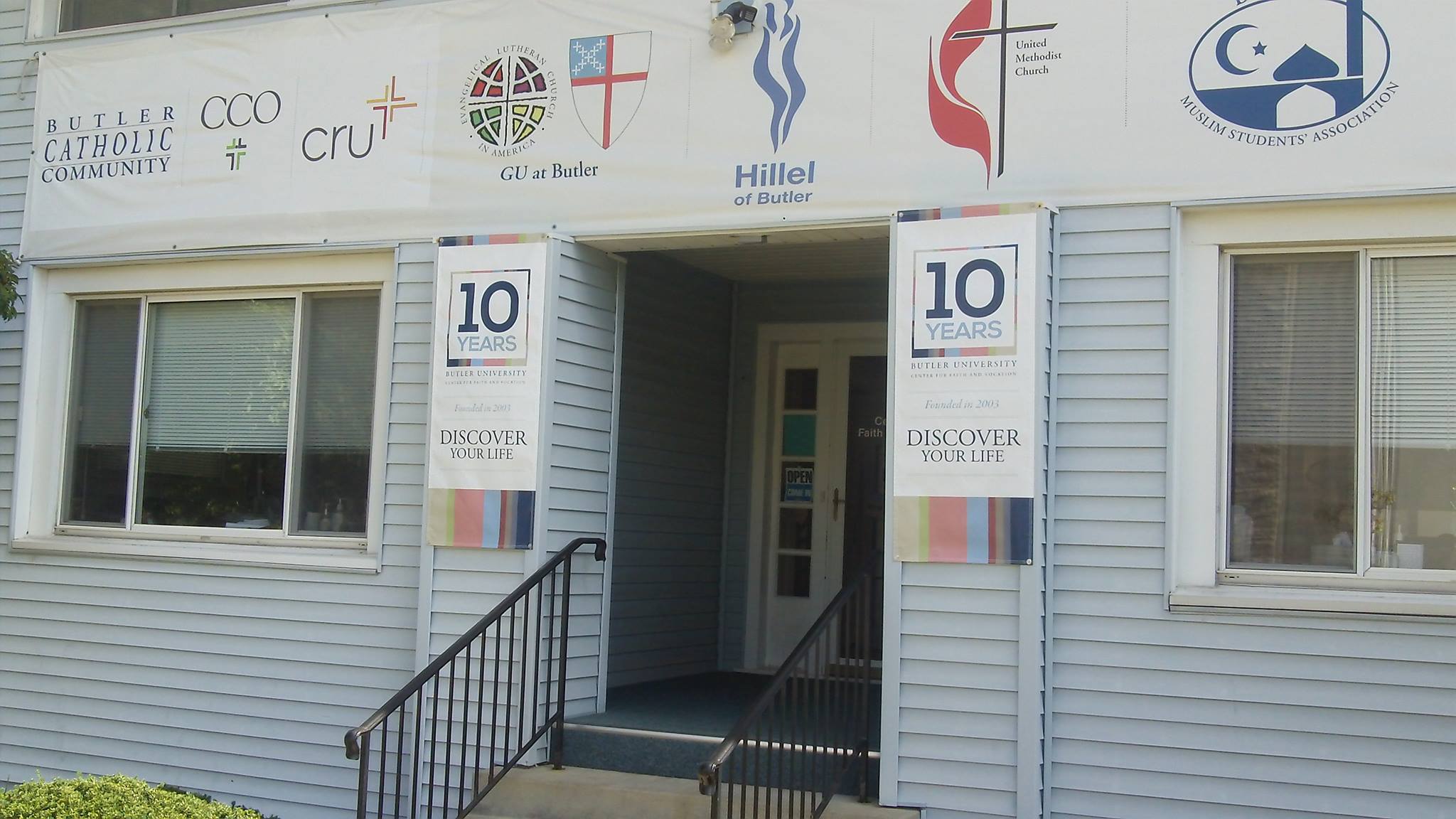
Just this week – in time for Homecoming 2013 – a new set of banners are up outside the Butler Center for Faith and Vocation.

Blue House 10th Anniversary Banners.jpg

“10 Years. Center for Faith and Vocation. Founded 2003.”


A decade ago there was no Blue House at Butler. No dedicated place where students could connect with diverse perspectives on faith. Where they could learn to meditate. Where they could talk together or with an advisor about the longing to live a meaningful life.

There was no Muslim Students Association. No Orthodox Christian Fellowship. No association of Methodists or Presbyterians. Hillel was a tiny group. The Catholics on campus were struggling to reorganize. Grace Unlimited was still in the shadows of a fledgling Lutheran-Episcopal ministry.

The Center was hardly a center. Rather it was a small office space in Jordan Hall 212 and an idea that Butler could become a campus that nurtures religious and spiritual engagement, exploration, faith, and doubt.  There was a hope that the university’s rich history in the liberal arts and sciences tradition, and its strong professional colleges could foster a culture of calling. There was a hope that Butler could become known as a place where students could connect their deepest beliefs and their gifts to make a difference through community and career.

Today Butler is becoming that place.

The CFV has its own house – affectionately called the Blue House – on Sunset across from the Schrott Center for the Arts.  The number of diverse religious and spiritual student groups on campus has nearly doubled since 2003. Each week , nearly 100 students take part in some form of religious, spiritual, or discernment practice or reflection.  Since 2003, more than 100 professors and staff leaders have taken part in workshops and other events to them discover their own calling in education as they become stronger mentors to students.

Across each academic year the CFV intersects with commuter students, Greek chapters, the Center for Global Education, student interns and activists, exploratory students, and numerous other academic programs and classes in welcoming students to pause, reflect, and discover their calling, their vocation. Students back from a semester abroad come over to talk with each other about how their lives are different now that they have lived and studied in Spain, or India or Australia. Pre-pharmacy students stop to consider if a career in healthcare is a reflection of their gifts in math and science, or part of a greater longing to serve. Business majors are connecting their acumen in marketing, finance, or management  with interests in non-profit careers. And pre-med and pre-law students are working as interns in clinics that serve immigrants, refugees, the uninsured and other vulnerable individuals and families.

It has been a privilege to lead the Center for Faith and Vocation from its founding and to be here today as Butler works toward even more. We can grow our internship opportunities at faith-based sites. We can find more ways to support the distinctive ways all six colleges form their students as compassionate, creative leaders. We can find new ways to help professors be even better teachers and advisors. We can strengthen true diversity of thought, belief, and practice – for people of faith and no faith – as inspiration for the greater community of Indianapolis and beyond.

And the CFV is inspired to see how our experiences with students, faculty, staff, alumni, and Indianapolis religious organizations can benefit Butler’s new venture: the Desmond Tutu Center. It is a joint project of Butler and the Christian Theological Seminary.

A decade ago I walked away from a 14-year career in journalism and into life at Butler. My own sense of calling to support religious diversity and the intersection of faith and work brought me to Butler. But it is Butler that has nurtured the call in me.  My hope is that Butler can continue that work for decades to come.


What a Year!

What a Year!

May 7, 2013

246643_10200161157646400_1435323775_n.jpgby Lauren Reed

What a Year! It’s been an exciting semester. Apart from my work at the CFV, I took my last semester of undergraduate classes, decided to move to the Chicago next fall, experienced cattle-call dance auditions (and the accompanying rejection), and got all nostalgic about leaving the place that has been my home for the last four years. Lots of things have been changing, and it’s been wonderful to know that I will always be welcome at the CFV after I graduate. Thinking back, I guess I’ve really spent a lot of time in the house this year. I hosted yoga once per week as part of Mind, Body, Spirit Tuesdays, I attended lots of group meetings, and I sent an ungodly number of emails to get ready for Interfaith Baccalaureate. I’ve loved every minute of it, but it was certainly a lot easier since it was my second semester in this position. And, if I’m being honest, there are things I learned on the job which, had I known earlier, would have changed my approach.
Working with the faith groups on campus is such a wonderful job, because, in essence, you just get to hang out with people and make new friends. I remember the first MSA meeting I went to; by the time the meeting ended, I was on the MSA listserv and had an invitation to go to dinner and a haunted house with some members of the group. For someone who likes to talk to people, this part of the job was perfect. The difficult part about interacting with the faith groups is that, occasionally, you have to actually plan some events. And let me tell you, Butler students are busy. I discovered that mass emails are NOT the way to go if you want people to attend an event. I had much better luck when I got a few leaders form groups on my side and, essentially, had them do the recruiting for me.
I was a little disappointed that it was consistently the same few groups that were willing to do interfaith activities. I understand that interfaith isn’t important or even on everyone’s radar. Unwillingness to be involved in interfaith seems contrary to the Butler Way, which confuses me because most Butler students seem pretty in-tune and supportive of the Butler Way in any other setting. I wonder if some groups just think that they shouldn’t be interested in interfaith; maybe one good experience with interfaith work is all it would take to make unwilling faith groups realize how much it fits with their own ideals. I wish I had been able to find a way to test that theory while doing this internship, but maybe it just takes time and a gentle but persistent interfaith presence.
Planning Baccalaureate was so much fun, but it also involved a lot of pestering via email. The biggest struggle was getting people to take 5 minutes to invite their friends to the Facebook event, which was funny because many of them sent me a copy of their speech for Baccalaureate within a few days. I think the secret to this is persistence in person. I tried to remind people whenever I saw them because that made me feel less guilty than sending a ton of emails. And it turns out that I got better results from that anyways.
My last wish for this internship is that more faculty members become involved in interfaith. There were a few that I could count on, but most of that was because their students were already planning interfaith projects. I think getting help from faculty would help people see the interfaith presence on campus, and maybe make the shy ones more willing to join the movement.
Interfaith, right now, has a very small role on this campus. But it is also a welcoming and friendly role, a role that is eager and willing to invite others in. I hope that this position stays alive in the CFV for many years to come and that, slowly, it will gain a bigger following at Butler. It is such an important part of the CFV and is a wonderful chance to work with some great people.

Bologna and Blogs: A Student’s Journey Towards Actualizing The Purpose of His Higher Education

Bologna and Blogs: A Student’s Journey Towards Actualizing The Purpose of His Higher Education

March 12, 2013

IMG_0002-e1363183025882-853x1024by Andrew Erlandson
Many students look forward to that magical graduation date when they will suddenly be equipped “to do something to make the world more sensible or more peaceful or more civil or more intelligent,” as the late Dr. Marshall Gregory says in his forthcoming book, Good Teaching and Educational Vision: Not the Same Thing as Disciplinary Expertise. These students misunderstand the key to this challenging quote. When Gregory urges us “to do something” beneficial to the people around us, he doesn’t exhort students to wait four years to start. That would be silly. As Boris Pasternak wrote in his novel Dr. Zhivago: “Man is born to live, not to prepare for life.”[1] The community of the Liberal Arts and Sciences encourages its students to actively pursue rationality, civility, and peace in the present moment through integrity of thought and action.
Our educational system’s logic proceeds as follows: perform well in middle school in order to get into high school honors classes. Achieve excellence in high school in order to be accepted to a renowned university. Excel in college in order to get a good job. Get a good job in order to retire early, so that you can putter around for a few years before dying. Right? The Liberal Arts and Sciences has broken me out of this rut by removing the phrase “in order to,” freeing me to concentrate on the world I live in, not the world I plan on occupying. Otherwise we end up following someone else’s orders until we go tumbling off a cliff like lemmings.
When I enrolled in EN 455: Writing In Schools, I wasn’t aware I would drive to Shortridge High School twice a week to make sandwiches. That’s right, bologna sandwiches with that rubbery cheese. Unlike other collegiate classes, this one wasn’t an opportunity to learn so much as an opportunity to act in the world. The focus was on helping the Shortridge students, not our grades. Utilizing our experience studying creative writing, we mentored the students in writing poetry, fiction, and nonfiction. We fed the students to ward off distraction, joked around with them like peers, gave them writing exercises, and supported them in any way we knew how. My proudest moment was watching the shy eighth grader I had worked with stand up in front of the whole class and present her poem about how irritating it can be dealing with annoying people. It was a special moment for all of us.
As a student of literature, I must ask myself how time spent analyzing The Divine Comedies or The Adventures of Huckleberry Finn prepares me to make the world “more congenial to human flourishing,” as Dr. Gregory put it. My answer came in November of 2012. A professor in the College of Liberal Arts and Sciences came under attack by a student for the wording of her syllabus. Although the article was not hateful in and of itself, a number of thoughtless, hateful, and bigoted messages were sent to the professor as a result.
I wrote two articles in response to the event that I posted on my blog. Taking as measured and rational approach as possible, I examined first the student’s argument and granted that there may be class curriculums that treat certain genders, ethnicities, or sexualities less favorably than others. Then I looked at the language used in his article, which claimed that the professor was asking the class to “disavow” their identities. The actual wording asked for students not to take any single type of identity “as the norm.”[2] My training taught me how to challenge the blatant misuse of logic and rhetoric, especially because of the harm it was causing to another person. I challenged that the twisted wording undermined the credibility of the author’s argument.
Within hours I was the new target of vitriol from online users that underscored the importance of Dr. Gregory’s call to civility and rationality.
My faith in the importance of the Liberal Arts and Sciences community came later that week when an open forum was held to address the situation. This conversation embodied the spirit of the Liberal Arts and Sciences. The word “conversation” originates from Latin “com-” meaning with and “vertere,” meaning to turn.[3] A true conversation involves two or more people “turning together” through thought. In this way the community navigated through this trying situation. For example, many attendees of the forum instinctively wanted to cast aspersions at the student author. The community guided each other away from such sentiments, because they lacked integrity, respect, or relevance.
It was important that the open forum was separated from the virtual realm. With online comments, a person can carry their extreme opinions, express them, and never worry over who they hurt or what reaction they provoke. The online community is a collection of disparate, anonymous, and isolated speakers who aren’t required to listen or engage in conversation with the rest of the community. The open forum resisted this phenomenon by fostering rationality, civility, peace, intelligence, and the growth of those speaking and listening. Everyone brought their opinions, but had to engage with others and acknowledge, if not agree with, the their thoughts. It was the catharsis necessary to ease everyone’s frustration and extinguish the fire that had raged on Facebook and Twitter for days.
Marshall Gregory’s words embody the spirit of the Liberal Arts, and express how my studies have been more than educational. They have given me the drive to actively participate in the world, the opportunity to defend against dishonest discourse, and the clarity to live a deliberate life.
________________________________________
[1] Pasternak, Boris.Doctor Zhivago. Trans. Richard Pevear and Larissa Volokhonsky. New York: Vintage, 2010. Print.
[2] Lovelace, Ryan. “Students Told to Disavow ‘American-ness, Maleness, Whiteness, Heterosexuality'”The College Fix. N.p., 27 Nov. 2012. Web. 31 Jan. 2013. .
[3] Douglas Harper. “Online Etymology Dictionary.”Online Etymology Dictionary. N.p., n.d. Web. 31 Jan. 2013. .

Majoring in Religion at Butler: A meaningful investment

Majoring in Religion at Butler: A meaningful investment

February 20, 2013

ann-herbertAnn Herbert graduated in 2006 with a major in Religion and minors in Spanish and Business Administration. She worked as a Health Extension Agent in Morocco with the Peace Corps from 2007-2009. She recently completed a Master in Public Policy from The University of Chicago Harris School of Public Policy in 2012 and is currently pursuing her Ph.D. in Public Health at Johns Hopkins Bloomberg School of Public Health.

by Ann Herbert

The decision to major in Religion was not an easy one. I was worried that studying religion wouldn’t lead to a job and that everyone I met would think I was a religious fanatic of some sort. Frankly, the decision came down to going through the course bulletin and highlighting all the courses I wanted to take. It was clear once the religion section was completely yellow that I would go this route. Still, I was uncertain about this decision so I handled it with humor. I remember standing up at a Religion/Philosophy Department dinner to explain to a group of fellow students that I chose to major in Religion in order to start a cult. Something I have yet to accomplish. But, my decision to study religion at Butler has turned out to be good one and one that I would suggest to others considering it.

While attending Butler, I was heavily involved with the Center For Faith and Vocation, which, among other things, afforded me the opportunity to participate in a Field Seminar to Nicaragua. This seminar included a trip to Nicaragua over spring break where we met with various religious leaders who were representing diverse roles in the country and who held divergent religious views. This trip was my first trip abroad and played a significant role in my decision to study abroad in Ecuador. Since then I have lived in Morocco and Germany and will likely have an international career. My studies in religion were the first exposure I had to learning about other people in different cultures and is one thing I took away from this major.

At Butler, I took courses that ranged from a broad overview of the world’s major religions to a micro-view of an Islamic mystic poet, Rumi. I did walking meditation in Asian Philosophy. I wore a headscarf for a day and wrote about the experience for Muslim Women in the Middle East. I wrote a paper using various theories of religion to prove that my sorority was in fact a religion. Coming from a small town in rural Indiana where I was only exposed to Christianity this was an eye opening experience to say the least. Studying religion opened my eyes to other ways of thinking and living in the world. I became a more well-rounded and open person having learned about diverse belief systems which is something I think is crucial in todays increasingly diverse world.

Because I was interested in different ways of thinking and living due to my exposure to different religions through my course work, I applied to Peace Corps. I was open to going to Morocco when many others were frightened at the prospect of living in a Muslim Country in the post-9/11 era. I wanted to see how Islam was practiced on an everyday basis. Not only did my background in religious studies lead me to Morocco, but also my experience in Morocco was much richer having studied the religion, as it is a major component of the average Moroccan’s worldview.

Following my Peace Corps experience, I could have done many things and the basic skills I gained as a religious studies major at Butler would have been enough preparation for most jobs I would have applied for. As a religion major I gained competence in reading, writing and critical thinking. These are the basic skills necessary for any job.  Jobs are basically seeking applicants that can do these three things well, learn quickly and are motivated to work, all of which a religious studies major at Butler is more than capable of.

I, however, chose to go to graduate school because I wanted to supplement my training in the humanities with a more quantitative base in the social sciences.  Paired with my Peace Corps experience, my excellent undergraduate performance afforded me a choice of top graduate schools offering a range of support. The fact that the religion department at Butler is small and is willing to work closely with students, advising them both academically and professionally, has been a huge advantage. I was able to thrive and grow in that supportive environment, which played a significant role in how well I did during my studies and subsequently what other opportunities became possible. The faculty was available both during my time at Butler and after. I have repeatedly returned to them for advice, contacts and other support. I actually applied to the University of Chicago where I just completed a Master of Public Policy Program because a Butler Religion Professor, Chad Bauman, directed me to this school. Finding a department where the professors believe in you and are willing to work with you is one of the most important aspects of an undergraduate education, and I am thankful to have experienced this at an optimal level in the Religion Department at Butler.

Additionally, having studied religion makes me unique and allows me to stand out from the crowd. It is a rare major that allows me to contribute a unique perspective. Through my courses I gained the ability to talk intelligently and respectfully about a controversial subject and to approach problems in a more creative, holistic way. Religion happens to be a part of most people’s lives all over the world in one way or another and therefore having studied it allows me to provide a pertinent and important perspective.

Lastly, for me, taking time to think about what I believed and finding out more about what others believed was a crucial step in my personal development. Knowing where I stood on fundamental things such as whether or not I believed in God has influenced most decisions I’ve made since. I had the luxury to think about big questions such as, “what is religion?” and “what role should it play in a democracy?” These are topics that most people consider to be a luxury to think about and I got to dive deep into them for four consecutive years.

Now if asked, “Why Study Religion at Butler?” by someone who is interested in the subject I would reply by saying you learn basic skills that are necessary for any job, you gain competence in a field that applies to anyone anywhere, you will get exceptional support from the department that will allow you to thrive academically and professionally, and you will stand out and provide a unique perspective. Needless to say, I am very happy I chose to study Religion at Butler.  In fact, I am very proud of my decision to major in religion. It has led me to where I am today, a place that I am very happy with.


Greatness

Greatness

February 7, 2013

by Olivia Nelson

Greatness
“Greatness,” is you. “Greatness,” is the goal you aim for. “Greatness,” is anything and everything around you.
This message to the Indianapolis Community from Common, the distinguished American hip hop recording artist and actor, spoke with depth.
Greatness is achieved through a three-step process. “Find your path, believe in your path, and live it,” Common stated.
Finding your path can be a challenging process. We are consistently pressured to figure out our future and contemplate where we plan to see ourselves in the next five years. This is a difficult question to answer, one which we ponder on every day. But how do you answer? Every now and then, the answer comprises of the broad fundamental goals of having a successful career, loving family, and a good life. But it goes deeper than that. What do you actually want out of life? What greatness do you desire to achieve?
Believe. Believing can go a long way. Investing your spirit into your aspirations can take you further than any expectation. Once you find that path, it cannot sustain itself without belief. Belief is what drives it to the act itself.
Live it! How else can you desire after something but choose not to live it?
With this motivating message, what’s next? Where do you start? How do you figure this out?
The answer: Utilize your resources.For one, you are not alone. The people that surround your everyday life battle with this question themselves. They may have more insight into these issues than you may realize.
There is also an assortment of resources available to you that can guide you through this process. One of these resources is the Center for Faith and Vocation.
The Center for Faith and Vocation is dedicated to helping others discover this inner greatness. It is committed to supporting people through this process of self-discovery and helping put it into action. This period of personal development is essential in anyone’s life, no matter the age, and the Center for Faith and Vocation recognizes this. Through internships, on-campus programs, one-on-one counseling, and opportunities for international travel, the Center for Faith and Vocation provides the needed support in the exploration of these issues. It proffers that next stepping stone to discovering your life of purpose, meaning, and contribution; your greatness.

A Traveler

A Traveler

February 4, 2013

by Lauren Reed

I’ve had a couple of great things going for me this January. The first was that I went on a 2-week trip to sunny Eastern Cuba for the second time to dance and do thesis research. The second is that I began a class that I created for myself (Butler will let you do almost anything if you ask nicely) about mantra. For the class, I’m chanting “gate gate paragate parasamgate bodi swaha” (gone gone, gone beyond, beyond the gone-beyond, so be it) for about 4 hours a week and then journaling about it. I think the best way to tell you about these experiences is to share my first journal entry that I wrote while I was still in Cuba:

I was planning on waiting, but I guess that it’s fitting that I’m starting to read The Way of the Pilgrim (a book I’m reading for my class about a man who chants) while I’m traveling in Cuba. I realized this while reading the foreword of the book. The write quotes Gabriel Marcel on his idea that order will be established on earth when each person understands that he or she is only a figurative traveler here. I’m a literal traveler right now so here is what that means to me in this moment:
1.) I’m living out of a suitcase and I don’t want to unpack everything because I know I’ll have to move again soon. I think the pilgrim’s physical body is his “suitcase” here on earth. It sounds like he barely takes care of his body. He hardly ever eats, he walks and sleeps outside in the snow with tattered old shoes, he doesn’t want a home. But the things inside his “suitcase,” his soul and connection with God, he takes care of those very well.
2.) I have to roll with the punches. I’m going to be disappointed if I expect a consistent schedule or to know what’s going to happen two days from now or to be in a car with adequate safety features. I’m living day to day. For a change.
3. I need to be ready to part with my belongings. If my Cuban friend needs my chapstick because it’s expensive in Cuba, I give her mine and make due without chapstick for the rest of the trip. It’s weird how attached we get to little things like headphones and pens and chapstick when they’re so easy to get in the U.S. But for that reason, it makes more sense to give those things to people that don’t have them.
4.) I’m careful to not waste. I haven’t thrown away or left a single mini bar of soap or roll of toilet paper in any of our hotel rooms because those things are also hard for Cuban people to get. And I know that when I get back to the U.S., I’ll have a hard time throwing away napkins or dumping out cups of water. It makes me upset to think of how much water it takes for a shower. I’ve been showering with a gallon and a half of water in a bucket for the past week and I’m doing just fine. It makes me even more upset to think that in a couple weeks, I’ll probably be back into my old wasteful habits…
I’m grateful to have a traveling experience as I read The Pilgrim; it gives me some perspective. As I read, I’m picking out phrases that jump out at me. For example, the pilgrim discusses wanting an experience in constant prayer (chanting mantra) rather than a mental study of it. And, hey, that’s what I’m doing right now with this mantra class. I’m learning about mantra by DOING rather than just by reading about it.
I tried my mantra for the first time today. I chanted for 20 minutes while I held ice on my knees. Hours of dancing on cobblestone is awful for your body. I started chanting in my normal speaking tone and after only a few minutes, my throat started to hurt. It felt like my vocal chords were straining from speaking in a low voice even though it wasn’t all that low. Around minute 10, I realized that my volume had been getting softer and softer. I decided to observe this rather than to try to change it. See? Rolling with the punches. My voice kept getting softer until finally, I “broke” into a whisper. I say “broke” because the change in effort to continue in a whisper felt so immediately relaxing that it was like releasing something I’d been holding too tightly. It was so freeing. The last 5 minutes went by smoothly, and I was surprised when my alarm went off to tell me that my time was up.

The way I think about Cuba and my practice keeps changing as I settle back in to America and dive into mantra. It already feels like a month since I’ve been home and the vividness of Cuba’s atmosphere and warm weather is being replaced by the reality of this awful winter. Still, I’m glad to be chanting at home and I’m so lucky that I was able to begin my mantra journey as a traveler.

Peace,
Lauren

Looking Back

Looking Back

January 8, 2013

by Lauren Reed

At the end of a semester, I’m always ready to run back to my apartment and sleep off my finals. After a few days, though, I snap out of it and finish tying-up loose ends of the year. One of those “ends” is to reflect on my internship with the Center for Faith and Vocation. My internship, as the CFV’s Interfaith Liaison, let me interact with all the faith groups on campus, connecting them to each other and the CFV. I attended events, blogged about them, and sent lots of emails to support the groups. Judy asked me to reflect on how my work has related to my own life. This threw me a little. When writing for the CFV, I feel guilty deviating from what I see as “the important parts” of this internship so my instinct is to be academic and leave my personal life out of it. But when I think about the Center, its crew, and what they stand for, I realize that it’s silly of me to think that way. The CFV is one of the most individualized places I’ve ever been. The purpose of the House is to see each person as an individual with unique problems, situations, and needs. And the people who work there are good at it, which is why I’m about to reflect upon this internship and my personal life. Well done, Judy. Here I go.

In the dance world, we often talk about making ourselves into “well rounded dancers.” There’s a misconception (especially among younger dancers) that you should focus all your energy one style of dance to be the best. Ie, if you want to be a ballerina, it doesn’t do you any good to study ballroom dance, you should spend that time practicing ballet instead. I’m not saying that this is the way most dancers (especially those at Butler) think, but for some dancers, it is. For a dancer to limit himself or herself by only studying one style is silly because, one, there are very few companies that do exclusively one style and, two, you get a much richer experiencing by learning a little of everything. The same thing can be said about having more than one passion. A dance major’s academic schedule is packed and doesn’t usually allow for other activities so we often get stuck in a cycle of dance class, homework, and sleep. This internship has helped me set aside time to find meaning outside of dance because I get to work with people and learn about religions- two things I love. Don’t get me wrong. Dance is my calling. But there are days (as there are in any profession) that make me want to get out of the dance studio and having something else to turn to keeps me grounded. While it makes my schedule busy at times, this internship helps make me a “well rounded person.” When I’m able to invest in something that really calls to me, it gives me meaning outside the dance world. I’ve found that this semester at the CFV.

Maybe this is because of my structured background in dance, but I had a hard time adjusting to this type of work. I’m used to work that involves punching in and sitting at a desk for a prescribed amount of time, producing some tangible results. At my other jobs, numbers matter. X attendees to an event is a success, anything less than Y means I did something wrong. Every time that I bring up my nervousness about numbers, the gracious Judy has tried to get me to shift my thinking. My role, Judy says, is to extend an interfaith invitation to everyone and if no one responds, no problem; I’ll just ask again the next week. To be honest, this is the kind of work environment I would choose if I had my pick of them all. I suppose I’m just surprised I landed such a perfect gig. Go Blue House! I’m so lucky to have been able to do the good work of the CFV. I’m really looking forward to next semester when I’ll get to come back and learn more about our campus faith groups.

Posts navigation

OLDER POSTS
NEWER POSTS

Recent Posts

  • The Jewish Community Center: Plants the Seeds for Growth and Connections
  • “Young Plato”: A Headmaster’s Refreshing Approach to Defusing Conflict
  • My Jewish Community Center Internship: An Awesome Fall
  • Religion and Artificial Minds: How AI Reflects Our Ethical Issues
  • “Mission Joy”: Overcoming Hardship and Finding Meaning Through Community

Links

  • College Well Podcast
  • Compass Conversations at Butler University Podcast
  • Dr. Brent Hege's Podcast
  • The Compass Center
  • The Compass Center on Facebook

Archives

© 2025   All Rights Reserved.