Escape Road Winter Full Guide: How to Survive the Frozen Wilderness?

Imagine: you find yourself stranded in a bare winter wasteland, with the wind screaming its presence like a cruel predator, and it takes an effort to take a step forward. Welcome to Escape Road Winter, a game that does not just test your skills; instead, it tests your will to survive. Except that this is not your regular survival game; it is a blend of strategy, exploration, and raw adrenaline. Anything from crafting life-saving tools to walking icy roads with treacherous footprints might weigh upon your fate between life and an early frosty demise! What perhaps defines this game all the more is its dynamic weather system and resource mechanics, ensuring that you never have time to relax. The frozen wilderness is before you, daring you to conquer it, so let us step into this guide to become the ultimate Escape Road Winter victor!

Game Overview: Enter the Frozen Wilderness

Game Overview Enter the Frozen Wilderness

Game Overview Enter the Frozen Wilderness

This untouched world, magnificent and unforgiving, struck me from birth on entering the icy expanse of Escape Road Winter. Survival is not just some objective; it is a continuous struggle in this snow-clad wilderness thrown at you by the game. The environment feels alive, with weather systems shifting from gentle snowfall to deadly blizzards in mere minutes. The view, a treat for sore eyes, with every snowflake and icy fissure mathematically designed for that one immersion thing in this frozen world. But don’t get your curly finger nails clipped: beautiful view, and yet hellishly challenging!

What sets Escape Road Winter apart is the emphasis on reality. This is more than hit points, hunger, and exhaustion. The game’s systems require you to think ahead. Do you brave the storm to collect resources, or conserve energy and wait it out? Every choice feels so crucial, so high-stakes. This isn’t just a game; this is an experience that keeps you on edge and I enjoyed every bit of it.

A World of Ice and Peril

A working world of Escape Road Winter is beautiful yet deadly. The open-world design promotes exploration, but every step feels like a gamble on fate. The icy terrain is full of hidden dangers-from thin ice that may give way under your weight to predators that constantly stalk-and life design adds to the tension. Every crunch of snow can be heard underfoot, accompanied by the faraway whistling of the wind, keeping you completely alert.

What I love about this world is the element of unpredictability. One moment, you would be admiring the aurora borealis glimmering in the night sky; the next, you are desperately looking for shelter as a blizzard rolls in. The weather system is not just a visual gimmick, but a crucial part of the gameplay. Freezing temperature drains stamina, and during whiteout conditions, it is easy to get lost and exposed. Thus, nature, in this hostile realm, will always be your greatest adversary.

Core Mechanics That Keep You on Edge

The mechanics of Escape Road Winter are an absolute masterclass in survival gameplay. Unlike other games, this one does not hold your hand; instead, it throws you into a survival situation and expects you to adapt to it. Resource management is crucial to your survival; food, water, and materials must be gathered for tools or shelter. But resources are scarce, and every choice has advantages and disadvantages. Do you want to spend your last piece of wood for a fire, or do you want to save it for repairing your gear?

One of the coolest and most innovative features is the game’s stamina and warmth system. Unlike other survival games, where these numbers are just a drudgery to manage, here they really feel like they are part of the experience. Running depletes your stamina very quickly, especially in deep snow, while being out in the cold for too long can cause frostbite. The need to plan every step adds a strategic element to the game, never making it feel repetitive.

Mastering Survival: Tips for Thriving in the Cold

Mastering Survival Tips for Thriving in the Cold

Mastering Survival Tips for Thriving in the Cold

  • Clothing Layering

The idea of dressing in layers is to trap heat. Consider using a base layer made from any fabric that absorbs moisture from your skin; this will be followed by insulating layers, such as fleece or wool, and then keep the topmost layer waterproof, both to block the wind and snow.

  • Maybe Keep Your Endurance In Mind

Do not allow others to overexert themselves in the cold. Take several breaks and manage your activities to conserve the energy required for essential tasks.

  • Stay Dry Always

Any clothing gained from water supports cold. If soaking, try to get into dry clothing as soon as possible to avoid hypothermia.

  • Make Fires at Critical Times

Carry materials for making a fire and be well aware of the proper erection of a fire under snow conditions. Fires provide warmth and help dry damp gear.

  • Shelters Come First

Search for or build an insulated shelter to provide a buffer against the elements. Shelter means the difference between survival and frostbite.

  • Do Your Best to Keep an Eye on Eating and Drinking

Eat foods rich in calories and drink plenty of fluids. Your body goes into high gear, burning extra energy to keep warm, thus making nutritionally balanced meals vital in cold weather.

Essential Tools and Crafting for Beginners

As for newbies, the first thing to attend to should be the essentials. A decent axe and a reliable firestarter are crucial in the early days. The axe gathers wood for makeshift fires and shelters, while the firestarter means you can make a fire even under harsh conditions. Never forget about that simplistic map and compass, either. The world is vast and can be tricky to navigate, and having basic navigational tools can save someone from countless hours of wandering in the cold.

Another tip for beginners is to try to build a small, secure base near a resource-rich area. Such places will often feature wood, water, or be associated with food sources. This saves time and energy, allowing one to focus on their exploration or gathering of higher-end materials.

Advanced Strategies: Outsmarting the Elements

Once you’ve gotten down the basics, it’s time to step up the game a notch. It is an advanced tactic to net profits by leveraging the weather. For example, blizzards may be a nightmare, yet they can also offer great opportunities. During storms, predators tend to be inactive, and scavenging becomes possible in areas that otherwise are too perilous.

Another professional tip: always carry a backup plan. Get food and firewood in your inventory for extra protection purposes, and never go too far from shelter without having a clear escape route mapped out. The game heavily rewards careful planning, and being prepared could be a life-saving occasion.

And never underestimate learning the terrain. Every region of the map presents its own challenges and resources. Spend time out there, taking mental note of a few key landmarks and where you might find the resources. Such features will have been handy later on, especially while negotiating in low visibility.

Escape Road Winter demands your undivided attention and ever-rewarding efforts for a very unforgettable survival experience. If you intend to rule the frozen wilds, whether you are a survivalist for time immemorial or just a newcomer to the genre, this guide helps you. So, gear up, stay sharp, and note that here, every decision counts.

Hidden Gems: Secrets of the Frozen World

Hidden Gems Secrets of the Frozen World

Hidden Gems Secrets of the Frozen World

Exciting and rewarding for any Escape Road Winter adventurer is when some of its mysteries are revealed. The game is not just about survival; it is about exploring a world that seems alive, with something unknown awaiting at every turn. From secret caves to abandoned ruins, the frozen land holds treasures that can help smooth your journey or add to the fun. During one of my sessions, I was always drawn to the unexplored parts of the map, hoping to find something great. And the game certainly does not let you down.

Unlocking Hidden Locations and Resources

The map in Escape Road Winter is quite big and rewards players who want to spend some time exploring. Sometimes, the biggest treats lie far away; maybe at the frozen lake, in an abandoned cabin, or somewhere along a mountain trail. One of my more memorable finds was a hidden cave system where I was able to create shelter from a ferocious blizzard, yet it also contained rare materials for crafting that I had never seen anywhere else.

Look out for environmental hints when trying to locate any hidden locations. For example, animal tracks in the snow may lead you to resource-filled areas, while irregularities in the rock formation could hint at a concealed entrance to caves. Other generic secrets are occasionally unveiled by good weather; sunny days melt away the snow, exposing a hidden path. My suggestion: stock up on supplies and gear yourself for the unforeseen. Some of the best prizes are awarded to those who dare to explore the riskiest ones.

The Thrill of Boss Encounters in the Snow

If you think that the environment is your only enemy in Escape Road Winter, think again. In fact, I would say that the boss encounters are among the most intense and memorable moments I have experienced. These aren’t quite fights, depending on your definition, and instead are tests of survival skills, resource management, and quick thinking. One that still sends a chill down my spine consisted of a massive snow-frosted predator striking at me while I was scavenging for supplies. The fight was vicious, and I had to use every bit of trickery I had learned to come out of it alive.

All bosses have different mechanics, so preparation is needed. Know their patterns, and they will reward the time you invest. Gather appropriate resources and repair your gear to maximum efficiency. They are challenging encounters but incredibly rewarding: killing bosses grants you rare loot or outright access to new areas, making the struggle worth every single second. Nothing compares to the adrenaline rush-well, being rushed by adrenaline, that is-from pulling through a life-or-death battle in the dead cold outdoors.

Beyond Survival: Building Your Legacy

Beyond Survival Building Your Legacy

Beyond Survival Building Your Legacy

Escape Road Winter is less about surviving day-to-day existence and more about carving a legacy in this world. The game encourages a long view—whether it’s completing achievements, overcoming challenges, or sharing your experience with the community. This is where the game truly shines: progression and accomplishment that transcend mere survival.

Achievements and Challenges to Conquer

For players who love a good challenge, Escape Road Winter offers plenty of opportunities to test your skills. The achievement system is comprehensive, ranging from surviving a certain number of days to defeating specific bosses and finding all the hidden areas. One of the most satisfying moments for me was finally achieving the “Master of the Wild” achievement: surviving 50 days without ever using a permanent shelter. It was grueling, but the sense of accomplishment was unmatched.

Challenges such as these provide more replay value to the program, encouraging you to push your limits and go beyond your usual methods. Be it an achievement hunter keen on unlocking all achievements or a casual gamer just wanting to grab a cheeky target to aim for, there is a little something here for everyone.

Community Stories: Share Your Frozen Adventures

In a sense, I would say one of the things I have loved most about Escape Road Winter is its community that has evolved around the game itself. People from all around the world share their stories, tips, and oddities that mark a fairly human-centric existence. I have spent hours reading about the experiences of other players, from their most perilous escapes to their proudest glories. It inspires me and often sparks original ideas for my own playthroughs.

If you haven’t already, join the online forums or social media groups for the card game. Interaction and sharing of experiences keep the game alive and evolving. In addition, sharing a screenshot of the latest discovery or victory and watching the community celebrate is immensely gratifying. Escape Road Winter is more than a game-it’s a shared experience, and the result of this community just adds to its charm.

Conclusion

Beyond Survival Building Your Legacy

More than a simple survival game, Escape Road Winter is an immersive journey in a frozen wilderness, calling upon your instincts, strategy, and perseverance. From the very act of mastering essential tools and crafting to finding secret spots and going head-to-head with ferocious bosses, every single moment in this game is an unforgiving test of your capacity to adjust and prosper in a set of ever-changing conditions with impinging changes in weather, resource availability, and sudden hazards. These constantly shifting elements make every choice count, keeping you always on your toes.

This guide provides you with the fundamental techniques to navigate icy terrain, from beginner tips to advanced strategies. The true magic of Escape Road Winter, however, lies in its ability to foster surprises and reward the spirit of exploration. Whether it be exploring secret areas, facing daunting Trials, or sharing epic tales of bravado with others in the community, the game truly lets you share in the birth of your own journey.

Gear up, keep that edge, and savor every moment in the life-or-death game of survival—the frozen wilderness is calling out for you to conquer it!
Posted in Uncategorized

Box Compression Tester Machine: Ensuring Packaging Quality and Strength

Packaging serves as the first line of defense against loss and degradation of the product during transportation and storage. But what ensures these packages are good enough to withstand the rigors of shipping and handling? The Box Compression Tester is a cutting-edge tool used for the compressive force endurance testing of packaging materials. This blog will provide an in-depth explanation of the essence of box compression testing, why industries that depend on packaged goods should consider this process, and how to achieve cost efficiency, sustainability, and customer satisfaction through the use of a suitable testing machine. Whether your field is manufacturing, logistics, or quality assurance, this article will provide you with pertinent information to enhance your packaging endeavors.Click here to read more

The Importance of Box Compression Testing

The Importance of Box Compression Testing

The Importance of Box Compression Testing

With the ability to withstand pressure and weight during storage and transit, packaging materials must be tested to ensure they can withstand the pressure and weight they encounter during these periods. This test determines the maximum load the box can carry before being deformed or failing, thereby ensuring that the products inside are safe from damage. It proves highly useful for shipping industries, as it helps minimize product loss, customer complaints, and overall dissatisfaction. Furthermore, box compression testing can be conducted by companies to assist in modifying packaging designs for a good balance of materials used with optimal strength.- sustainability and cost-efficiency.

Understanding Compression Strength

Various factors influence compression strength, including their box design, material cast, and environmental conditions. The type of flute, corrugated board thickness, and quality of adhesive determine how much weight the box can hold. External factors could set in and erode the box’s structural strength over time-an example of such would be situations dependent on the alternatives of humidity and temperature. Standard tests, such as Edge Crush Tests (ECTs) and Box Compression Tests (BCTs), are used to determine the compressive strength of the box, thereby assessing its suitability as a shipping standard. With this back-of-the-house expertise, firms can design packaging that better meets industry requirements and keeps the product safe during shipment.

Benefits of a Box Compression Tester

With this, a Box Compression Tester provides several essential functions for businesses that require reliable packaging solutions. First and foremost, it ensures that the structural integrity of the packaging is maintained by determining the highest possible compression strength of the box under bearing loads, without damage during handling and transit. Through such ultra-institutional testing, companies can determine the proper materials and box specifications based on the weight of their item or employ special packaging for especially heavy or fragile items to make the product safer.

The Box Compression Tester, in conjunction with the packaging design process, can efficiently introduce alternative methods for reducing unnecessary material costs without compromising necessary strength and reliability. Furthermore, it ensures compliance with industry standards and regulations, ensuring the packaging meets the accepted standards for transportation and handling. Routinely subjected to testing, the process of quality control can be improved to ensure that packaging performance is present and consistent across various operations involving strength tests.

Competition in any industry necessitates product protection; hence, with a Box Compression Tester, one can limit the theft of products, minimize product loss resulting from damage to goods, and increase customer satisfaction through enhanced delivery ability. This is how the tool boosts efficiency, sustainability, and worth.

Applications in Packaging Quality Control

A box compression tester is an essential tool for packaging quality control, ensuring the strength and durability of packages throughout the various stages of the supply chain. These devices ascertain whether the packaging will withstand pressures during stacking for storage or transit. These are particularly common in package industries that concern food and drinks, pharmaceuticals, and e-commerce, where the good packaging demonstration is paramount to product protection and carton compression.

By verifying through standardization that a box meets maximum compressive load requirements, manufacturers can ensure adequate material strength while controlling the amount of materials used in paper and packaging. This promotes saving by avoiding overly large packages. Box Compression Testers will also help the packaging industry comply with industry standards and customer-specific packaging requirements, resulting in consistent product delivery.

How Box Compression Testers Work

How Box Compression Testers Work

How Box Compression Testers Work

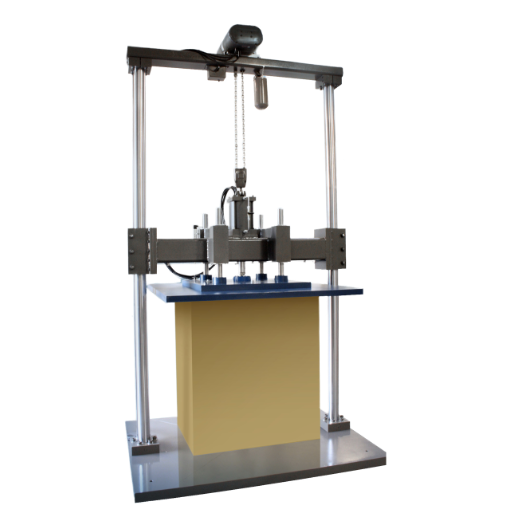
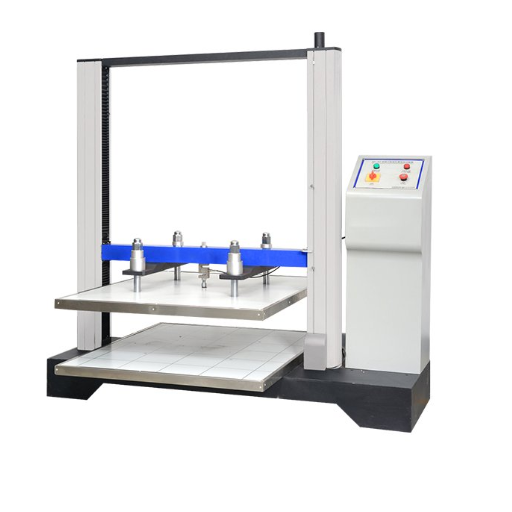
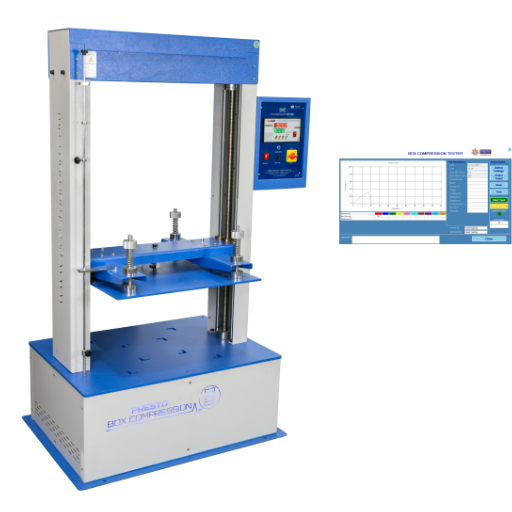
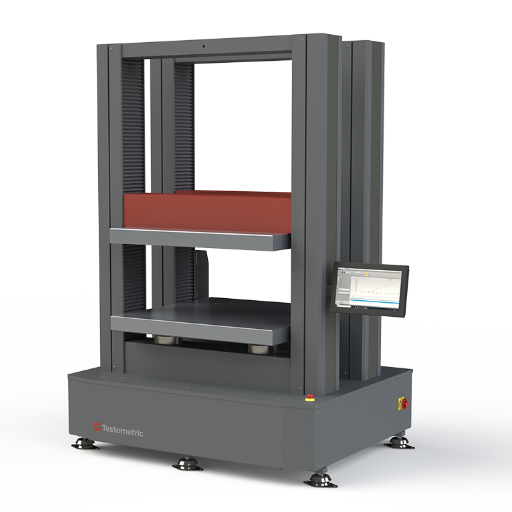
Box Compression Testers work by applying a controlled compressive force on a box until it deforms or fails. The box is secured on the machine’s platform, ensuring it is properly aligned. The machine then moves the platen downwards steadily, measuring the force applied and the resistance to that force exerted by the box. This figure is subsequently obtained to determine the maximum load a box can withstand before collapse. The utmost precision and reliability of test results are what make these testers crucial for evaluating the strength and durability of packaging.

Overview of the Testing Machine Mechanics

The box compression test machine utilizes numerous fine mechanical components and high-level sensors to analyze packaging strength. The mechanization is composed of a movable platen that applies a pre-set pressure uniformly to the box. This can be achieved through hydraulic or screw mechanisms, ensuring that every possible force is used uniformly. The load cells of this machine are highly advanced, which measure the force applied while a computer program simultaneously stores the data for later analysis. The parameters (such as distance) can all be set before the test to fit different dimensions of box samples and materials, allowing for calibration to many standards used by various industries. To increase repeatability and precision, these machines are crucial in quality control, enabling manufacturers to optimize packaging design for effective performance in real-world conditions.

Types of Compression Tests Performed

  1. Top-to-Bottom Compression Test

Here, a maximum force will be exerted on the box or container with pressure applied vertically. During this test, it will be determined whether the product can be stacked or not, and whether the packaging has the structural integrity to withstand transport and storage.

  1. Edge Crush Test (ECT)

This test was performed on corrugated material. It tests the edgewise strength of the material for predicting resistance to compression of the box, using a test method designed explicitly for this purpose. It is crucial in estimating how well the box will stack and how much load it can support.

  1. Flat Crush Test (FCT)

The purpose of the FCT is to check the compression strength of the flute structure of corrugated boards. It exposes the linerboards to direct and uniformly distributed pressure, measuring their resistance and maintenance of cushioning properties.

Measuring Box Compression Strength

As a vital parameter in packaging design, box compression strength refers to the maximum pressure or force that a box can withstand before it loses its shape, as determined by a strength test. To determine the strength of the box, it is tested according to commercial-standard test procedures, such as the Box Compression Test. In this test, a gradually increasing force is applied to the box until it collapses, providing precise insight into its stacking performance and load-bearing strength.

Some of the key factors affecting a BCT test result are the type of materials used, flute structure, box dimensions, and quality in its manufacture. Other variables that affect performance include humidity and temperature levels. By utilizing data generated from BCT, manufacturers can design and tailor materials to meet their durability requirements in a cost-effective manner. Accurate testing protects the content, prevents waste, and guarantees safe handling throughout the logistics chain.

Choosing the Right Compression Testing Equipment

Choosing the Right Compression Testing Equipment

Choosing the Right Compression Testing Equipment

The main factors to consider when choosing compression testing equipment include accuracy, reliability, and compatibility with the specific testing requirement at hand. Machines ideally suited to the size and type of materials tested should be chosen based on testing for the capacity of the actual load and precise measurement. Additionally, user-friendly controls and software would be helpful for collecting data and analyzing it. Give preference to devices manufactured by companies with an established history of quality and support so as to remain reliable and work well in the long run.

Factors to Consider When Selecting a Tester

Types of Testing Application

You have to decide what exactly you want to test: tensile, compression, or fatigue testing; therefore, there should be a machine that can truly perform these tests. Verify that it is compatible with the type of material or standards used in your industry to ensure reliable results.

Capacity and Grinding Precision

Select machines that match the load range of your application in terms of both strength and precision. Machines have to be highly accurate and repeatable if the testing criteria are more demanding in these industries.

Ease of Use and Software Integration

The testers should have an intuitive graphical user interface, facilities, and good software integration. It will enhance the efficacy and accuracy of testing by facilitating automated data collection, reporting, and real-time monitoring.

Durability and Manufacturer Reputation

An investment should be made in instruments from manufacturers who have a reputation for quality construction and good customer support. More durable equipment will save you money in the long run, as it requires less maintenance and is less prone to breakdowns.

Budget and Scalability

Assessment of the allotted budget would ensure that the product offers scalability for any future test requirements. Cost-effectiveness over advanced functionality must keep the investment very much sustainable.

Considering these aspects would aid in choosing a test equipment that fulfills present needs while allowing for future goals.

Comparing Box Compression Tester Prices

Several factors must be considered when comparing box compression tester prices to ensure the best value for the purchase. Such testers can even set one back anywhere in the range of a few hundred to a few thousand dollars, depending on the brand, features, or capabilities.

  1. Basic Models

Entry-level box compression testers typically cost between $300 and $1,000. These models provide standard functionalities for smaller-scale operations or basic testing needs. Thus, any company with a tight budget and minimum test requirements will benefit from this model.

  1. Mid-Range Models

The mid-range models typically cost between $1,000 and $5,000 and feature a digital display panel, automatic functionality, and the highest accuracy. These would be for medium-scale companies, intermediate in cost and performance measure.

  1. VIP Models

Depending on whether they are advanced or industrial-grade models, one can assert that these models can be priced beyond $5,000, with lucrative features including configurable testing parameters, precision, and solid software integration. They are best suited for settings with extensive and specialized applications, yielding the highest level of performance.

To make an informed decision, consider several quotes from top providers and manufacturers while evaluating whether the model meets your specific testing requirements. Also, consider your maintenance costs, as well as warranties and potential upgrades, when determining the acquisition price.

Top Brands and Models of Compression Strength Testers

Measuring compression strength belongs to a domain dominated by top brands and models, such as Instron, MTS, and Tinius Olsen; therefore, these well-established names should be considered. Considered among the best, these brands produce highly specialized equipment that offers features such as precise load application and measurement, and the configurations can be adjusted according to specific tests. The Instron 6800 Series is highly regarded for its accuracy and features an easy-to-operate interface, while the Super L series by Tinius Olsen is known for its rugged build and dependable performance. If you explore the offerings of these great industry names, you will undoubtedly find a machine fulfilling your particular objectives in testing.

Compliance with Industry Standards

Compliance with Industry Standards

Compliance with Industry Standards

Ensuring that individuals comply with industry standards is a way to maintain the accuracy and reliability of a specific piece of testing equipment. Models such as the Instron 6800 Series and the Super L series of Tinius Olsen are three reputable examples that have been designed to meet or exceed international standards, including those established by ASTM and ISO. These standards go a long way in assuring dependable performance and results across testing applications. Selecting equipment that meets these standards ensures your processes align with regulatory requirements and industry best practices.

Relevant Standards for Packaging Testing

Packaging testing must be performed adhering to the utmost standards for reliability, safety, and performance, among others. Some key standards include:

  • ASTM D4169 – It involves performance testing for shipping containers and systems. The testing considers the effects of a distribution environment, including vibration, compression, and impact, so that a package can withstand real-life conditions.
  • ISO 11607 – This standard pertains to the packaging of terminally sterilized medical devices. It covers materials for packaging, preformed sterile barrier systems, and packing processes, all of which ensure that sterility is maintained until the point of use.
  • ISTA Testing Series – Developed by the International Safe Transit Association, the ISTA 1, 2, and 3 series provide testing protocols that instruct on pre-shipment testing, minimizing product damage while enhancing packaging for transport.

This ensured compliance with regulatory and industrial requirements. It also enhanced product integrity and customer satisfaction. Such alignment ensures that the testing processes can meet these standards set by the relevant testing instrument.

How Testing Ensures Regulatory Compliance

Testing performs pivotal roles that put a product to the test against regulatory standards. They check safety, reliability, and performance standards for the product. Regulatory bodies draft regulations to protect consumers, regulate industry practices, and maintain environmental sustainability. In this way, testing helps businesses demonstrate conformity with these standards, thereby averting risks such as a levy, product recall, or outright defamation.

Some key issues addressed include chemical safety, electrical compliance, and packaging suitability, making them industry-specific standards, such as those established by the FDA, ISO, and ASTM, among others. Companies thus establish a relationship of trust with their customers and stakeholders while also ensuring they are legally free and clear. In-depth testing presents the possibility of detecting non-compliance early on, thereby correcting any discrepancies and saving resources and time.

Impact of Standards on Packaging Safety

Segmentation of packaging safety involves standards that must be clearly defined, outlining the functional and consumer protection aspects with which compliance will be assessed. In one instance, the FDA implemented all food packaging regulations to prevent contamination to the maximum extent possible, while also preserving product integrity through the strength testing of packaging materials. ISO standards, on the other hand, relate to potential changes in quality management systems and environmental aspects, thereby providing packaging solutions that are environmentally sustainable and efficient. ASTM is concerned with testing materials to confirm whether they can withstand, resist, and be safe under various conditions, especially for packaging materials with high strength.

When these standards are met, the risks of contamination, leakage, and breakage are mitigated, and international trade can be facilitated through compatibility among the markets of various countries. The frameworks also encourage innovations because manufacturers may, through packaging solutions, provide a means of enhancing safety standards and user experience while considering sustainability. These standards, once established, protect public health, and the liability of the business decreases while upholding quality and responsibility in the paper and packaging industry.

Frequently Asked Questions (FAQs)

What is a box compression tester machine?

A box compression tester machine primarily tests the weight applied to packaging materials, especially to corrugated boxes, to induce deformation. It is a crucial factor in ensuring that packaging is strong enough to provide protection during shipping and handling, especially for corrugated cartons.

How is a box compression tester used?

The box compression strength tester applies an intermediate load on a box until it is deformed or crushed. Manufacturers and suppliers are hence provided with test information that describes the strength of their packaging materials. Testing against international standards is widely accepted, as it ensures results with consistency and accuracy.

What are the benefits of using a compression tester in packaging testing?

The compressed tester gives valuable insight into the stackability and compressive ability of the cartons. By testing the strength of packaging materials, companies can enhance their packaging, thereby reducing product damage during shipping and ultimately meeting their industry standards.

What materials can we test using the box compression tester?

The box compression tester is used to test a wide range of materials, including corrugated boxes, paper boxes, honeycomb boxes, beehive crates, and paper cases. It is essentially vital for manufacturers to determine how resistant their packaging is to compression.

What are the distinctions between a stacking test and a compression test?

With a stacking test, the packaging is subjected to pressure due to the weight of other boxes stacked on top of it, whereas with a compression test, the maximum load a box can bear without deformation is the issue. These tests are primarily conducted to verify whether the packaging will withstand the stresses of storage and transport.

How can I ensure that my box compression tester is accurate?

Generally, the tester for corrugated cartons must be calibrated regularly to ensure its accuracy. Proper maintenance procedures should always be carried out. Through standards of international applicability, the reliability of test results will be upheld, facilitating a precise evaluation of box strength.

What are the implications of test data acquired from a box compression strength tester?

The test data from a box compression tester provides insight into how cartons perform under specific conditions. With such data, manufacturers and suppliers are better equipped to select materials and package designs, thereby ensuring improvements in the quality and strength of their products.

Is a box compression strength tester fit for lab testing?

Indeed, box compression strength testers are used in lab testing to determine the compression strength and performance of packaging materials. The tester enables testing under specified conditions and the collection of measurements. The tester is an irreplaceable piece of equipment in quality assurance and product development activities.

What considerations should be taken into account when buying a box compression tester?

When buying a box compression tester, look for the capacity of the testing machine, as well as features such as computer controls, overload protection, and the ability to calibrate. Additionally, if you consider high-quality brands, Haida International Equipment stands out as a leading manufacturer that provides packaging testing equipment tailored to your requirements.

Posted in Uncategorized