Author: Maddie Koss

  • Passion, Purpose, and Play: Manolo Ferreres’ Journey in Business and Soccer

    Passion, Purpose, and Play: Manolo Ferreres’ Journey in Business and Soccer

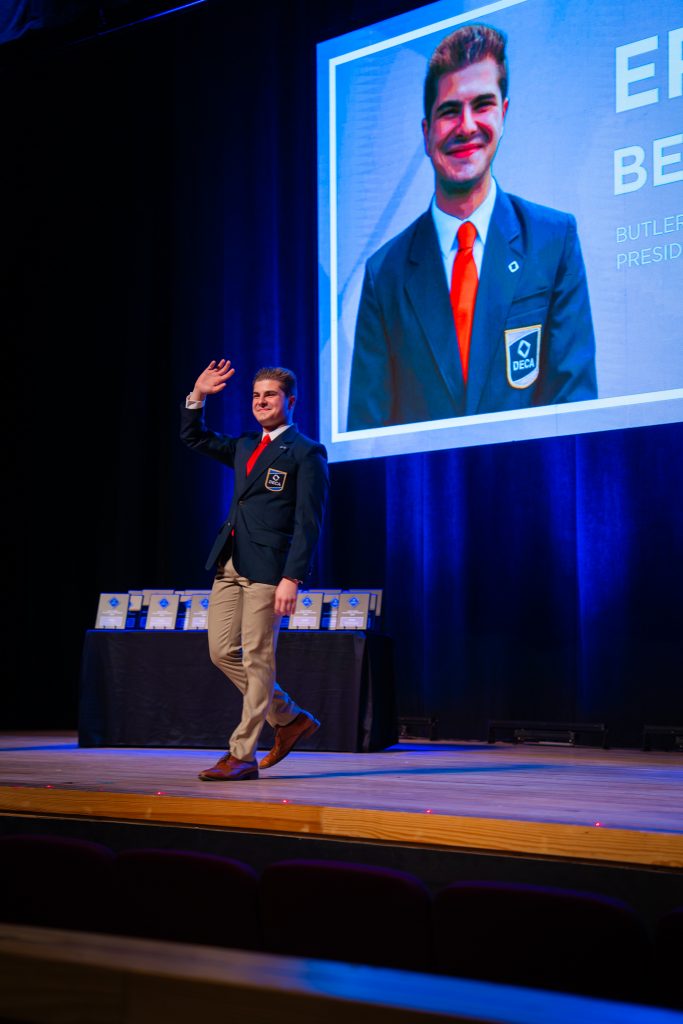
    When Manolo Ferreres first stepped onto Butler’s campus, he carried more than a suitcase and a soccer ball – he carried a dream.

    Growing up in Deltebre, Catalonia, Spain, he had already built a life steeped in discipline and ambition, balancing his studies in economics with his passion for soccer. Moving to the United States meant stepping into a world that was entirely new: a different culture, different people, and new expectations. “At the beginning, it was kind of difficult,” he recalled. “Everything was new. But over time, people here made it easier. The professors, the classmates – they were always willing to help and guide me.”

    Choosing the Lacy School of Business wasn’t just about academics. For the senior economics major, Butler offered the chance to grow as a student, as an athlete, and as a future professional. “I saw the opportunity to step up my career,” he said. “To combine my studies in economics with soccer, while learning in an environment that pushed me to be my best.”

    Manolo’s journey was shaped not only by those around him but also by the international perspective he brought to campus. Adapting to a new country meant embracing change while staying connected to his roots. “I realized it was important to bring your own knowledge, keep your mind sharp, and adapt to your environment,” the center-back said.

    This mindset translated seamlessly to his entrepreneurial work with ESUS Soccer Company, an international company he co-founded while still a student. The company’s mission is to open doors for international players, helping them secure U.S. college soccer scholarships while combining athletic excellence with academic achievement. Through ESUS, Manolo connects young athletes with top NCAA, NAIA, and NJCAA programs, matching them with opportunities that align with their skills, ambitions, and long-term goals.

    “It’s about more than soccer,” he explained. “We’re helping players grow as athletes, students, and people. They improve their game, earn a degree, and experience a new culture. It’s a chance to reach their full potential on and off the field.”

    ESUS also provides an elite program in Spain, where players train and compete with professional and semi-professional clubs over a 10-month season, participating in more than 35 official matches and training multiple times per week.

    Recently, the company acquired an international tournament in Manolo’s hometown, giving players from around the world the chance to compete and connect within the Spanish soccer culture. “We’re creating opportunities for players to grow, to learn, and to succeed,” he said. “It’s about helping them find their path, just like Butler helped me find mine.”

    The lessons Manolo has learned at LSB have been instrumental in building his business. Classes focused on communication, presentations, and practical problem-solving have helped him refine his English, convey ideas clearly, and sell his vision to others.

    Balancing rigorous coursework, soccer, and entrepreneurship requires discipline and focus, but Manolo thrives on it. His days are meticulously planned, from early morning soccer practice to classes, then to managing ESUS, and finally evening study sessions. “It’s a lot, but every moment counts. You learn to focus on what’s in front of you and give it your best.”

    Despite his busy schedule, Manolo finds balance through music and creativity. He writes and performs songs, plays guitar, and enjoys spending time with friends – activities that recharge him and spark new ideas. These moments of personal expression mirror the creativity he brings to both his studies and his business endeavors.

    Manolo’s journey at LSB and with ESUS illustrates a powerful truth: growth happens at the intersection of challenge, curiosity, and action. He encourages others to take risks, follow their ambitions, and embrace the unknown.

    “If you have an idea or a dream, you have to take the leap,” he said. “Start, learning along the way, and keep improving. You’ll never know what you can achieve until you try.”

  • Butler Entrepreneurship Named 2026 TechPoint MIRA Awards Finalist for Community Impact

    Butler Entrepreneurship Named 2026 TechPoint MIRA Awards Finalist for Community Impact

    Lacy School of Business (LSB) is proud to announce that Butler Entrepreneurship has been named a 2026 TechPoint MIRA Awards Finalist for the Community Impact Award, recognizing organizations that are transforming Indiana’s tech and business ecosystem.
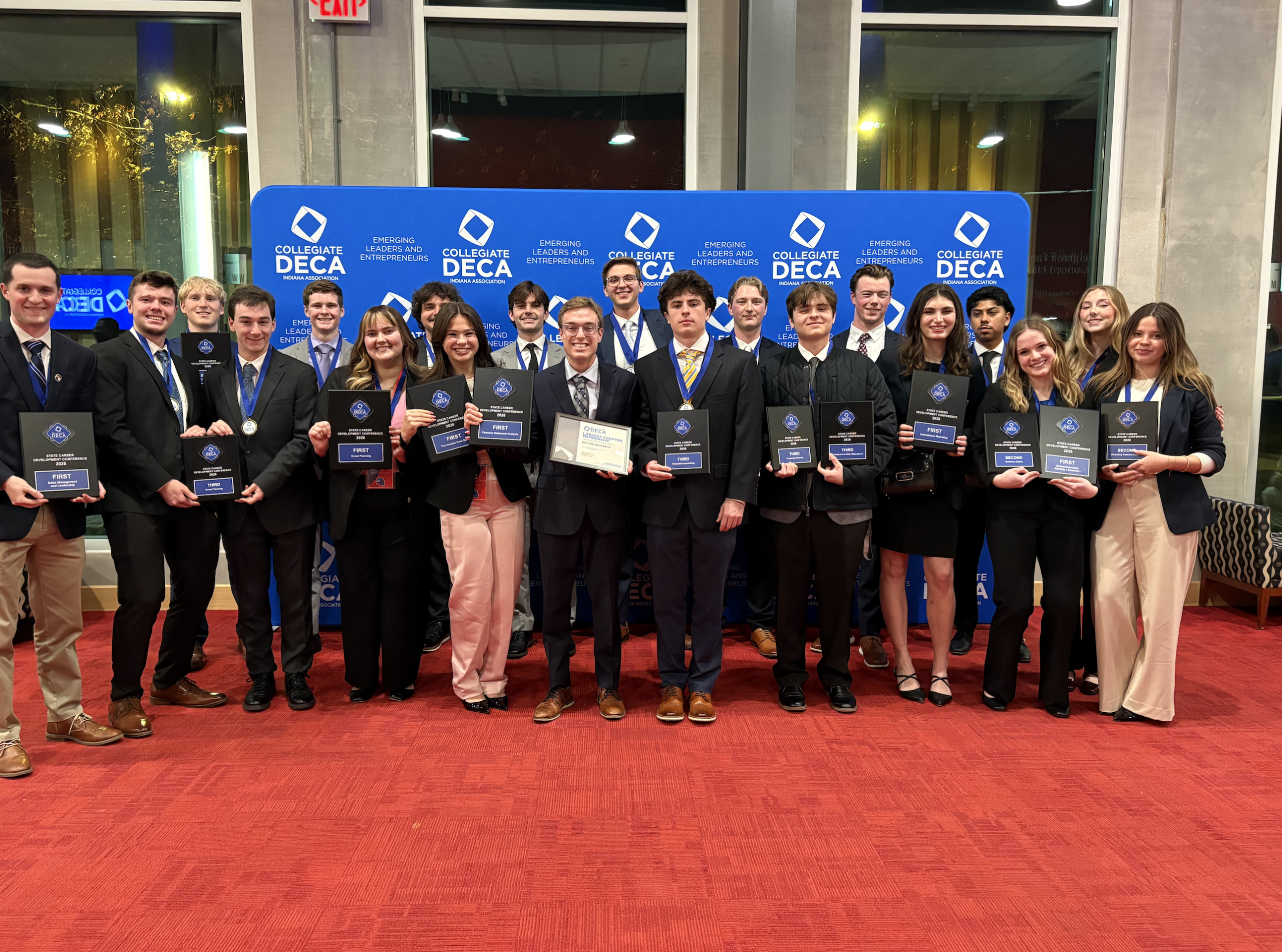
    Launched in January 2025, Butler Entrepreneurship is more than a program – it’s a campus-wide movement that empowers students, faculty, and alumni to transform ideas into ventures that create measurable social, economic, and community impact. Rooted in the belief that business can be a force for good, the program equips students with the skills, mentorship, and resources they need to launch ventures that generate revenue, create jobs, and strengthen local communities.

    “Imagine a student arriving on campus with a spark of an idea, unsure if it can go beyond a class project. Butler Entrepreneurship transforms that spark into real change,” Nick Smarrelli, Director of Entrepreneurship, said. “From their first day to graduation, students engage in experiences that cultivate entrepreneurial mindsets, launch authentic ventures, and create measurable social, economic, and community impact.”

    Since its launch, Butler Entrepreneurship has grown into a cross-disciplinary engine of innovation, supporting more than 70 student-owned businesses, partnering with 40+ community organizations, and connecting students with 100+ alumni and industry mentors. Student ventures have generated six-figure profits and have contributed meaningfully to local commerce, employment, and community well-being.

    Key initiatives demonstrating the program’s impact include Launch HOPE, where students mentor entrepreneurs from marginalized communities, helping them access resources and grow ventures that drive meaningful outcomes. Through Building Indiana’s Tech Future, students leverage AI tools and collaborate with alumni founders, engineers, and investors to bring tech-enabled solutions to life. Community partnerships like the Healthy Care, Healthy Costs Data Challenge & Accelerator and Rolltack Ventures’ First-Year Pitch Competition give students hands-on experience addressing real-world challenges in healthcare, financial literacy, and workplace innovation.

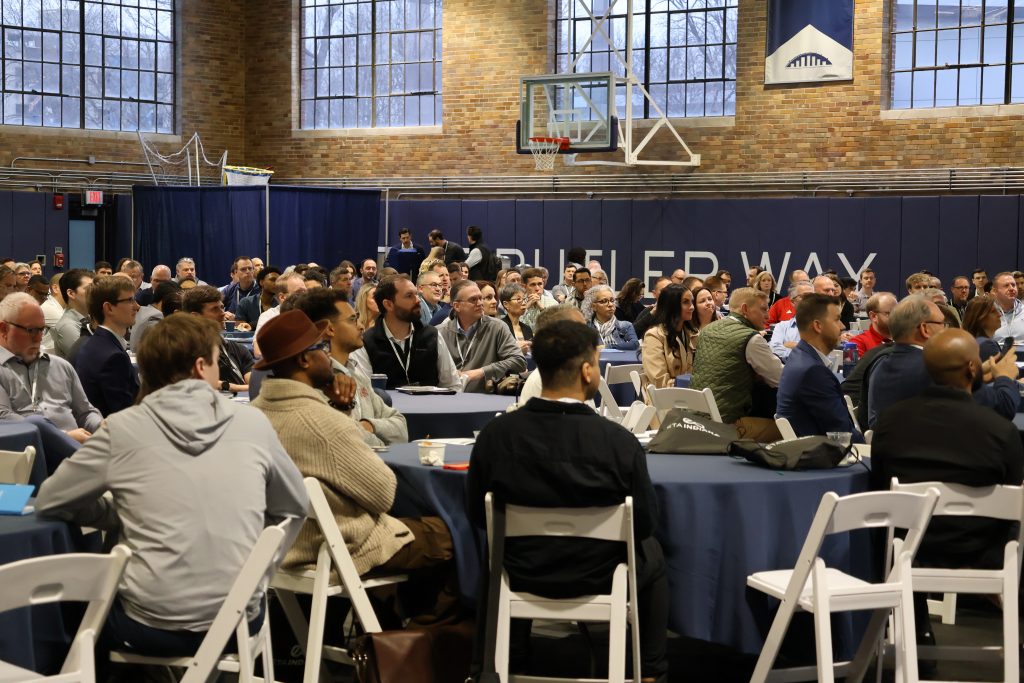
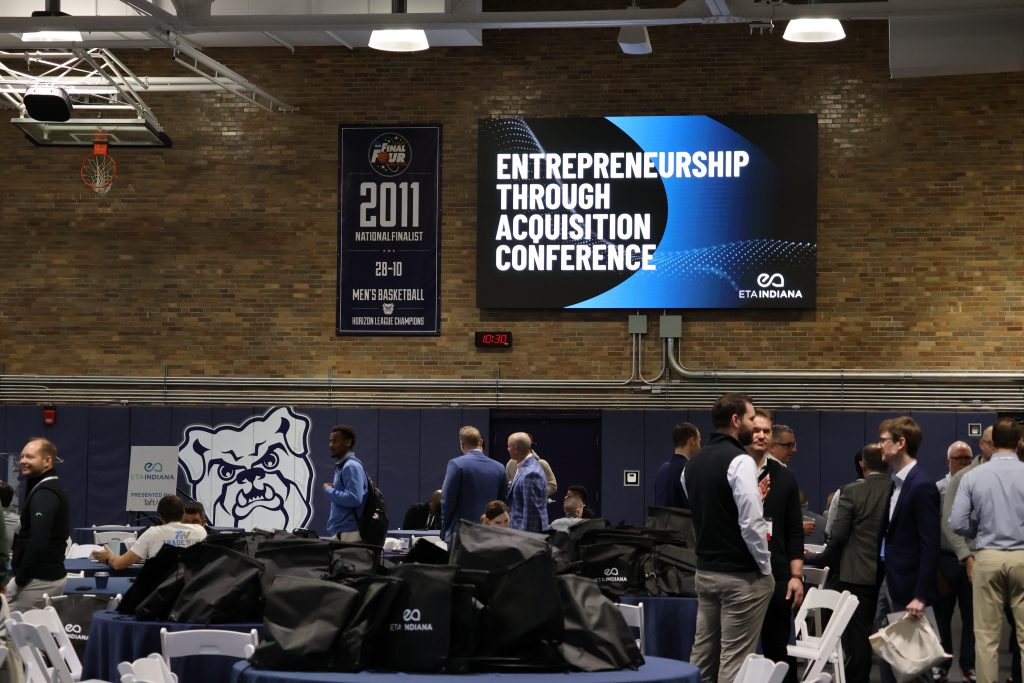
    In addition to its campus initiatives, Butler Entrepreneurship is helping lead the way in connecting universities and fostering intercollegiate collaboration. The program has partnered with Notre Dame graduate Adam Andres, as well as CICP, Rolltack Ventures, and 16Tech, to host an intercollegiate entrepreneurship conference and competition in late February. This effort brings together student innovators from multiple universities to share ideas, compete, and build networks that extend Indiana’s entrepreneurial ecosystem. Butler Entrepreneurship will also participate in the Entrepreneurship Through Acquisition (ETA) Conference on January 26, supporting the community by educating and preparing the next generation of leaders to take over Indiana’s most important businesses.

    Student-run ventures under Bulldog Enterprises, including Chimba Bowls, Blue’s Closet, Butler Brew, and Blue Roll Media, generate revenue, employ peers, and reinvest profits locally. Highlights include Chimba Bowls expanding to a second location, Blue’s Closet diverting over 2,200 pounds of clothing from landfills and donating 800 pounds to local nonprofits, and Butler Brew achieving a six-figure net positive while supporting campus and community causes. Every student-run venture in the Real Business Experience donates at least 10% of profits to local nonprofits, totaling nearly $20,000 over three years to support food banks, scholarships, and community programs.

    Butler Entrepreneurship bridges students with mentors, investors, and peers through programs like the Private Ventures Association (PVA), Minority Owned Business Initiative (MOBI), and community events including Elevate Sprint Week, Bark Tank, and the First-Year Pitch Competition. Alumni founders from Salesforce, High Alpha, and Elevate Ventures serve as mentors, judges, and investors, creating a strong ecosystem that extends Butler’s impact far beyond the campus.

    The program has ambitious goals for the coming years: launching the Butler Accelerator, a year-round hub connecting student founders with mentors, investors, and seed funding; doubling participation in programs supporting minority and marginalized entrepreneurs; piloting new student-run ventures in health tech, sustainable retail, and AI-enabled education tools; and expanding national recognition by sharing Butler’s open-source entrepreneurship framework with other universities.

    With these initiatives, Butler is positioning itself as the Midwest’s most accessible university-based startup ecosystem, nurturing the next generation of socially responsible leaders ready to make an impact in Indianapolis and beyond.

    The MIRA Awards gala will take place on April 24, 2026, at The Palladium in Carmel, celebrating Indiana’s brightest innovators, impact makers, and tech leaders. Butler Entrepreneurship is honored to be recognized among these outstanding changemakers.

    “This recognition is a testament to the creativity, passion, and dedication of our students, faculty, and community partners,” Nick said. “Together, we’re building ventures, building leaders, and building a stronger, more equitable community.”

  • Dr. Matthew Lanham Named One of Poets&Quants’ 50 Best Undergraduate Professors

    Dr. Matthew Lanham Named One of Poets&Quants’ 50 Best Undergraduate Professors

    We are thrilled to announce that Dr. Matthew Lanham, Assistant Professor of Business Technology and Analytics for Butler University’s Lacy School of Business, has been named one of Poets&Quants’ 50 Best Undergraduate Professors for 2025.

    This recognition honors faculty who demonstrate outstanding teaching excellence and a profound impact on their students’ lives. Dr. Lanham’s teaching philosophy emphasizes experiential learning, student growth, and real-world application, preparing students to think like leaders and problem-solvers.

    “Nobody deserves this award more than Professor Lanham,” Max Sanders, senior accounting major, said. “He is kind and caring, fun, and enthusiastic. You can tell when he teaches that he just wants to make us all better individuals, inside and outside of the classroom. Butler University is insanely blessed to have a professor as good as Professor Lanham.”

    Dr. Lanham joined Butler University in 2025 and teaches Predictive Analytics and Prescriptive Analytics. His research focuses on predictive-prescriptive integration and Data-for-Good initiatives, which he brings directly into his courses through team competitions and applied projects. He also founded the National Data4Good Analytics Competition, giving students worldwide the chance to work on social-impact cases while completing professional certifications.

    In addition to this national recognition, Dr. Lanham has received numerous teaching and leadership awards, including:

    • INFORMS Data Mining Society Teach Award (2025)
    • INFORMS Senior Member (2025)
    • Salgo-Noren Outstanding Master’s Teaching Award at Purdue University (2024)
    • Co-Chair of the Meeting of Analytics Program Directors
    • Two-time recipient of Purdue’s Transformative Impact Award

    Dr. Lanham’s dedication to his students goes beyond the classroom. He describes what he enjoys most about teaching business students:

    “They’re hands-on doers, eager to test ideas and take risks, and I find myself learning from them as much as they learn from me. Someday, one of them might even convince me to leave the classroom and help run a business together.”

    When asked what makes him stand out as a professor, Dr. Lanham reflects:

    “A zeal for outcomes. I care deeply that every student leaves my course with tangible evidence of growth – certifications earned, projects delivered, and confidence gained. Grades matter less to me than transformation. My approach is to coach, not just to teach, and to measure success by the lives my students change afterward.”

    Read more about Dr. Lanham and the full list of honorees on Poets&Quants.

  • Building Business from Scratch: Inside Butler’s Real Business Experience

    Building Business from Scratch: Inside Butler’s Real Business Experience

    You walk into a classroom, and it hits you: by the end of the semester, you won’t have merely learned about business – you’ll have built one from scratch. That’s the challenge sophomore students face in the Lacy School of Business’ Real Business Experience (RBE), a program that doesn’t just teach entrepreneurship – it throws you into it. 

    Teams of six, randomly assigned across majors, take on CEO, CFO, and CMO roles. Over the next few months, they brainstorm ideas, prototype products, manage budgets, handle suppliers, and sell to real customers. Mistakes aren’t hypothetical; they’re costly. Every decision matters. Every setback teaches a lesson. 

    “It’s innovative in a way that Butler does it,” Brenda Geib-Swanson, Lecturer of Entrepreneurship & Innovation, said. “At the start, it’s a class. By the end, it’s a business. And the learning comes from what goes wrong. Teams will face chaos, they’ll hit walls – but those moments are the ones that teach them the most.” 

    For Toni Jazvic, CEO of PawPrints Flags, those lessons came fast. Her team’s idea, a Butler-themed garden flag, seemed simple at first. But when their initial design failed, they had to scrap it completely and started over. 

    “Not knowing what you don’t know until you’re doing it, it looks so easy on paper,” the exploratory business and biology major said. “Every decision mattered. And the moment we sold our first flags? That’s when I really believed our idea could work.” 

    Emily Clark, CEO of Butler Cases & Co., faced her own real-world obstacles. Her team wanted to produce three different styles of Butler-branded eyeglass cases but quickly realized their budget couldn’t cover them all. 

    “We had to drop one style to stay within budget. It’s the kind of thing textbooks don’t prepare you for – you live it,” the accounting and marketing major said. 

    RBE isn’t just about making a product – it’s about experiencing every facet of running a business. Butler provides each team with a $1,000 loan to start their business, and students are responsible for repaying it, managing sales, and donating 10% of profits to a local charity. Faculty and professional mentors guide – but never take over – letting students make the big decisions and live with the consequences. 

    “I try really hard to give them bumpers at the beginning, but they’re wide. I want them to have room to make mistakes, pivot, and problem solve,” Professor Geib-Swanson said. “That’s where the growth comes from.” 

    By the end of the semester, these teams have more than a grade – they have businesses they’ve built themselves. 

    Toni reflects on what she’s learned about leadership: “The value of delegating to a good team – you can get more done. Seeing my team execute ideas I couldn’t have done alone – that’s been incredible.” 

    Emily echoes this: “I’ve learned I cannot do this on my own. It’s about finding your strengths and building around them.” 

    All of that effort culminates at the RBE Marketplace, where the Butler community can see and buy what these students have created. On Friday, Nov. 14, from 10:00 AM to 2:00 PM in the lobby of Dugan Hall, 28 student-run businesses will showcase their products in person. This is the chance to see that ingenuity, creativity, and perseverance in action. For those who can’t attend, online storefronts remain open until Sunday, Nov. 30. 

    Over the past year, RBE students have started 63 businesses, generating more than $59,000 in profits – $6,000 of which went straight to local charities. It’s proof that these are real companies, built and run by real students, with tangible impact on both the community and their own experience. 

    “At the end of the day, it’s not about the products they sell or the profits they make – it’s about giving students the tools to think critically, solve problems creatively, and lead with confidence,” Professor Geib-Swanson said. “They leave this class not just knowing business – they know themselves.” 

  • Data4Good: Using Data as a Force for Good

    Data4Good: Using Data as a Force for Good

    This Friday, October 31, marks the registration deadline for the 4th Annual National Data4Good Analytics Competition – a national platform where undergraduate and master’s students apply data and technology to solve real-world challenges. The Data4Good Competition is open to undergraduate and master’s students across the U.S. Teams compete within their regions for cash prizes, with regional winners advancing to present at Johns Hopkins University’s Carey School of Business.

    While the name highlights analytics, the deeper story is about stewardship: how we use our skills and knowledge to serve others and make meaningful impact. This competition goes beyond technical ability. It’s an invitation to strengthen consulting-style problem solving, analytical expertise, and collaboration through purpose-driven projects. Participants engage in professional development sessions, earn free industry certifications, and connect with leading corporate sponsors – all while using data for good.

    Since its founding in 2022, Data4Good has brought together students, educators, and industry leaders to collaborate on data solutions that create social impact:

    • 2022: Students partners with SIL Global to create captions for children’s Bible stories in low-resource languages.
    • 2023: Teams improved healthcare documentation using AI models to structure physician-patient transcripts from a Prediction Guard client.
    • 2024: In collaboration with the Tragedy Assistance Program for Survivors (TAPS), students analyzed grief data to support families of fallen service members.
    • 2025: This year’s challenge focuses on improving the factuality of AI-generated educational content, provided by Prediction Guard, to promote truth in an era of misinformation.

    Together, these projects have awarded more than $110,000 in student prizes and led over 1,500 students to earn Microsoft certifications in Azure Fundamentals (AZ-900) or Artificial Intelligence Fundamentals (AI-900).

    Data4Good thrives on strong partnerships and our success is made possible through the support of:

    • Dr. Dan Whitenack, CEO of Prediction Guard
    • Aaron Burciaga, CEO of ZETEC
    • Nick Ulmer, Principal OR Analyst at CANA
    • Carol Curley and Bill Griffin of INFORMS
    • Mafer Bencomo of DataCamp
    • Dr. Lori Downen, Rochelle Fisher, and Liz Moran of SAS

    Through these partnerships, students engage with INFORMS and the Certified Analytics Professional (CAP) framework, learning stewardship through structured problem-solving and ethics. DataCamp expands our reach by providing a global learning platform. While SAS’ Global Academic Programs continues to model and lead analytics education.

    As Liz Moran of SAS shares, “Data4Good Competition is about more than analytics – it’s about using the data to make a difference. When students tackle real-world challenges, they see firsthand how their skills can create positive change.”

    The Lacy School of Business is proud to be a sponsor of this national competition, advancing data-driven innovation and ethical decision-making through education. Leading the charge is our Assistant Professor of Business Technology & Analytics, Dr. Matthew A. Lanham, who teaches predictive and prescriptive analytics at LSB and was recently honored with the 2025 Inaugural INFORMS Data Mining Society Teaching Award for his impact on students within and beyond the classroom. His research focuses on integrating predictive models within optimization models and improving analytics education, reflecting the same spirit of innovation at the heart of the Data4Good competition.

    Ready to use data for good? Registration for the 2025 Data4Good Competition closes Friday, October 31. Don’t miss your chance to apply data and AI to a real-world challenge and compete alongside peers nationwide.

  • Teaching Beyond the Balance Sheet: Dr. Bryan Foltice’s Approach to Finance and Life

    Teaching Beyond the Balance Sheet: Dr. Bryan Foltice’s Approach to Finance and Life

    When Dr. Bryan Foltice left behind the world of investment banking for academia, it wasn’t because he lost his edge for numbers – it was because he started questioning their meaning.

    A professional athlete turned finance professional turned professor, Dr. Foltice’s path to the Lacy School of Business has been anything but linear, yet every step seems to have led him exactly to where he’s meant to be.

    It started in Germany, where Dr. Foltice was playing professional basketball after college. “The only English channel I had at the time was CNBC,” the Associate Professor of Finance laughed.” That’s what got me curious about finance.

    That curiosity turned into a career once he moved back to the U.S., earning his Masters of Business Administration at the University of North Florida after completing a Bachelor of Science in Business Administration from Cornerstone University. But success in the fast-paced world of investment banking didn’t feel like fulfillment. “I was good at what I did, but I started asking myself, is this all there is? What kind of purpose do you find in this?”

    His mentors told him that purpose wasn’t part of the job – you just made money and found fulfillment elsewhere. That answer didn’t sit right with him. He decided to explore other options, which brought him back to Germany for a Ph.D. in finance. That’s where he realized that academia could be something long-term – something with meaning.

    When he began his academic job search, Butler University was at the top of his list. As a Michigan native, the Midwest felt like home. “But it wasn’t just that. The first week I was here, I remember thinking, everyone’s so nice. I told myself, give it two weeks, the niceness will wear off,” he said. “Eleven years later, it still hasn’t.”

    Dr. Foltice brings a global lens and a team-player mindset to his classroom – both shaped by his time overseas.  Playing professional basketball in Germany taught him that leadership is about action, not words – that people know you care not because you say it, but because you show it. It’s a lesson that finds its way into his teaching style, where connection and empathy are just as important as numbers and models. His time abroad also reinforced that “different isn’t bad – it’s just different,” a mindset he now encourages his students to embrace, whether they study abroad or simply begin to view finance through a broader, global perspective.

    Today, Dr. Foltice teaches international finance, investment, and behavioral finance – a field he’s particularly passionate about.

    Bryan Foltice teaching in class.

    “When I was working during the financial crisis, people would yell at me for losing their money,” he said with a grin. “I realized people feel losses twice as much as they feel gains. That’s behavioral finance in real life.”

    His classroom has become a place where those real-world lessons come to life, preparing students not just to understand markets but to understand people. “If you’ve had me in class, you’ve got me for life,” Dr. Foltice said. “That’s the Foltice lifetime guarantee. Students still reach out years later to talk about jobs, careers, or personal finances. That’s the best part of this work – the relationships that last.”

    That same passion for financial literacy led to the creation of Money Strong, a personal finance initiative he co-founded with Randy Brown, an executive career mentor at LSB. The two started at Butler around the same time but didn’t meet until nearly nine years later – thanks to a few mutual connections who insisted they had to. Once they finally connected, they realized they’d been working toward the same goal from different angles. What began as a simple idea quickly became a movement.

    Dr. Foltice and Randy proposed a series of personal finance “Money Talks” that were approved for Butler Cultural Requirement credits within 20 minutes. Students packed the sessions – some even sitting on the floor. Dr. Foltice recalled how the atmosphere shifted once students realized the content applied directly to their lives. From there, the program grew rapidly, supported by a Robinhood Markets, Inc. grant and the addition of new behavioral and personal finance courses, including a one-credit financial well-being class that filled up almost immediately.

    For Dr. Foltice, the goal is simple: make financial literacy accessible to every student, regardless of major.

    “We all have to play the game of money,” he said. “So, we might as well learn the rules.” Through Money Strong, he’s helping students do just that – building confidence, knowledge, and healthier financial habits that extend far beyond graduation.

    Outside the classroom, Dr. Foltice’s philosophy of “financial wellness” extends to life itself. For him, it’s not about hitting a specific number or chasing success for its own sake. Instead, he measures a rich life through what he calls the five F’s: finances, family, fitness, fun, and fulfillment. He’s proud to be a hands-on dad to two teenage sons and prioritizes balance and health, reminding his students that while high-pressure careers can be exciting, they’re rarely sustainable long-term. And when it’s time to unwind, he’s all about karaoke – especially anything 80s rock.

    “You’ve got to have fun,” he said. “Life’s too short to take yourself too seriously.”

    After more than a decade at LSB, Dr. Foltice says what keeps him energized is seeing the ripple effect of his work.

    “When you start to see the students you taught ten years ago mentoring the students you have now – that’s when you know the impact is growing exponentially,” he said. “That’s what drives me. Doing good work, in the right way, and watching it multiply.”

  • From Classroom to Cause: How Carly Pitts Found Her Passion for Purpose-Driven Marketing

    From Classroom to Cause: How Carly Pitts Found Her Passion for Purpose-Driven Marketing

    When Carly Pitts arrived at the Lacy School of Business (LSB) in August 2023, she didn’t have a clear vision for her career – just a strong desire to learn, grow, and find the right fit. “I wanted to go somewhere that was the perfect size and somewhere decently away from home,” the Minnesota native laughed. “I was looking for a good business school and everyone around me kept saying LSB was one of the best.”

    What sealed the deal was LSB’s hands-on approach. Carly was especially intrigued by the Real Business Experience (RBE), a program that has sophomore students start and run a business from scratch. Her RBE company, Butler Chew, created and sold dog toys. Those first steps in running a business taught her more than just marketing skills – they taught her how to take initiative, collaborate with a team, and see a project through from idea to execution.

    “It’s one thing to learn about business in class, but it’s another to actually build one from the ground up,” the Marketing and Economics student said. “And I loved that we had to complete two internships. It guaranteed I’d get real experience before graduating.”

    Her curiosity for marketing, though, had begun in high school, through classes and DECA competitions. But it wasn’t until she took Principles of Microeconomics with Dr. Whitney Bross that she discovered a complementary passion.

    “Economics tied into my analytical brain and complemented marketing really well,” the senior said.

    This combination of marketing and economics would shape the kind of professional – and person – she wanted to become, guiding the choices she made during internships and beyond.

    In May 2024, Carly began her Digital Marketing internship with Banner Engineering, an automation company that designs sensors to help machines streamline processes. Although she didn’t know much about the industry, her brother had once interned there, and her father built part of his career with the organization – making it a natural fit.

    She dove into digital marketing, handling competitive research and analytics, including a 12-company competitive analysis that became the centerpiece of her internship. “I learned how to work in an office, lead meetings, and present findings to senior leaders. I also discovered that I love research and analytics – but maybe not sitting in a cubicle all day,” she admitted with a laugh. Banner gave her a solid foundation in professional discipline and strategy, but it also made her think: what did it mean to use these skills in a way that truly mattered to her?

    That question followed her overseas, where she returned to GO Ministries in the Dominican Republic – a place that had first captured her heart during a summer trip. GO Ministries empowers local leaders through Church Planting, Medical, and Sports initiatives, supporting communities with mentorship, ministries, mobile clinics, and sports programs that develop the next generation of leaders.

    When the opportunity arose to intern with them in July 2024, she didn’t hesitate. She spent five weeks initially and then returned for a 12-week internship in the summer of 2025, focusing on storytelling, donor engagement, and volunteer marketing

     “Nonprofit marketing is really different,” she explained. “You’re not marketing a product – you’re marketing a purpose. You’re telling stories that inspire people to give, serve, and be part of something bigger.”

    In this role, Carly found a place where her professional skills could serve a bigger mission, and her heart could fully engage.

    By fall 2025, Carly made a decision that would define the next chapter of her journey: she accepted a full-time role with GO Ministries, headquartered in Louisville, as Coordinator of Media Marketing, beginning right after graduation.

    “I loved my time at Banner – it taught me so much – but I realized I needed to be a little uncomfortable to stay interested,” she said. “With GO, I found something I’m passionate about. If you love your work, you’re not really working.”

    In this role, she’ll manage social media accounts, share stories from local and international teams, and even launch a podcast – all while traveling regularly to the Dominican Republic.

    Looking back, Carly credits LSB with preparing her for both corporate and nonprofit worlds.

    “I didn’t expect my Digital Marketing class with Dr. Chi Zhang to help inform my life trajectory as much as it did,” she said. “We partnered with a nonprofit called COIN and created social media campaigns for them. That project helped me understand nonprofit marketing before I even interned abroad.”

    That combination of classroom learning, hands-on experience, and real-world exploration gave Carly the confidence to chart her own path – one that connects business with purpose.

    When asked what advice she’d give other students still figuring out their paths, her answer was clear:

    “Take the risky internship – the nontraditional one. College is the time to experiment and try something different. You’ll learn what you like and what you don’t, and that’s just as valuable.”

    And if she could talk to her first-year self? “Don’t worry so much,” she said. “If you get involved and try new things, you’ll figure it out. It takes time, but it all works out the way it’s supposed to.”

  • Preparing the Next Generation of Supply Chain Leaders — One Forklift at a Time

    Preparing the Next Generation of Supply Chain Leaders — One Forklift at a Time

    Inside a bustling 30,000-square-foot warehouse in Plainfield, Indiana, Lacy School of Business students aren’t just studying logistics – they’re living it. Through a new agreement with the Vincennes University Logistics Training and Education Center (VU LTEC), students in LSB’s supply chain and operations program are gaining hands-on experience in a modern, fully functioning distribution center with the Butler Experiential Logistics Lab.

    The facility features everything you’d expect in a professional logistics environment: storage systems, racking, safety equipment, forklifts, power jacks, pick-to-light order fulfillment, truck loading docks, and even industrial robots and cobots (collaborative robots). It’s an immersive space where students can move beyond theory to truly understand how products flow from supplier to customer. 

    “Professor Siegler and I began working with the VU LTEC team in 2019,” Matthew Caito, a Lecturer in Operations Management, said. “Since that time, we’ve visited their facilities with a few students a couple of times each year, and we’ve noted that students almost always leave excited and with a better understanding of operations and supply chains.” 

    This collaboration between Butler and VU LTEC was designed to bridge the gap between classroom concepts and real-world logistics. By stepping into the warehouse, students learn to apply what they’ve studied – inventory control, process optimization, warehouse safety, and supply chain technology – in a tangible, fast-paced setting. 

    For LSB, it’s another step in its commitment to experiential education – ensuring students graduate not only with knowledge but with the confidence to use it. 

    “It is important for us as faculty to really connect our students with the reality of industry beyond what we read in textbooks and discuss in class,” Professor Caito said. “This program really brings to life the very concepts we discuss in class: the importance of safety, materials-handling equipment, work optimization, learning curves, and storage/retrieval systems. And show me a student who doesn’t want to share a picture of themselves driving a new forklift!” 

    During their sessions at VU LTEC, students participate in a variety of simulations that reflect the complexity and collaboration of real-world logistics. They might manage an incoming shipment, fulfill orders using pick-to-light technology, or optimize warehouse layout for efficiency and safety. 

    Some exercises even include a competitive element – challenging students to meet accuracy goals, complete orders faster, or troubleshoot process errors as they go. Afterward, faculty debrief sessions help students reflect on what worked, what didn’t, and how they’d improve next time. 

    “Our new program is designed to reinforce what we learn in the classroom and give students a greater sense of confidence when discussing what they’re learning,” he said. “Calculating the return on investment for automation, walking through a working distribution center, loading pallets into racks, and seeing trailers secured for loading show students what it takes to design and operate a facility safely and effectively. We’re also working to develop the soft skills these students will need to be impactful leaders in the decades to come.” 

    The new collaboration with VU LTEC is more than just a learning experience – it’s a steppingstone toward career readiness. Students leave the warehouse with a deeper understanding of supply chain operations and the confidence to enter internships and jobs where they can make an immediate impact. 

    “I really enjoyed the experience. It provided me with a lot of insight into warehouse management and put our class discussions into perspective,” Mindy Smith, an Economics and Supply Chain major, said. “I was eager to try the equipment and pick-to-light system. My favorite part of the experience was the opportunity to operate the forklift. Overall, I felt like this lab was impactful and applicable to my ambitions as a supply chain major.” 
    “It was definitely one of the coolest out-of-the-classroom experiences I’ve had at Butler so far,” Will Zander, a senior Finance and Entrepreneurship major, added.

    With logistics and supply chain management among the fastest-growing career fields in Indiana and across the country, this kind of hands-on training gives LSB students a competitive advantage. They’re not only prepared to join the workforce – they’re ready to lead it. 

  • New Faculty Join the Lacy School of Business for 2025-26

    New Faculty Join the Lacy School of Business for 2025-26

    The Lacy School of Business is excited to introduce a dynamic group of faculty members joining us for the 2025-26 academic year. Each brings a unique mix of industry experience, research expertise, and passion for teaching – further enriching the student experience at LSB. Their contributions will help us continue shaping future business leaders while tackling the challenges and opportunities of an ever-changing world.
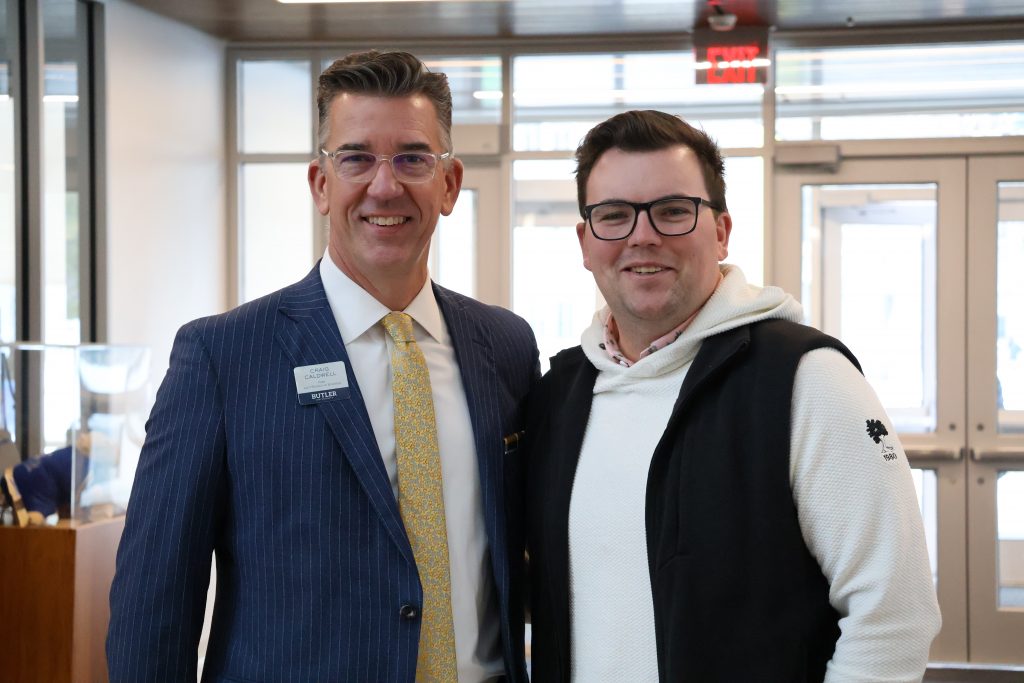
    “Our new faculty members represent the future of the Lacy School of Business. These are the educators who will form the most meaningful connections with our students – shaping their experiences, their thinking, and ultimately, their futures,” Craig Caldwell, Dean of the Lacy School of Business, said. “One of LSB’s defining strengths is our faculty: research-active scholars who are deeply committed to student engagement. This new group brings extraordinary promise, continuing and even elevating our tradition of thoughtful, student-centered teaching and impactful scholarship.”
    Meet our new faculty members:

    Kanan Asif, Assistant Professor of Entrepreneurship & Innovation

    Kanan Asif’s own journey has been anything but ordinary – from growing up in a small town in Pakistan and riding a horse cart to school, to working as a tea boy in a jewelry shop, to launching startups and earning a Ph.D. in Entrepreneurship from the University of Massachusetts Lowell. That lived experience shapes how he teaches Real Business Experience (E201) at Butler: not just through lectures, but by helping students discover and develop their own unique strengths. “Learning, unlearning, and relearning every day is what keeps me inspired,” Asif says. Prior to joining academia, he worked across the nonprofit, corporate, and public sectors and began his academic career in Pakistan in 2017. His research explores entrepreneurial decision-making and the individual differences that shape how entrepreneurs think and act. When he’s not sparking entrepreneurial thinking in the classroom, he’s usually spending time with his wife and young daughter, exploring human behavior and personal growth – topics that fuel both his teaching and his life.

    Kanan Asif, Assistant Professor of Entrepreneurship & Innovation

    Tanya Carson, Lecturer in Accounting

    For Tanya Carson, teaching is all about connection. After years of leading large lecture halls with hundreds of students each semester, she knew she wanted something different – smaller classes where she could bring energy to the room and create a safe space for students to collaborate, ask questions, and experience those “light bulb” moments. At Butler, she’s found her dream fit. Carson teaches Principles of Accounting (AC203) and LSB Business Internship (LSB402), where she aims to make accounting approachable, interactive, and even fun. She earned her MBA from Ball State University and holds a graduate certificate in Accounting Analytics from the University of Connecticut. A longtime Carmel resident who has always admired Butler’s campus and community, Carson says joining the Lacy School of Business is everything she hoped it would be: engaged students, the right-sized classrooms, and an atmosphere that feels magical. Outside the classroom, she enjoys hiking, camping, and canoeing, as well as cooking and baking – her specialties include broccoli cheese soup and banana chocolate bread.

    Tanya Carson, Lecturer in Accounting

    Kerri Cissna, Lecturer of Entrepreneurship & Innovation

    Kerri Cissna loves learning and dreaming alongside her students, exploring ways to upgrade antiquated systems and use business as a force for good. At Butler, she teaches First Year Business Experience (E101), bringing her passion for innovation, leadership, and purpose-driven work into the classroom. Cissna earned her Ph.D. in Global Leadership and Change from Pepperdine University, completed a postdoctoral program at Wake Forest, and holds a master’s degree from Azusa Pacific and an undergraduate degree from Warner Pacific University. A certified yoga instructor and studio owner, she integrates mindfulness and movement into her life and teaching. When she’s not in the classroom, she enjoys spending time with her journal and a cappuccino, teaching fitness classes, and spending time with her husband Greg caring for their seven cats.

    Kerri Cissna, Lecturer of Entrepreneurship & Innovation

    Joe Cripe, Lecturer in Supply Chain Management

    Joe Cripe brings his love of developing talent – from his days leading operations at adidas to coaching grade school teams – into the classroom at Butler. He teaches Operations Management (MS350), LSB Business Internship (LSB402), and Strategy Capstone (MG490), helping students connect classroom theory to the real-world goods and services they encounter every day. A proud Indianapolis native, Cripe earned his B.S. at the University of Notre Dame and his MBA from the University of Chicago Booth School of Business. Butler has always held a special place in his life: his father is an alum, he’s been a Butler basketball season ticket holder for 25 years, and he has witnessed firsthand the University’s positive impact on the community. Now transitioning from adjunct to full-time faculty, he’s excited to deepen those connections with students. When he’s not teaching, you’ll likely find him running along the canal towpath or cheering on the Dawgs.

    Joe Cripe, Lecturer in Supply Chain Management

    Juan Manuel Gil, Assistant Professor of International Business

    For Juan Manuel Gil, international business is more than strategy and markets – it’s about people, purpose, and possibility. Gil has lived and studied across Colombia, England, France, Mexico and Spain, earning his Ph.D. cum laude in Business Administration and Management from Universitat Politècnica de València and a master’s degree in international relations from the University of Bristol. At Butler, he teaches International Business Environment (IB320), inviting students to connect global strategy with deeper meaning and confidence in their ability to shape the world. His own journey includes nearly three years in a unique international community with people from 14 nationalities, an experience that taught him the power of “unity in diversity” and sparked his lifelong belief in the strength of community. Guided by Butler’s purpose-driven mission, Gil begins each class with a moment of breathing and reflection, encouraging students to slow down, think intentionally, and approach business with imagination and heart. When he’s not teaching, he’s exploring entrepreneurial imagination through research and spending time with the global community he’s built around him.

    Juan Manuel Gil, Assistant Professor of International Business

    Matthew Lanham, Assistant Professor of Business Technology & Analytics

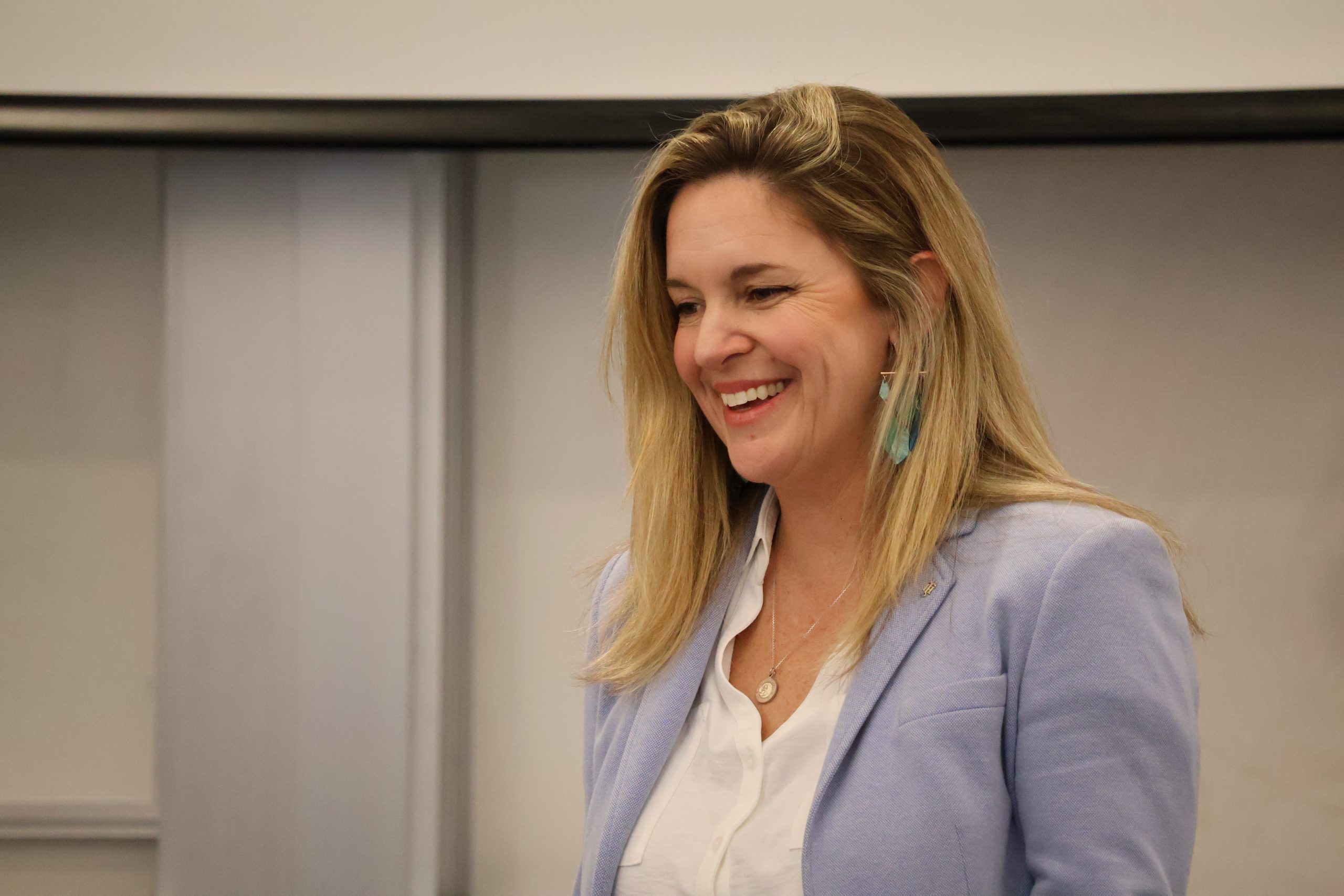
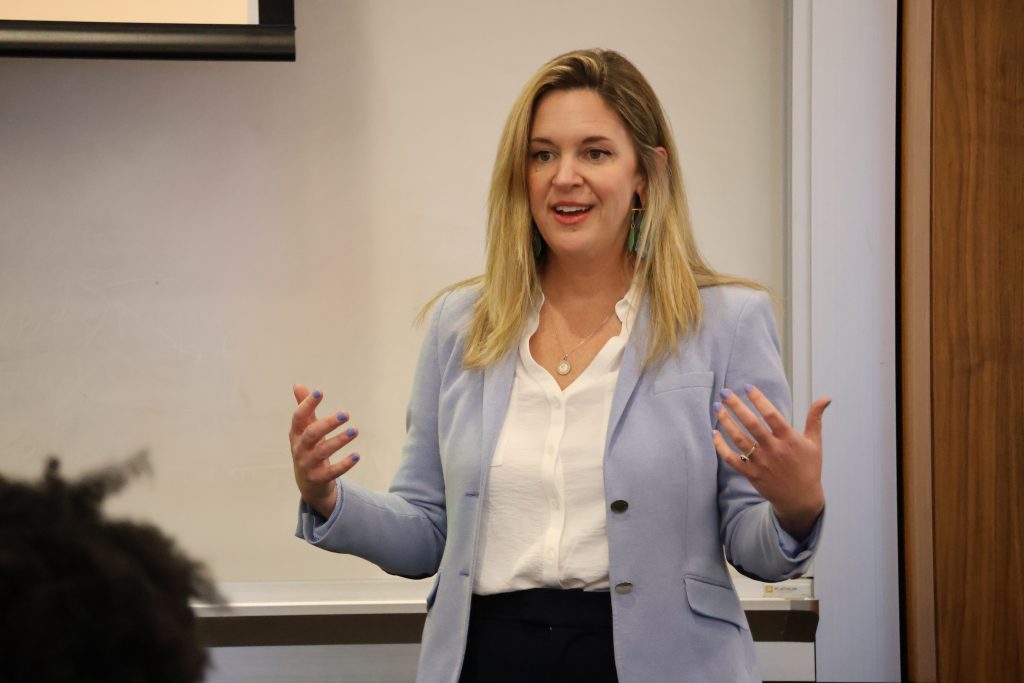
    Matthew Lanham is passionate about helping students become independent thinkers – so much so that his favorite part of teaching is watching them grow to the point where they no longer need him. At Butler, he teaches Business Analytics (MS365), guiding students to master data-driven decision-making and turn complex information into actionable insights. Lanham earned his Ph.D. in Business Information Technology from Virginia Tech, a master’s degree in Biostatistics-Decision Science from the University of Louisville, and his undergraduate degree from Indiana University. Before joining Butler, he spent nine years at Purdue University, leading analytics programs and research. Beyond the classroom, Lanham is a devoted dad to his seven-year-old daughter, Stella – his favorite Little House on the Prairie rewatch partner – and an active member of his church, where he teaches young children on Sundays.

    Matthew Lanham, Assistant Professor of Business Technology & Analytics

    John Shassberger, Lecturer in Finance

    After serving 40 years with the Department of the Navy – 21 on active duty as commander and nearly two decades as a civilian leader – John Shassberger knew exactly what he wanted to do next: teach. His journey from the Naval Academy – where he trained and mentored young sailors – to the classroom has been fueled by a passion for getting students to think critically, engage deeply, and launch confidently into life. At Butler, Shassberger is teaching Corporate Finance (FN340) and International Finance (FN451). He earned his Ed.D. in Leadership from Oakland City University, his M.S. in Financial Management from the Naval Postgraduate School in Monterey, Calif., and his B.S. in Political Science from the United States Naval Academy. Beyond the classroom, he runs a lively family farm that keeps him, in his words, “young in body and sharp in mind” – with seven kids, twelve dogs, two horses, two cows, two mini donkeys, and six goats to help with that mission.

    John Shassberger, Lecturer in Finance

    Shubhra Sharma, Lecturer in Entrepreneurship & Innovation

    For Shubhra Sharma, teaching is about presence – 50 minutes of full focus where “aha” moments spark and the classroom feels alive. She teaches First Year Business Experience (E101), drawing on a career that spans continents, from earning a doctorate in socio-cultural anthropology at the University of Texas at Austin to completing an Executive Master’s in Luxury Management and Design Innovation at ESSEC Business School in Paris. Along the way, she’s taught at Vanderbilt, lived in New York, and traveled to seven countries – each experience adding new perspective to how she approaches entrepreneurship. Sharma believes being an entrepreneur is “like drawing the map while you’re walking the terrain,” and she loves helping first-year students begin their journey. When she’s not teaching, you might find her on the golf course (handicap 12), strength training or running outdoors, listening to her favorite 80’s playlists, or working on creative projects like co-writing children’s books with her 10-year-old niece – who proudly claims the title of Creative Director.

    Shubhra Sharma, Lecturer in Entrepreneurship & Innovation
  • Advancing Ideas: Lacy School of Business Launches Fall 2025 Research Speaker Series

    Advancing Ideas: Lacy School of Business Launches Fall 2025 Research Speaker Series

    The Lacy School of Business is excited to announce the Fall 2025 Research Speaker Series. This series highlights the innovative research and thought leadership of our faculty and visiting scholars, providing opportunities for students, colleagues, and community members to engage with cutting-edge ideas in business and beyond.

    Each session offers a chance to hear directly from researchers about their latest work, ask questions, and connect theory with practice. Whether you’re curious about global business challenges, entrepreneurship, or emerging insights across disciplines, the series is designed to spark discussion and inspire new ways of thinking.

    We invite you to join us throughout the semester to learn, connect, and be part of the ongoing exchange of ideas shaping the future of business scholarship.

    Wednesday, October 8 at 11:45 PM

    Speaker: Ki-Hoon Lee, Senior Professor and Chair of Sustainability in Business at Edinburg Napier University
    Location:
    Dugan Hall, Room 347
    Title:
    “Sustainability Research Impact in Academia and Beyond”

    Abstract: Sustainability Research addresses global challenges and planetary boundaries by developing innovative solutions, influencing policy, and informing societal change towards sustainable development. In business and management research, public concern for environmental sustainability (e.g. climate change, water scarcity, air pollution) and social sustainability issues (e.g., poverty, hunger, income inequality, gender equity) over two decades have generated ‘social license to operate’ in corporate boardrooms that exceed regulatory compliance. However, scholars suggest that the sustainability research domain is not only narrowly-focused but also highly fragmented. Scholars suggest shifting the focus of research from “what” (sustainability definition) and “why” (reasons and motivations for engagement) to a greater concern for “how” firms can implement sustainable practices. Sustainability research across disciplines to tackle global challenges can generate research impacts in academia and society. This research talk seeks academic roles to generate sustainability research impact in our business and society.  

    Friday, October 17 at 12:00 PM

    Speaker: Hessam Sarooghi, Associate Professor of Entrepreneurship and Innovation
    Location: Dugan Hall, Room 347
    Title: “Configuring Success: Legitimation Pathways in Cryptocurrency Exchanges”

    Abstract: Legitimation is central to how new ventures secure resources and gain acceptance, yet it is rarely uniform. Ventures can establish credibility by being understandable and familiar to stakeholders (cognitive legitimacy), by signaling adherence to ethical norms and regulatory expectations (normative legitimacy), or by demonstrating tangible benefits and reliability (pragmatic legitimacy). These dimensions often operate together, sometimes in complementary fashion and sometimes as substitutes. The goal of this study is to examine how such patterns shape performance outcomes to provide a more complete understanding of the consequences of legitimation.

    To this end, this study develops a configurational perspective and applies fuzzy-set qualitative comparative analysis (fsQCA) to 111 cryptocurrency exchanges. The setting is institutionally fluid and high in volatility, making legitimacy particularly salient. The analysis reveals multiple equifinal pathways to high performance: some exchanges combine pragmatic utility with normative transparency, others substitute visible leadership for broad public recognition, and still others integrate all three dimensions into coherent constellations. 

    Friday, November 14 at 12:00 PM

    Speaker: Juan Manual Gil, Assistant Professor of International Business
    Location: Dugan Hall, Room 347
    Title: “Beyond Cognition: Integrating Embodied Imagination and Spiritual Capital in Entrepreneurial Value Creation”

    Abstract: This research project challenges the cognitive reductionism that dominates entrepreneurship scholarship by demonstrating how non-cognitive dimensions – specifically embodied entrepreneurial imagination and spiritual capital – fundamentally shape entrepreneurial value creation. Current theories treat entrepreneurial imagination as sophisticated information processing, yet this cognitive emphasis fails to explain the sudden insights, intuitive breakthroughs, and transformative visions that enable entrepreneurs to create genuinely novel value. Drawing on phenomenological philosophy, this work reconceptualizes entrepreneurial imagination as an embodied, affective process rooted in sensory experience and somatic intuition rather than mental computation alone. Similarly, it reframes spiritual capital as immanent, relational knowing embedded in everyday practice rather than external ethical norms or transcendent belief systems.

    The project currently focuses on conceptual development – clarifying constructs, establishing theoretical boundaries, and building nomological networks that connect these non-cognitive dimensions to existing entrepreneurship frameworks. This foundational work extends the effectuation decision-making model while developing an integrated framework for understanding how consciousness-based entrepreneurial imagination drives value creation, drawing on phenomenology, embodiment theory, and historical organizational analysis to establish conceptual coherence before empirical investigation.

    This conceptual foundation will enable subsequent qualitative research examining how contemporary entrepreneurs mobilize embodied imagination and spiritual resources to generate transformative value in practice, followed by quantitative studies measuring consciousness development practices and their relationship to venture outcomes across diverse contexts. By progressing systematically from philosophical grounding through interpretive inquiry to empirical validation, this research line aims to transform entrepreneurship scholarship from narrow cognitive models toward holistic frameworks that honor human consciousness in its full dimensionality for creating meaningful, regenerative entrepreneurial value.

    Friday, December 5 at 12:00 PM

    Speaker: Kuhelika De, Associate Professor of Economics
    Location: Dugan Hall, Room 347
    Title: “Remittances and Business Cycles: The Role of Financial Development”

    Abstract: This paper investigates whether financial development mitigates the impact of remittance shocks on the volatility of business cycles. Employing a two-stage empirical approach, we first estimate the dynamic response of consumption to remittance shocks using country-specific structural vector autoregression (VAR) models across 92 advanced and emerging market economies. In the second stage, we perform a cross-country analysis to assess the moderating role of financial development.

    The findings indicate that higher levels of financial development significantly reduce the volatility of consumption in response to remittance shocks, even after accounting for other macroeconomic and institutional factors. This study holds important policy implications. Since financial development dampens the impact of remittance shocks on consumption volatility, policies aimed at strengthening financial institutions, improving access to credit, and promoting financial inclusion can enhance economic resilience in remittance-receiving countries.