Category: Innovation & Enterprise

  • Building the Future of Small Business Ownership: Entrepreneurship Through Acquisition Conference

    Building the Future of Small Business Ownership: Entrepreneurship Through Acquisition Conference

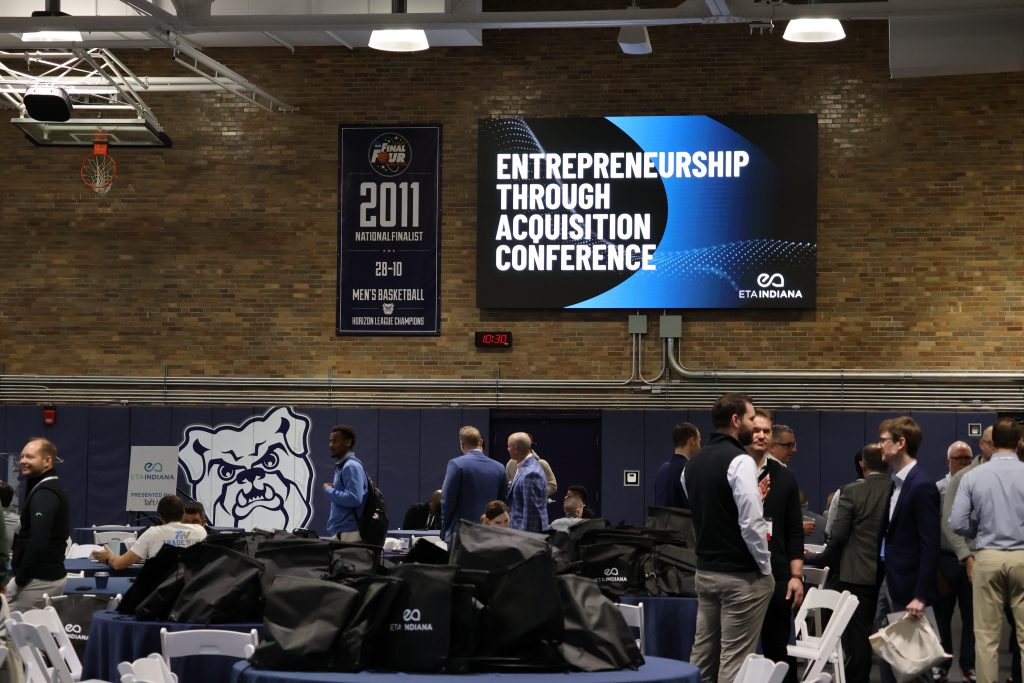
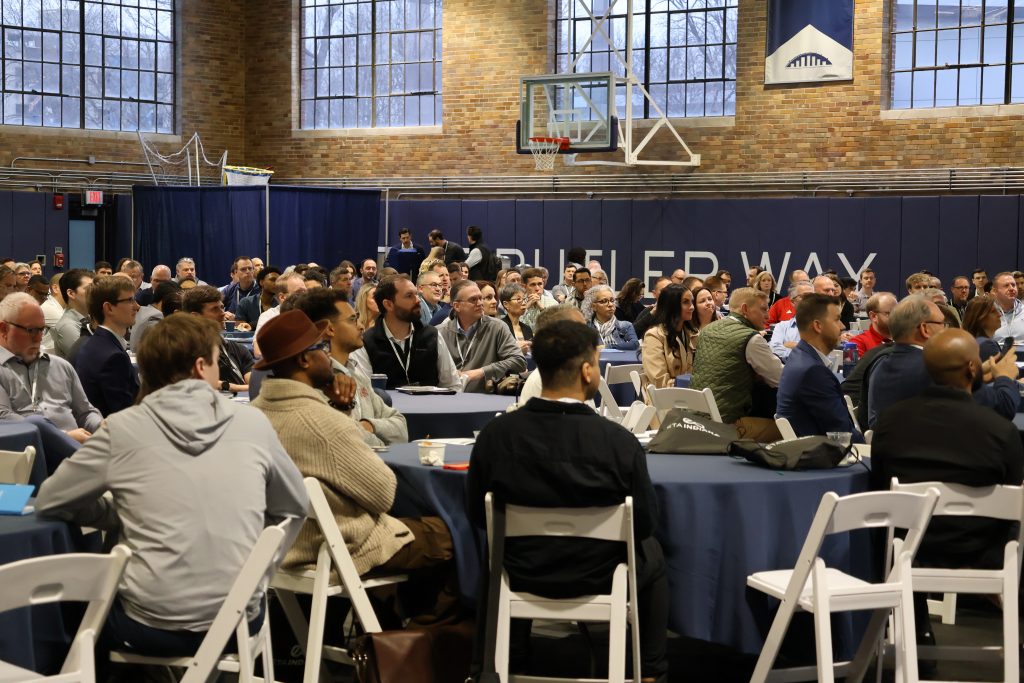
    On Tuesday, March 10, the Lacy School of Business hosted the inaugural Indiana Entrepreneurship Through Acquisition (ETA) Indy Conference, drawing over 350 entrepreneurs, operators, investors, advisors, lenders, and community partners from across Indiana and the broader Midwest.

    With 40 speakers and two tracks of programming running from morning through evening, the event marked a milestone for a region full of legacy businesses, founders nearing retirement, and a rising generation eager to step into ownership.

    From the moment attendees arrived, the energy made one thing clear: Indiana is ready to invest in the future of these businesses.

    Before the first session even began, conversations flowed easily – first time searchers exploring their next step, small business owners thinking about transition, and operators reflecting on what it really takes to run a company after close.

    The opening keynote by Chelsea Wood of the Acquisition Lab tapped into that shared sense of purpose, emphasizing ETA’s role in preserving the small businesses that anchor communities – businesses that sustain jobs, support families, and form the backbone of local economies. Across Indiana alone, thousands of owners are approaching retirement without succession plans. ETA, as the keynote highlighted, isn’t just about buying companies; it’s about stewarding something worth preserving.

    “In Indiana alone, tens of thousands of baby-boomer–owned businesses will change hands in the next decade – many of them in just the next five years. What’s alarming isn’t the volume, but the lack of preparation. Fewer than half of owners have a written succession plan, and nearly half of transitions happen unexpectedly due to health, family, economic stress, or sudden life events,” Nick Smarrelli, director of entrepreneurship, said. “If we don’t build a stronger ETA community now – one that learns together, shares best practices, and connects capital, operators, and students – we risk losing businesses, jobs, and the local legacies that define our communities. The Lacy School of Business has both the responsibility and the platform to help unify this work across the state – not for Butler’s benefit alone, but in the best interest of Indiana’s people, employers, and future.”

    Throughout the day, panels, interviews, and hands-on presentations gave attendees a grounded look at the realities of the acquisition journey. Sessions explored how to build a thoughtful buy box, how governments and communities are supporting local ownership transitions, and how buyers can evaluate businesses beyond surface-level financials. Technical discussions on valuation and diligence helped attendees understand the difference between reported numbers and true cash flow, while other panels broke down what it takes to move a deal from handshake to a bankable, legally sound close.

    Financing emerged as a defining theme – SBA lenders, debt partners, and advisors offered candid insight into assembling a capital stack for a first acquisition and what makes a searcher stand out as credible. Operators also spoke openly about the emotional realities of ETA, from the uncertainty of the search process to the responsibility of leading a team on day one. Many attendees noted how refreshing it was to hear honest accounts of the first 100 days, culture-building, and the long-term professionalization that comes after closing.

    Between sessions, campus buzzed with conversations about deals being evaluated, industries of interest, and opportunities for collaboration. Students asked operators what life looks like after buying a business; advisors shared guidance; lenders made introductions; and owners told the stories behind the companies they built. Those moments – spontaneous, unplanned, and full of possibility – became the heartbeat of the day.

    As the final reception wound down and attendees left with full notebooks and new connections, one thing was unmistakable: the conversations begun at ETA Indy will continue – through searches launched, deals explored, and businesses passed thoughtfully to the next generation of leaders. The inaugural conference laid the foundation for a growing community rooted in stewardship, opportunity, and a shared commitment to strengthening the region’s small business ecosystem.
  • Building Indiana’s Next Generation of Innovators: First Collegiate Entrepreneurs Summit

    Building Indiana’s Next Generation of Innovators: First Collegiate Entrepreneurs Summit

    On Friday, February 27, more than 250 students from 17 universities arrived at the 16 Tech Innovation District in Indianapolis for the inaugural Collegiate Entrepreneurs Summit, a statewide gathering created to bring student innovators together, spark new collaborations, and strengthen Indiana’s entrepreneurial network.

    The summit was more than an event – it was the result of a multi-organization planning committee led by Butler University’s Lacy School of Business, 16 Tech, CICP, and INtercollegiate Entrepreneurs. For months, these four groups worked together to design a student-centered experience that could bring Indiana’s entrepreneurial community closer and create a truly statewide ecosystem.

    What began as a simple idea among a small group of campus leaders grew into one of the largest student entrepreneurship events the state has hosted, marking a significant milestone for both Indiana’s innovation community and for LSB, which served as a co‑host, challenge partner, and event sponsor.

    Throughout the day, The AMP at 16 Tech transformed into a hub of activity as students participated in workshops, founder conversations, peer discussions, and hands on sessions that explored the many pathways available to those interested in building, creating, or problem solving.

    “It was one of the few spaces where everyone shared the same drive to build something new,” said Preston Asher, a finance and entrepreneurship & innovation double major. “You could walk up to any table and immediately start talking ideas.”

    A central component of the day was the Anchor & Accelerate Innovation Challenge. More than 40 intercollegiate teams formed quickly to analyze a structured business problem, develop a market-ready concept, and present their ideas under tight deadlines. The challenge emphasized creative problem solving over polished prototypes, encouraging students to focus on clarity, feasibility, and real world application.

    LSB delivered a standout showing. Eight Butler teams participated in the challenge, and LSB students secured both first and second place overall – a major accomplishment given the number of competing institutions. First place was awarded to Jenna Burd and Lily Laffond, whose concept impressed judges for its innovation and practical potential. Second place went to Trevor Storm and Preston Asher, offering Butler a clean sweep of the top two positions and reinforcing the strength of LSB’s experiential learning approach.

    “The challenge pushed us to think fast, communicate clearly, and trust our instincts,” Preston said. “Everything we’ve learned at LSB showed up in those moments, and it felt like we were genuinely prepared.”

    Lily described the challenge as eye opening, especially around the problem her team tackled. “Our team was tasked with solving the problem of lost tribal knowledge and workforce productivity within the manufacturing sector,” she said. “We created LeanLens, an AI software tool built into industrial grade goggles. Before this, I had no idea that manufacturing makes up 27% of Indiana’s GDP. Given how archaic many systems still are, the industry is well suited for AI disruption.”

    Beyond the competition, the summit offered a rare opportunity for students to connect across campuses in a way that had never existed before. For Lily, these conversations became a highlight of the entire day. “I left the conference feeling energized with ideas,” she said. “Talking to students all over the Hoosier state about what they’re building was inspiring. The best part of a network like this is the shared commitment to helping one another succeed.”

    She also noted a clear difference in how Butler students showed up: “Given that out of 40+ teams, the top two were from Butler – that’s a testament to the program. One key distinction I noticed was the strong emphasis Butler students place on soft skills and relationship building. Rather than simply presenting financials and metrics, they prioritize building genuine rapport and connecting meaningfully with judges.”

    Leadership from INtercollegiate Entrepreneurs – the student run organization that helped spearhead the event – echoed this sentiment, emphasizing the importance of building statewide community rather than isolated campus level efforts. With students attending from Indiana, Illinois, and Virginia, the summit highlighted just how quickly this network is expanding and how crucial collaboration will be in supporting student founders in the years ahead.

    “I’ve been watching Butler’s presence in the ecosystem grow – the building of partnerships, the credibility compounding – and the summit was the moment all of it became visible at once,” Iman Noor D. Braham, an MBA candidate concentrating in finance and entrepreneurship & innovation, said.

    “Meeting students from other universities was eye opening,” Preston added. “It helped me see how strong Butler’s entrepreneurship culture really is. People kept saying they could tell we were well supported and well prepared.”

    Students left the summit carrying new ideas, new relationships, and a stronger sense of what entrepreneurship can look like in any field, whether launching a startup or driving innovation within an existing organization. “I walked away with a better understanding of entrepreneurial storytelling,” Lily said. “Venture capitalists invest in businesses, but they also invest in founders. Being able to articulate my purpose, positioning, and vision is a key differentiator.”

    The inaugural Collegiate Entrepreneurs Summit represented the beginning of something larger: a shared effort to empower student founders, elevate Indiana’s entrepreneurial ecosystem, and build a statewide community grounded in collaboration rather than competition.

    For Iman, the summit confirmed a broader shift already underway in Indiana. “Indiana is at a genuinely exciting moment,” she shared. “I’ve seen what emerging ecosystems look like in different markets, and this feels like the window where the people showing up now will shape what it becomes.”

    “I walked away with more confidence – not just in my ideas, but in the direction Indiana’s innovation ecosystem is heading,” Preston said. “It feels like there’s real momentum, and Butler is right in the middle of it.”

  • Building Momentum: Butler Welcomes 150+ Students for Indiana’s First Collegiate DECA State Conference

    Building Momentum: Butler Welcomes 150+ Students for Indiana’s First Collegiate DECA State Conference

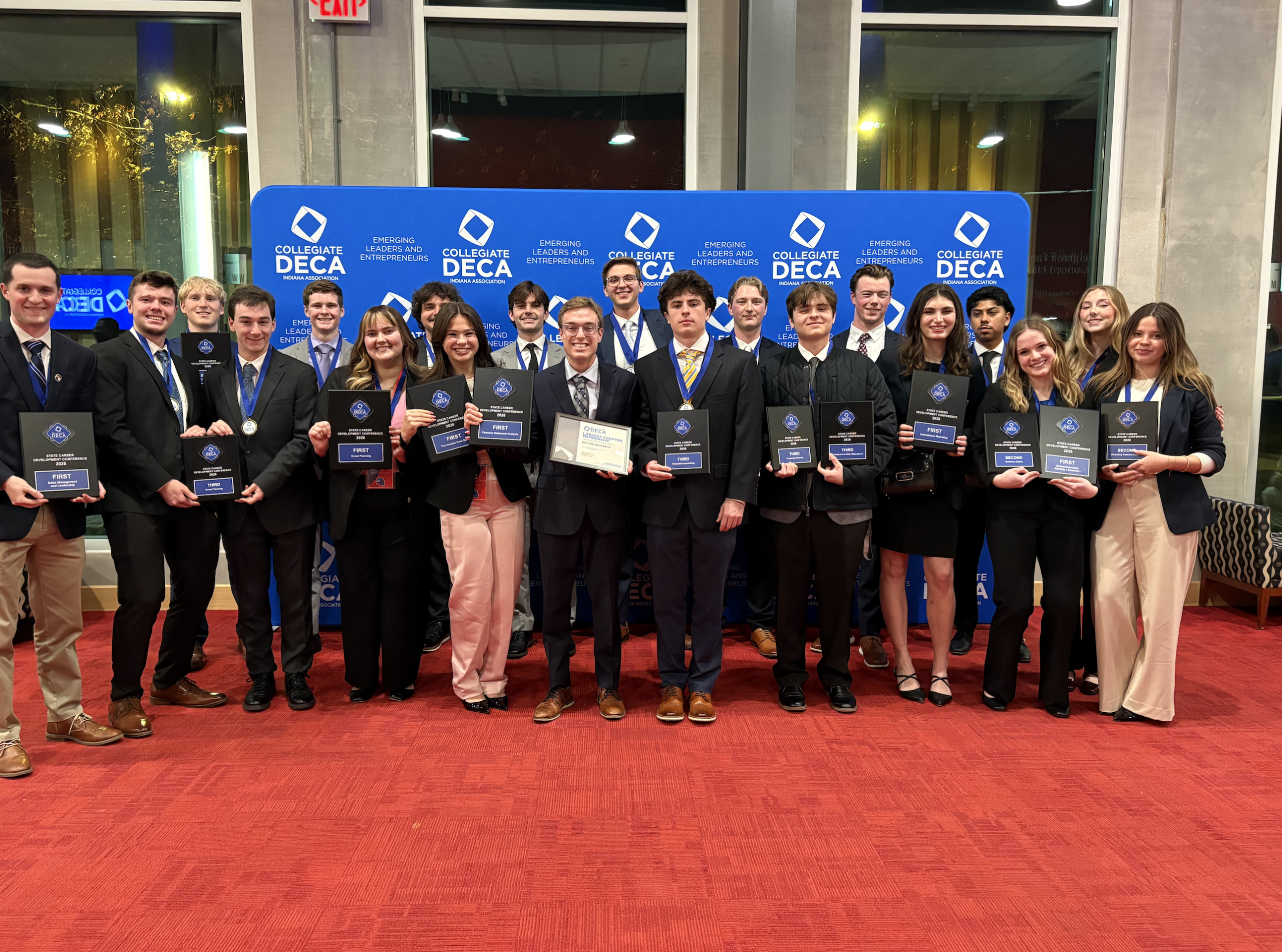
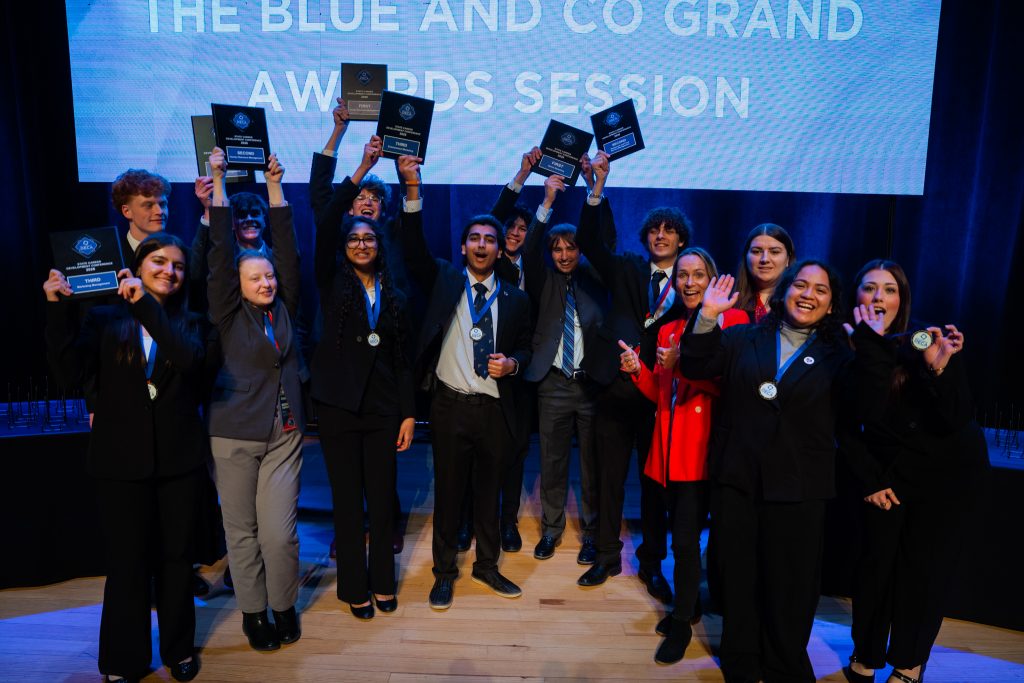
    Last Saturday, Butler University’s Lacy School of Business welcomed more than 150 students from eight states and 15 college campuses for the inaugural Indiana Collegiate DECA State Career Development Conference. The event represented the culmination of four years of planning, organizing, and building an association from the ground up – making this first-ever statewide conference a significant milestone for both Indiana Collegiate DECA and for Butler, which served as host.

    The day-long conference brought students to campus for an immersive experience in professional development, competitive case events, and statewide networking. As attendees moved between sessions, they explored many of Butler’s signature spaces – from the Collegiate Gothic architecture of Jordan Hall to the history of Hinkle Fieldhouse to the quiet pathways of Holcomb Gardens. It was a fitting backdrop for a day centered on curiosity, problem-solving, and collaborative leadership.

    The conference also reflected the rapid momentum Indiana Collegiate DECA has built during its first year as a fully chartered association. Membership across the state grew by more than 40 percent, surpassing 430 students and supporting chapters at seven campuses in Indiana. This growth helped make possible a conference that not only emphasized competition, but also created a space for students to learn from industry professionals and connect with peers from across the region.

    Throughout the morning and afternoon, students participated in the Professional Development Series, which brought together speakers from across Indiana to discuss regional industries, career pathways, and the evolving business culture of Indianapolis. Non‑competitive members participated in these sessions throughout the day, while competitive members moved between workshops and their timed case events.

    A key feature of the conference was the Hoosier Case Study Event, designed in partnership with an Indiana-based company. Students were challenged to analyze a real business scenario, craft solutions, and present their recommendations under tight deadlines. The event quickly became one of the day’s most energizing opportunities, offering a realistic look at the kind of strategic thinking required in today’s professional landscape.

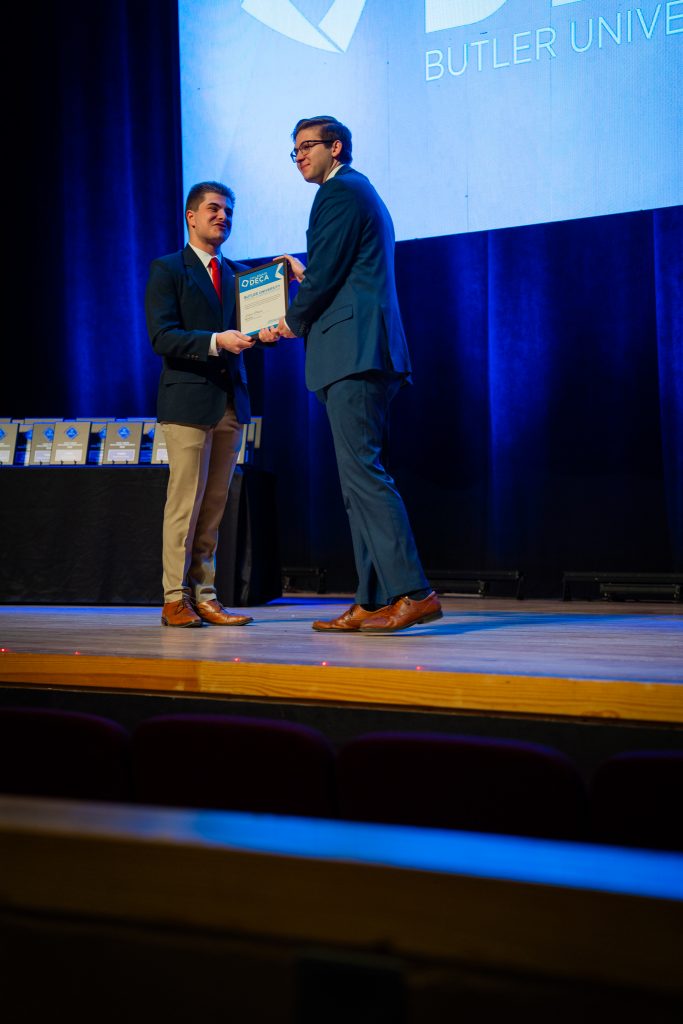
    The conference also offered an opportunity to recognize outstanding leadership within the collegiate DECA community. LSB is proud to share that Mark Donner, lecturer in applied business technology, was named the 2025–2026 Indiana Collegiate DECA “Advisor of the Year.” The award, presented during the conference, honored his exceptional mentorship, support of student development, and longstanding commitment to elevating experiential learning within the Lacy School of Business. His recognition added another point of pride to an already important weekend for Butler’s DECA community.

    During opening session, attendees gathered for the keynote address delivered by Scott Fussell, principal of Scott Fussell Coaching and Consulting and founder of The Shift Initiative. Fussell’s talk, “The Three Absolutes of Leadership,” centered on leading with clarity, building connections, and identifying the strengths of others. His message about authenticity and purposeful leadership resonated with students preparing to enter the next stage of their academic and professional journeys.

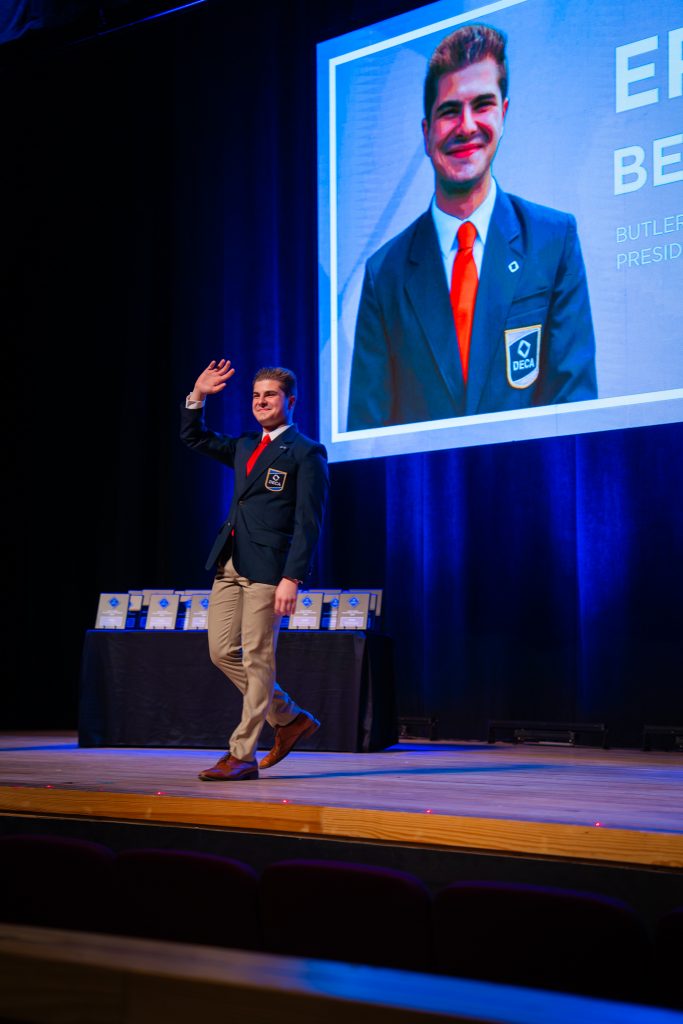
    For many Butler students, the conference marked a personal milestone. Eric Bedrosian, founder of Butler’s DECA chapter and the outgoing Indiana Collegiate DECA President, reflected on what it meant to see this moment come to life after years of work. “Four years in the making. One powerful day of networking, collaboration, and competition,” Bedrosian said. “What began as a vision has officially become a reality.” His remarks captured the pride of a leader who helped shape the organization from its earliest foundation.

    Jack Paulson also reflected on what it meant to help shape such a successful inaugural event. This year’s conference highlighted his leadership as he earned first place in the Sales Management & Leadership Case Study Event. Reflecting on the experience, Jack shared, “It was especially meaningful to see Butler host such a strong inaugural event and help lay the foundation for the future of Indiana Collegiate DECA.” His remarks underscored the pride he feels in both competing and helping guide the organization into its next chapter.

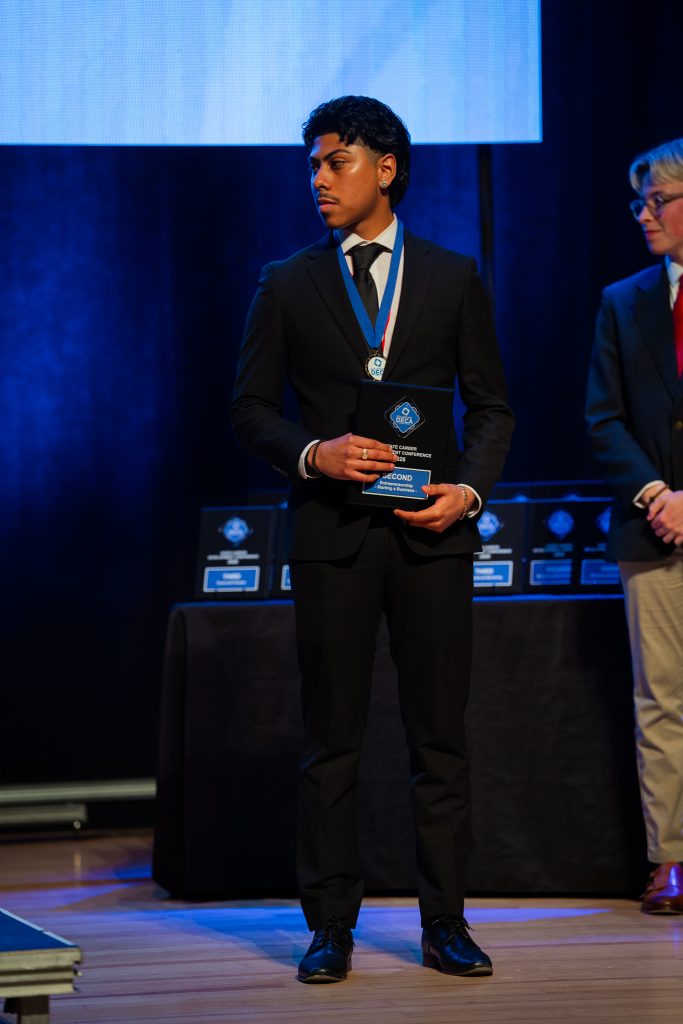
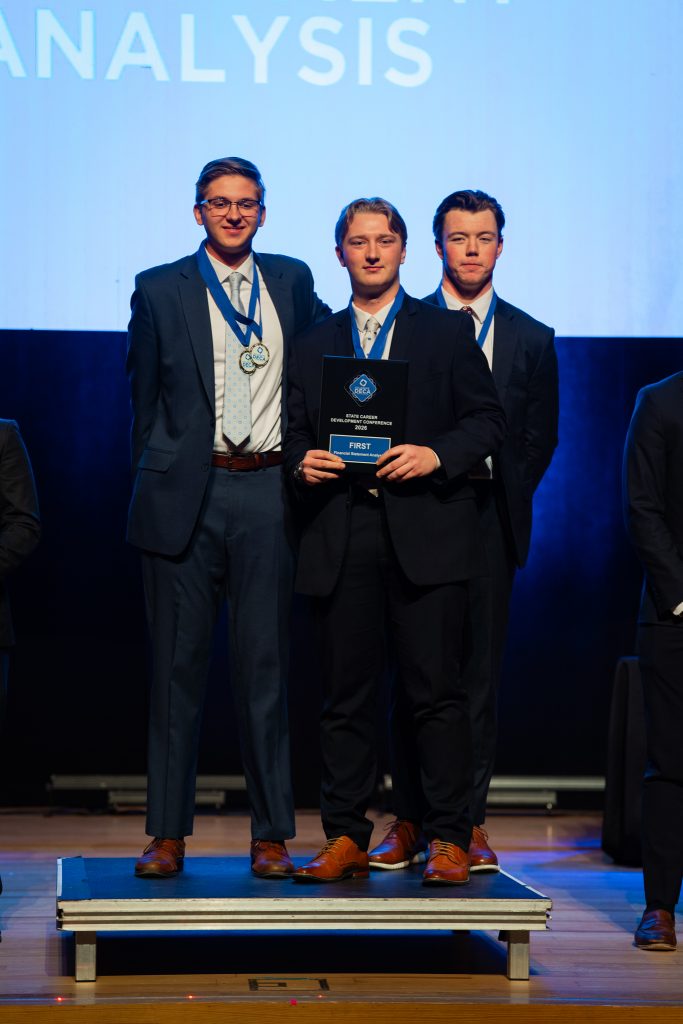
    Competitors from the Lacy School of Business delivered standout performances across numerous categories. First‑place finishes included Addison Altman and Zoe Meek in Business Ethics; Katie Kirch and Kate Parisi in Entrepreneurship – Starting a Business; Kelsey Babinec and Brooke Underwood in Event Planning; Jenna Burd and Trevor Storm in International Marketing; Jack Paulson in Sales Management and Leadership; and Preston Asher, who won both Corporate Finance and the Hoosier Case Study Event alongside teammates in Financial Statement Analysis. Their achievements reflected not only strong academic preparation but also the teamwork, adaptability, and communication skills that DECA events are designed to develop.

    As Butler competitors prepare for the International Career Development Conference, they carry with them the experience, confidence, and community formed during this inaugural statewide event. Hosting Indiana’s first Collegiate DECA state conference allowed the Lacy School of Business to showcase its commitment to preparing students through hands-on learning, employer engagement, and leadership development. It also signaled a major step forward for Indiana Collegiate DECA as it continues to expand opportunities for students throughout the state.

    The inaugural State Career Development Conference reflected not only the accomplishments of the past year, but the promise of what lies ahead – new partnerships, new challenges, and new opportunities for emerging business leaders to connect, grow, and make their mark.

  • When Data Gets Real: The NCAA Final Four Analytics Challenge

    When Data Gets Real: The NCAA Final Four Analytics Challenge

    It doesn’t start with a lecture or a textbook.

    It starts with a question – one without a clear answer – and a dataset big enough to feel intimidating. Students aren’t told exactly what to do or how to get there. Instead, they’re asked to figure it out, together, under real deadlines and real expectations.

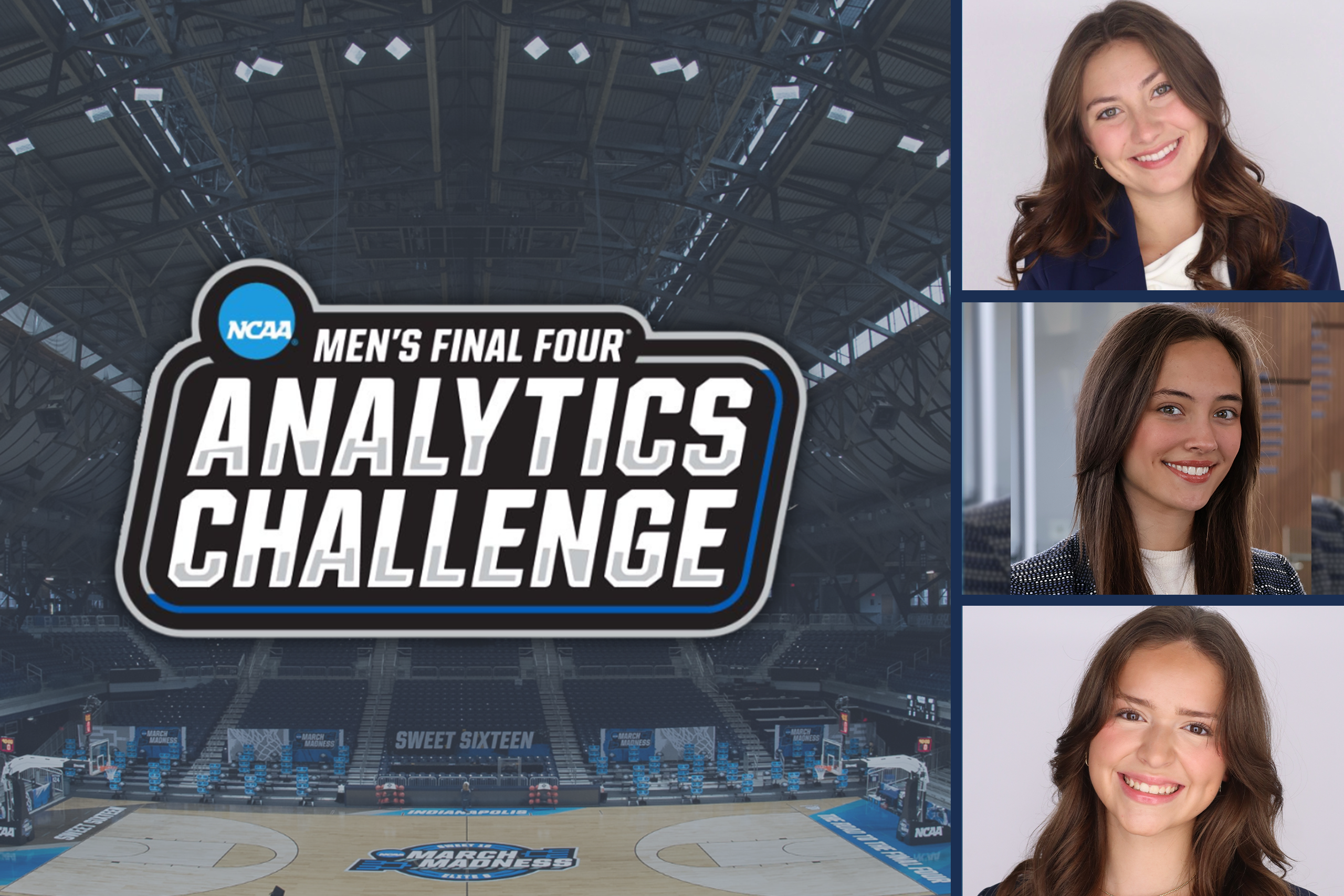
    That’s the premise of the NCAA Final Four Analytics Challenge, where analytics move beyond the classroom and into a professional arena. Using real NCAA data, students step into the role of analysts, strategists, and storytellers – applying technical skills while learning how to communicate insights that matter.

    Originally launched as a regional analytics competition, the challenge has grown into a statewide experience that mirrors Indianapolis’s role as both a basketball capital and an innovation hub. Now co-hosted by Butler University and the NCAA, the Final Four Analytics Challenge invites students from across Indiana to step into the kind of analytical work happening behind the scenes of major sporting events – and far beyond them.

    Students compete in teams of two to five, working through multiple rounds that require predictive modeling, visualization, and clear business communication. They’re asked not only to analyze data, but to explain it – translating complex findings into insights decision-makers can actually use.

    For many students, the draw is simple: it’s real.

    “As a Finance and Business Technology Analytics dual major, I wanted hands-on experience in data analysis, exploration, and modeling,” senior Jentry Gottfried said. “Knowing I could potentially present to the NCAA challenged me in a completely new way and opened my eyes to what a career in analytics can look like.”

    That challenge often pushes students well beyond what a traditional classroom can offer. Past participants describe learning new tools, navigating ambiguity, and working at a pace that mirrors professional environments.

    “This competition gave me hands-on experience with advanced Tableau modeling, Google Collaboratory, and data classification,” Gottfried said. “Those are skills you don’t just learn conceptually – you learn them by doing, at the scale real projects require.”

    The analytics challenge is intentionally designed to welcome students from a wide range of academic backgrounds. Analytics experience helps, but curiosity, collaboration, and problem-solving matter just as much.

    Senior Marianna Green, an international business and Spanish double major, didn’t initially see herself as an analytics student at all.

    “I had little to no interest in data analytics until I was encouraged to enroll,” Green said. “I doubted my skills, but the experience pushed me to think innovately, overcome challenges, and rely on the strengths of my team. It was fast-paced, and an incredible experience. I’m so grateful for the way it pushed me.”

    For many students, the impact extends well beyond the competition itself. Participants consistently point to the competition as a turning point – academically, professionally, or both.

    “The challenge broadened my perspective on the opportunities that exist in analytics,” Gottfried said. “It showed me how the skills we’re learning right now can make us changemakers in a rapidly evolving industry.”

    Juanita Rojas, a junior finance and economics double major, echoed that sentiment.

    “The challenge allowed me to apply analytical foundations from the classroom to a real-world problem,” Rojas said. “I learned how to balance technical analysis with clear, actionable insights – how to tell a data story that actually matters to stakeholders.”

    That ability to communicate insights is a core focus of the competition, and one that students say has followed them into internships and professional settings.

    “After the competition, my confidence with data visualization and advocating for recommendations grew significantly,” Rojas said. “It reinforced my interest in using analytics in real decision-making environments.”

    The experience begins with a Tip-Off Event on Feb. 2 at the NCAA Hall of Champions, where teams receive their case and connect with peers and professionals. Finalists advance to present in person on April 6 at the Indiana Convention Center just ahead of the Men’s National Championship game – a national stage that underscores just how real the work has become.

    For students considering whether to register, past participants offer simple advice.

    “Register to broaden your perspective, get hands-on experience, and work with a team that will push you to be better,” Gottfried said.

    “If you’re looking to expand your skill set in a competitive environment, this is it,” Green added. “The skills you take away will serve you long after the competition ends.”

    As Indianapolis prepares to welcome the Final Four, LSB students won’t just be watching the action – they’ll be contributing to the kind of analytical thinking that drives it. And by the end of the competition, they’ll walk away with more than experience.

    They’ll walk away knowing they can do the work.

  • Lacy School of Business Students Drive Real-World Change with Indianapolis Vision Zero Initiative

    Lacy School of Business Students Drive Real-World Change with Indianapolis Vision Zero Initiative

    At the Lacy School of Business, our students don’t just learn about data analytics – they apply it to real-world challenges that make a tangible impact on our community. This fall, a group of senior students partnered with the Indianapolis Department of Public Works (DPW) to contribute to Vision Zero, the city’s ambitious initiative to eliminate traffic fatalities and serious injuries by 2035.

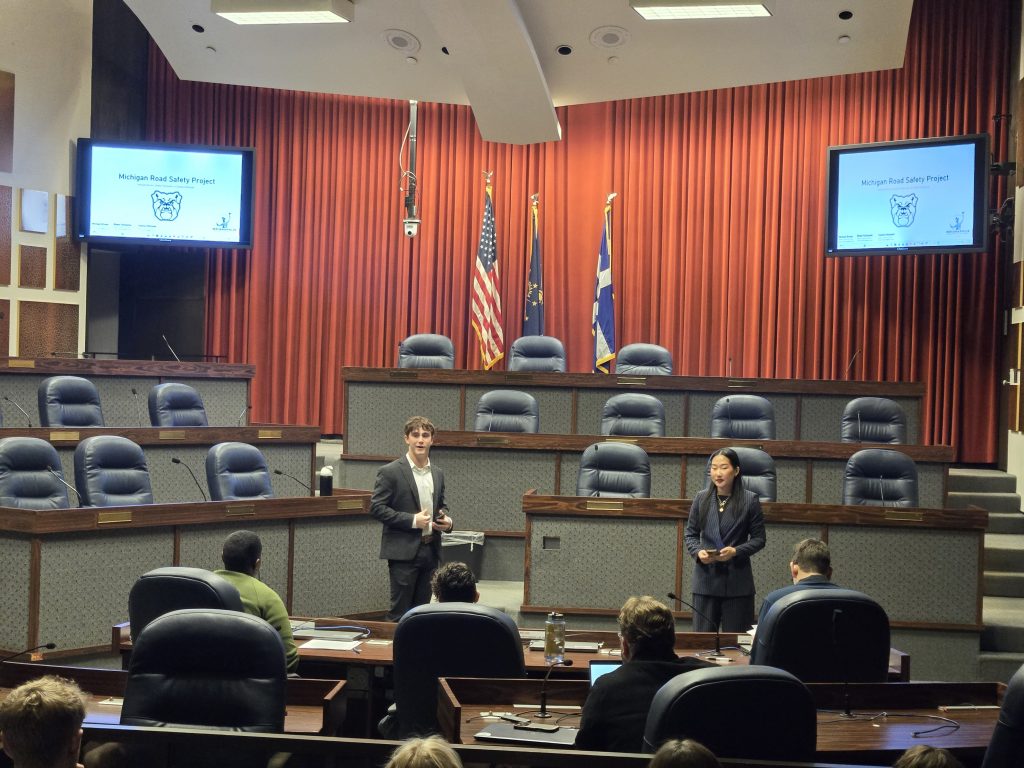
    Through this collaboration, students worked on multiple projects analyzing live traffic data to identify high-risk areas across Indianapolis. One focus area was Michigan Road, where a significant number of traffic-related fatalities have occurred. By examining detailed data – including traffic speeds, patterns, and street usage – students developed actionable recommendations for improving safety, such as where medians or other traffic-calming measures could be most effective.

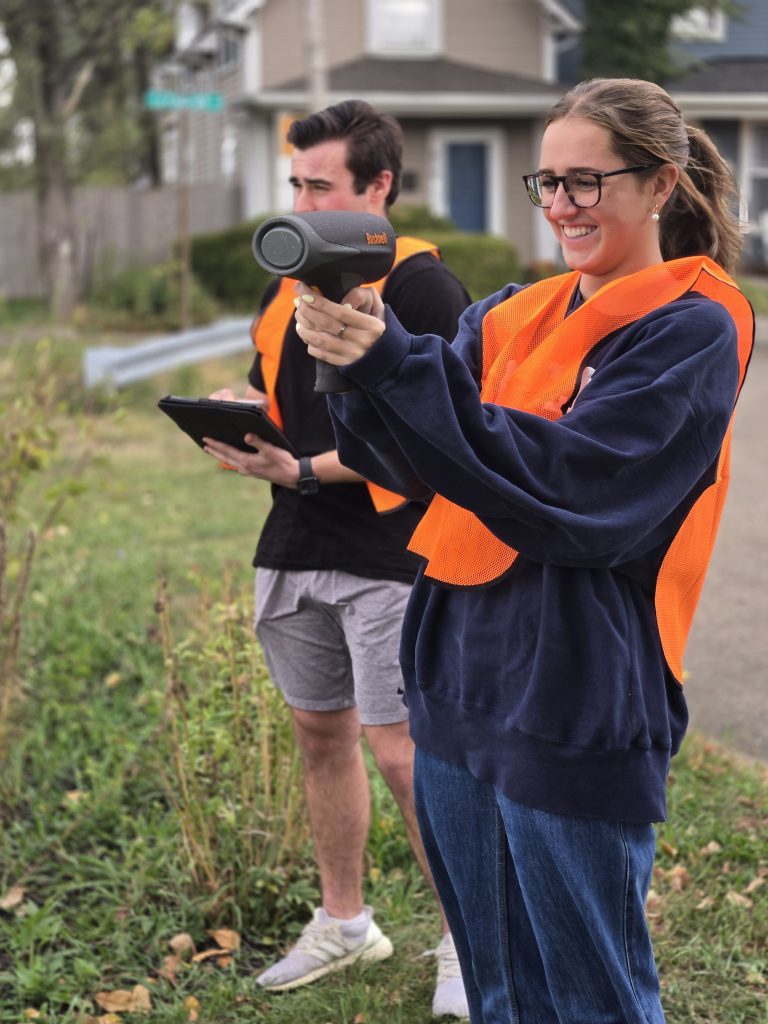
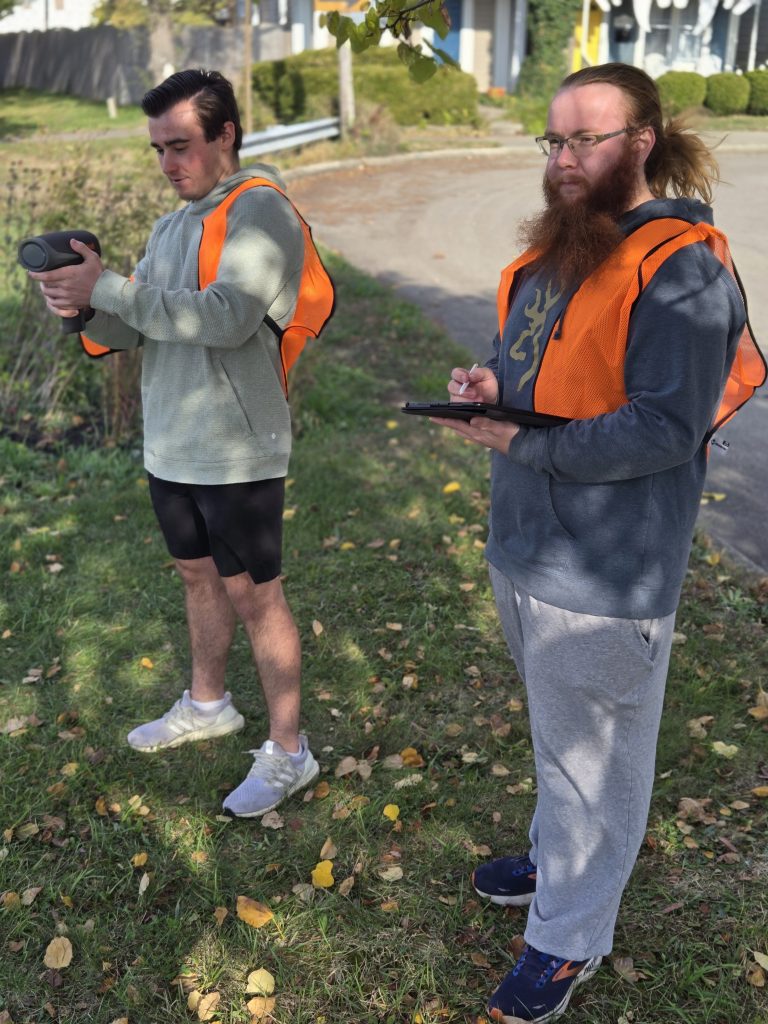
    Another project brought students directly into the heart of the city, in Fountain Square, where they studied the effects of a “road diet” that reduced lanes to slow traffic and installed urban safety devices. Using speed guns and pre/post observations, students tracked vehicle speeds on roads with and without medians, giving them direct insight into how street design influences driver behavior.

    “This project allowed students to see firsthand how data, design, and human behavior intersect on our streets,” Dr. Jason Davidson, assistant professor of management information systems, said. “They weren’t just analyzing numbers – they were observing, learning, and contributing to solutions that could save lives.”

    For Natalie Bayes, a statistics major and data science minor, the opportunity to participate was both exciting and eye-opening. “I’ve never done research before, so when I heard about the Vision Zero partnership, I reached out to Dr. Davidson right away,” she said. “I was really excited to be onsite, collecting data and using speed guns – not just working with numbers on a spreadsheet.”

    The New Jersey native was particularly impacted by the hands-on nature of the work. “Working with the Department of Public Works gave me a perspective on how the city operates,” she explained. “I got to work closely with the traffic signal engineer, and it was fascinating to conceptualize what goes into traffic planning. There are things you don’t think about, and it was fun to contribute to solving real problems.”

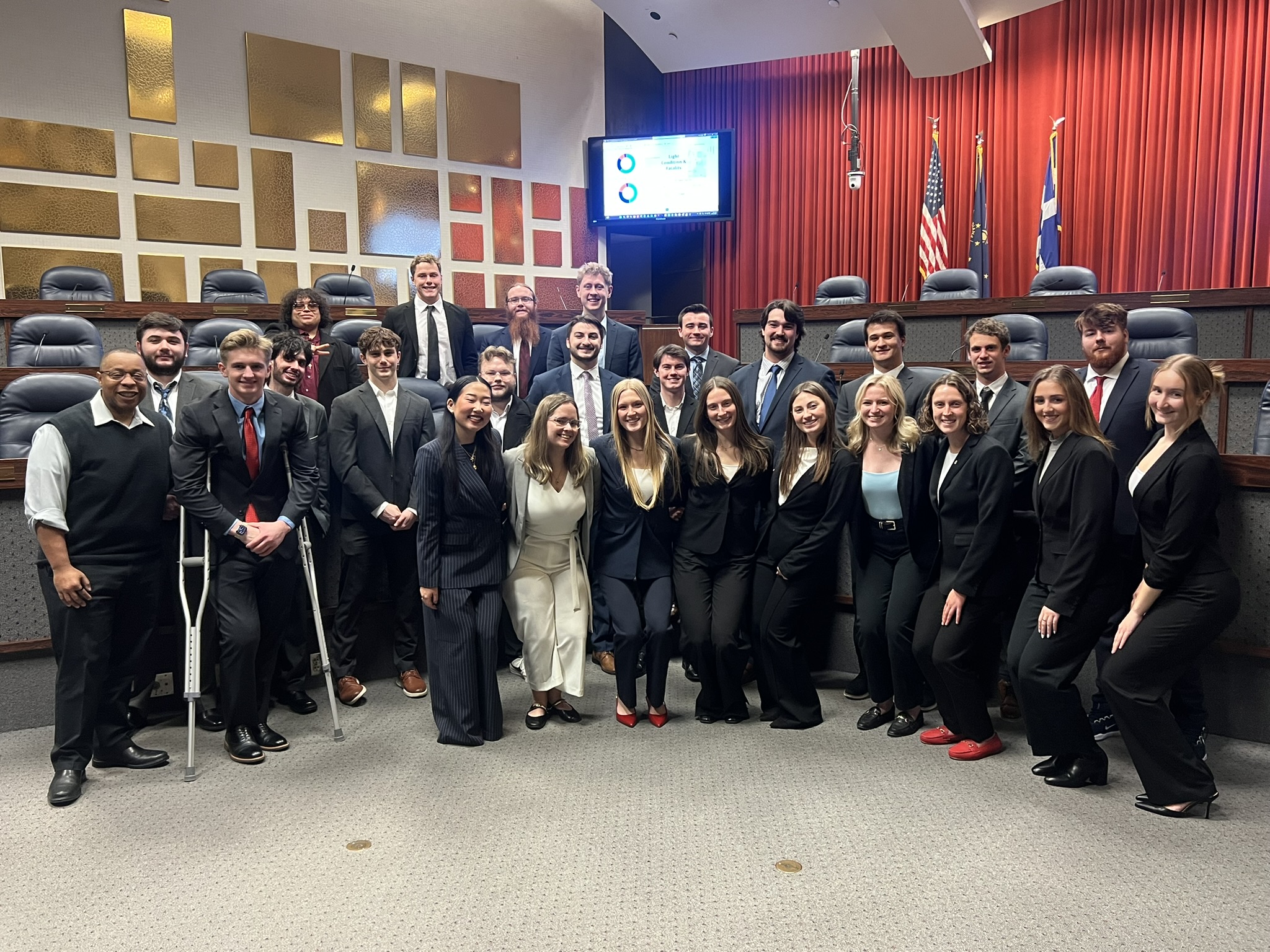
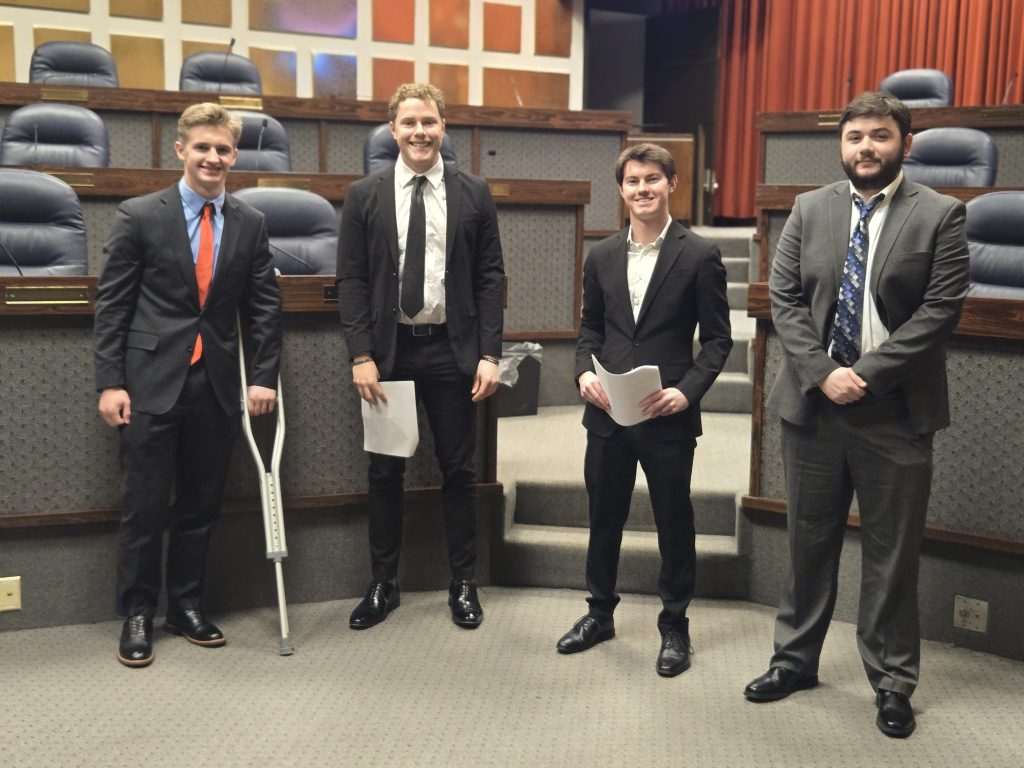
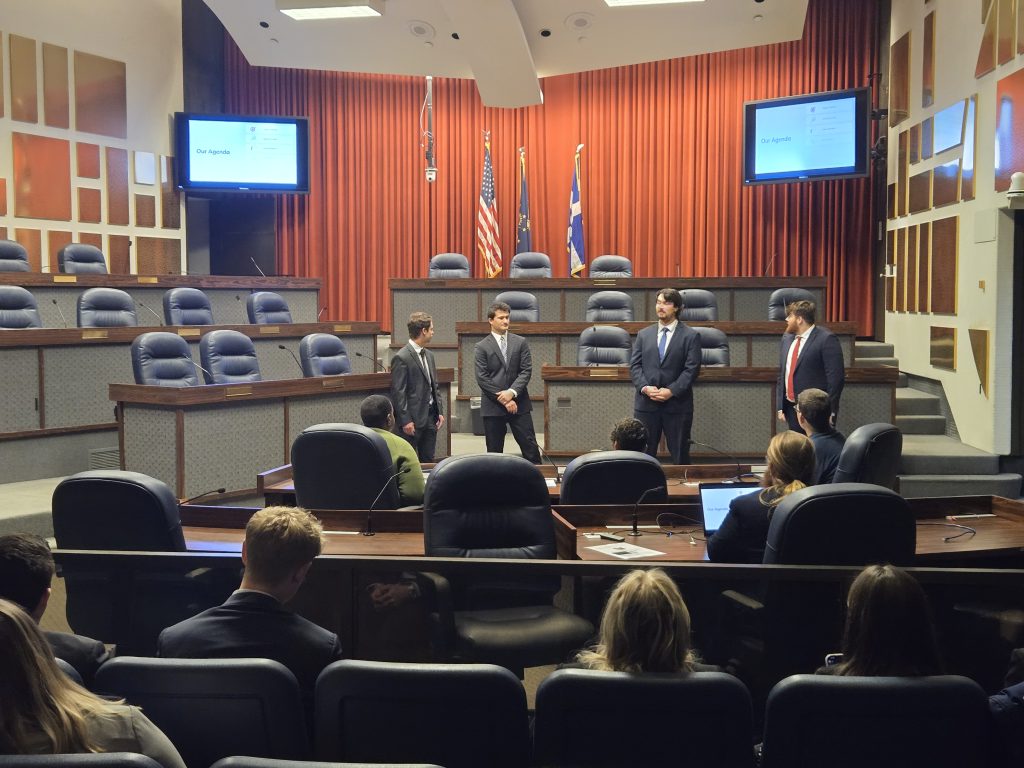
    Students presented their findings and recommendations at the City-County Building in early December, creating dashboards and actionable insights that directly inform the DPW’s ongoing safety initiatives.

    Vision Zero reflects Indianapolis’ commitment to creating streets that are safe, equitable, and accessible for everyone – whether walking, biking, driving, or using public transit. By partnering with local government on these initiatives, LSB students are not only learning critical analytical and research skills – they are actively helping shape a safer, smarter city.

    “Hands-on learning is so important,” Natalie added. “If you stay in the classroom, you lose sight of the ‘why.’ Applying what you learn to real-world situations is exactly what you’ll do in every career.”

  • Thinking Like a Business Leader: Inside First-Year Business Experience and Top Dawg

    Thinking Like a Business Leader: Inside First-Year Business Experience and Top Dawg

    Before most first-year students have even settled into campus life, they’re handed a challenge: Here’s a real company. Here’s a problem. Now go figure out what to do about it.

    That’s the heartbeat of the First-Year Business Experience (FBE), a course that throws students into the world of business from day one, letting them learn by building, creating, presenting, and discovering. It’s the class that nudges them out of the familiar and into the mindset of someone who asks hard questions, digs for answers, and thinks like a business professional from the start.

    Teams begin the semester by diving into a publicly traded company – an intentional decision that gives students access to real data and real insight.

    “We choose publicly traded companies because students can dig in and find real research,” Brenda Geib-Swanson, Lecturer of Entrepreneurship & Innovation, said. “They don’t know what they don’t know yet, so exploring everything – from marketing to logistics to organizational structure – opens their eyes to how businesses actually operate.”

    This year, every company touched the logistics industry: shipping, fuel, warehousing, and the many layers of supply chain work that shape how products move through the world. For many students, it’s the first time they’ve seen how interconnected business truly is.

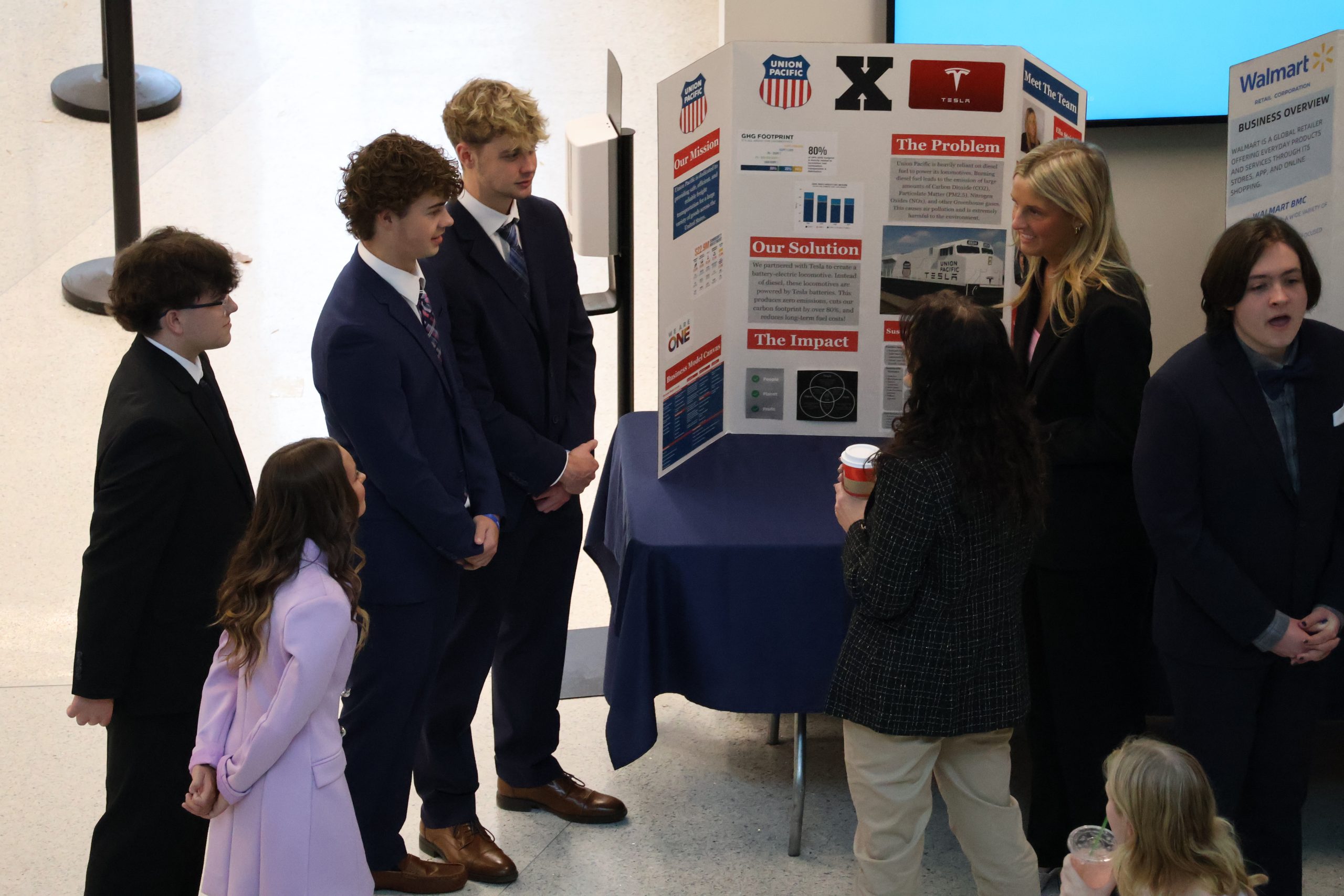
    The turning point of the semester comes during the final four weeks, when teams enter what Professor Geib-Swanson calls the “sustainability sprint.” After uncovering a sustainability issue within their chosen company – whether it’s emissions, waste, inefficiency, or something less obvious – they begin ideating a bold, research-backed solution. They sketch, test, revise, and refine, often discovering that the solution they start with is not the one they end up championing.

    “Sustainability is a hot topic, and we want them to think creatively,” Professor Geib-Swanson said. “This is where they practice ideation, problem solving, business writing, and business presenting. Even if they won’t become entrepreneurs, they still need those skills.”

    For first-year exploratory business student Charlotte Potts, the sprint revealed a challenge she didn’t expect to enjoy. “I’m not a numbers person, so the toughest part was getting them right,” she said. “But I ended up handling the cost-benefit analysis, and seeing everything come together – and actually be accurate – felt really rewarding.”

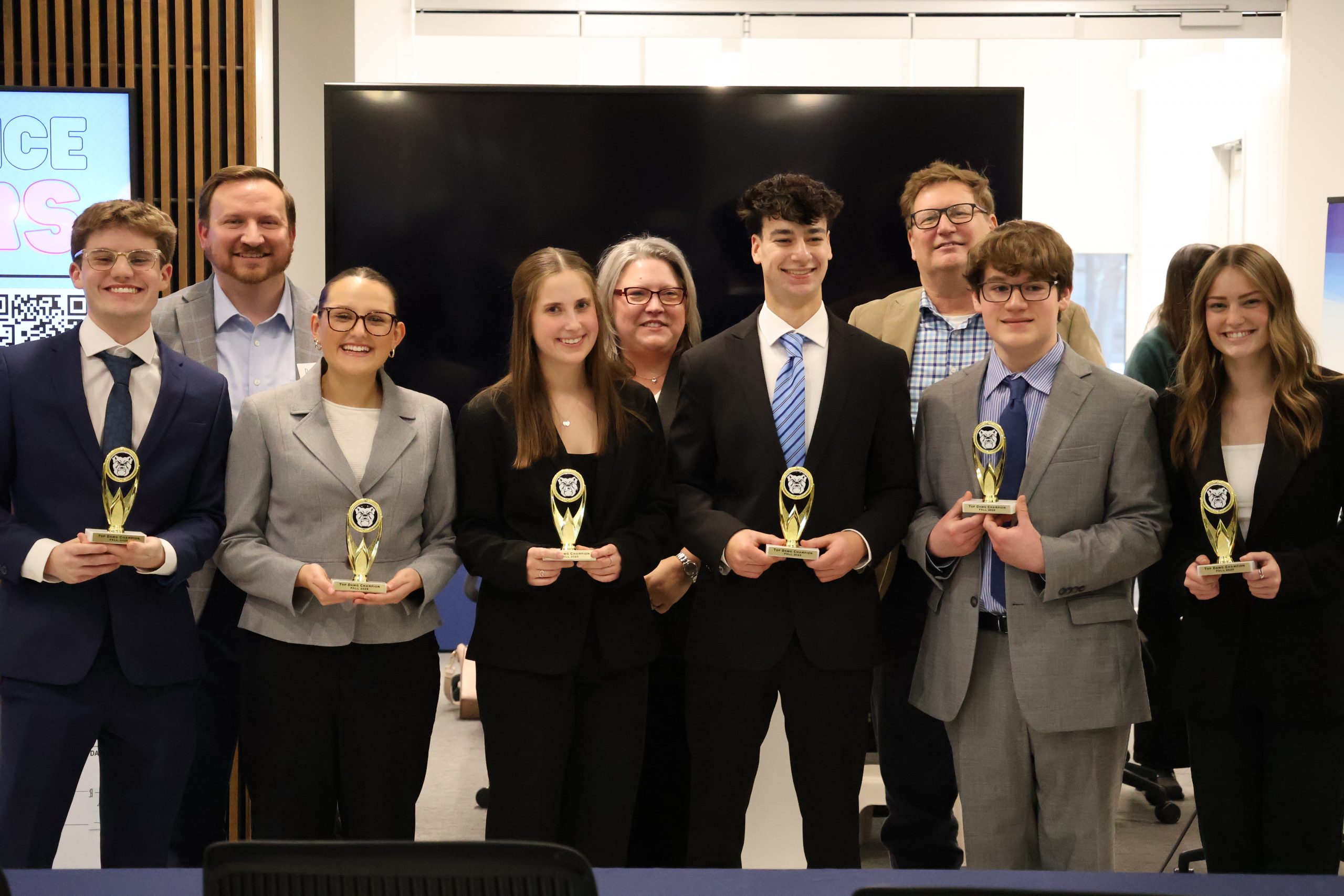
    By the end of the sprint, every team produces a research poster, a one-minute elevator pitch, and a full 4–7 minute presentation. Each class section votes on a winner, and those teams advance to one of the most anticipated traditions of the semester: the Top Dawg First-Year Competition, where section winners pitch to a panel of business professionals. The ultimate Top Dawg earns an automatic A and bragging rights that last long past finals week.

    “It’s really fun,” Professor Geib-Swanson said. “The energy, the ideas, the excitement – students surprise us every year with how far they take this project.”

    By the end of the semester, the transformation is unmistakable. Students who walked in unsure of what business school might look like leave with real experience in ideation, creativity, innovation, and complex problem solving. They’ve researched real companies, uncovered meaningful sustainability challenges, and learned how to communicate their ideas clearly and confidently. They’ve stretched themselves, surprised themselves, and discovered something essential about who they are and who they’re becoming.

    For many, Top Dawg is the defining moment – the culmination of a semester of hard work, curiosity, and creativity. For others, it’s simply the spark – the moment they realize they are capable of thinking like a business leader long before they’ve completed their first year.

    “It’s important to be open to learning as much as you can. You’ll get out of this what you put into it,” Charlotte said. “Problem-solving, teamwork, communicating – these are skills I know I’ll use in future classes and in my career.”

  • Butler Entrepreneurship Named 2026 TechPoint MIRA Awards Finalist for Community Impact

    Butler Entrepreneurship Named 2026 TechPoint MIRA Awards Finalist for Community Impact

    Lacy School of Business (LSB) is proud to announce that Butler Entrepreneurship has been named a 2026 TechPoint MIRA Awards Finalist for the Community Impact Award, recognizing organizations that are transforming Indiana’s tech and business ecosystem.

    Launched in January 2025, Butler Entrepreneurship is more than a program – it’s a campus-wide movement that empowers students, faculty, and alumni to transform ideas into ventures that create measurable social, economic, and community impact. Rooted in the belief that business can be a force for good, the program equips students with the skills, mentorship, and resources they need to launch ventures that generate revenue, create jobs, and strengthen local communities.

    “Imagine a student arriving on campus with a spark of an idea, unsure if it can go beyond a class project. Butler Entrepreneurship transforms that spark into real change,” Nick Smarrelli, Director of Entrepreneurship, said. “From their first day to graduation, students engage in experiences that cultivate entrepreneurial mindsets, launch authentic ventures, and create measurable social, economic, and community impact.”

    Since its launch, Butler Entrepreneurship has grown into a cross-disciplinary engine of innovation, supporting more than 70 student-owned businesses, partnering with 40+ community organizations, and connecting students with 100+ alumni and industry mentors. Student ventures have generated six-figure profits and have contributed meaningfully to local commerce, employment, and community well-being.

    Key initiatives demonstrating the program’s impact include Launch HOPE, where students mentor entrepreneurs from marginalized communities, helping them access resources and grow ventures that drive meaningful outcomes. Through Building Indiana’s Tech Future, students leverage AI tools and collaborate with alumni founders, engineers, and investors to bring tech-enabled solutions to life. Community partnerships like the Healthy Care, Healthy Costs Data Challenge & Accelerator and Rolltack Ventures’ First-Year Pitch Competition give students hands-on experience addressing real-world challenges in healthcare, financial literacy, and workplace innovation.

    In addition to its campus initiatives, Butler Entrepreneurship is helping lead the way in connecting universities and fostering intercollegiate collaboration. The program has partnered with Notre Dame graduate Adam Andres, as well as CICP, Rolltack Ventures, and 16Tech, to host an intercollegiate entrepreneurship conference and competition in late February. This effort brings together student innovators from multiple universities to share ideas, compete, and build networks that extend Indiana’s entrepreneurial ecosystem. Butler Entrepreneurship will also participate in the Entrepreneurship Through Acquisition (ETA) Conference on January 26, supporting the community by educating and preparing the next generation of leaders to take over Indiana’s most important businesses.
    Student-run ventures under Bulldog Enterprises, including Chimba Bowls, Blue’s Closet, Butler Brew, and Blue Roll Media, generate revenue, employ peers, and reinvest profits locally. Highlights include Chimba Bowls expanding to a second location, Blue’s Closet diverting over 2,200 pounds of clothing from landfills and donating 800 pounds to local nonprofits, and Butler Brew achieving a six-figure net positive while supporting campus and community causes. Every student-run venture in the Real Business Experience donates at least 10% of profits to local nonprofits, totaling nearly $20,000 over three years to support food banks, scholarships, and community programs.

    Butler Entrepreneurship bridges students with mentors, investors, and peers through programs like the Private Ventures Association (PVA), Minority Owned Business Initiative (MOBI), and community events including Elevate Sprint Week, Bark Tank, and the First-Year Pitch Competition. Alumni founders from Salesforce, High Alpha, and Elevate Ventures serve as mentors, judges, and investors, creating a strong ecosystem that extends Butler’s impact far beyond the campus.

    The program has ambitious goals for the coming years: launching the Butler Accelerator, a year-round hub connecting student founders with mentors, investors, and seed funding; doubling participation in programs supporting minority and marginalized entrepreneurs; piloting new student-run ventures in health tech, sustainable retail, and AI-enabled education tools; and expanding national recognition by sharing Butler’s open-source entrepreneurship framework with other universities.

    With these initiatives, Butler is positioning itself as the Midwest’s most accessible university-based startup ecosystem, nurturing the next generation of socially responsible leaders ready to make an impact in Indianapolis and beyond.

    The MIRA Awards gala will take place on April 24, 2026, at The Palladium in Carmel, celebrating Indiana’s brightest innovators, impact makers, and tech leaders. Butler Entrepreneurship is honored to be recognized among these outstanding changemakers.

    “This recognition is a testament to the creativity, passion, and dedication of our students, faculty, and community partners,” Nick said. “Together, we’re building ventures, building leaders, and building a stronger, more equitable community.”

  • Building Business from Scratch: Inside Butler’s Real Business Experience

    Building Business from Scratch: Inside Butler’s Real Business Experience

    You walk into a classroom, and it hits you: by the end of the semester, you won’t have merely learned about business – you’ll have built one from scratch. That’s the challenge sophomore students face in the Lacy School of Business’ Real Business Experience (RBE), a program that doesn’t just teach entrepreneurship – it throws you into it. 

    Teams of six, randomly assigned across majors, take on CEO, CFO, and CMO roles. Over the next few months, they brainstorm ideas, prototype products, manage budgets, handle suppliers, and sell to real customers. Mistakes aren’t hypothetical; they’re costly. Every decision matters. Every setback teaches a lesson. 

    “It’s innovative in a way that Butler does it,” Brenda Geib-Swanson, Lecturer of Entrepreneurship & Innovation, said. “At the start, it’s a class. By the end, it’s a business. And the learning comes from what goes wrong. Teams will face chaos, they’ll hit walls – but those moments are the ones that teach them the most.” 

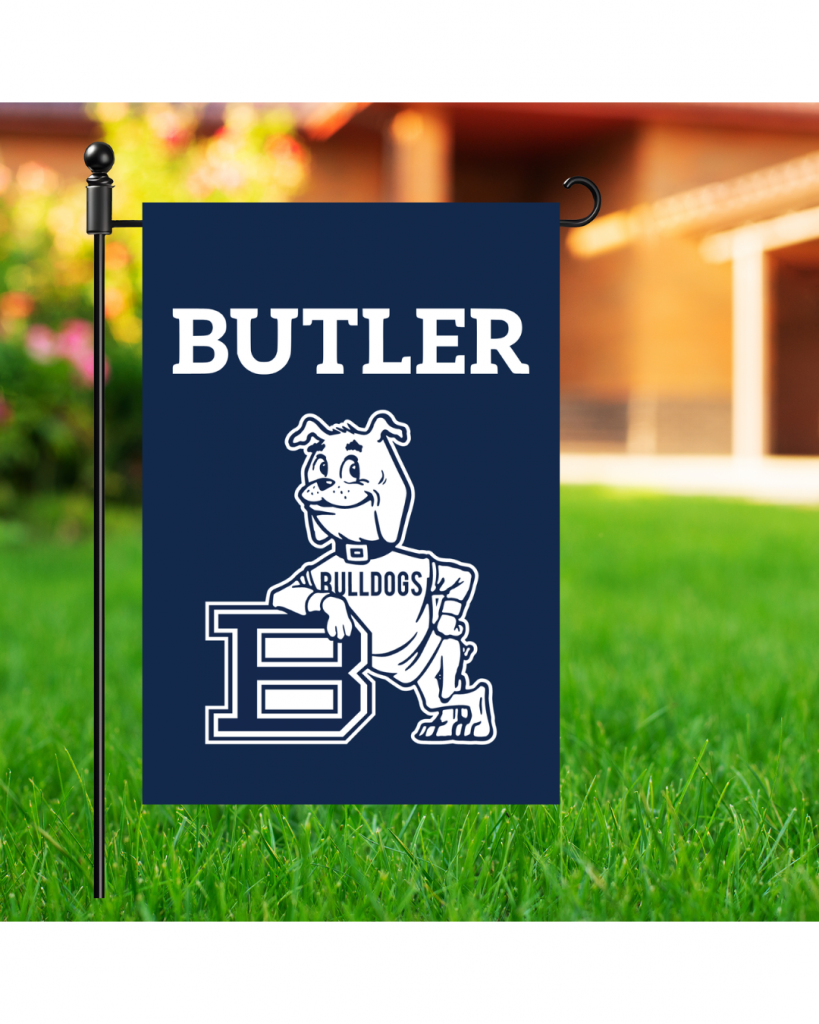
    For Toni Jazvic, CEO of PawPrints Flags, those lessons came fast. Her team’s idea, a Butler-themed garden flag, seemed simple at first. But when their initial design failed, they had to scrap it completely and started over. 

    “Not knowing what you don’t know until you’re doing it, it looks so easy on paper,” the exploratory business and biology major said. “Every decision mattered. And the moment we sold our first flags? That’s when I really believed our idea could work.” 

    Emily Clark, CEO of Butler Cases & Co., faced her own real-world obstacles. Her team wanted to produce three different styles of Butler-branded eyeglass cases but quickly realized their budget couldn’t cover them all. 

    “We had to drop one style to stay within budget. It’s the kind of thing textbooks don’t prepare you for – you live it,” the accounting and marketing major said. 

    RBE isn’t just about making a product – it’s about experiencing every facet of running a business. Butler provides each team with a $1,000 loan to start their business, and students are responsible for repaying it, managing sales, and donating 10% of profits to a local charity. Faculty and professional mentors guide – but never take over – letting students make the big decisions and live with the consequences. 

    “I try really hard to give them bumpers at the beginning, but they’re wide. I want them to have room to make mistakes, pivot, and problem solve,” Professor Geib-Swanson said. “That’s where the growth comes from.” 

    By the end of the semester, these teams have more than a grade – they have businesses they’ve built themselves. 

    Toni reflects on what she’s learned about leadership: “The value of delegating to a good team – you can get more done. Seeing my team execute ideas I couldn’t have done alone – that’s been incredible.” 

    Emily echoes this: “I’ve learned I cannot do this on my own. It’s about finding your strengths and building around them.” 

    All of that effort culminates at the RBE Marketplace, where the Butler community can see and buy what these students have created. On Friday, Nov. 14, from 10:00 AM to 2:00 PM in the lobby of Dugan Hall, 28 student-run businesses will showcase their products in person. This is the chance to see that ingenuity, creativity, and perseverance in action. For those who can’t attend, online storefronts remain open until Sunday, Nov. 30. 

    Over the past year, RBE students have started 63 businesses, generating more than $59,000 in profits – $6,000 of which went straight to local charities. It’s proof that these are real companies, built and run by real students, with tangible impact on both the community and their own experience. 

    “At the end of the day, it’s not about the products they sell or the profits they make – it’s about giving students the tools to think critically, solve problems creatively, and lead with confidence,” Professor Geib-Swanson said. “They leave this class not just knowing business – they know themselves.” 

  • Data4Good: Using Data as a Force for Good

    Data4Good: Using Data as a Force for Good

    This Friday, October 31, marks the registration deadline for the 4th Annual National Data4Good Analytics Competition – a national platform where undergraduate and master’s students apply data and technology to solve real-world challenges. The Data4Good Competition is open to undergraduate and master’s students across the U.S. Teams compete within their regions for cash prizes, with regional winners advancing to present at Johns Hopkins University’s Carey School of Business.

    While the name highlights analytics, the deeper story is about stewardship: how we use our skills and knowledge to serve others and make meaningful impact. This competition goes beyond technical ability. It’s an invitation to strengthen consulting-style problem solving, analytical expertise, and collaboration through purpose-driven projects. Participants engage in professional development sessions, earn free industry certifications, and connect with leading corporate sponsors – all while using data for good.

    Since its founding in 2022, Data4Good has brought together students, educators, and industry leaders to collaborate on data solutions that create social impact:

    • 2022: Students partners with SIL Global to create captions for children’s Bible stories in low-resource languages.
    • 2023: Teams improved healthcare documentation using AI models to structure physician-patient transcripts from a Prediction Guard client.
    • 2024: In collaboration with the Tragedy Assistance Program for Survivors (TAPS), students analyzed grief data to support families of fallen service members.
    • 2025: This year’s challenge focuses on improving the factuality of AI-generated educational content, provided by Prediction Guard, to promote truth in an era of misinformation.

    Together, these projects have awarded more than $110,000 in student prizes and led over 1,500 students to earn Microsoft certifications in Azure Fundamentals (AZ-900) or Artificial Intelligence Fundamentals (AI-900).

    Data4Good thrives on strong partnerships and our success is made possible through the support of:

    • Dr. Dan Whitenack, CEO of Prediction Guard
    • Aaron Burciaga, CEO of ZETEC
    • Nick Ulmer, Principal OR Analyst at CANA
    • Carol Curley and Bill Griffin of INFORMS
    • Mafer Bencomo of DataCamp
    • Dr. Lori Downen, Rochelle Fisher, and Liz Moran of SAS

    Through these partnerships, students engage with INFORMS and the Certified Analytics Professional (CAP) framework, learning stewardship through structured problem-solving and ethics. DataCamp expands our reach by providing a global learning platform. While SAS’ Global Academic Programs continues to model and lead analytics education.

    As Liz Moran of SAS shares, “Data4Good Competition is about more than analytics – it’s about using the data to make a difference. When students tackle real-world challenges, they see firsthand how their skills can create positive change.”

    The Lacy School of Business is proud to be a sponsor of this national competition, advancing data-driven innovation and ethical decision-making through education. Leading the charge is our Assistant Professor of Business Technology & Analytics, Dr. Matthew A. Lanham, who teaches predictive and prescriptive analytics at LSB and was recently honored with the 2025 Inaugural INFORMS Data Mining Society Teaching Award for his impact on students within and beyond the classroom. His research focuses on integrating predictive models within optimization models and improving analytics education, reflecting the same spirit of innovation at the heart of the Data4Good competition.

    Ready to use data for good? Registration for the 2025 Data4Good Competition closes Friday, October 31. Don’t miss your chance to apply data and AI to a real-world challenge and compete alongside peers nationwide.

  • Founders in the Making: LSB Launches First-Year Pitch Competition

    Founders in the Making: LSB Launches First-Year Pitch Competition

    Three and a half weeks into college, most first-years are still figuring out where their classes are or which dining hall is the safest bet. At the Lacy School of Business, though, 44 students were already stepping into the spotlight, pitching startup ideas as if millions were on the line.

    That was the scene at the first First-Year Pitch Competition, sponsored by Roll Tack Ventures, on September 19. 22 teams, two students each, three minutes on the clock, and just three slides to make their case. A panel of six judges stood in as venture capitalists, pressing them with questions about customers, markets, and why their ideas deserved to exist right now.

    The case studies students worked from were inspired by real-world startups: HeartHalo, a wearable sensor that prevents heat stress in industrial workers; ReturnRaccoon, a B2B software that streamlines product returns; ShieldFox, a real-time risk monitoring tool; and TrueVibe, an employee sentiment platform mapping workplace “vibes” in real time. Each team wasn’t just pitching a product – they were stepping into the role of founder, showing why this company, why now, and why them.
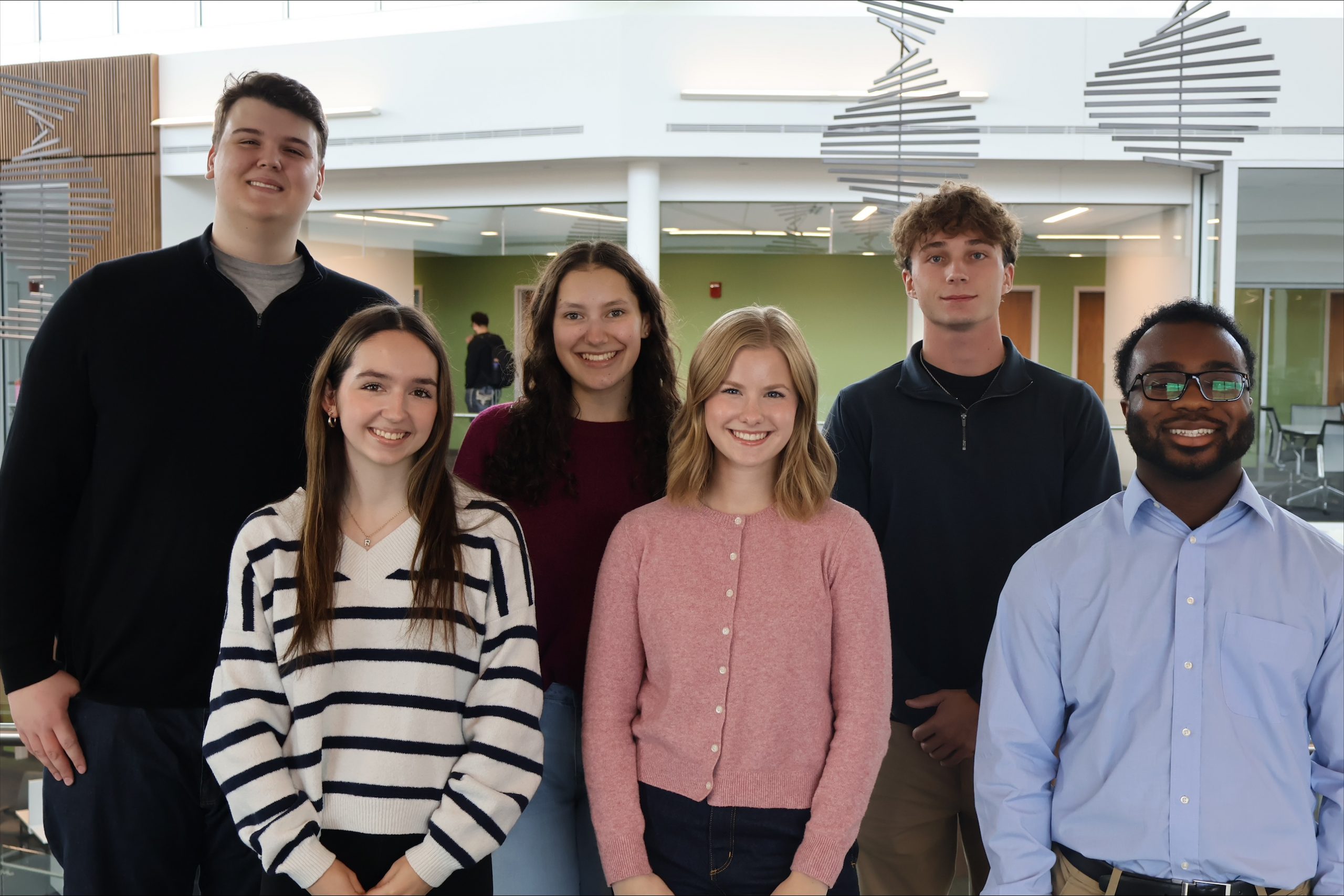
    And they didn’t hold back. Some dressed in coordinated outfits, others designed their own logos, and one team triggered an alarm mid-pitch to demonstrate HeartHalo in action. It was Shark Tank energy; with all the guts and creativity you’d expect from entrepreneurs – only these “founders” had been on campus less than a month.

    Judges pushed hard, asking questions like: Who’s the decision-maker? Why hasn’t this problem been solved yet? What makes this the right time? But they also offered encouragement that left students buzzing. “Even if you don’t know the answers, come with confidence and give it your best shot,” Tyler Mantel, General Partner at Roll Tack Ventures, said.

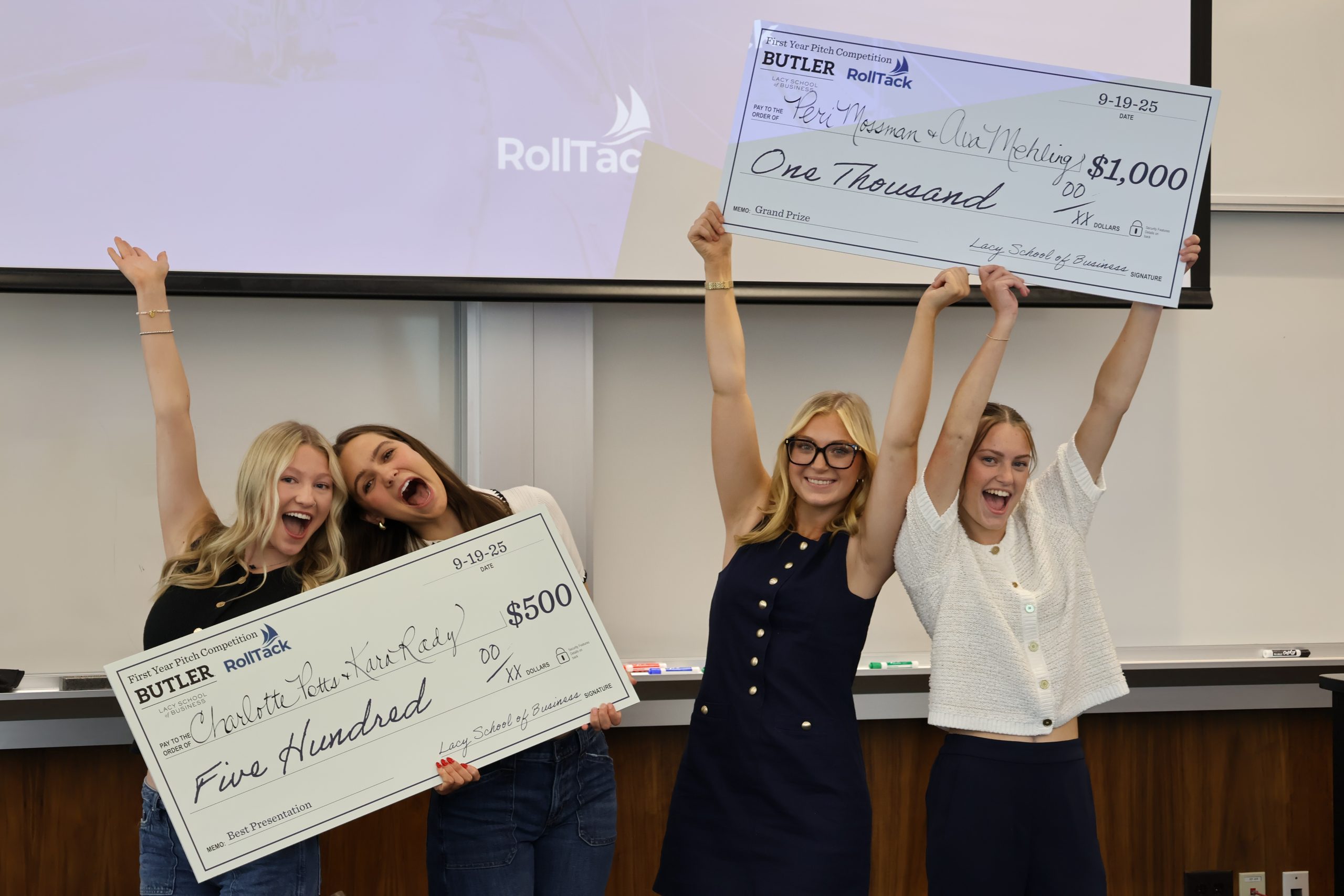
    At the end of the day, two teams stood out. Peri Mossman and Ava Mehling walked away with first place and a $1,000 prize for their compelling pitch of TrueVibe, showing how live “vibe maps” could transform employee engagement. Charlotte Potts and Kara Rady earned Best Presentation and a $500 prize for their polished and creative HeartHalo pitch, impressing judges with both style and substance.

    But the real story wasn’t about the big checks. It was about students pushing themselves out of their comfort zones and gaining skills that will serve them well beyond this competition.

    “Pitching allows students to practice nearly every skill they’ll need after graduation – working as a team, presenting ideas clearly, thinking through problems, leveraging research, balancing accuracy with creativity, and showing themselves well,” Nick Smarrelli, Lecturer in Entrepreneurship and Innovation said. “And the best part? It’s fun. Every team exceeded expectations. The students who said ‘yes’ to this competition have already set themselves apart just a few weeks into the school year.”

    As Roll Tack Ventures mentors reminded students, not every business is right for venture capital funding, and part of the process is learning to spot which ideas have the potential to scale. Just as importantly, students connected with peers and industry leaders, building networks that will fuel their growth throughout their academic and professional journeys.

    “To do something that doesn’t exist in the world, you have to have confidence – maybe even a little arrogance – to believe you can,” Mantel said. “Today, students showed they have a piece of that confidence. And that’s the start of something great.”