Category: Innovation & Enterprise

  • Bringing K-12 Technology Leaders Together to Learn, Share and See What’s Possible

    Bringing K-12 Technology Leaders Together to Learn, Share and See What’s Possible

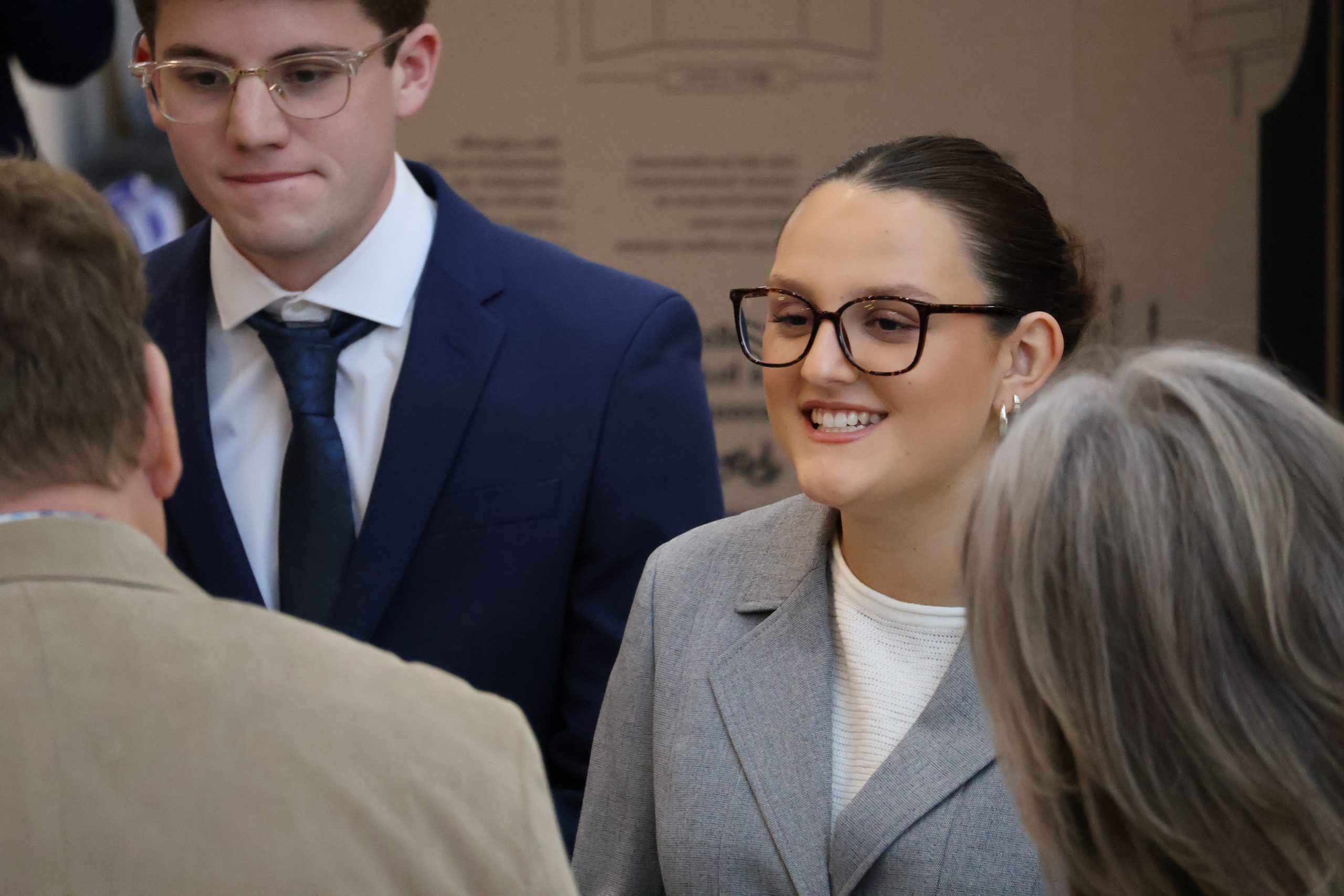
    On September 10, Butler University’s campus became a meeting place for the people helping Indiana schools navigate an increasingly technology-driven world.

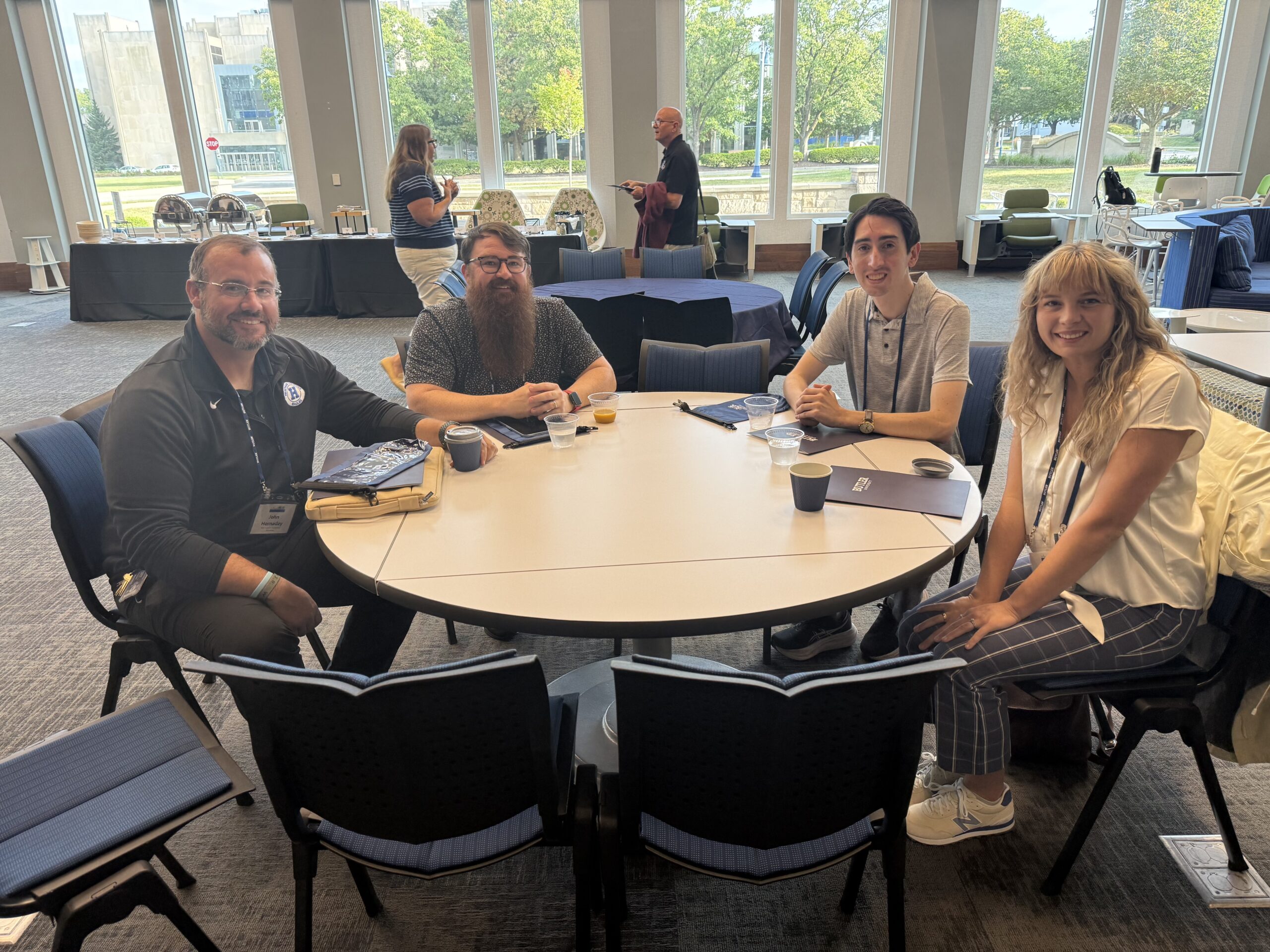
    Through AvantBlue’s K-12 Tech Field Day, technology leaders from school districts across the state—including CTOs, technology directors, IT managers and district leaders—came together for a day focused less on presentations and more on conversation, collaboration and seeing technology in action.

    AvantBlue, a Butler Ventures-backed technology consultancy and Value-Added Reseller, was founded within Butler University’s IT department and supported through the university’s Transformation Lab. Its K-12 Tech Field Day was designed to give education technology professionals an opportunity to step away from the traditional conference format and learn directly from one another.

    “We created the K-12 Tech Field Day to offer something fundamentally different—a space for district leaders to share honest experiences, benchmark strategies with peers, and explore live technology environments in action,” said Bruce Johnson, CETL, Senior Consultant at AvantBlue and IT Business Manager at Butler University.

    Throughout the day, participants took part in roundtable conversations covering some of the challenges and opportunities facing K-12 technology leaders today.

    Discussions touched on Google, Canvas, infrastructure, budgeting, emerging technology, construction and the evolving role of technology in education.

    The format encouraged participants to share what is working in their own districts, talk through challenges and compare approaches with peers navigating many of the same questions.

    That peer-to-peer exchange was central to AvantBlue’s approach.

    Rather than focusing the day around vendor presentations or product demonstrations, the event created space for education technology leaders to have candid conversations about the decisions they are making in their schools and districts—and the challenges they expect to face next.

    The conversations continued beyond the roundtable discussions as attendees explored Butler’s campus and visited several facilities, including the Butler Esports facility, College of Pharmacy and Health Sciences, Gallahue Hall, Jordan Hall and the Lacy School of Business.

    The tours offered a different perspective on the conversations taking place throughout the day: rather than simply discussing how technology can support learning, participants could see examples of it being used in real educational environments.

    At the Lacy School of Business, attendees experienced Dugan Hall and explored how technology is integrated into classrooms and learning spaces designed to support collaboration, experiential learning and the student experience.

    For K-12 technology leaders, the campus experience provided an opportunity to consider how other educational institutions are approaching technology, infrastructure and learning environments—and what ideas might translate to their own schools.

    The event reflects AvantBlue’s broader belief that technology should support an institution’s mission and the people it serves.

    By bringing K-12 technology professionals together in an environment centered on transparency and peer learning, AvantBlue is helping create opportunities for leaders across Indiana to share knowledge and build connections beyond their individual districts.

    The event also represents one example of the ways Butler’s entrepreneurial ecosystem can extend beyond the university itself. What began within Butler’s IT department has grown into a Butler Ventures-backed organization serving K-12 districts, higher education institutions and public-sector organizations across the Midwest.

    For the technology leaders who attended, the day offered something simple but valuable: time to step outside their own districts, connect with people facing similar challenges and return with new ideas.

    And for Butler, it was another opportunity to open its campus and its expertise to professionals shaping the future of education.

    About AvantBlue

    AvantBlue is a Butler Ventures-backed Value-Added Reseller (VAR) and technology consulting service born inside Butler University’s IT department and supported through the Transformation Lab. Built on more than 100 years of combined education IT experience, AvantBlue provides strategic technology roadmapping, cybersecurity advisory, and cost-effective hardware and software solutions to K-12 districts, higher education institutions and public-sector organizations across the Midwest.
  • When the Classroom Goes Global: Inside the X-Culture Challenge

    When the Classroom Goes Global: Inside the X-Culture Challenge

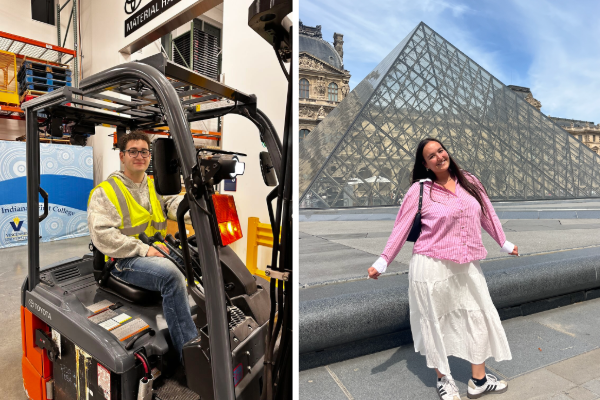
    On a Friday night, while his friends were making plans to go out, Miguel Fernandez was sitting on Zoom.

    On the other side of the screen were teammates in Thailand, China and South Carolina. Together, they were tackling a challenge many professionals encounter only after entering the workforce: developing an international expansion strategy for a real company.

    For Miguel, a senior at the Lacy School of Business, it was a glimpse into the realities of global business long before graduation.

    This wasn’t a typical group project. It was X-Culture, a global business consulting challenge embedded in Dr. Juan Manuel Gil‘s International Business Environment course.

    Students are placed on international teams with peers from universities around the world and tasked with developing market-entry and growth strategies for real companies facing real business challenges.

    This year, 6,165 students from 162 universities in 53 countries participated, forming more than 1,000 virtual teams. Two Lacy School of Business students earned recognition among the program’s Top 10 teams for their respective client companies, placing them among the competition’s highest-performing participants worldwide.

    For Miguel, the challenge centered on EnglishHelper, an AI-powered English literacy platform seeking opportunities for international growth.

    Excitement about working with students from around the world quickly gave way to the realities of global collaboration.

    Messages sometimes sat unanswered for hours. Meetings landed on Friday nights. Communication styles varied widely.

    “Some of my teammates told me what they thought straight up without sugar coating,” Miguel says. “It showed me that what’s considered ‘normal’ communication can be very different depending on where you’re from.”

    Learning to navigate those differences became as valuable as the project itself.

    Working with teammates across multiple countries, Miguel helped develop a three-phase expansion strategy for Costa Rica that included partnerships with the National Institute of Learning, the Ministry of Public Education and, eventually, private schools and workforce training providers.

    The experience also pushed him beyond his typical coursework. As a Finance and Economics major, Miguel found himself contributing to marketing and creative materials for the team’s proposal.

    “I don’t get to do a lot of creative things,” he says. “That’s why I found it interesting.”

    For Caroline Forster, the challenge looked different but required many of the same skills.

    Her team worked with Nature’s Nectar, a Zambian social enterprise that produces certified organic honey and beeswax while partnering with more than 2,500 smallholder farmers. Their task was to identify opportunities for international expansion while preserving the company’s environmental mission and unique hive-to-jar traceability system.

    Before the project began, Caroline expected the time-zone challenges. What she didn’t anticipate was how quickly concepts from class would become reality.

    “My teammates from Thailand and other Asian countries were very on top of it,” the senior International Business major says. “The students from the U.S. were much more laid back.”

    Different expectations around communication, leadership and decision-making required constant adjustment. As the team researched target markets, competitors, logistics and pricing strategies, they were also learning how to collaborate effectively across cultures.

    Their final proposal ultimately earned Top 10 recognition among submissions for their client company.

    “I kept thinking, ‘Wait, this is crazy. This is real,’” Caroline says.

    That moment of realization is exactly what Dr. Gil hopes students experience.

    “In business, when we think about the future and strategy, we have to base it on two things: data and evidence, and also intuition and ideas about what trends might emerge,” Dr. Gil says. “The best strategies are grounded in evidence but flexible enough to anticipate what’s next.”

    More importantly, he wants students to experience what happens when the neat frameworks of a textbook meet the complexities of real people, real companies and real business challenges.

    “You get frustrated, and you plan things and it doesn’t work,” Dr. Gil says. “This gives them the best international, global and real experience and what they will face.”

    For the Assistant Professor of International Business, that is precisely the point.

    Today’s graduates are increasingly expected to work across cultures, time zones and communication styles, and sometimes in virtual environments. X-Culture gives students the opportunity to practice those skills while still in the classroom, turning international business from a subject they study into an experience they live.

    For Caroline, the project fundamentally changed how she viewed the course.

    “You can take an international business course and still not have an international experience,” she says. “This was different because we were taking what we learned in class and applying it in the real world, working directly with people from other countries.”

    Dr. Gil’s work with X-Culture was also recognized with the program’s Best Professor Award, an honor he sees as a reflection of what his students accomplished.

    The impact of the experience extends beyond a single semester.

    Earlier this year, Butler exchange student Gregor von Rohr advanced from X-Culture coursework to the program’s 2026 Global Business Week Conference in Trieste, Italy. Working directly with Barilla Group on an international consulting challenge, his team ultimately won the competition.

    Together, those outcomes demonstrate what’s possible when classroom learning intersects with global business practice.

    For Miguel, the experience reinforced how interconnected today’s world has become and how important it will be to understand different perspectives throughout his career.

    “I’m always looking to learn and make people comfortable,” he says. “I feel like this is very beneficial to be able to connect with different clients depending on where they come from.”

    And he believes the lessons extend far beyond international business.

    “Even if you’re not looking into international business,” he says, “I feel like the world is so interconnected.”

    That’s exactly what students discover through experiences like X-Culture.

    At the Lacy School of Business, global business isn’t something students wait to experience after graduation. Through real companies, international teams and hands-on consulting projects, they begin doing it now.

    Sometimes that means developing a market-entry strategy for a company on another continent.

    Sometimes it leads to international competitions and global conferences.

    And sometimes it starts with a Friday night Zoom call that reminds you the world is much closer than you think.

  • From Indiana to Korea: How Lacy School of Business Is Engaging in the Future of Global Business 

    From Indiana to Korea: How Lacy School of Business Is Engaging in the Future of Global Business 

    Some trips expand perspective. Others signal where an institution is heading. 

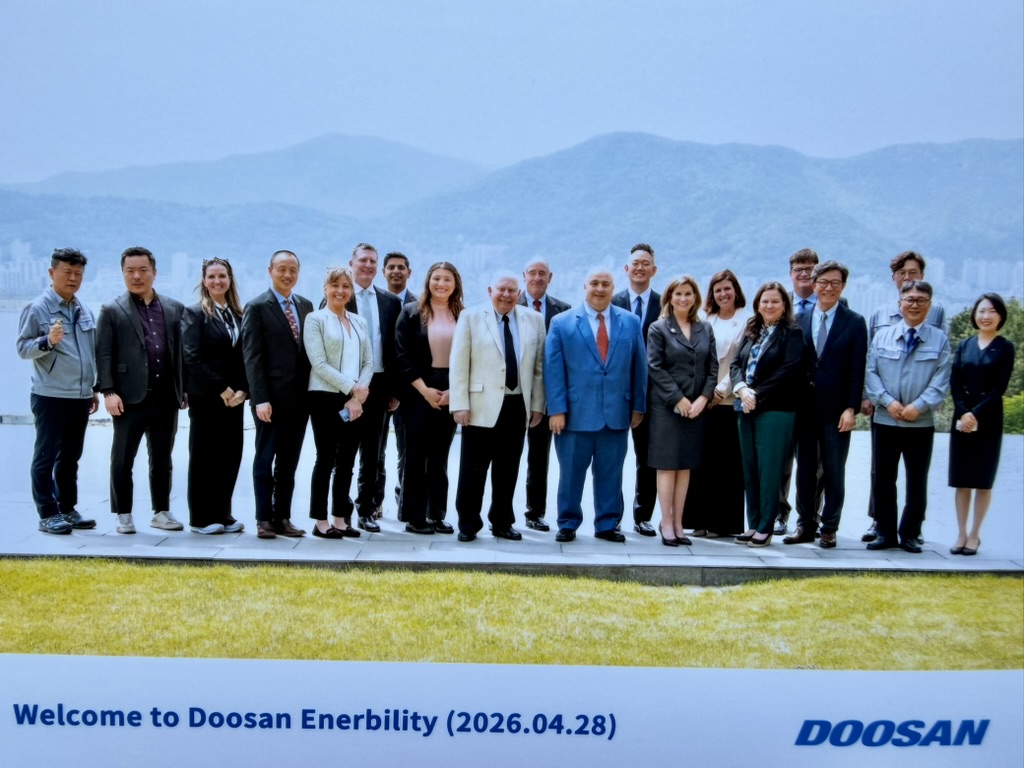
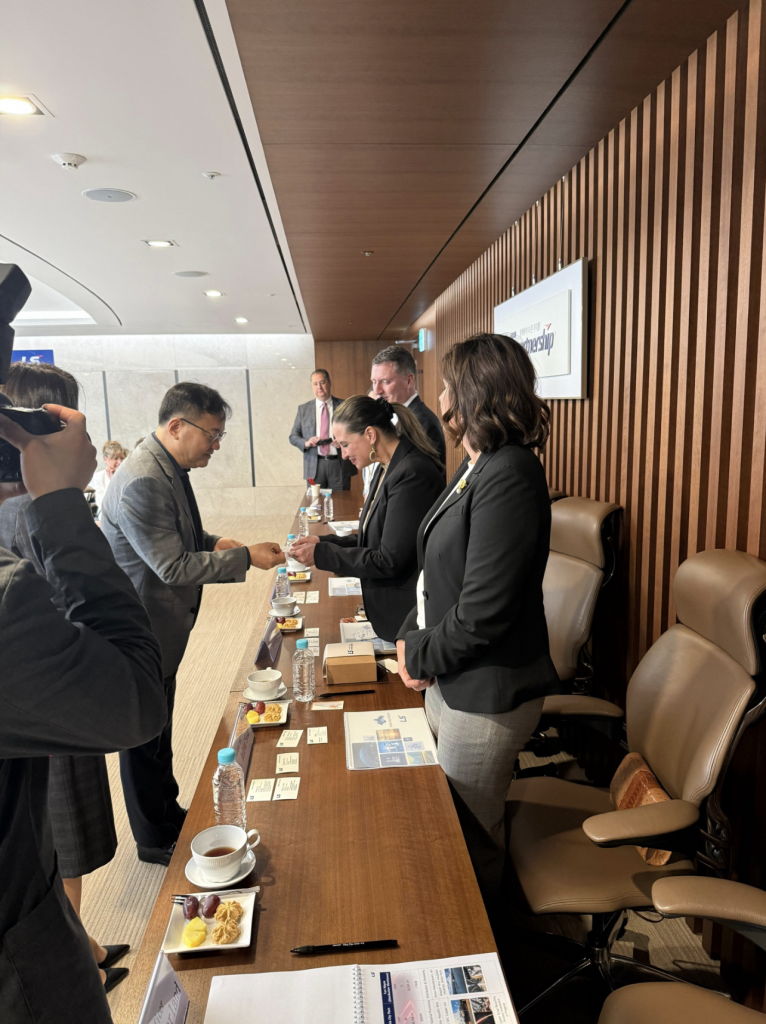
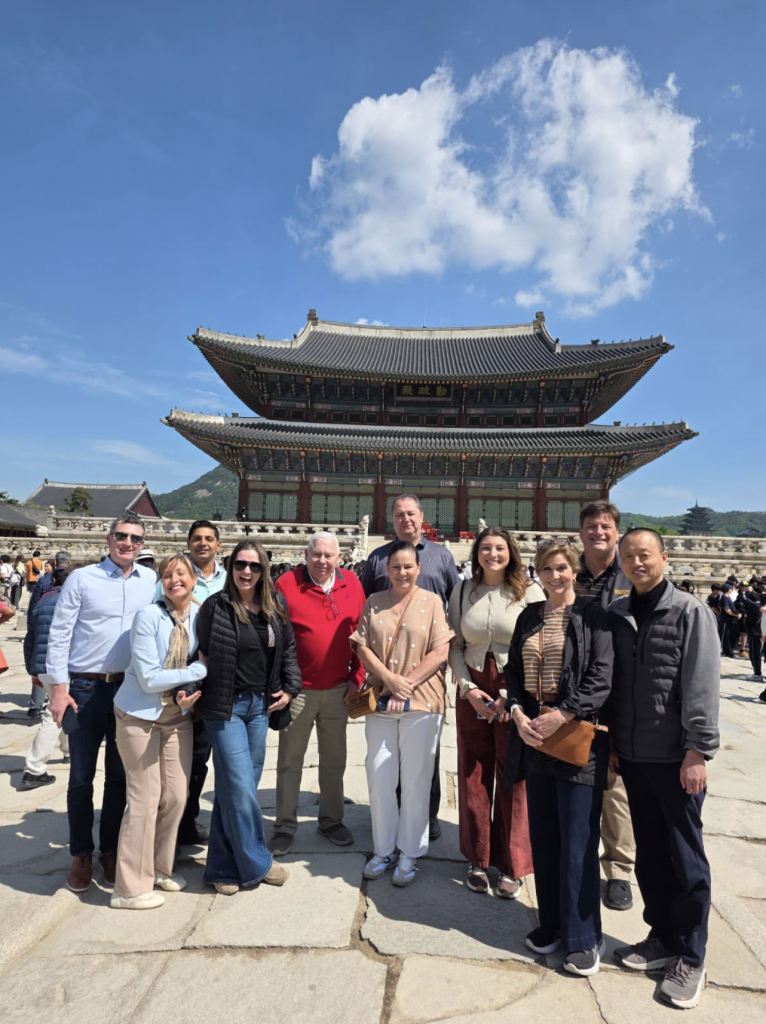
    When Indiana’s trade and energy delegation traveled to South Korea this spring to discuss investments tied to a Korea–U.S. economic framework valued at roughly $350 billion, Butler University’s Lacy School of Business was at the table. Not as observers, but as contributors to conversations shaping the future of supply chains, energy infrastructure, manufacturing, semiconductors, and global investment. 

    Dr. Jane Siegler joined the delegation as the only representative from Butler University and the only business school voice in a group otherwise composed of engineers, policymakers, and corporate leaders. That distinction mattered because the central question throughout the trip was not simply about energy or infrastructure. It was about how global business actually works and who has the expertise to help organizations navigate increasingly complex international supply chains and investment networks. 

    Over the course of the week, as the delegation moved between executive meetings in Seoul and industrial visits across Korea, one theme surfaced repeatedly: supply chains are no longer back-office operational concerns. They are strategic systems shaping where investment flows, how infrastructure gets built, and which regions emerge as global economic hubs. 

    Executives consistently emphasized the importance of deeper supplier-network visibility and multi-tier supply chain coordination as critical capabilities for large-scale international investment. One of the defining moments of the trip came inside the headquarters of LS Group, one of Korea’s largest conglomerates. During a meeting with the delegation, Vice Chairman and CEO Roehyun Myung underscored the importance of multi-tier supply chain visibility in determining whether international investment efforts succeed and where it ultimately lands. It was not a scripted talking point. It was a business priority discussed at the highest levels of global industry. 

    For Dr. Siegler and the Lacy School of Business, the moment reinforced something important: these are the same concepts already embedded in Butler’s growing focus on supply chain analytics and experiential business education. The challenges being discussed in Seoul boardrooms are the same kinds of challenges that LSB students are learning to analyze in the classroom.  

    At Doosan Enerbility’s manufacturing complex in Changwon, the delegation stepped into one of the world’s most advanced vertically integrated industrial operations, producing everything from raw materials to large-scale energy infrastructure. Walking the factory floor offered a firsthand view into the complexity of modern manufacturing, global logistics, and industrial coordination, including hydrogen reactors already in production for next-generation AI infrastructure projects. For Dr. Siegler, the experience was not simply observational. It immediately became applied material that will translate into classroom discussions, case studies, and experiential learning opportunities grounded in real companies, real operational systems, and real timelines. 

    What made the trip especially significant is that the conversations did not end in the meeting rooms. Discussions throughout the delegation are already evolving into active projects and partnerships involving supply chain mapping, executive engagement, and Korea–Indiana collaboration initiatives connected to manufacturing and investment strategy. 

    Early in the week, a conversation with Doris Anne Sadler, president of the World Trade Center Indianapolis, began shifting Lacy’s role from participant to contributor. The discussion centered on a proposed “Doing Business in Indiana – Seoul Symposium,” designed to connect Korean suppliers with major companies operating in Indiana across sectors such as semiconductors, energy, automotive manufacturing, and advanced infrastructure. 

    Behind that initiative is a highly complex challenge: identifying the right suppliers across multiple layers of global supply networks and aligning them with the operational needs of Indiana-based firms. That work depends on sophisticated supply chain mapping and analytics, precisely the kind of expertise increasingly associated with the Lacy School of Business. 

    By the end of the trip, those early discussions had evolved into a working plan positioning Lacy alongside the World Trade Center Indianapolis and key Korean partners in supporting the technical supply chain mapping work behind the initiative. 

    For the school, this represents something larger than a single project. It reflects a growing role for the Lacy School of Business at the intersection of business, policy, analytics, and global economic development. It also demonstrates the increasing relevance of applied business education in solving real-world problems that governments, manufacturers, and international partners are actively working to address today. 

    The impact of these experiences extends directly back into the classroom. Students benefit through updated case materials, stronger industry connections, exposure to active global business challenges, and future opportunities for experiential learning tied to real-world projects and partnerships. 

    The trip created meaningful relationships with Korean industry leaders, global energy and infrastructure firms, international trade organizations, government agencies, and Indiana-based companies and institutions. Those connections are already opening new opportunities for collaboration, executive engagement, experiential learning, sponsored projects, and future international initiatives that can benefit both Lacy students and the broader Indiana business community. 

    Most importantly, the trip reinforced a larger reality: the future of business education belongs to institutions capable of connecting classrooms to the real systems shaping the global economy. Increasingly, the Lacy School of Business is not simply studying those systems. It is actively engaging in them. 

  • Inside the Inaugural Bulldog Reports Equity Research Conference 

    Inside the Inaugural Bulldog Reports Equity Research Conference 

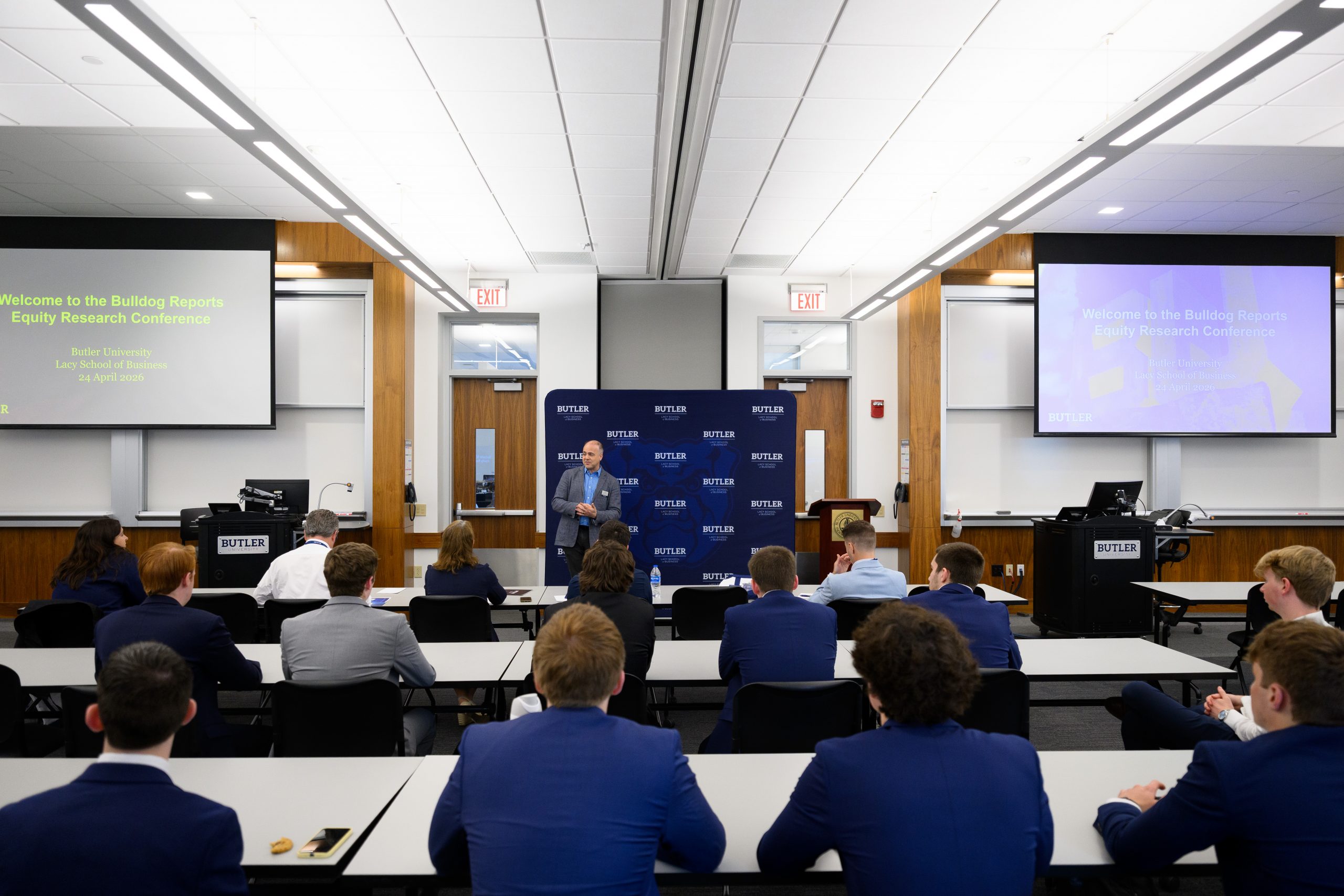
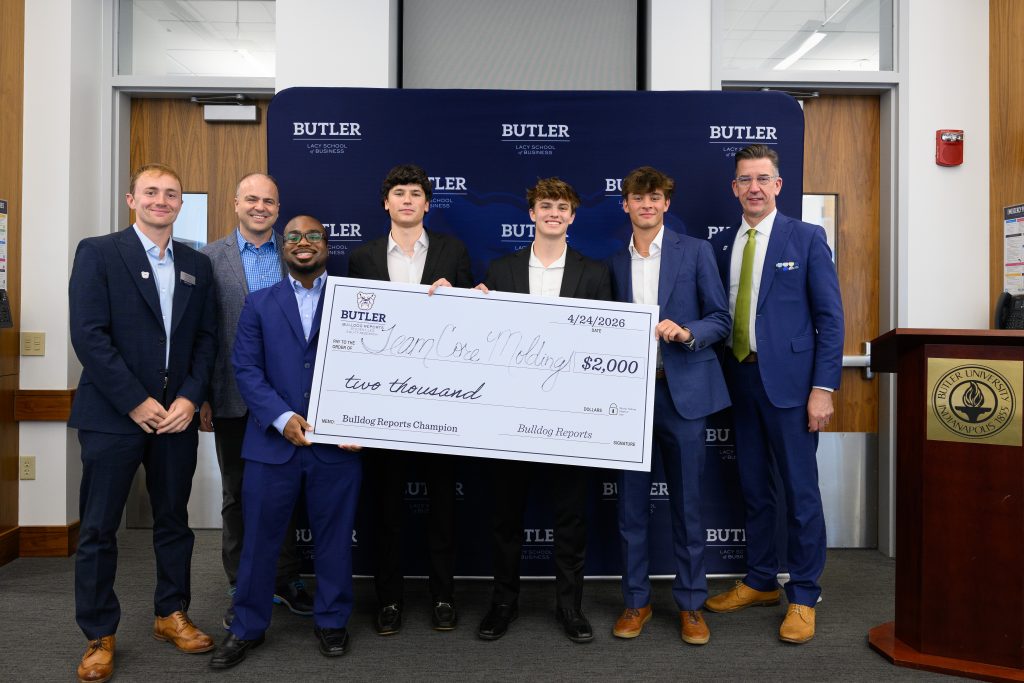
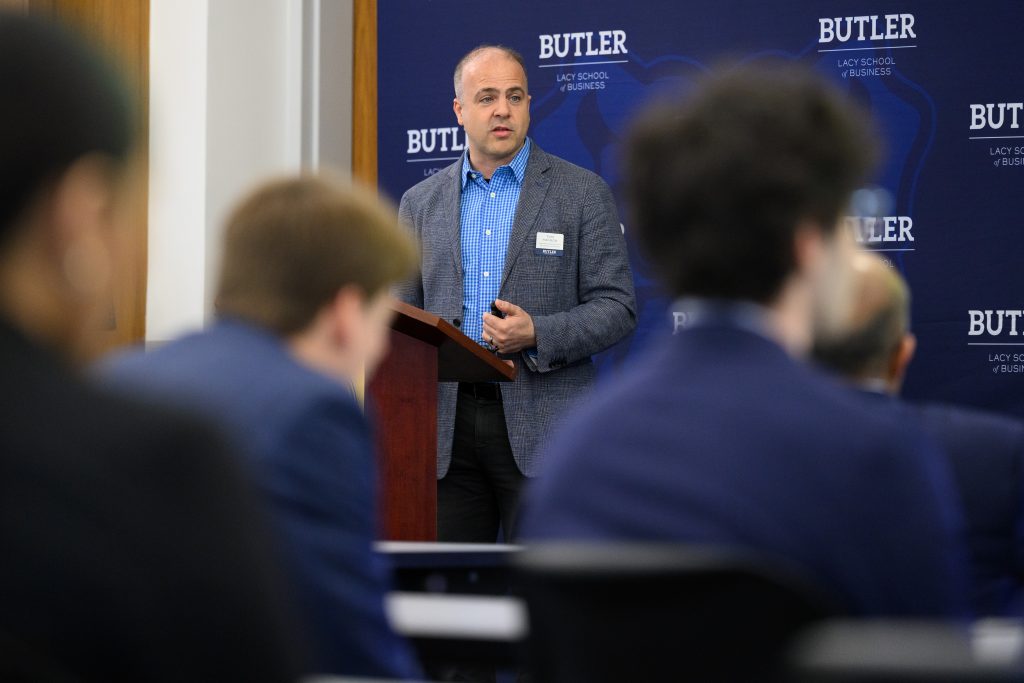
    On April 24, the Lacy School of Business hosted the inaugural Bulldog Reports Equity Research Conference – a moment months in the making and a powerful demonstration of what experiential learning looks like when students are trusted to operate at a professional level. 

    Led by Faculty Director Dr. Tom Hanson, Bulldog Reports is a student‑run equity research program that pushes LSB finance students beyond traditional coursework and into the realities of professional financial analysis. 

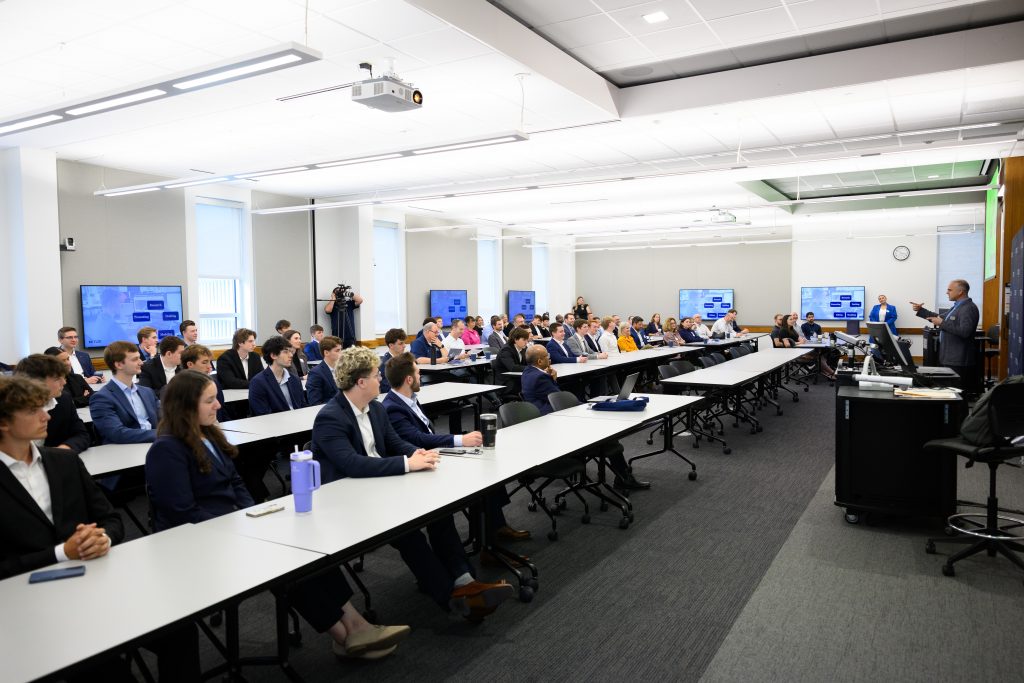
    After a semester of intensive research, modeling, site visits, and revision, 52 student analysts across eight teams presented equity research reports on publicly traded, small‑ to mid‑cap Midwest companies. In front of finance professionals, alumni, faculty, and peers, students didn’t just explain their conclusions – they defended them, just as they would in real equity research roles. 

    Bulldog Reports is intentionally designed to go beyond the classroom. Students are paired with real companies and tasked with navigating the ambiguity, complexity, and imperfect information that define the finance industry. 

    “Even if you’re doing a case study in the classroom, it’s not as messy or as challenging as it will be when you’re out there in your first year on the job,” Dr. Hanson says. 

    Throughout the semester, analysts traveled to company headquarters, toured facilities, and met directly with executive leadership teams. Those conversations reshaped how students understood the numbers in their models, and the assumptions behind them. 

    “You can see things on a balance sheet or a cash flow statement, but when you actually get to talk to management and understand their goals, you see why decisions are being made,” Braden Myers, student managing director, says. 

    The eight companies represent a diverse cross‑section of small‑ to‑mid‑cap firms headquartered in Indiana and neighboring states, including Visteon, Signet Jewelers, Portillo’s, MillerKnoll, Hillman, Core Molding Technologies, Calumet, and Patrick Industries. This range provides students with exposure to a wide range of industries, operating models, and leadership approaches. 

    What sets Bulldog Reports apart is how deeply student leadership is embedded into every level of the program. Students participated in all aspects of corporate outreach, analyst training, and research execution. The student managing directors and analysts ultimately delivered the investment conference itself, all supported by alumni mentors and guided by faculty. 

    That responsibility fundamentally changes how students approach their work. 

    “When students are presented with real‑world problems, they understand the gravity and the stakes involved,” Craig Caldwell, Dean of the Lacy School of Business, says. 

    By the time conference day arrived, teams weren’t turning in assignments. They were presenting polished, professional research shaped through multiple iterations, challenged by peers, mentors, and their own findings. 

    Standing before industry professionals, students articulated investment theses, walked through valuation models, examined risks, and responded to pointed questions designed to test both logic and conviction. 

    For many students, Bulldog Reports represents more than a course or a conference; it is a tangible body of work and a defining moment of growth. 

    “The process has impacted my confidence and leadership,” Claire Venisnik, student associate, says. “I now have professional work to showcase – something my team and I created.” 

    As the inaugural Bulldog Reports Equity Research Conference came to a close, the impact was clear. Students demonstrated not only technical skills, but professionalism, accountability, and the ability to communicate complex ideas with clarity. They showed what happens when learning extends beyond theory and into practice; and why experiences like Bulldog Reports leave a lasting mark long after the conference ends. 

  • Building the Future of Small Business Ownership: Entrepreneurship Through Acquisition Conference

    Building the Future of Small Business Ownership: Entrepreneurship Through Acquisition Conference

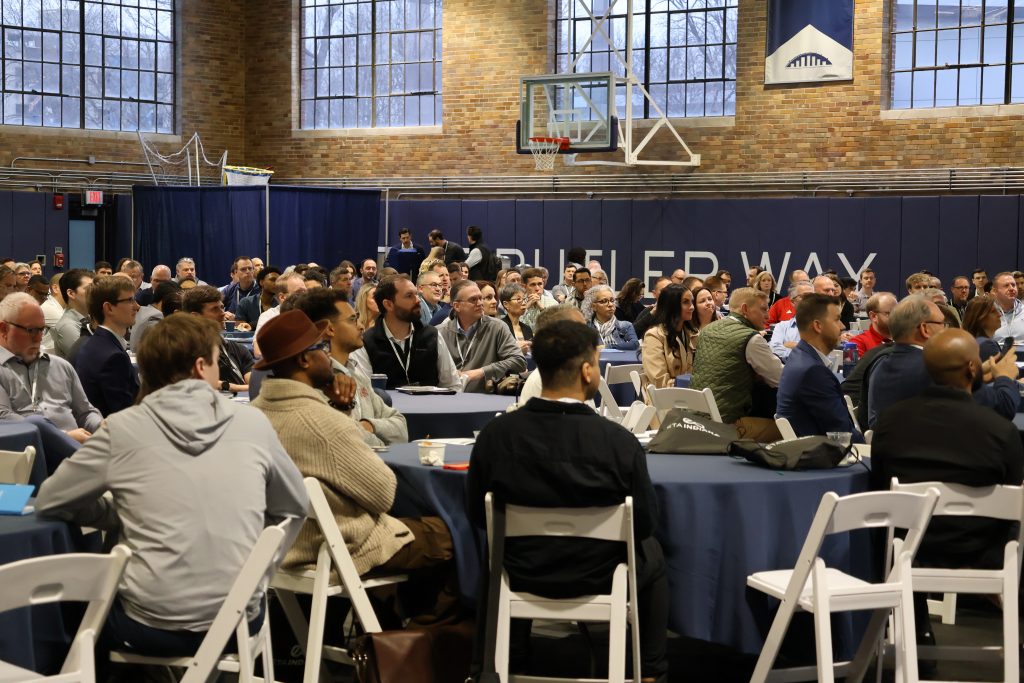
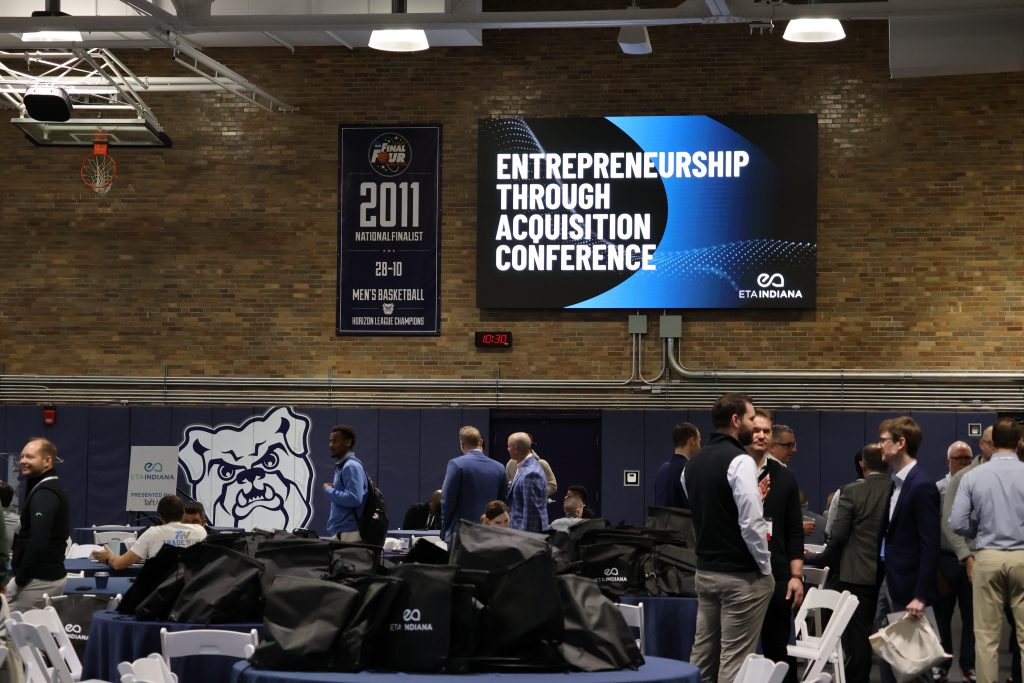
    On Tuesday, March 10, the Lacy School of Business hosted the inaugural Indiana Entrepreneurship Through Acquisition (ETA) Indy Conference, drawing over 350 entrepreneurs, operators, investors, advisors, lenders, and community partners from across Indiana and the broader Midwest.
    With 40 speakers and two tracks of programming running from morning through evening, the event marked a milestone for a region full of legacy businesses, founders nearing retirement, and a rising generation eager to step into ownership.

    From the moment attendees arrived, the energy made one thing clear: Indiana is ready to invest in the future of these businesses.

    Before the first session even began, conversations flowed easily – first time searchers exploring their next step, small business owners thinking about transition, and operators reflecting on what it really takes to run a company after close.

    The opening keynote by Chelsea Wood of the Acquisition Lab tapped into that shared sense of purpose, emphasizing ETA’s role in preserving the small businesses that anchor communities – businesses that sustain jobs, support families, and form the backbone of local economies. Across Indiana alone, thousands of owners are approaching retirement without succession plans. ETA, as the keynote highlighted, isn’t just about buying companies; it’s about stewarding something worth preserving.

    “In Indiana alone, tens of thousands of baby-boomer–owned businesses will change hands in the next decade – many of them in just the next five years. What’s alarming isn’t the volume, but the lack of preparation. Fewer than half of owners have a written succession plan, and nearly half of transitions happen unexpectedly due to health, family, economic stress, or sudden life events,” Nick Smarrelli, director of entrepreneurship, said. “If we don’t build a stronger ETA community now – one that learns together, shares best practices, and connects capital, operators, and students – we risk losing businesses, jobs, and the local legacies that define our communities. The Lacy School of Business has both the responsibility and the platform to help unify this work across the state – not for Butler’s benefit alone, but in the best interest of Indiana’s people, employers, and future.”

    Throughout the day, panels, interviews, and hands-on presentations gave attendees a grounded look at the realities of the acquisition journey. Sessions explored how to build a thoughtful buy box, how governments and communities are supporting local ownership transitions, and how buyers can evaluate businesses beyond surface-level financials. Technical discussions on valuation and diligence helped attendees understand the difference between reported numbers and true cash flow, while other panels broke down what it takes to move a deal from handshake to a bankable, legally sound close.

    Financing emerged as a defining theme – SBA lenders, debt partners, and advisors offered candid insight into assembling a capital stack for a first acquisition and what makes a searcher stand out as credible. Operators also spoke openly about the emotional realities of ETA, from the uncertainty of the search process to the responsibility of leading a team on day one. Many attendees noted how refreshing it was to hear honest accounts of the first 100 days, culture-building, and the long-term professionalization that comes after closing.

    Between sessions, campus buzzed with conversations about deals being evaluated, industries of interest, and opportunities for collaboration. Students asked operators what life looks like after buying a business; advisors shared guidance; lenders made introductions; and owners told the stories behind the companies they built. Those moments – spontaneous, unplanned, and full of possibility – became the heartbeat of the day.

    As the final reception wound down and attendees left with full notebooks and new connections, one thing was unmistakable: the conversations begun at ETA Indy will continue – through searches launched, deals explored, and businesses passed thoughtfully to the next generation of leaders. The inaugural conference laid the foundation for a growing community rooted in stewardship, opportunity, and a shared commitment to strengthening the region’s small business ecosystem.

  • Building Indiana’s Next Generation of Innovators: First Collegiate Entrepreneurs Summit

    Building Indiana’s Next Generation of Innovators: First Collegiate Entrepreneurs Summit

    On Friday, February 27, more than 250 students from 17 universities arrived at the 16 Tech Innovation District in Indianapolis for the inaugural Collegiate Entrepreneurs Summit, a statewide gathering created to bring student innovators together, spark new collaborations, and strengthen Indiana’s entrepreneurial network.

    The summit was more than an event – it was the result of a multi-organization planning committee led by Butler University’s Lacy School of Business, 16 Tech, CICP, and INtercollegiate Entrepreneurs. For months, these four groups worked together to design a student-centered experience that could bring Indiana’s entrepreneurial community closer and create a truly statewide ecosystem.

    What began as a simple idea among a small group of campus leaders grew into one of the largest student entrepreneurship events the state has hosted, marking a significant milestone for both Indiana’s innovation community and for LSB, which served as a co‑host, challenge partner, and event sponsor.

    Throughout the day, The AMP at 16 Tech transformed into a hub of activity as students participated in workshops, founder conversations, peer discussions, and hands on sessions that explored the many pathways available to those interested in building, creating, or problem solving.

    “It was one of the few spaces where everyone shared the same drive to build something new,” said Preston Asher, a finance and entrepreneurship & innovation double major. “You could walk up to any table and immediately start talking ideas.”

    A central component of the day was the Anchor & Accelerate Innovation Challenge. More than 40 intercollegiate teams formed quickly to analyze a structured business problem, develop a market-ready concept, and present their ideas under tight deadlines. The challenge emphasized creative problem solving over polished prototypes, encouraging students to focus on clarity, feasibility, and real world application.

    LSB delivered a standout showing. Eight Butler teams participated in the challenge, and LSB students secured both first and second place overall – a major accomplishment given the number of competing institutions. First place was awarded to Jenna Burd and Lily Laffond, whose concept impressed judges for its innovation and practical potential. Second place went to Trevor Storm and Preston Asher, offering Butler a clean sweep of the top two positions and reinforcing the strength of LSB’s experiential learning approach.

    “The challenge pushed us to think fast, communicate clearly, and trust our instincts,” Preston said. “Everything we’ve learned at LSB showed up in those moments, and it felt like we were genuinely prepared.”

    Lily described the challenge as eye opening, especially around the problem her team tackled. “Our team was tasked with solving the problem of lost tribal knowledge and workforce productivity within the manufacturing sector,” she said. “We created LeanLens, an AI software tool built into industrial grade goggles. Before this, I had no idea that manufacturing makes up 27% of Indiana’s GDP. Given how archaic many systems still are, the industry is well suited for AI disruption.”

    Beyond the competition, the summit offered a rare opportunity for students to connect across campuses in a way that had never existed before. For Lily, these conversations became a highlight of the entire day. “I left the conference feeling energized with ideas,” she said. “Talking to students all over the Hoosier state about what they’re building was inspiring. The best part of a network like this is the shared commitment to helping one another succeed.”

    She also noted a clear difference in how Butler students showed up: “Given that out of 40+ teams, the top two were from Butler – that’s a testament to the program. One key distinction I noticed was the strong emphasis Butler students place on soft skills and relationship building. Rather than simply presenting financials and metrics, they prioritize building genuine rapport and connecting meaningfully with judges.”

    Leadership from INtercollegiate Entrepreneurs – the student run organization that helped spearhead the event – echoed this sentiment, emphasizing the importance of building statewide community rather than isolated campus level efforts. With students attending from Indiana, Illinois, and Virginia, the summit highlighted just how quickly this network is expanding and how crucial collaboration will be in supporting student founders in the years ahead.

    “I’ve been watching Butler’s presence in the ecosystem grow – the building of partnerships, the credibility compounding – and the summit was the moment all of it became visible at once,” Iman Noor D. Braham, an MBA candidate concentrating in finance and entrepreneurship & innovation, said.

    “Meeting students from other universities was eye opening,” Preston added. “It helped me see how strong Butler’s entrepreneurship culture really is. People kept saying they could tell we were well supported and well prepared.”

    Students left the summit carrying new ideas, new relationships, and a stronger sense of what entrepreneurship can look like in any field, whether launching a startup or driving innovation within an existing organization. “I walked away with a better understanding of entrepreneurial storytelling,” Lily said. “Venture capitalists invest in businesses, but they also invest in founders. Being able to articulate my purpose, positioning, and vision is a key differentiator.”

    The inaugural Collegiate Entrepreneurs Summit represented the beginning of something larger: a shared effort to empower student founders, elevate Indiana’s entrepreneurial ecosystem, and build a statewide community grounded in collaboration rather than competition.

    For Iman, the summit confirmed a broader shift already underway in Indiana. “Indiana is at a genuinely exciting moment,” she shared. “I’ve seen what emerging ecosystems look like in different markets, and this feels like the window where the people showing up now will shape what it becomes.”

    “I walked away with more confidence – not just in my ideas, but in the direction Indiana’s innovation ecosystem is heading,” Preston said. “It feels like there’s real momentum, and Butler is right in the middle of it.”

  • Building Momentum: Butler Welcomes 150+ Students for Indiana’s First Collegiate DECA State Conference

    Building Momentum: Butler Welcomes 150+ Students for Indiana’s First Collegiate DECA State Conference

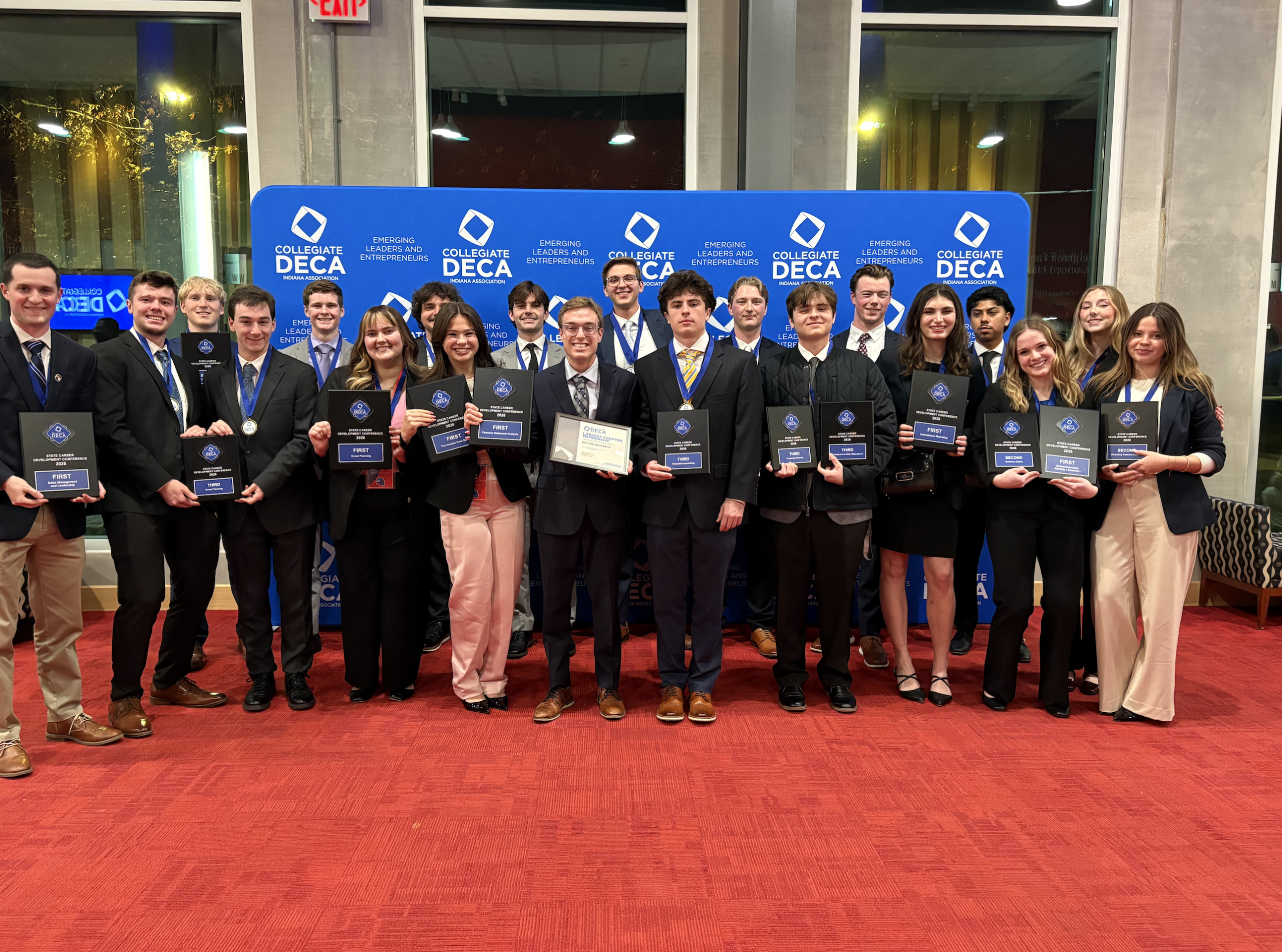
    Last Saturday, Butler University’s Lacy School of Business welcomed more than 150 students from eight states and 15 college campuses for the inaugural Indiana Collegiate DECA State Career Development Conference. The event represented the culmination of four years of planning, organizing, and building an association from the ground up – making this first-ever statewide conference a significant milestone for both Indiana Collegiate DECA and for Butler, which served as host.

    The day-long conference brought students to campus for an immersive experience in professional development, competitive case events, and statewide networking. As attendees moved between sessions, they explored many of Butler’s signature spaces – from the Collegiate Gothic architecture of Jordan Hall to the history of Hinkle Fieldhouse to the quiet pathways of Holcomb Gardens. It was a fitting backdrop for a day centered on curiosity, problem-solving, and collaborative leadership.

    The conference also reflected the rapid momentum Indiana Collegiate DECA has built during its first year as a fully chartered association. Membership across the state grew by more than 40 percent, surpassing 430 students and supporting chapters at seven campuses in Indiana. This growth helped make possible a conference that not only emphasized competition, but also created a space for students to learn from industry professionals and connect with peers from across the region.

    Throughout the morning and afternoon, students participated in the Professional Development Series, which brought together speakers from across Indiana to discuss regional industries, career pathways, and the evolving business culture of Indianapolis. Non‑competitive members participated in these sessions throughout the day, while competitive members moved between workshops and their timed case events.

    A key feature of the conference was the Hoosier Case Study Event, designed in partnership with an Indiana-based company. Students were challenged to analyze a real business scenario, craft solutions, and present their recommendations under tight deadlines. The event quickly became one of the day’s most energizing opportunities, offering a realistic look at the kind of strategic thinking required in today’s professional landscape.

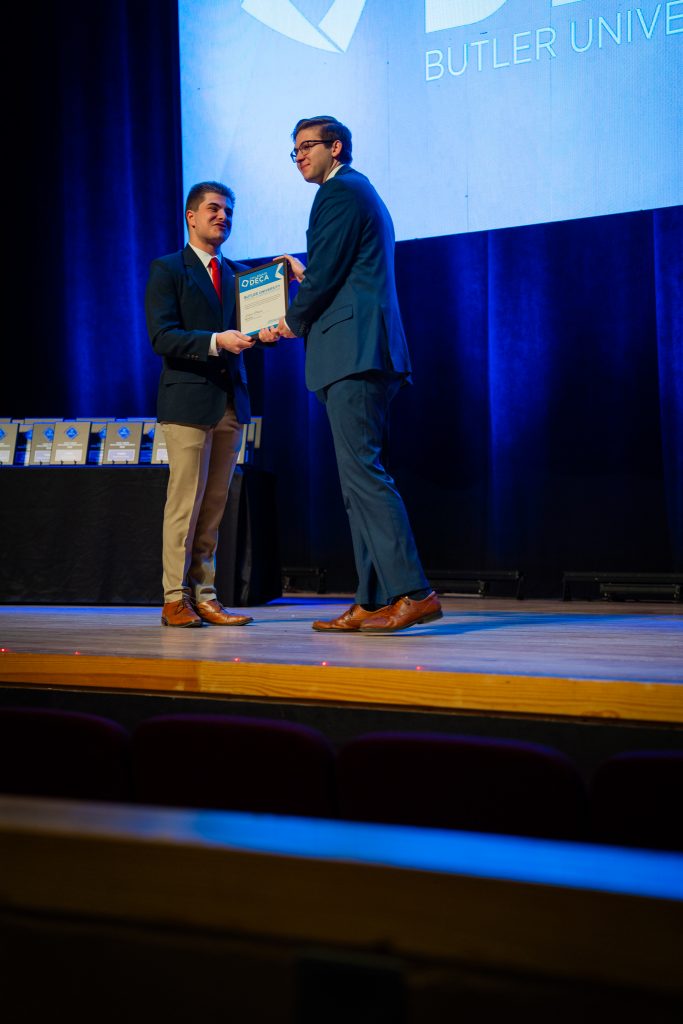
    The conference also offered an opportunity to recognize outstanding leadership within the collegiate DECA community. LSB is proud to share that Mark Donner, lecturer in applied business technology, was named the 2025–2026 Indiana Collegiate DECA “Advisor of the Year.” The award, presented during the conference, honored his exceptional mentorship, support of student development, and longstanding commitment to elevating experiential learning within the Lacy School of Business. His recognition added another point of pride to an already important weekend for Butler’s DECA community.

    During opening session, attendees gathered for the keynote address delivered by Scott Fussell, principal of Scott Fussell Coaching and Consulting and founder of The Shift Initiative. Fussell’s talk, “The Three Absolutes of Leadership,” centered on leading with clarity, building connections, and identifying the strengths of others. His message about authenticity and purposeful leadership resonated with students preparing to enter the next stage of their academic and professional journeys.

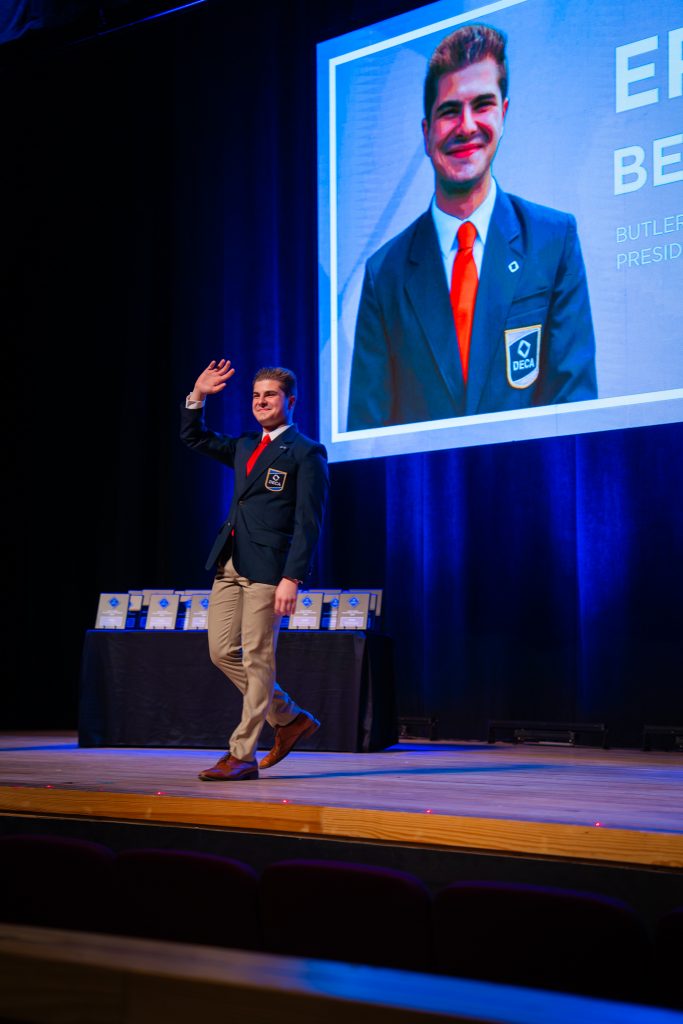
    For many Butler students, the conference marked a personal milestone. Eric Bedrosian, founder of Butler’s DECA chapter and the outgoing Indiana Collegiate DECA President, reflected on what it meant to see this moment come to life after years of work. “Four years in the making. One powerful day of networking, collaboration, and competition,” Bedrosian said. “What began as a vision has officially become a reality.” His remarks captured the pride of a leader who helped shape the organization from its earliest foundation.

    Jack Paulson also reflected on what it meant to help shape such a successful inaugural event. This year’s conference highlighted his leadership as he earned first place in the Sales Management & Leadership Case Study Event. Reflecting on the experience, Jack shared, “It was especially meaningful to see Butler host such a strong inaugural event and help lay the foundation for the future of Indiana Collegiate DECA.” His remarks underscored the pride he feels in both competing and helping guide the organization into its next chapter.
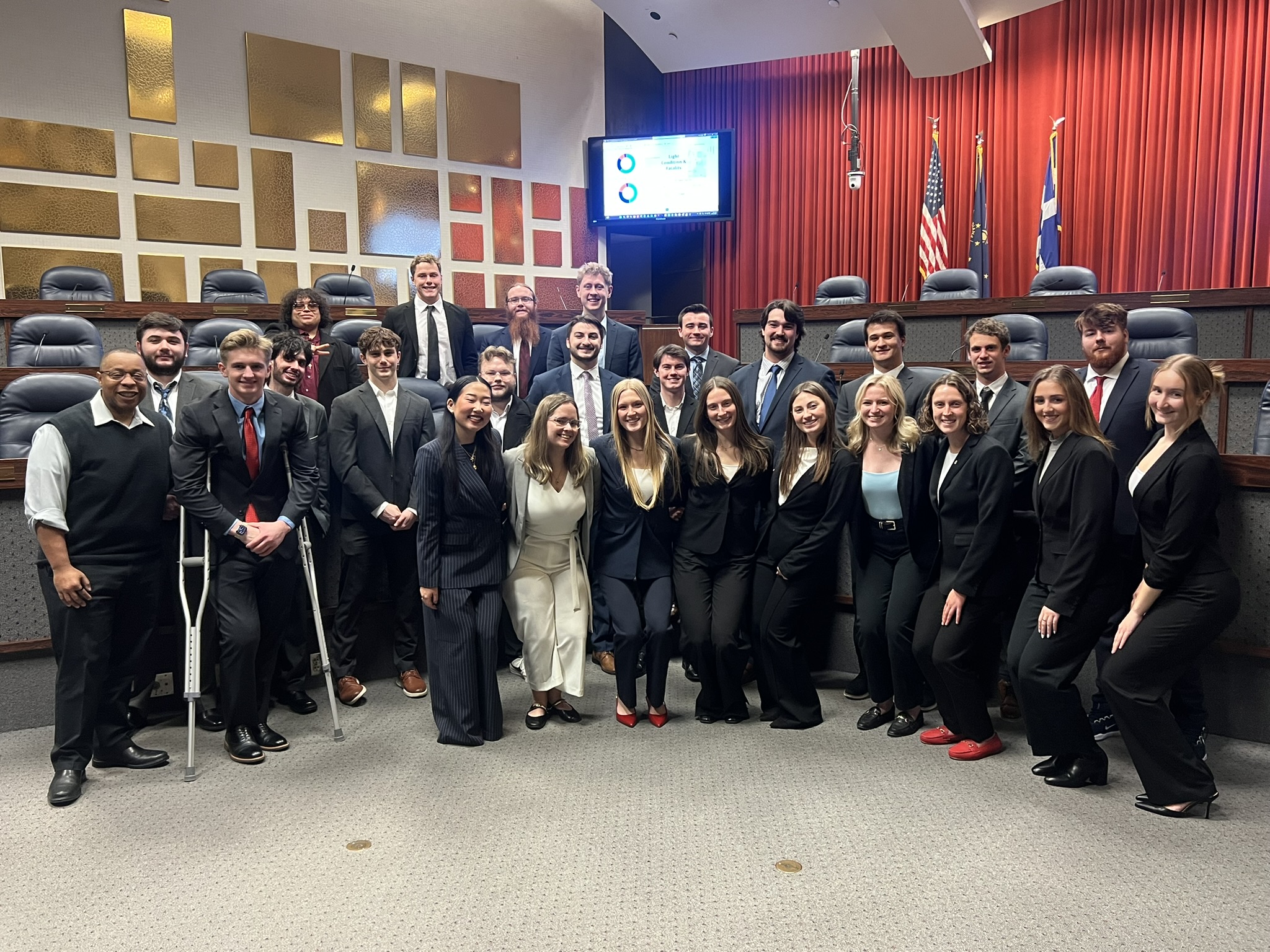
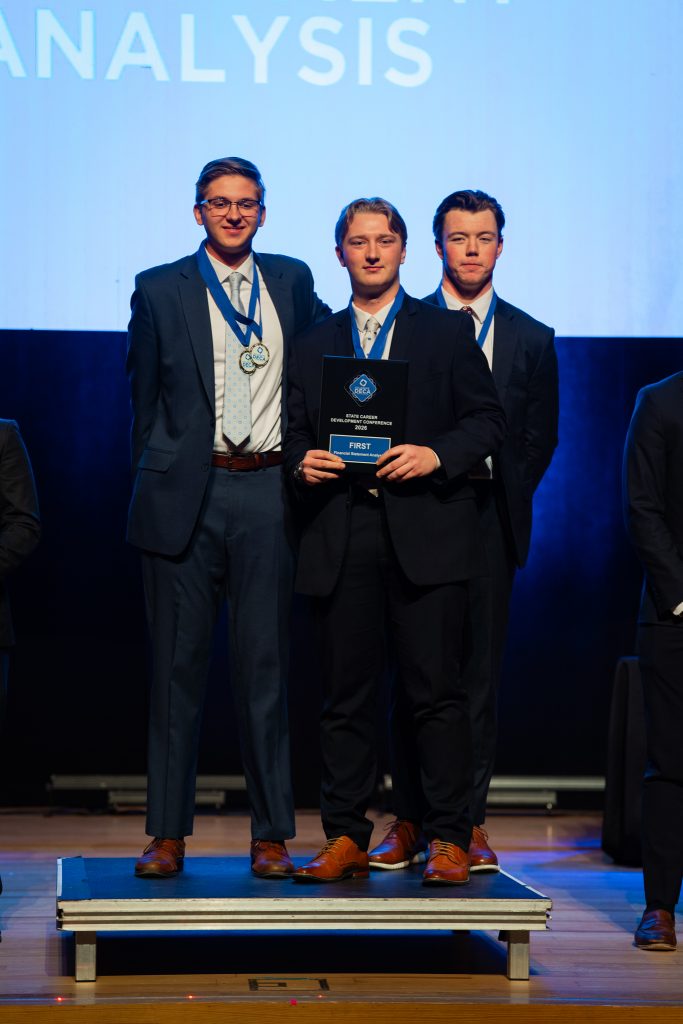
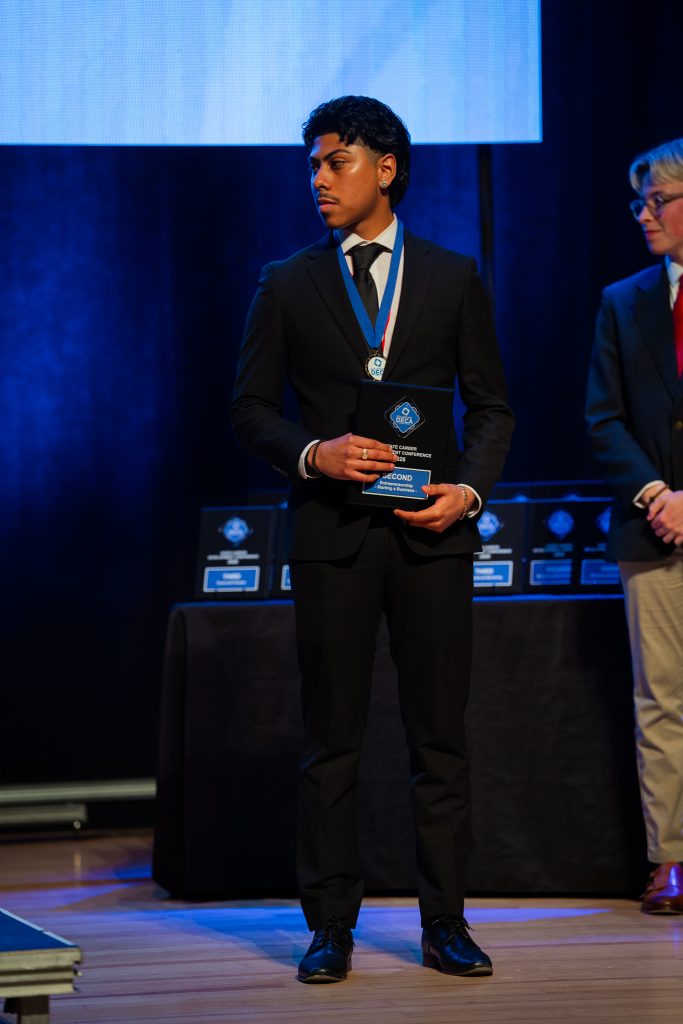
    Competitors from the Lacy School of Business delivered standout performances across numerous categories. First‑place finishes included Addison Altman and Zoe Meek in Business Ethics; Katie Kirch and Kate Parisi in Entrepreneurship – Starting a Business; Kelsey Babinec and Brooke Underwood in Event Planning; Jenna Burd and Trevor Storm in International Marketing; Jack Paulson in Sales Management and Leadership; and Preston Asher, who won both Corporate Finance and the Hoosier Case Study Event alongside teammates in Financial Statement Analysis. Their achievements reflected not only strong academic preparation but also the teamwork, adaptability, and communication skills that DECA events are designed to develop.

    As Butler competitors prepare for the International Career Development Conference, they carry with them the experience, confidence, and community formed during this inaugural statewide event. Hosting Indiana’s first Collegiate DECA state conference allowed the Lacy School of Business to showcase its commitment to preparing students through hands-on learning, employer engagement, and leadership development. It also signaled a major step forward for Indiana Collegiate DECA as it continues to expand opportunities for students throughout the state.

    The inaugural State Career Development Conference reflected not only the accomplishments of the past year, but the promise of what lies ahead – new partnerships, new challenges, and new opportunities for emerging business leaders to connect, grow, and make their mark.

  • When Data Gets Real: The NCAA Final Four Analytics Challenge

    When Data Gets Real: The NCAA Final Four Analytics Challenge

    It doesn’t start with a lecture or a textbook.

    It starts with a question – one without a clear answer – and a dataset big enough to feel intimidating. Students aren’t told exactly what to do or how to get there. Instead, they’re asked to figure it out, together, under real deadlines and real expectations.

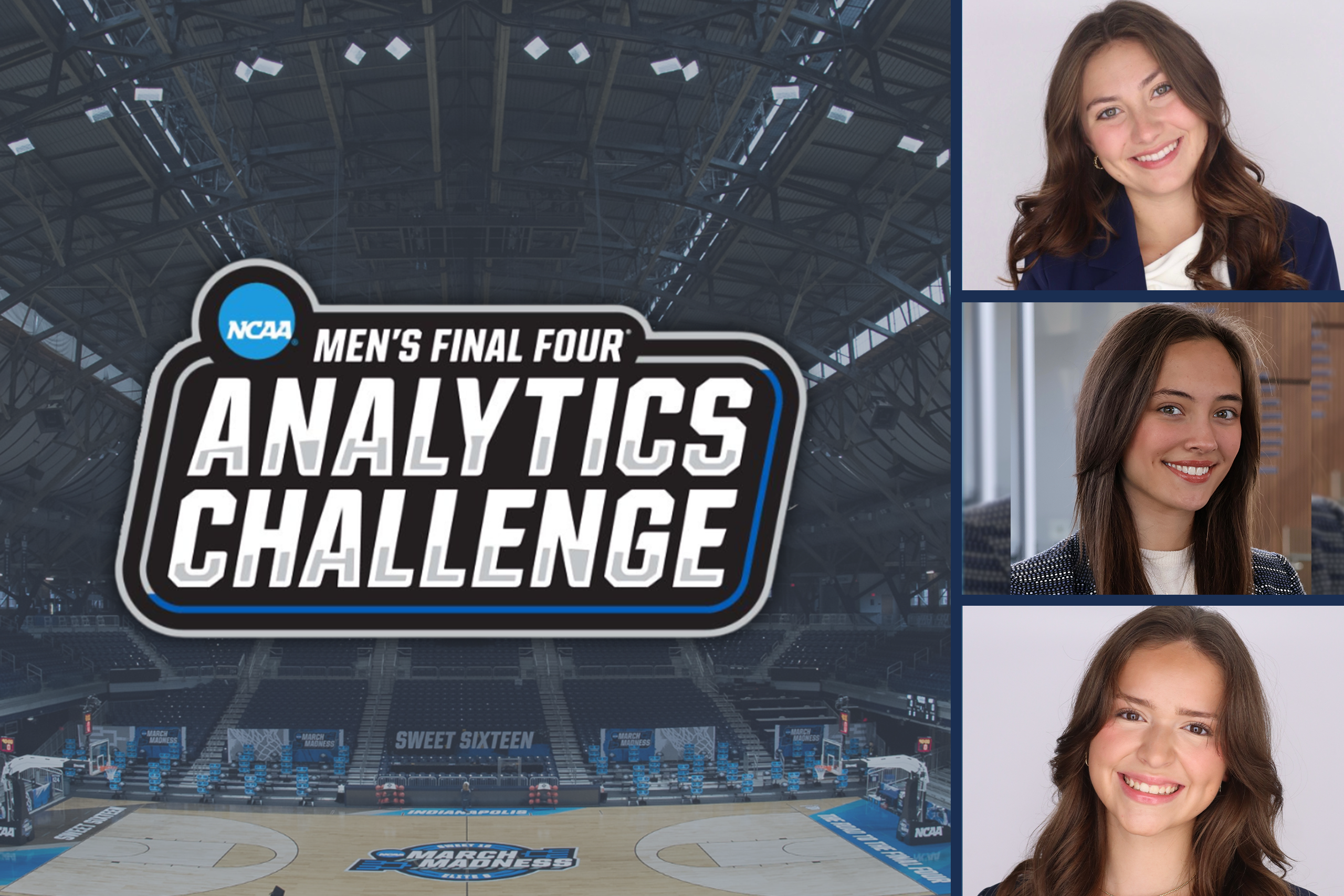
    That’s the premise of the NCAA Final Four Analytics Challenge, where analytics move beyond the classroom and into a professional arena. Using real NCAA data, students step into the role of analysts, strategists, and storytellers – applying technical skills while learning how to communicate insights that matter.

    Originally launched as a regional analytics competition, the challenge has grown into a statewide experience that mirrors Indianapolis’s role as both a basketball capital and an innovation hub. Now co-hosted by Butler University and the NCAA, the Final Four Analytics Challenge invites students from across Indiana to step into the kind of analytical work happening behind the scenes of major sporting events – and far beyond them.

    Students compete in teams of two to five, working through multiple rounds that require predictive modeling, visualization, and clear business communication. They’re asked not only to analyze data, but to explain it – translating complex findings into insights decision-makers can actually use.

    For many students, the draw is simple: it’s real.

    “As a Finance and Business Technology Analytics dual major, I wanted hands-on experience in data analysis, exploration, and modeling,” senior Jentry Gottfried said. “Knowing I could potentially present to the NCAA challenged me in a completely new way and opened my eyes to what a career in analytics can look like.”

    That challenge often pushes students well beyond what a traditional classroom can offer. Past participants describe learning new tools, navigating ambiguity, and working at a pace that mirrors professional environments.

    “This competition gave me hands-on experience with advanced Tableau modeling, Google Collaboratory, and data classification,” Gottfried said. “Those are skills you don’t just learn conceptually – you learn them by doing, at the scale real projects require.”

    The analytics challenge is intentionally designed to welcome students from a wide range of academic backgrounds. Analytics experience helps, but curiosity, collaboration, and problem-solving matter just as much.

    Senior Marianna Green, an international business and Spanish double major, didn’t initially see herself as an analytics student at all.

    “I had little to no interest in data analytics until I was encouraged to enroll,” Green said. “I doubted my skills, but the experience pushed me to think innovately, overcome challenges, and rely on the strengths of my team. It was fast-paced, and an incredible experience. I’m so grateful for the way it pushed me.”

    For many students, the impact extends well beyond the competition itself. Participants consistently point to the competition as a turning point – academically, professionally, or both.

    “The challenge broadened my perspective on the opportunities that exist in analytics,” Gottfried said. “It showed me how the skills we’re learning right now can make us changemakers in a rapidly evolving industry.”

    Juanita Rojas, a junior finance and economics double major, echoed that sentiment.

    “The challenge allowed me to apply analytical foundations from the classroom to a real-world problem,” Rojas said. “I learned how to balance technical analysis with clear, actionable insights – how to tell a data story that actually matters to stakeholders.”

    That ability to communicate insights is a core focus of the competition, and one that students say has followed them into internships and professional settings.

    “After the competition, my confidence with data visualization and advocating for recommendations grew significantly,” Rojas said. “It reinforced my interest in using analytics in real decision-making environments.”

    The experience begins with a Tip-Off Event on Feb. 2 at the NCAA Hall of Champions, where teams receive their case and connect with peers and professionals. Finalists advance to present in person on April 6 at the Indiana Convention Center just ahead of the Men’s National Championship game – a national stage that underscores just how real the work has become.

    For students considering whether to register, past participants offer simple advice.

    “Register to broaden your perspective, get hands-on experience, and work with a team that will push you to be better,” Gottfried said.

    “If you’re looking to expand your skill set in a competitive environment, this is it,” Green added. “The skills you take away will serve you long after the competition ends.”

    As Indianapolis prepares to welcome the Final Four, LSB students won’t just be watching the action – they’ll be contributing to the kind of analytical thinking that drives it. And by the end of the competition, they’ll walk away with more than experience.

    They’ll walk away knowing they can do the work.

  • Lacy School of Business Students Drive Real-World Change with Indianapolis Vision Zero Initiative

    Lacy School of Business Students Drive Real-World Change with Indianapolis Vision Zero Initiative

    At the Lacy School of Business, our students don’t just learn about data analytics – they apply it to real-world challenges that make a tangible impact on our community. This fall, a group of senior students partnered with the Indianapolis Department of Public Works (DPW) to contribute to Vision Zero, the city’s ambitious initiative to eliminate traffic fatalities and serious injuries by 2035.

    Through this collaboration, students worked on multiple projects analyzing live traffic data to identify high-risk areas across Indianapolis. One focus area was Michigan Road, where a significant number of traffic-related fatalities have occurred. By examining detailed data – including traffic speeds, patterns, and street usage – students developed actionable recommendations for improving safety, such as where medians or other traffic-calming measures could be most effective.

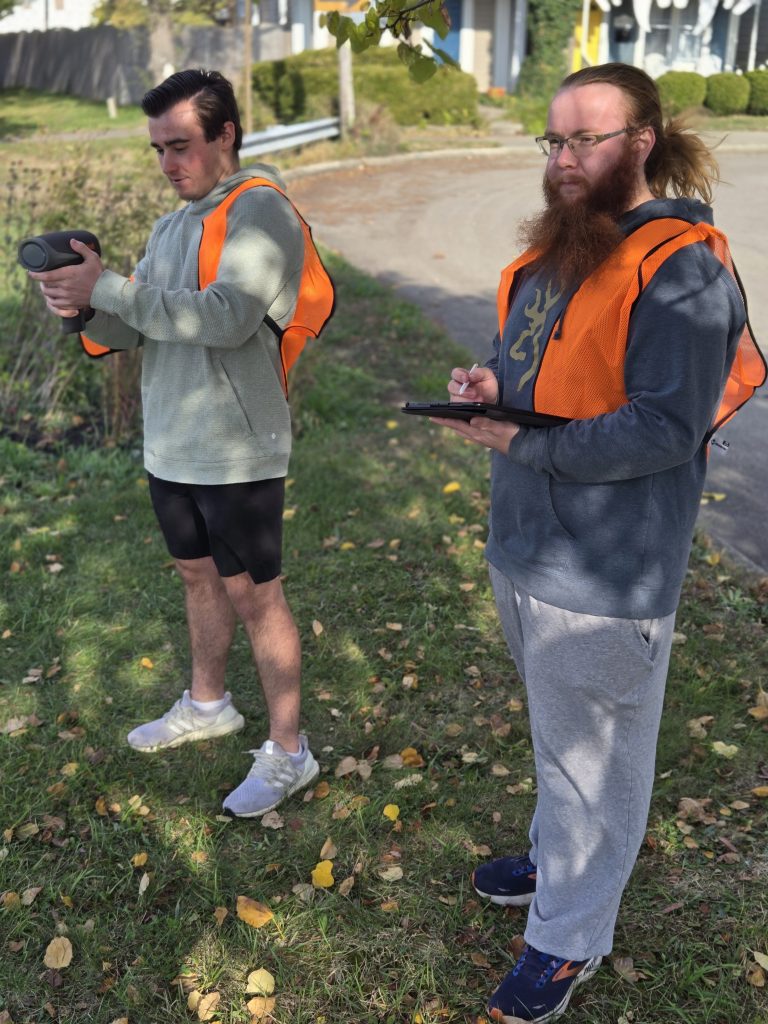
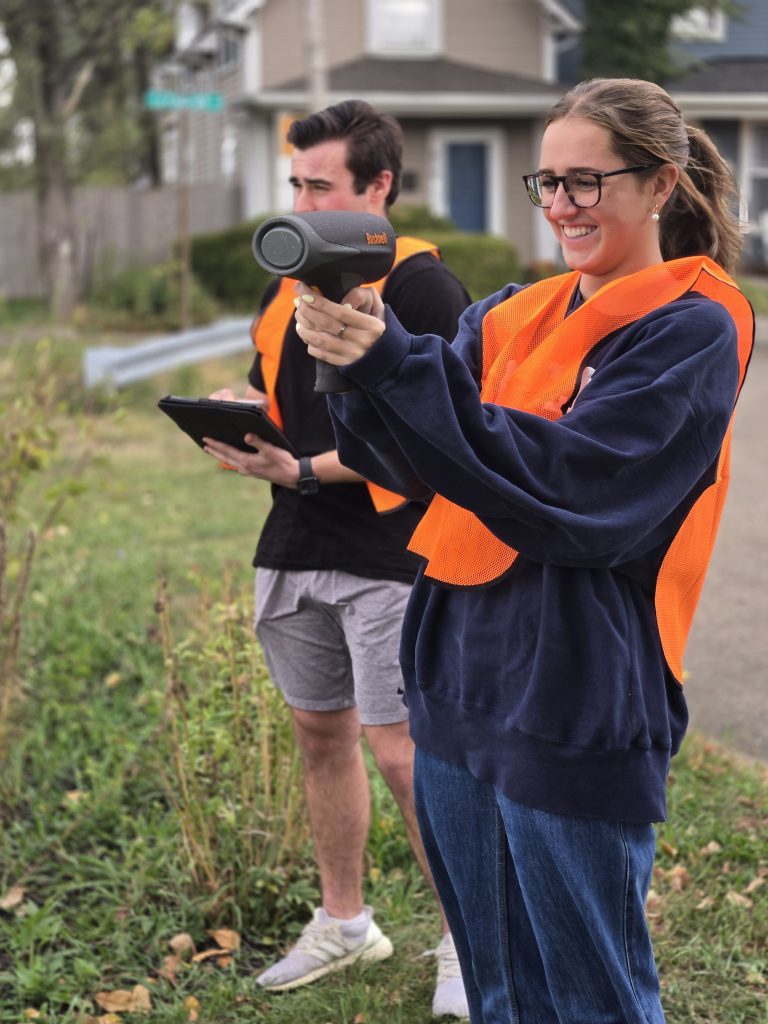
    Another project brought students directly into the heart of the city, in Fountain Square, where they studied the effects of a “road diet” that reduced lanes to slow traffic and installed urban safety devices. Using speed guns and pre/post observations, students tracked vehicle speeds on roads with and without medians, giving them direct insight into how street design influences driver behavior.

    “This project allowed students to see firsthand how data, design, and human behavior intersect on our streets,” Dr. Jason Davidson, assistant professor of management information systems, said. “They weren’t just analyzing numbers – they were observing, learning, and contributing to solutions that could save lives.”

    For Natalie Bayes, a statistics major and data science minor, the opportunity to participate was both exciting and eye-opening. “I’ve never done research before, so when I heard about the Vision Zero partnership, I reached out to Dr. Davidson right away,” she said. “I was really excited to be onsite, collecting data and using speed guns – not just working with numbers on a spreadsheet.”

    The New Jersey native was particularly impacted by the hands-on nature of the work. “Working with the Department of Public Works gave me a perspective on how the city operates,” she explained. “I got to work closely with the traffic signal engineer, and it was fascinating to conceptualize what goes into traffic planning. There are things you don’t think about, and it was fun to contribute to solving real problems.”

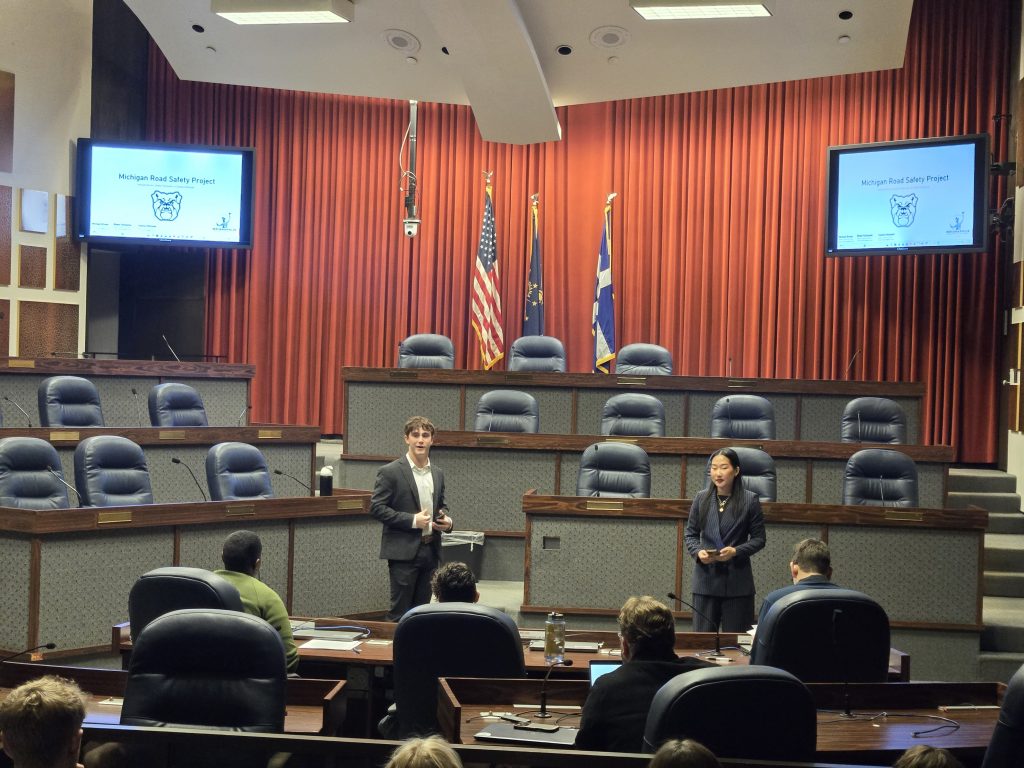
    Students presented their findings and recommendations at the City-County Building in early December, creating dashboards and actionable insights that directly inform the DPW’s ongoing safety initiatives.

    Vision Zero reflects Indianapolis’ commitment to creating streets that are safe, equitable, and accessible for everyone – whether walking, biking, driving, or using public transit. By partnering with local government on these initiatives, LSB students are not only learning critical analytical and research skills – they are actively helping shape a safer, smarter city.

    “Hands-on learning is so important,” Natalie added. “If you stay in the classroom, you lose sight of the ‘why.’ Applying what you learn to real-world situations is exactly what you’ll do in every career.”

  • Thinking Like a Business Leader: Inside First-Year Business Experience and Top Dawg

    Thinking Like a Business Leader: Inside First-Year Business Experience and Top Dawg

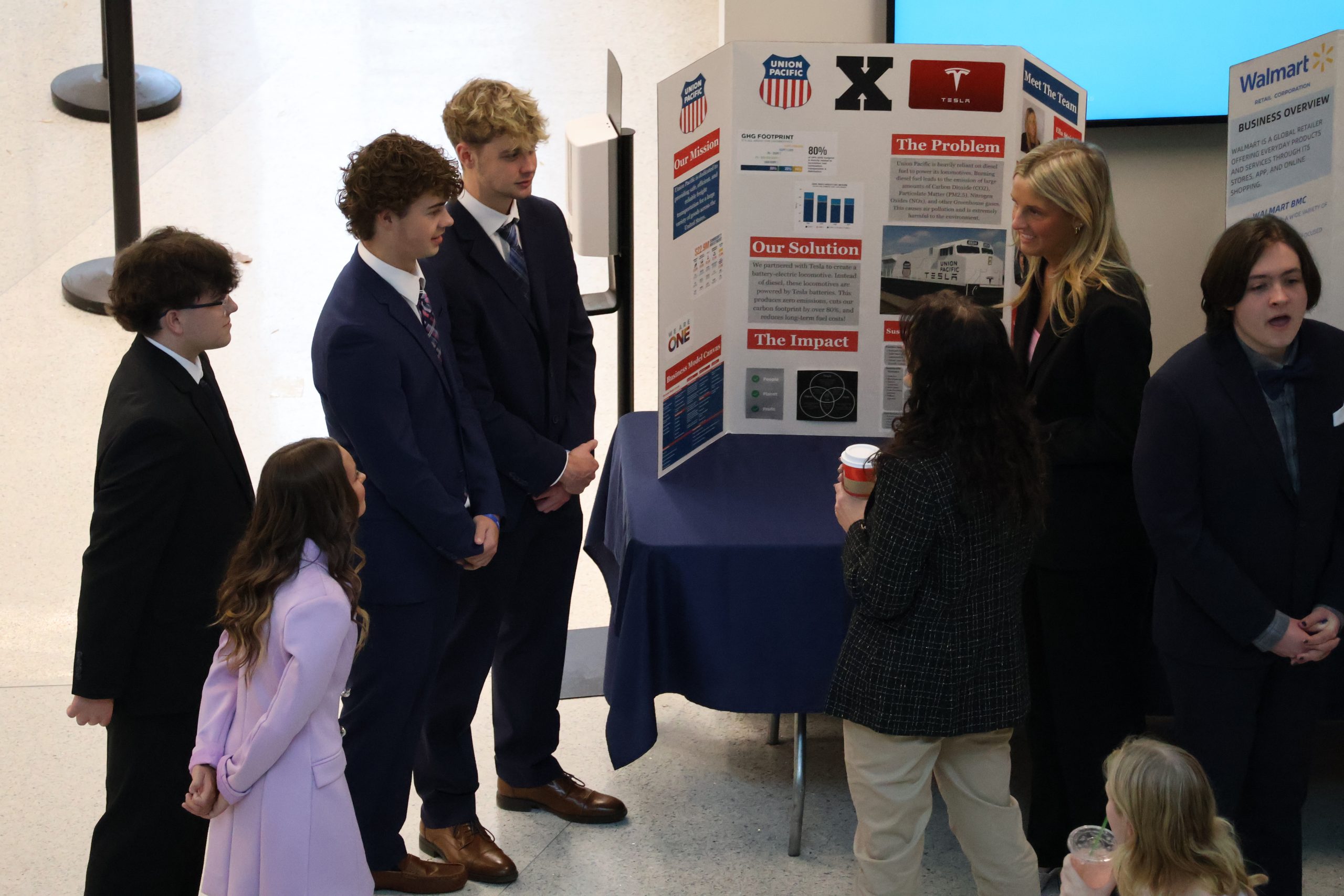
    Before most first-year students have even settled into campus life, they’re handed a challenge: Here’s a real company. Here’s a problem. Now go figure out what to do about it.

    That’s the heartbeat of the First-Year Business Experience (FBE), a course that throws students into the world of business from day one, letting them learn by building, creating, presenting, and discovering. It’s the class that nudges them out of the familiar and into the mindset of someone who asks hard questions, digs for answers, and thinks like a business professional from the start.

    Teams begin the semester by diving into a publicly traded company – an intentional decision that gives students access to real data and real insight.

    “We choose publicly traded companies because students can dig in and find real research,” Brenda Geib-Swanson, Lecturer of Entrepreneurship & Innovation, said. “They don’t know what they don’t know yet, so exploring everything – from marketing to logistics to organizational structure – opens their eyes to how businesses actually operate.”

    This year, every company touched the logistics industry: shipping, fuel, warehousing, and the many layers of supply chain work that shape how products move through the world. For many students, it’s the first time they’ve seen how interconnected business truly is.

    The turning point of the semester comes during the final four weeks, when teams enter what Professor Geib-Swanson calls the “sustainability sprint.” After uncovering a sustainability issue within their chosen company – whether it’s emissions, waste, inefficiency, or something less obvious – they begin ideating a bold, research-backed solution. They sketch, test, revise, and refine, often discovering that the solution they start with is not the one they end up championing.

    “Sustainability is a hot topic, and we want them to think creatively,” Professor Geib-Swanson said. “This is where they practice ideation, problem solving, business writing, and business presenting. Even if they won’t become entrepreneurs, they still need those skills.”

    For first-year exploratory business student Charlotte Potts, the sprint revealed a challenge she didn’t expect to enjoy. “I’m not a numbers person, so the toughest part was getting them right,” she said. “But I ended up handling the cost-benefit analysis, and seeing everything come together – and actually be accurate – felt really rewarding.”

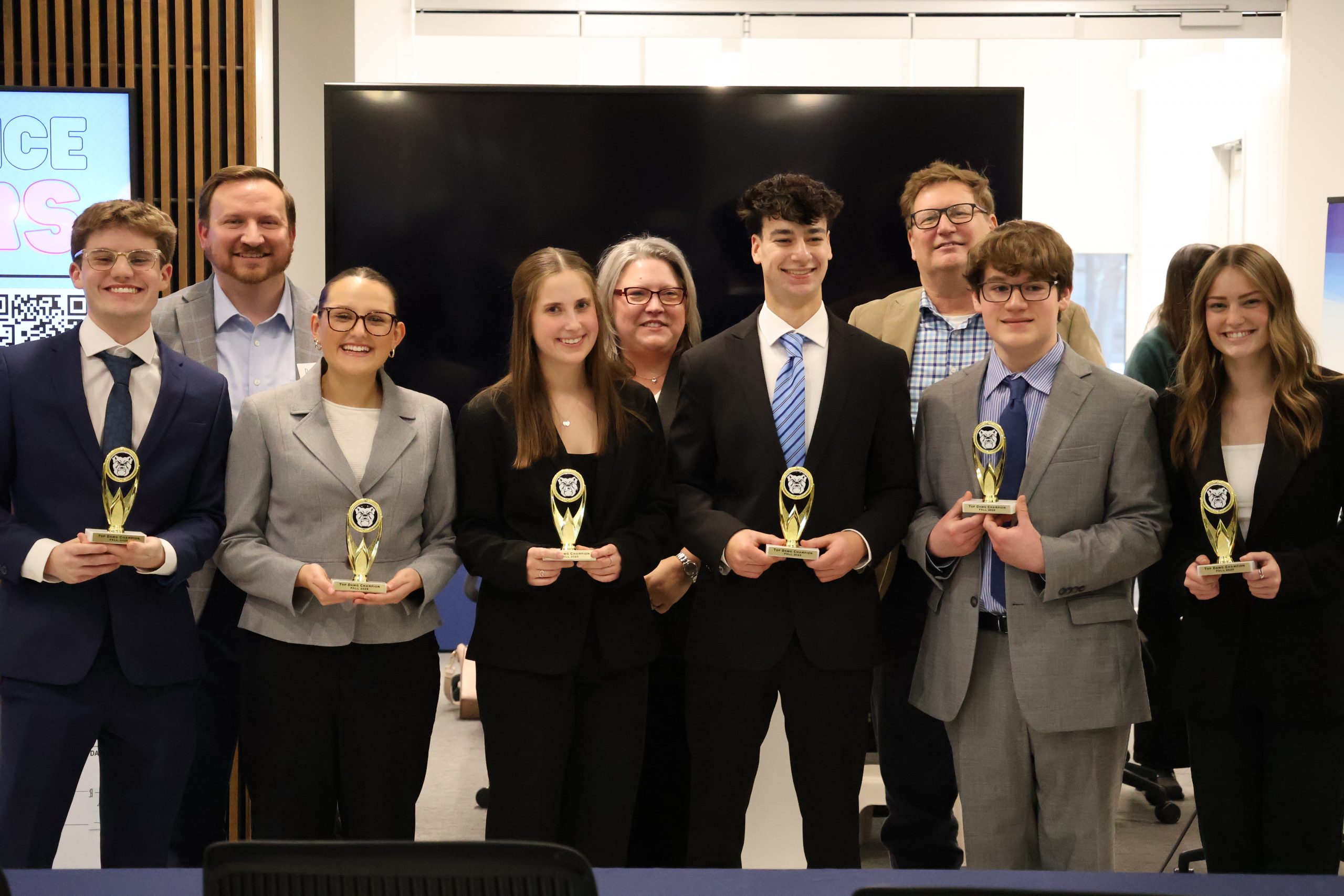
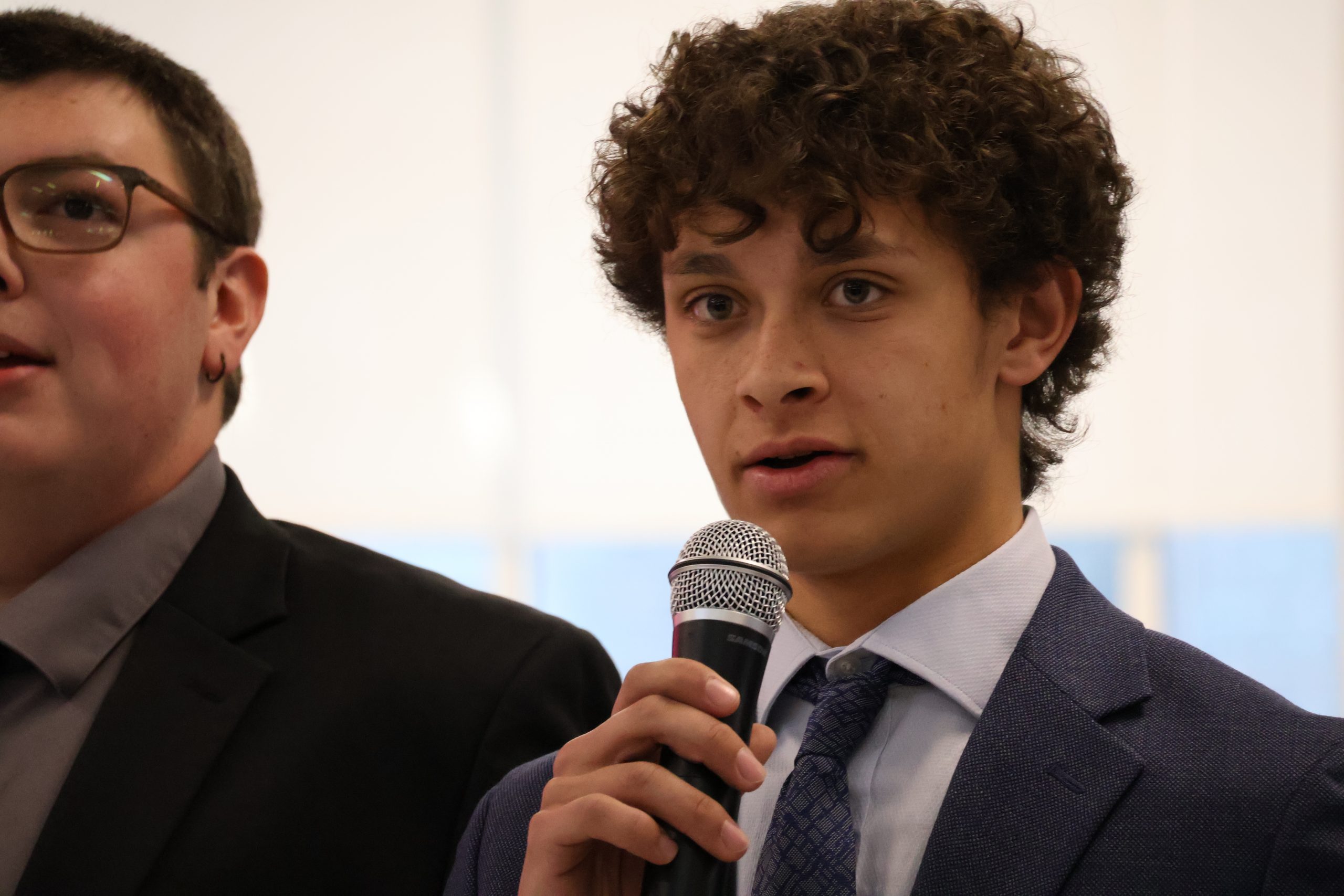
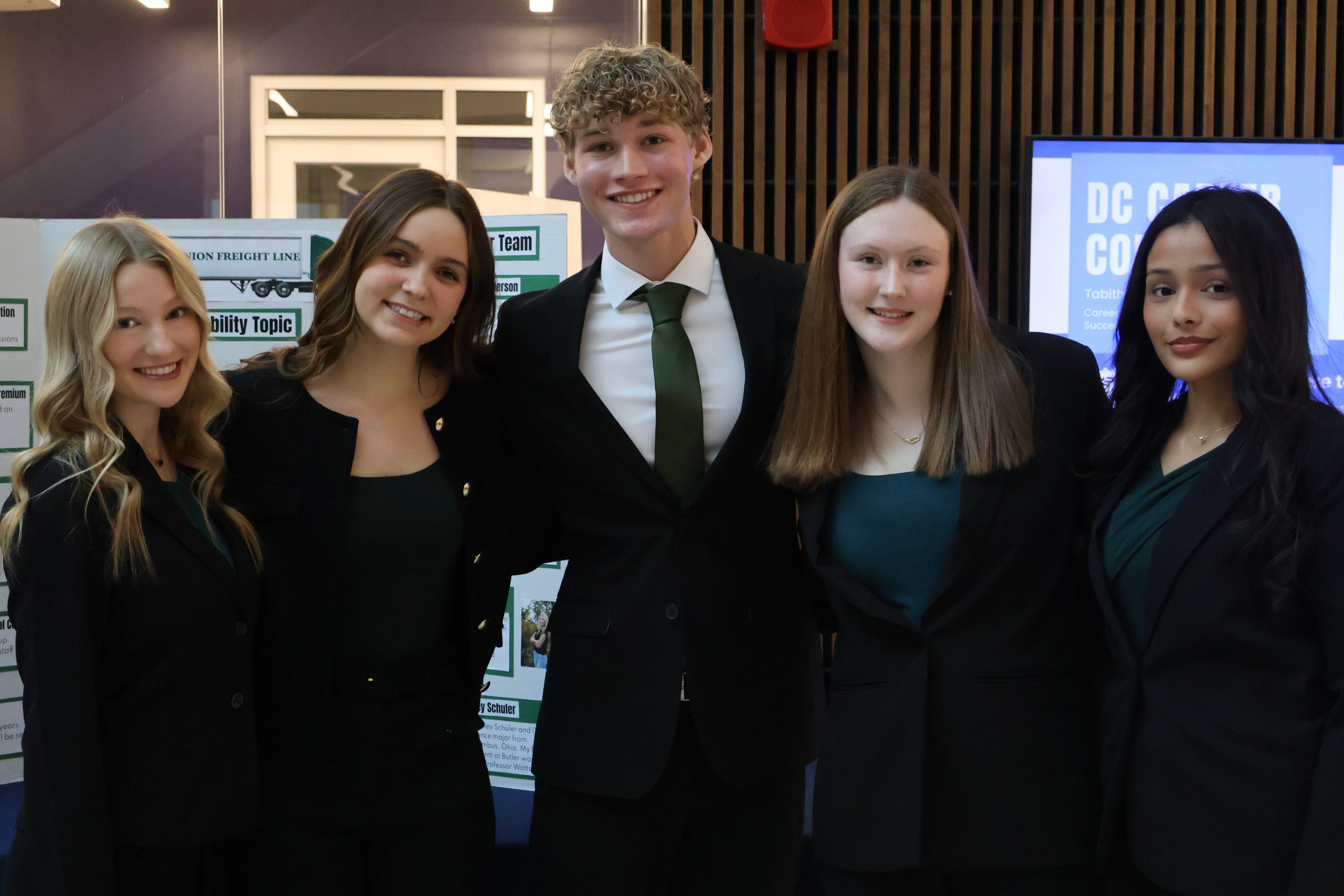
    By the end of the sprint, every team produces a research poster, a one-minute elevator pitch, and a full 4–7 minute presentation. Each class section votes on a winner, and those teams advance to one of the most anticipated traditions of the semester: the Top Dawg First-Year Competition, where section winners pitch to a panel of business professionals. The ultimate Top Dawg earns an automatic A and bragging rights that last long past finals week.

    “It’s really fun,” Professor Geib-Swanson said. “The energy, the ideas, the excitement – students surprise us every year with how far they take this project.”

    By the end of the semester, the transformation is unmistakable. Students who walked in unsure of what business school might look like leave with real experience in ideation, creativity, innovation, and complex problem solving. They’ve researched real companies, uncovered meaningful sustainability challenges, and learned how to communicate their ideas clearly and confidently. They’ve stretched themselves, surprised themselves, and discovered something essential about who they are and who they’re becoming.

    For many, Top Dawg is the defining moment – the culmination of a semester of hard work, curiosity, and creativity. For others, it’s simply the spark – the moment they realize they are capable of thinking like a business leader long before they’ve completed their first year.

    “It’s important to be open to learning as much as you can. You’ll get out of this what you put into it,” Charlotte said. “Problem-solving, teamwork, communicating – these are skills I know I’ll use in future classes and in my career.”