Category Archives: Uncategorized
HPV Vaccine for Preteens and Teens
Why does my child need HPV vaccine?
This vaccine is for protection from most of the cancers caused by human papillomavirus (HPV) infection. HPV is a very common virus that spreads between people when they have sexual contact with another person. About 14 million people, including teens, become infected with HPV each year. HPV infection can cause cervical, vaginal, and vulvar cancers in women and penile cancer in men. HPV can also cause anal cancer, mouth/throat (oropharyngeal) cancer, and genital warts in both men and women.
When should my child be vaccinated?
The HPV vaccine is recommended for preteen boys and girls at age 11 or 12 so they are protected before ever being exposed to the virus. HPV vaccine also produces a higher immune response in preteens than in older adolescents. If your teen hasn’t gotten the vaccine yet, talk to their doctor about getting it for them as soon as possible.

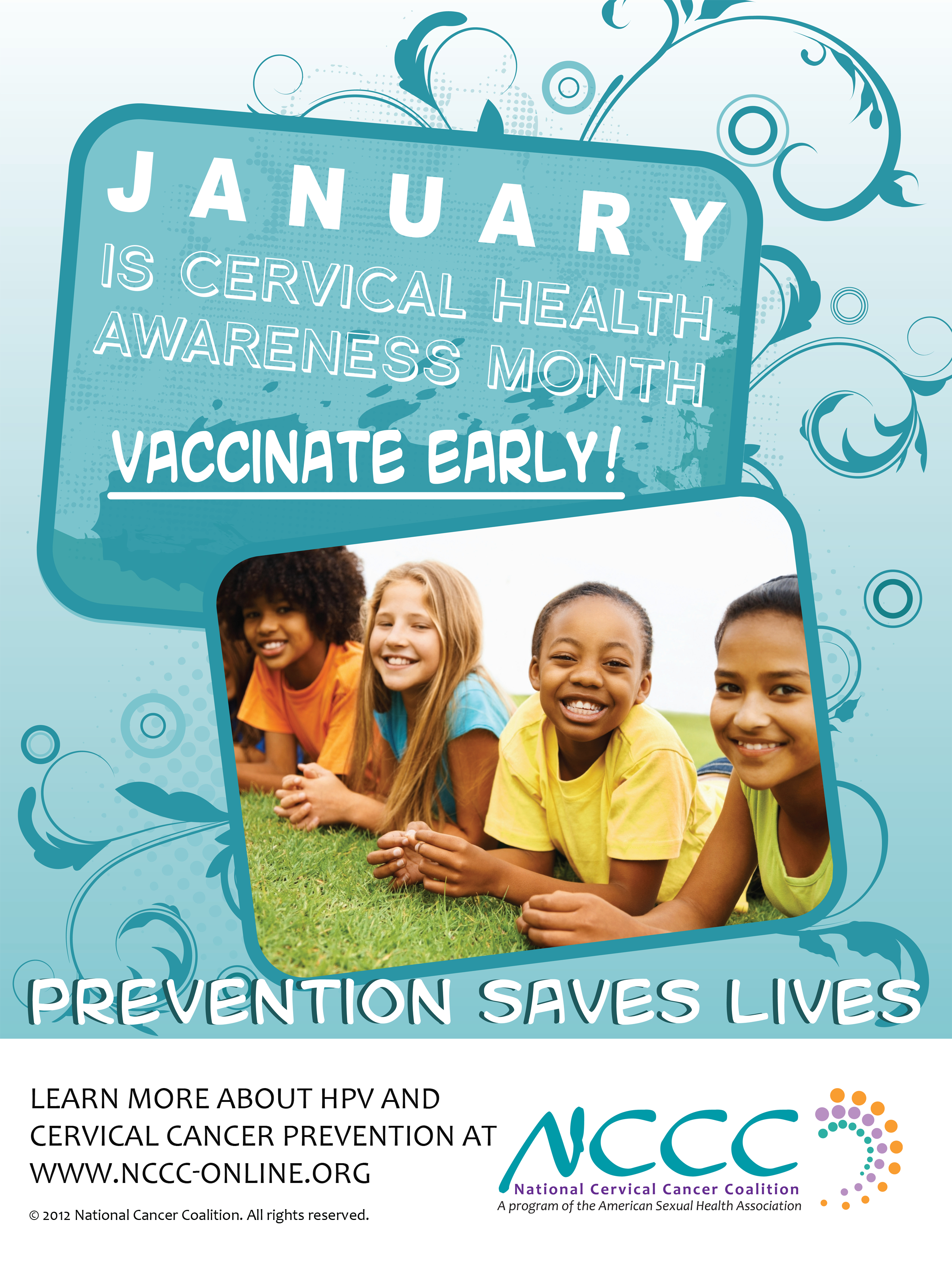
HPV CANCER PREVENTION
Preteens need HPV vaccine now to prevent many of the cancers caused by HPV later.
The HPV vaccine is given in 3 shots. The second shot is given 1 or 2 months after the first shot. Then a third shot is given 6 months after the first shot.
What else should I know about HPV vaccine?
There are two HPV vaccines. Girls and young women should get either HPV vaccine to prevent cervical cancer.
One of the HPV vaccines also protects against genital warts and anal cancer in both females and males.Boys should get this HPV vaccine to prevent anal cancer and genital warts. Girls can get this vaccine to prevent cervical cancer, anal cancer and genital warts.
Both HPV vaccines have been studied very carefully. These studies showed no serious safety concerns. Common, mild adverse events (side effects) reported during these studies include pain in the arm where the shot was given, fever, dizziness and nausea.
Some preteens and teens might faint after getting the HPV vaccine or any shot. Preteens and teens should sit or lie down when they get a shot and stay like that for about 15 minutes after the shot. This can help prevent fainting and any injury that could happen while fainting.

Serious side effects from the HPV vaccine are rare. It is important to tell the doctor or nurse if your child has any severe allergies, including an allergy to latex or yeast. HPV vaccine is not recommended for anyone who is pregnant. HPV vaccination is recommended by the Centers for Disease Control and Prevention (CDC), the American Academy of Family Physicians, the American Academy of Pediatrics, and the Society for Adolescent Health and Medicine.
January – Cervical Cancer Awareness Month
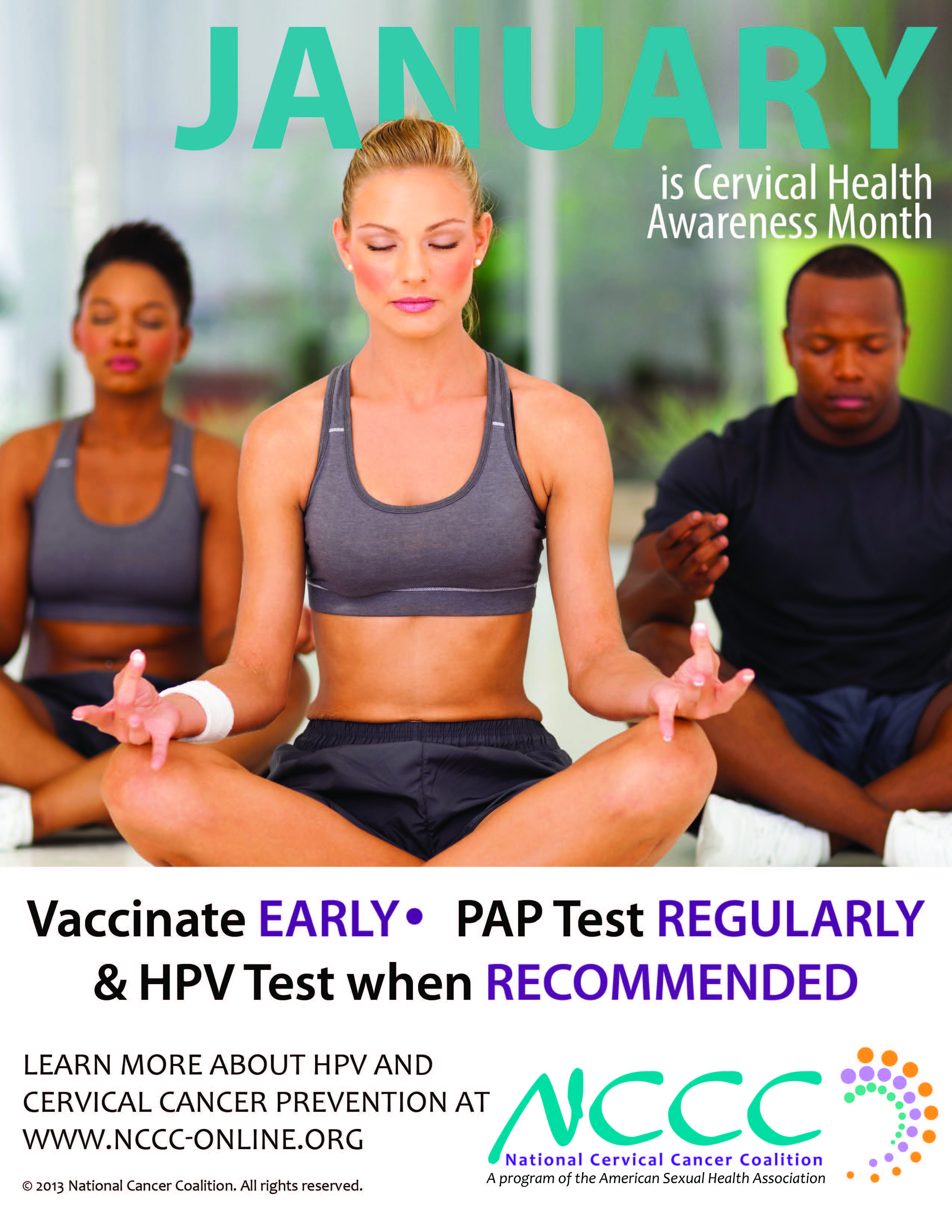
Cervical Cancer is Preventable! Listen To This

Prevent Cervical Cancer
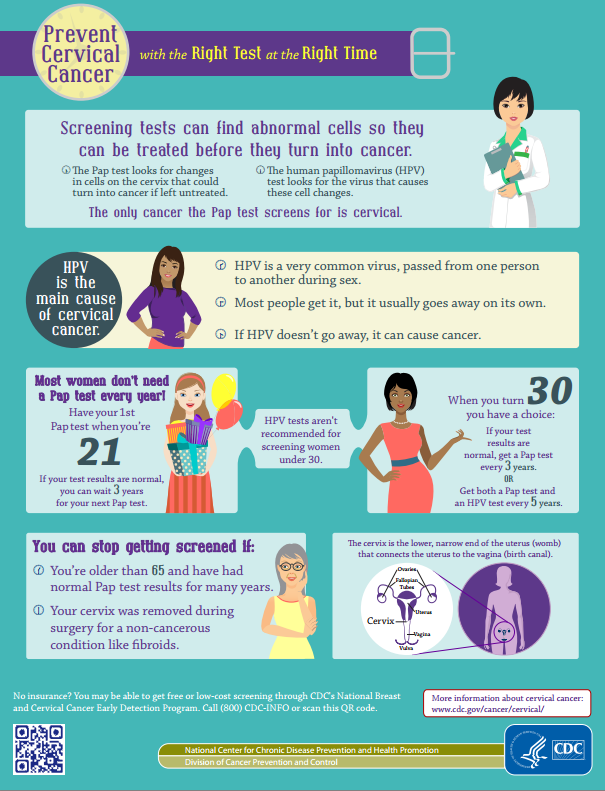
Take a look at this infographic on how to prevent cervical cancer.
Get Tested for Cervical Cancer
The Basics
How often should I get screened (tested)?
How often you should get screened for cervical cancer depends on how old you are and which tests you get.
If you are age 66 or older, ask your doctor if cervical cancer screening is recommended for you.
What happens during a Pap test?
A Pap test takes about 2 to 5 minutes. It may feel uncomfortable, but a Pap test doesn’t hurt.
While you lie on the exam table, the doctor or nurse will put a medical tool (called a speculum) into your vagina and open it to see your cervix. The doctor or nurse will use a special brush to collect a few cells from your cervix. These cells are sent to a lab to be checked by an expert.
The doctor or nurse will also do a pelvic exam to check your uterus, ovaries, and other organs.
What is cervical cancer?
Cervical cancer is cancer of the cervix, which is the lower, narrow part of the uterus (or womb).
Abnormal cells in the cervix can turn into cancer if they are not found early and treated. Cervical cancer is more common in women over age 30.
The cervix connects the uterus (or womb) to the vagina.

Learn more about cervical cancer and screening:
Take Action!
Take these steps to help prevent cervical cancer.
Schedule your Pap test.
Call a doctor’s office or local health clinic to schedule your Pap test and pelvic exam.
What about cost?
Testing for cervical cancer is covered under the Affordable Care Act, the health care reform law passed in 2010. Depending on your insurance plan, you may be able to get tested at no cost to you.
- If you have private insurance, check with your insurance provider to find out what’s included in your plan. Ask about the Affordable Care Act.
- If you don’t have insurance, find a program near you that offers free or low-cost Pap tests.
- If you have Medicare, find out how often Medicare covers Pap tests and pelvic exams.
For information about other services covered by the Affordable Care Act, visit HealthCare.gov.
Get ready for your Pap test.
Try to schedule your Pap test for a time when you won’t have your period. For 2 days before your test, doctors recommend that you don’t:
- Use tampons
- Have sex
- Use birth control creams, foams, or jellies
- Douche (rinse the vagina with water or other liquid)
Lower your risk of cervical cancer.
A major cause of cervical cancer is HPV (human papillomavirus). HPV is the most common STD (sexually transmitted disease).
Some types of HPV can cause genital and anal warts. Other types of HPV can cause cervical cancer and other cancers.
You are at higher risk of getting HPV if you:
- Started having sex before age 18
- Have unprotected sex
- Have many different sex partners
- Have a sex partner who has other sex partners
Check out these websites for more information on HPV:
Get the HPV vaccine.
Doctors recommend that women age 26 and younger get the HPV vaccine. The HPV vaccine is given in 3 shots over 6 months. The shots protect against the types of HPV that cause most cases of cervical cancer. Find out more about the HPV vaccine.
Girls and boys can get the HPV vaccine, too. If you have kids, ask their doctor about the HPV vaccine.
Get your well-woman visit every year.
During your visit, talk to the doctor or nurse about other important screenings and services to help you stay healthy. Find out more about getting your well-woman visit every year.
January – Cervical Health Awareness Month
January is Cervical Health Awareness Month, and Healthy Horizons wants you to know that there’s a lot you can do to prevent cervical cancer.
HPV (human papillomavirus) is the most common sexually transmitted disease. It’s also a major cause of cervical cancer. About 79 million Americans currently have HPV, but many people with HPV don’t know they are infected.
The good news?
- HPV can be prevented by the HPV vaccine.
- Cervical cancer can often be prevented with regular screening tests (called Pap tests) and follow-up care.
In honor of National Cervical Health Awareness Month, Healthy Horizons encourages:
- Women to start getting regular Pap tests at age 21
- Women to get the HPV vaccine before age 27
- Parents to make sure their pre-teens get the HPV vaccine at age 11 or 12
- Men to get the HPV vaccine if you are under age 22
Thanks to the health care reform law, you and your family members may be able to get these services at no cost to you. Check with your insurance company.
New Year’s Resolutions For Health And Wealth

• Focus on being healthy today with attitude, exercise, natural food, plenty of sleep and quality time and communication with extended family. Get the most happiness with minimal stress out of today.
• Review your income and spending plan so that you are reminded of how much you can spend today, this week, this month and this year, in order to limit current and future financial stress.
• Stay alert today to any person who appears to need help or assistance and place a priority taking the time to do whatever you can to make that person’s day and life better.
Start 2015 On A Laugh!

Happy New Year