What’s that you’re drinking?

We all have our favorite drinks we get when we get thirsty. But did you know that just like eating healthy food, we need to drink healthy drinks?

Look at this chart with your parent and check to see whether each drink is healthy, not healthy, or okay to drink sometimes. Post this chart on the refrigerator as a reminder and to encourage your whole family to switch to healthy drinks with you!

Type of Drink What’s in it? How does it help my body? Why should I be careful? Should I drink it? Is it healthy?
Regular soda It has a lot of calories* but no nutrients** (See the definition down below if you don’t know what a calorie or nutrient is.) Even though soda may taste good, it does not give any of the nutrients that your body needs. Soda provides more sugar than your body needs, which can cause not only weight gain, but also tooth decay and cavities.*** Yikes! The less soda you drink the better; try drinking water or fat-free (skim), 1 percent fat, or low-fat milk instead. YES

NO

Sometimes

Diet soda Diet soda doesn’t have any calories, but it doesn’t have any nutrients either. Diet soda does not provide any of the nutrients your body needs. Like regular soda, diet soda can lead to tooth decay and cavities too. Diet soda is okay to drink occasionally, but be sure to drink enough water and fat-free (skim) milk to make sure you are getting all your nutrients YES

NO

Sometimes

Fat-Free Milk
(Skim Milk)
Many good nutrients your body needs, like calcium and protein. These help you build strong bones and muscles. Calcium helps to keep your bones and teeth strong and protein helps you build strong muscles. Not all milk is the same. Some milk contains a lot of extra fat (like in whole milk and 2% fat milk) that your body doesn’t need. Make sure to grab ones that say fat-free (skim) or 1% fat.. To get enough calcium and protein, you will want to drink a few glasses of low-fat (1%) or fat-free (skim) milk every day. Try having a glass at breakfast, lunch, and dinner, or for a snack. YES

NO

Sometimes

Chocolate Milk Many good nutrients your body needs, like calcium and protein. The chocolate and other flavors of milk are okay, but they have some extra calories from sugar that regular milk doesn’t have. Calcium helps to keep your bones and teeth strong and protein helps you build strong muscles. Make sure to get low-fat (1%) or fat-free (skim) milk so that you aren’t drinking too much fat! To get enough calcium and protein, you will want to drink a few glasses of low-fat (1%) or fat-free(skim) milk every day. Try saving chocolate and other flavored milks for occasional treats or desserts. YES

NO

Sometimes

Water, Just water! There are no calories in water, but it is something that your body needs plenty of. Water helps your body do its jobs like keeping your body temperature cool and helping you digest food. Also, water helps you control the number of calories you eat and maintain your weight. It is important to drink water every day. Our bodies are mostly made of water; it is in all of our cells, tissues, muscles, everywhere! So be sure to get your fill to keep your body from getting thirsty. YES

NO

Sometimes

Sugary drinks (Like flavored drinks and sports drinks) A lot more sugar than your body needs. Some sugary drinks (like sweetened juice, fruit drink, fruit punch) may have some of the nutrients you need, like vitamins and minerals, but should not take the place of 100% juice or water. Sugary drinks provide more sugar
than your body needs,
which can cause not only
weight gain, but also tooth
decay.
The less you have of these sugary drinks, the better. Look for drinks that have fewer calories and get nutrients from drinks like fat-free (skim) milk. YES

NO

Sometimes

Energy drinks Some energy drinks contain a lot of sugar or artificial sweeteners, caffeine and other chemicals that you can’t even pronounce. Even though  energy drinks may wake your body up for a while, they often have a hard “crash” after the effects wear off. Having energy drinks may increase the chances of developing an abnormal heart rhythm and it increases you blood pressure, which can strain your heart. Try drinking a full glass of water if you feel tired, or lay down for a 20-minute cat-nap. Both of those things can help energize you during an afternoon slump. YES

NO

Sometimes

100% Fruit Juice The 100% juice label means that everything in the bottle came from a fruit or vegetable, but not necessarily the fruit or vegetable you think you’re drinking. Drinking juice isn’t a substitute for eating fruit, but it can be healthier than some sugary drinks. Know what you’re drinking! Calories from juices can add up quickly. For example: 4 oz of 100% grape juice has 76 calories! Sometimes — and you can even eat it! Put 100% fruit juice in an ice tray and freeze it to make mini-popsicles. YES

NO

Sometimes


GardenFest

Saturday, March 25, 2017, 9:00 AM.
GardenFest at Hoosier Harvest Church in Martinsville.

30 garden-related vendors, speakers, pansy sale, food service, seed and native tree giveaways, and more, presented by the Morgan County Master Gardeners. 9 AM to 3 PM. Free admission. Info: 765-346-5611.
Location: Hoosier Harvest Church, 4085 Leonard Road, Martinsville, Morgan County.
visitmorgancountyin.com/

Free Large Indoor Play Park – NW Indpls

http://indywithkids.com/locations/the-park-free-indoor-playground-at-traders-point-church/

Location:

Traders Point Northwest
6590 S Indianapolis Rd
Whitestown, IN 46075

Hours:

Monday to Friday – 8 a.m. to 8 p.m.
Saturday – 8 a.m. to noon
Sunday – 2 to 8 p.m.

The Park is free and open to everyone in the community, so whether you’re stopping by to let your children work off extra energy, meeting some friends to reconnect while your kids play, or want to relax while your kids play in a safe, fun environment, we hope you feel at home and know you are welcome.

If you have any questions or need help, stop by and talk with one of our park attendants or emailpark@tpcc.org.

Colorectal Cancer Myths and Facts

Colorectal Cancer Myths and Facts

Colorectal cancer, often referred to as colon cancer, is the third leading cancer killer among men and women in the U.S. Colorectal cancer is largely preventable with regular screening, and is curable with early detection.

A study by leading cancer groups states that deaths from colorectal cancer in the U.S. are down nearly five percent, more than the other leading cancer killers (lung, breast and prostate cancers). Among the key factors credited with the decline is prevention through screening and the removal of precancerous polyps.

Approximately 140,000 people are diagnosed with colon cancer in the U.S. and over 50,000 people die from it annually.

There are many myths about colorectal cancer, such as that the procedure to screen for the disease is painful, when in fact a colonoscopy is well tolerated and can save your life.

Let’s explore more myths about colon cancer and the facts patients need to know.
Myth: Colon cancer only affects men
Colon cancer affects both men and women, in fact approximately 26,000 women die every year from colon cancer. It is an equal opportunity disease that does not discriminate against gender or race. Your age, not your gender, is the single most important risk factor for colorectal cancer. Both men and women should undergo testing for the disease starting at age 50. Most insurance covers colonoscopy screening at age 50. If you are 65 or older, colonoscopy is covered by Medicare. For many people, you do not need a referral.

Myth: You don’t need to be screened for colon cancer if you have regular bowel movements and are feeling fine
Colon cancer is a silent killer. Usually there are no symptoms to rely on, and when there are symptoms, the cancer may be at an advanced stage. When colon cancer is caught early, most people are cured. However, when colon cancer is detected at later stages, the chances for cure are much lower.

Although colon cancer often has no symptoms, warning signs that may indicate colon cancer include blood in your stools, narrower than normal stools, unexplained abdominal pain, unexplained change in bowel habits, unexplained anemia, and unexplained weight loss. These symptoms may be caused by other benign diseases such as hemorrhoids, inflammation in the colon or irritable bowel syndrome. However, if you have any of these symptoms, you should be evaluated by your physician.

There are certain behaviors that can increase or decrease your risk for colorectal cancer. A high fat diet, smoking and excessive alcohol intake may increase your risk of colorectal cancer. On the other hand, exercise and a healthy balanced diet containing certain minerals and vitamins might decrease your chances of getting colorectal cancer. However, there is no substitution for getting tested. Starting at age 50, everyone should have a colonoscopy to screen for colon cancer, regardless of their lifestyle. In fact, colonoscopy allows for the detection and removal of benign polyps or growths in the colon BEFORE cancer develops.

Some individuals with certain gastrointestinal diseases, such as ulcerative colitis or Crohn’s disease, may have a risk of developing colon cancer earlier than age 50 and should talk to their physician about regular colonoscopy screening starting at an age earlier than 50 years.
Myth: Once you are diagnosed with colon cancer, it is too late to do anything about it
Colon cancer is a preventable and highly treatable cancer when caught at an early stage. People who are diagnosed at early stages have over a 90 percent chance of a cure and surviving. In contrast, people that have advanced stages of colorectal cancer have a lower chance of a cure; less than 10 percent will be alive in five years after the diagnosis. Therefore, it makes good sense to get screened for colorectal cancer.
Myth: You don’t need to get screened for colon cancer if there is no family history of colon cancer
Most people with colorectal cancer do not have a family member with the disease. Only 10-20 percent of people that have colorectal cancer have a family member with colorectal cancer. You can still get colon cancer even if no one in your family has ever had it.

The American Society for Gastrointestinal Endoscopy recommends having your first colonoscopy screening starting at age 50 and repeating every 10 years. If you have a family history of colorectal cancer, you might need to start screening before age 50. Consult your doctor and get tested for colorectal cancer, it may save your life.

http://www.screenforcoloncancer.org/myths.asp

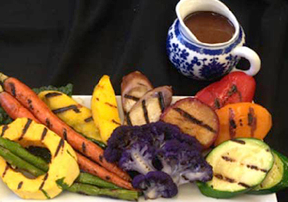
Grilled Vegetable Salad with Asian Dressing

American Institute for Cancer Research Award Winning Recipe

Ingredients for Dressing:

  • 2 Tbsp grated ginger
  • 3/4 cup hoisin sauce
  • 6 Tbsp rice vinegar
  • 2½ tsp chili garlic paste (sambal oelek)
  • 1 Tbsp soy sauce
  • 3 Tbsp sesame oil
  • Wrap the grated ginger in 3 layers of cheesecloth and squeeze to extract juice. Reserve juice for dressing and discard pulp.
  • In small bowl combine ginger juice, hoisin sauce, rice vinegar, garlic paste and soy sauce.
  • Whisk in sesame oil until well blended.
  • Refrigerate until ready to serve.

    Ingredients for Salad:

  • 1 medium yellow bell pepper, cut into quarters
  • 1 medium red bell pepper, cut into quarters
  • 1 bunch asparagus, stem ends trimmed
  • 2 medium zucchini, sliced inch 1/2 inch coins
  • 2 medium Japanese eggplant, sliced into 1/2 inch coins
  • 1 small, purple cauliflower, slice into 1/2 inch steaks
  • 1 medium mango, halved and sliced into 1/2 inch thick strips
  • 2 medium plum, cut in half and seeds removed
  • 1 bunch green onions, cleaned and trimmed
  • 2 portabella mushrooms, cleaned and trimmed
  • 1 medium acorn or carnival squash, seeded and sliced into ½ inch thick rounds
  • 3 Tbsp extra virgin olive oil

Directions:

Place grill pan over medium-high heat. Brush vegetables with oil to coat lightly and sprinkle with salt and pepper.

Working in batches, grill vegetables until tender and lightly charred all over, about 8-10 minutes for the sweet peppers and squash; 7 minutes for zucchini, eggplant, and mushrooms; 4 minutes for the asparagus and green onions. To get attractive grill marks do not shift vegetables once they’ve been placed on the hot grill.

Arrange vegetables on serving platter. Serve vegetables with the dressing on the side.

For easier serving of large groups, vegetables can be divided among 3-4 smaller platters.

Makes 20 (1-cup) servings.

Per Serving: 132 calories, 6 g total fat (1 g saturated fat),
19 g carbohydrates, 3 g protein, 4 g dietary fiber, 120 mg sodium.


Lower Your Risk of Colorectal Cancer

Body weight, physical activity, and diet

You might be able to lower your risk of colorectal cancer by managing some of the risk factors that you can control, like diet and physical activity

Weight: Being overweight or obese increases the risk of colorectal cancer in both men and women, but the link seems to be stronger in men. Having more belly fat (that is, a larger waistline) has also been linked to colorectal cancer. Staying at a healthy weight and avoiding weight gain around the midsection may help lower your risk.

Physical activity: Increasing your level of activity lowers your risk of colorectal cancer and polyps. Regular moderate activity (doing things that make you breathe as hard as you would during a brisk walk) lowers the risk, but vigorous activity might have an even greater benefit. Increasing the intensity and amount of your physical activity may help reduce your risk.

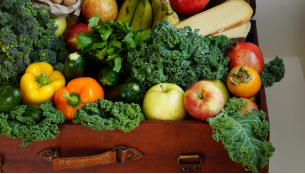
Diet: Overall, diets that are high in vegetables, fruits, and whole grains (and low in red and processed meats) have been linked with lower colorectal cancer risk, although it’s not exactly clear which factors are important. Many studies have found a link between red meats (beef, pork, and lamb) or processed meats (such as hot dogs, sausage, and lunch meats) and increased colorectal cancer risk.Limiting red and processed meats and eating more vegetables and fruits may help lower your risk.

In recent years, some large studies have suggested that fiber in the diet, especially from whole grains, may lower colorectal cancer risk. Research in this area is still under way.

https://www.cancer.org/cancer/colon-rectal-cancer/causes-risks-prevention/prevention.html

Pennsy Trail

Pennsy Trail

The Pennsy Rail Trail is a multi-use trail that is ideal for runners of all fitness levels. Geared towards the new runner, the trail is fully paved and is open in three segments. The segments are broken down into the following:
  • Eastern Side: This side of the rail links the neighborhood of Irvington with the local elementary school and the Indiana Department of Transportation. Pennsy Trail spans 1.2 miles in length.
  • East Side: Also east of Indianapolis is the second section of the trail that is paved. The trail spans 3 miles and runs through Cumberland county. This trail is beautiful, and includes industrial properties, open farmland, railroad bridges and a wooded corridor.
  • Third Segment: The final segment starts east of Cumberland county in Greenfield. The trail spans nearly 6 miles long, and passes through farmland and the Greenfield golf course. The trail also goes across the famous Brandywine Creek.

The trail is currently proposed to extend a full length of 9.5 miles. While all three segments of the trail exist, it is proposed to connect with the Pleasant Run Trail. Upon completion, the trail will be part of a much larger, 150-mile cross-state trail.

The National Road Heritage Trail will include Pennsy Trail and will run from Terre Haute to Richmond when it’s fully complete.

Many runners consider these trails to be a best kept secret due to the lower amount of foot traffic on the trails. You’ll find that the trail isn’t as frequented as others in the state, and it’s the ideal trail for beginners, although it does have its flaws.

An issue with many of the trails is that you’ll find rotting railroad lines and artifacts left behind by people, which isn’t too pleasant. But for the most part, the trails are very scenic, and with little competition, you’ll find the trails to be peaceful.

http://www.indygreenways.org/pennsy-trail/

What Is Colorectal Cancer Screening?

A screening test is used to look for a disease when a person doesn’t have symptoms. (When a person has symptoms, diagnostic tests are used to find out the cause of the symptoms.)

Colorectal cancer almost always develops from precancerous polyps (abnormal growths) in the colon or rectum. Screening tests can find precancerous polyps, so that they can be removed before they turn into cancer. Screening tests can also find colorectal cancer early, when treatment works best.

Screening Guidelines

Regular screening, beginning at age 50, is the key to preventing colorectal cancer. The U.S. Preventive Services Task Force (USPSTF) recommends that adults age 50 to 75 be screened for colorectal cancer, and that adults age 76 to 85 ask their doctor if they should be screened.

When Should I Begin to Get Screened?

You should begin screening for colorectal cancer soon after turning 50, then continue getting screened at regular intervals. However, you may need to be tested earlier than 50, or more often than other people, if—

Speak with your doctor about when you should begin screening and how often you should be tested.

https://www.cdc.gov/cancer/colorectal/basic_info/screening/index.htm