Community in Italy

Written by: Astrid Ariana |  Summer 2023
Arts and Cultural Management in Italy

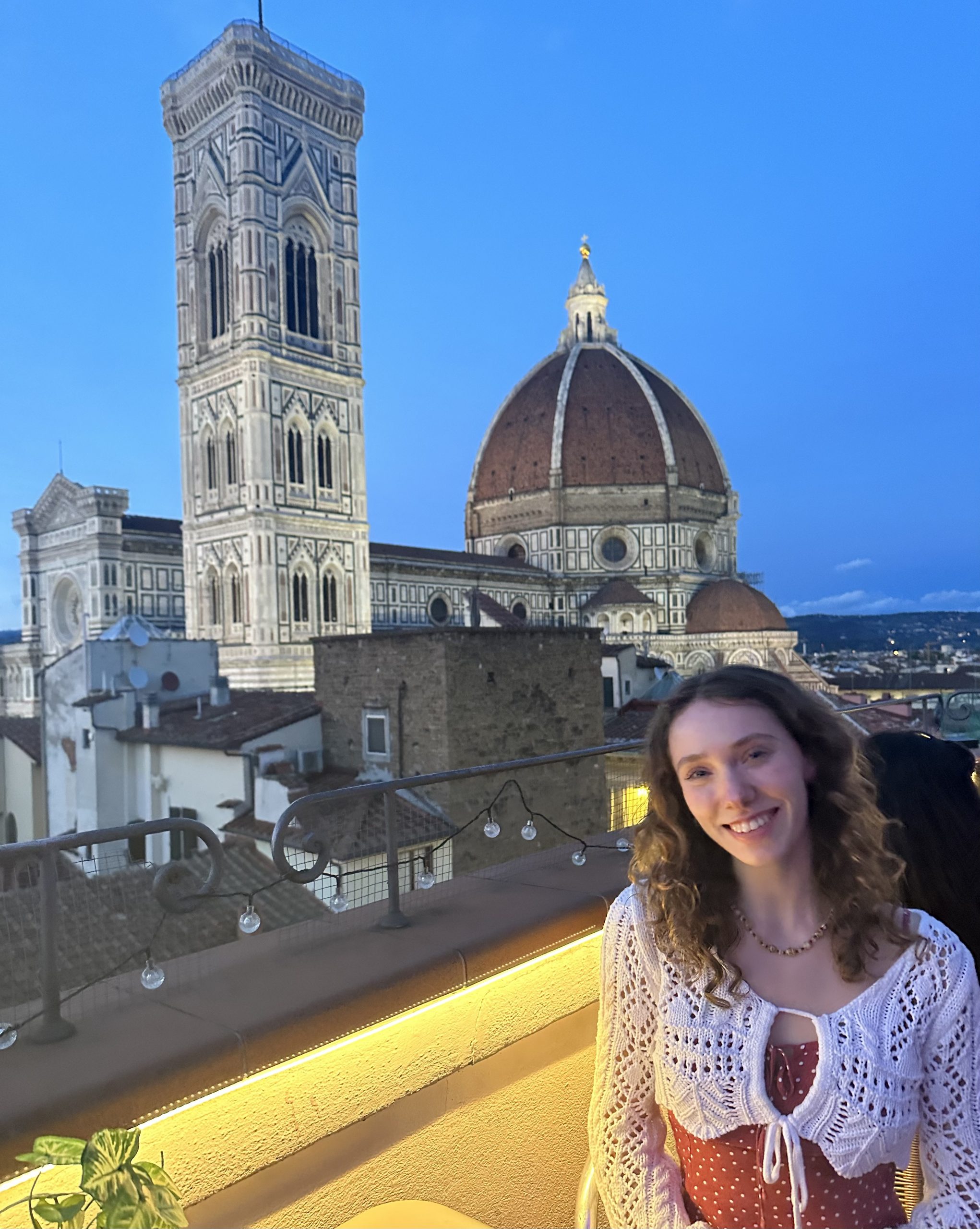
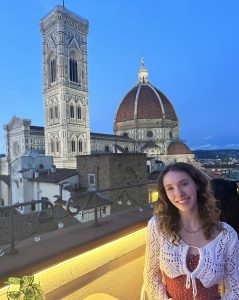
Growing up Jewish gave me a strong Astrid posing on a balcony in front of the Duomo Florence.sense of familial community throughout my entire life. However, I think the United States struggles as a whole to have a strong sense of community. This was strikingly apparent to me while traveling abroad in Italy. Prior to studying abroad in Florence I did extensive research on the Holocaust in Italy as well as the Synagogue and Jewish Museum of Florence. Although their Jewish community has always been small, even greatly diminished, it has remained viable and vibrant.
Most Jews who originally settled in Florence were merchants and money lenders with their community officially founded in 1437. Fortunately, their community was protected by the Medici family, one of the most historically powerful families in Florence, who had major influence in the art and architecture that is iconic to Florence. Without their support, the Roman Catholic clergy would likely have exiled the Jews. When the Medicis briefly fell from power in the 1490s, Jews were ordered to leave the city.
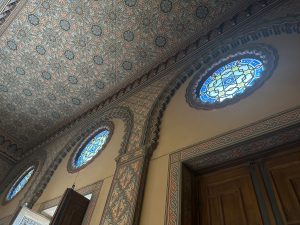
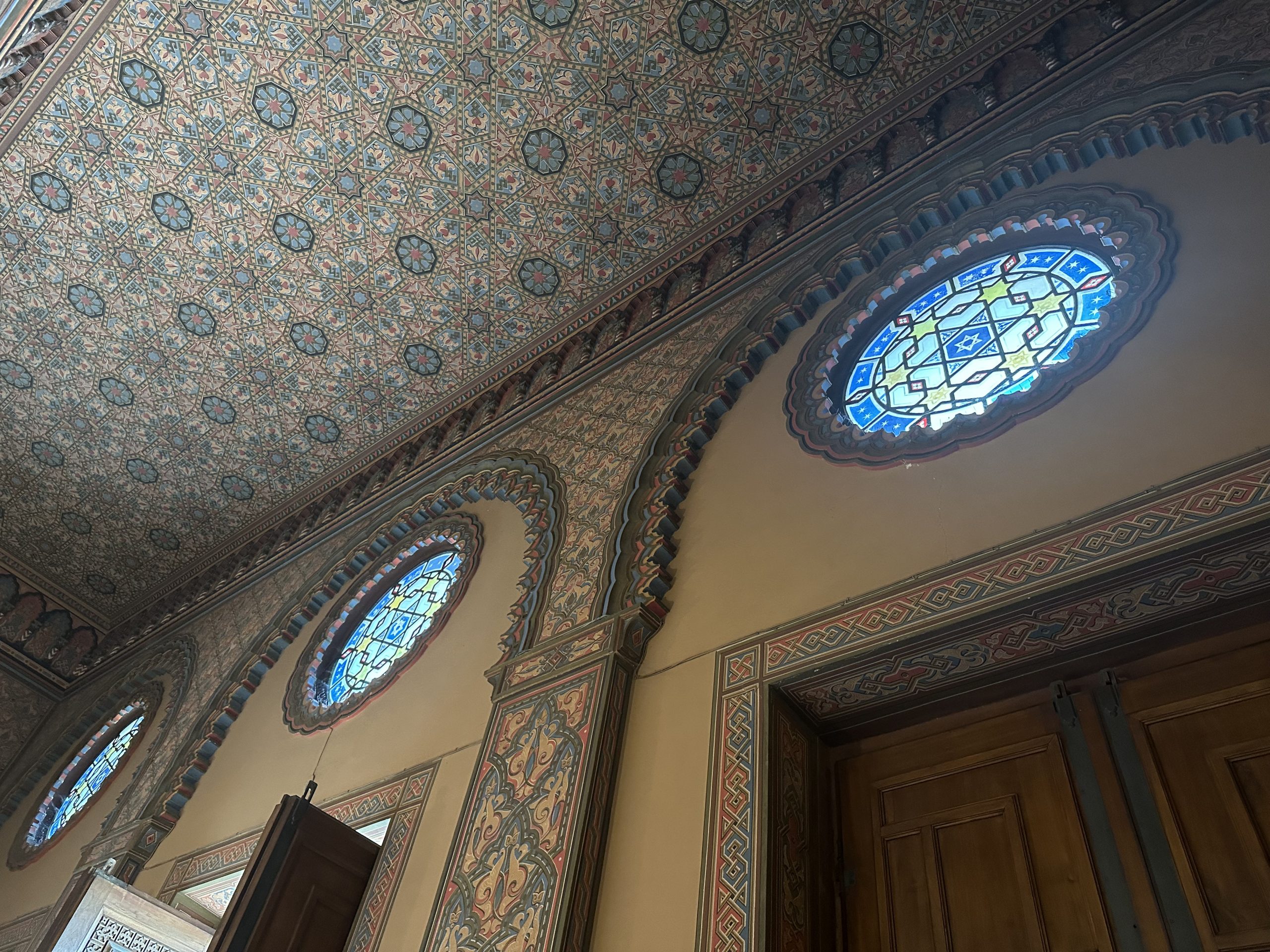
Inside an Italian building showcasing the architecture and glasswork

In an effort to preserve their community, they loaned money to the Republic of Florence to delay their expulsion. The tactic worked, and when the Medicis returned to power in1512, the Jewish community grew. Sadly, when Cosimo de Medici consolidated his power, he also enacted a multitude of anti-Jewish laws. He created a special dress code for them and established the Jewish ghetto of Florence in 1571. This was located in the Piazza della Repubblica, a central piazza of Florence that our study abroad group went to frequently. These and other challenges catalyzed tension and disunity, complicated because the Italian Jews were commingled with Spanish and Portuguese Jews.

Napoleonic forces occupied Florence in 1799 leading to a moment of emancipation for the Jews. There was a new constitution created where Jews were given rights. By 1861 Jews were given full citizenship and the ghetto was leveled for urban renewal. But with the Holocaust, World War 2, and the Nazi invasion of Italy, life for Jews deteriorated. Nazis arrested and sent Jews to Auschwitz. Almost all of them were killed except for the few who were hidden and saved by other Italians. Their previous place of worship, The Great Synagogue of Florence was occupied by Nazi soldiers and used for storage. After the war, the Jews who remained, restored their Temple and added a Jewish museum with Jewish ceremonial art. They intended to use the space to help rebuild their community.

The architecture of the Synagogue stands out with Moorish design as well as a bright, teal oxidized roof to stand out on the Florence skyline. The level of preservation of the Synagogue as well as the artifacts and art brought to the Synagogue and museum are incredible. When I visited the Synagogue it cultivated a lot of emotion for me as well as my friends who came. The Synagogue was almost completely empty. Due to excessive tourism in Florence, most churches and historical sites we went to were packed. The fact that there was practically no one there actualized how small the Jewish community in Florence is and the hardships they have faced. It was a much more intimate setting compared to the business of everywhere else we had been, allowing a safe space for us to feel and appreciate the perseverance and determination of these Italian Jews.
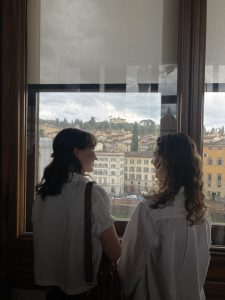
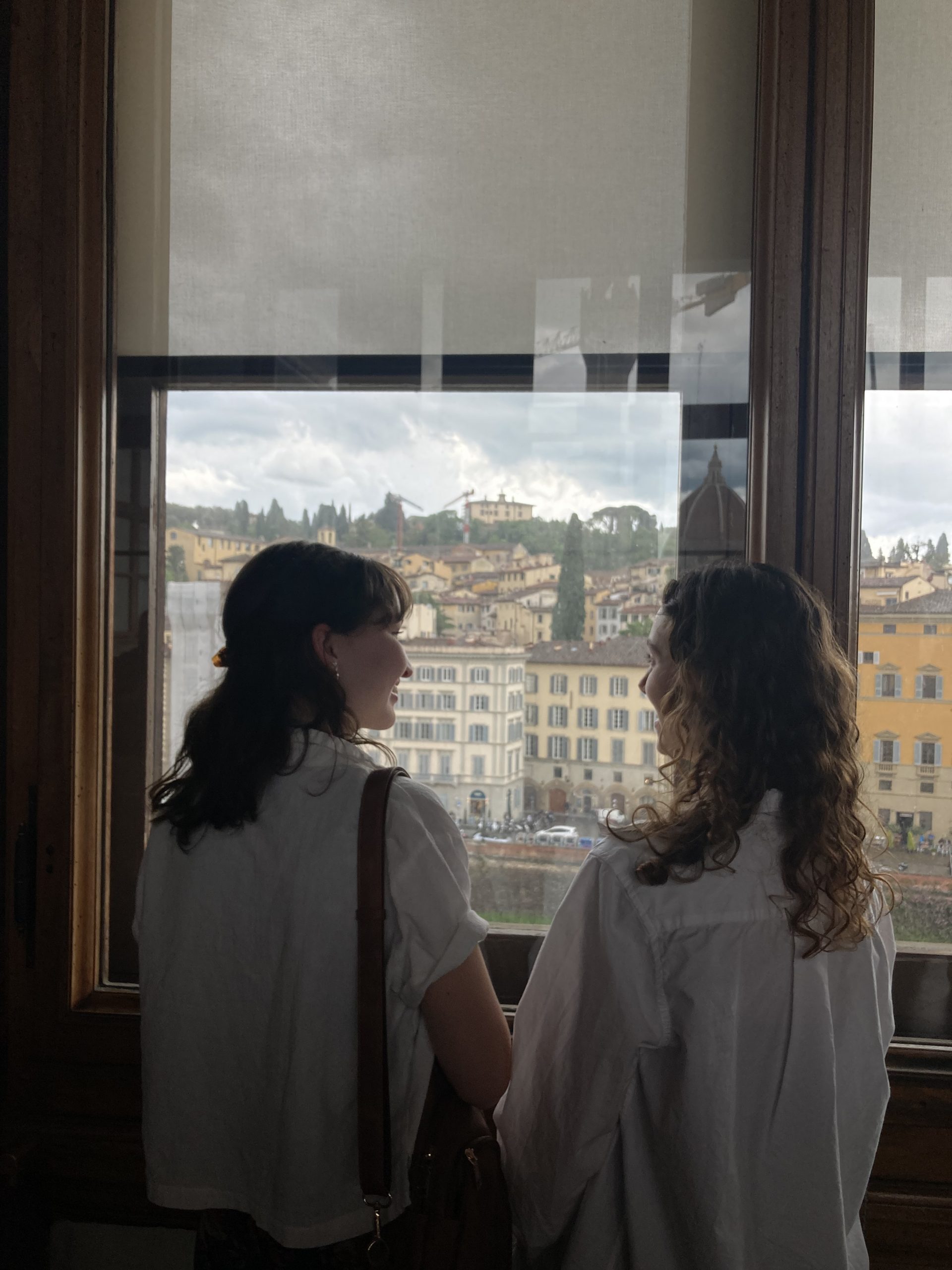
Astrid and a friend looking out a high window at the city of Florence

I asked the staff member there how all of the artifacts in the museum were so well preserved in spite of the Nazi invasion and occupation of Florence. She responded that everything that remained had simply been hidden very well. For example, one of the Torahs preserved still had completely visible and intact Hebrew. They had also preserved traditional outfits for adults and infants and many other artifacts.

Today, they have built up the community surrounding the Synagogue with Jewish-owned businesses. There are bakeries, restaurants, and many of the Jews live in the area surrounding the Synagogue. It is beautiful to see the community they have fought for and preserved in Italy.

These values of community are apparent to me in every part of Italy that I went to. When we visited Siena, we were fortunate enough to come on a day with a festa titolare. This is a “parade of the districts” where the town puts up their Siena flags and drums throughout all the neighborhoods. Men and boys of all ages marched with drums through the streets dressed in their traditional attire. Their pants were bright red on one side and white with a green stripe on the other side. They had green velvet tops on, some striped with white as well. On their heads they wore a red velvet cap or other red headpiece. We gracefully stumbled upon a community gathered and watched the festa titolare parade through. Everyone seemed to know each other and hugged and celebrated. I was in awe of the feeling of closeness juxtaposed against what seemed to me a very large city.
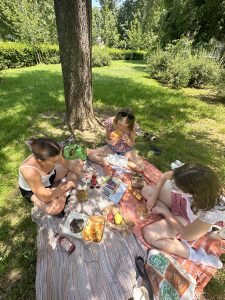
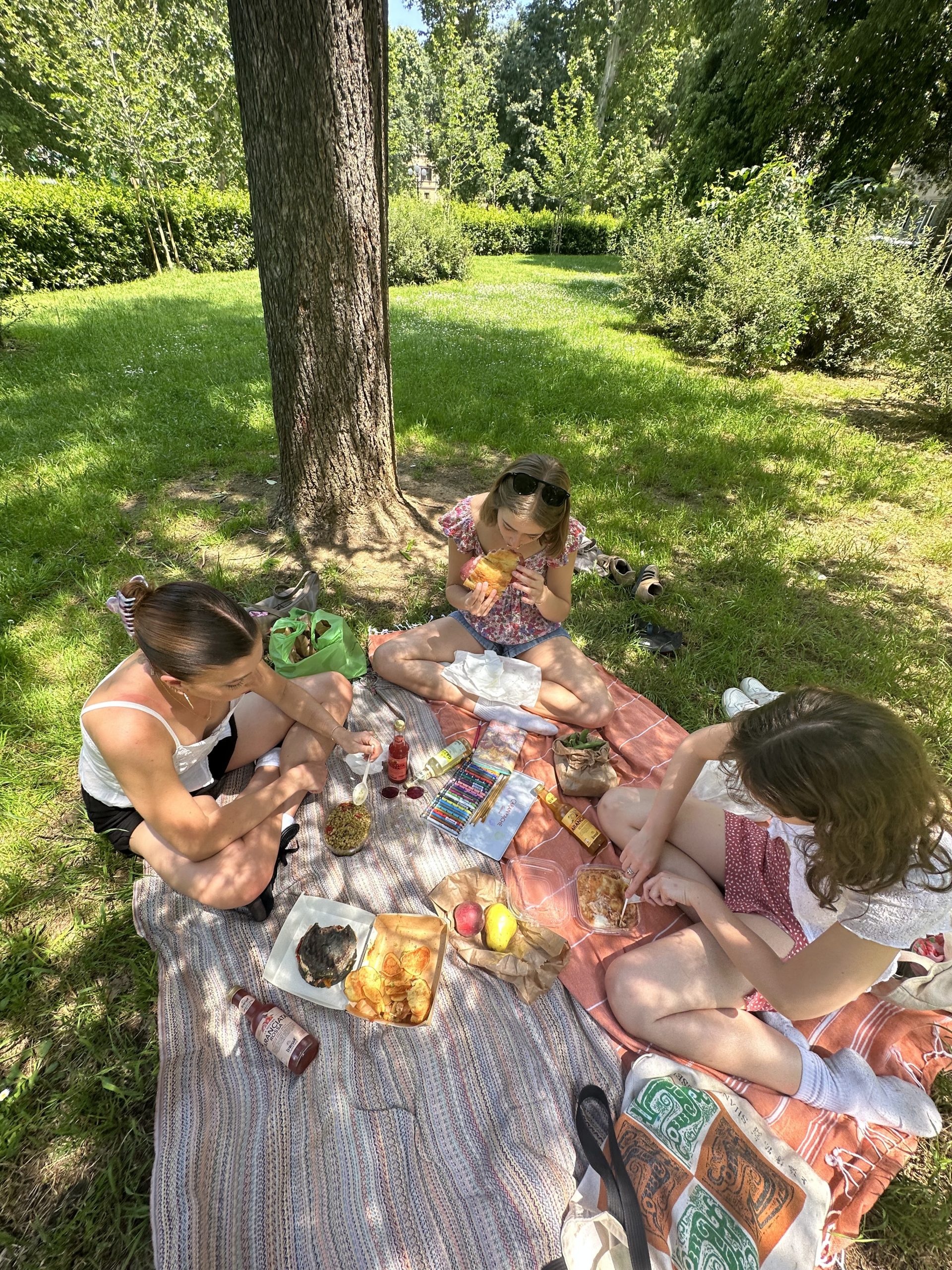
Astrid and friends enjoying a picnic and paintingMy group of close friends, with whom I roomed during my time in Florence, collectively realized these differences of cultural values and knew we wanted to incorporate them into our lives back in the United States. Endeavoring to start immediately, one sunny afternoon in Florence, we went to a local market near our apartment and got an assortment of fresh fruits and vegetables, dried fruits, and lunch items. We brought our things to a park and picnicked together for a long while talking, eating, laughing, and painting in watercolor. That afternoon was so special to us because while we were in Italy, the values we were appreciating were things that we could immediately incorporate into our lives and to inspire us to do so back in the U.S. later. We agreed that when coming back to Butler we would meet every Wednesday evening to cook together and enjoy each other’s presence.

Americans have become so privatized and separated from one another that it seems loneliness has become normalized. Through studying the Jewish community in Florence, as well as learning about Italian values as a whole, I felt my own values in life shifting. I wanted the closeness of my own Jewish family to inspire me further by creating community in other dimensions of my life. I believe community heals the soul, and I could not be more grateful for the ways Italy changed me, indefinitely, and for the better.
Posted in Uncategorized | Leave a comment

Flourishing in the Aesthetic

Written by: Daylen Byrd |  Summer 2023
Art and Culture in Vienna

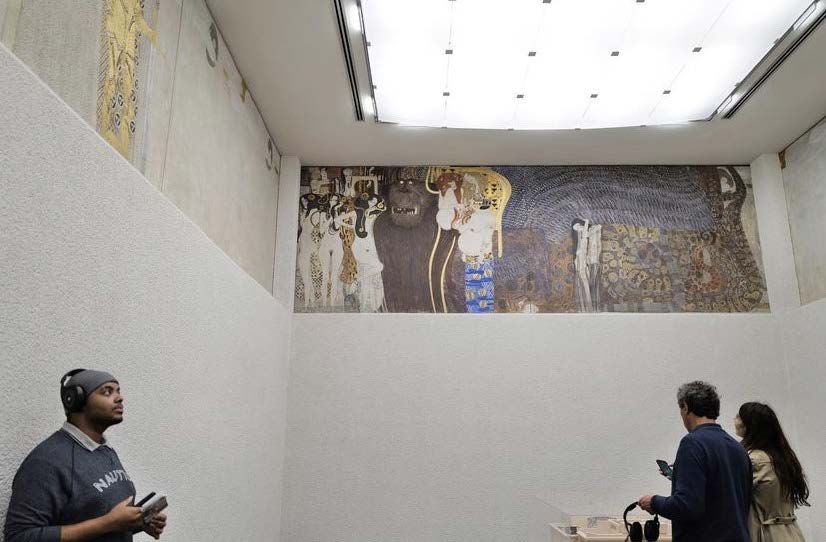
Daylen inside the Secession, “Beethoven Frieze” -Gustav Klimt

Inside the Secession, “Beethoven Frieze” -Gustav Klimt

An aesthetic can be defined by its physicality or set principles. One merely experiences an aesthetic when obligated to do so, although others commit themselves in doing so. To flourish in the aesthetic is to command experience and perception. Qualities that help to define or redefine the nature of such. Traversing countries and continents mends a perceived yearning for cultural understanding and artisanal appreciation. Here a person becomes self-aware, relating the foreign to their domestic, establishing if not growing who they are in relation to the world around them.

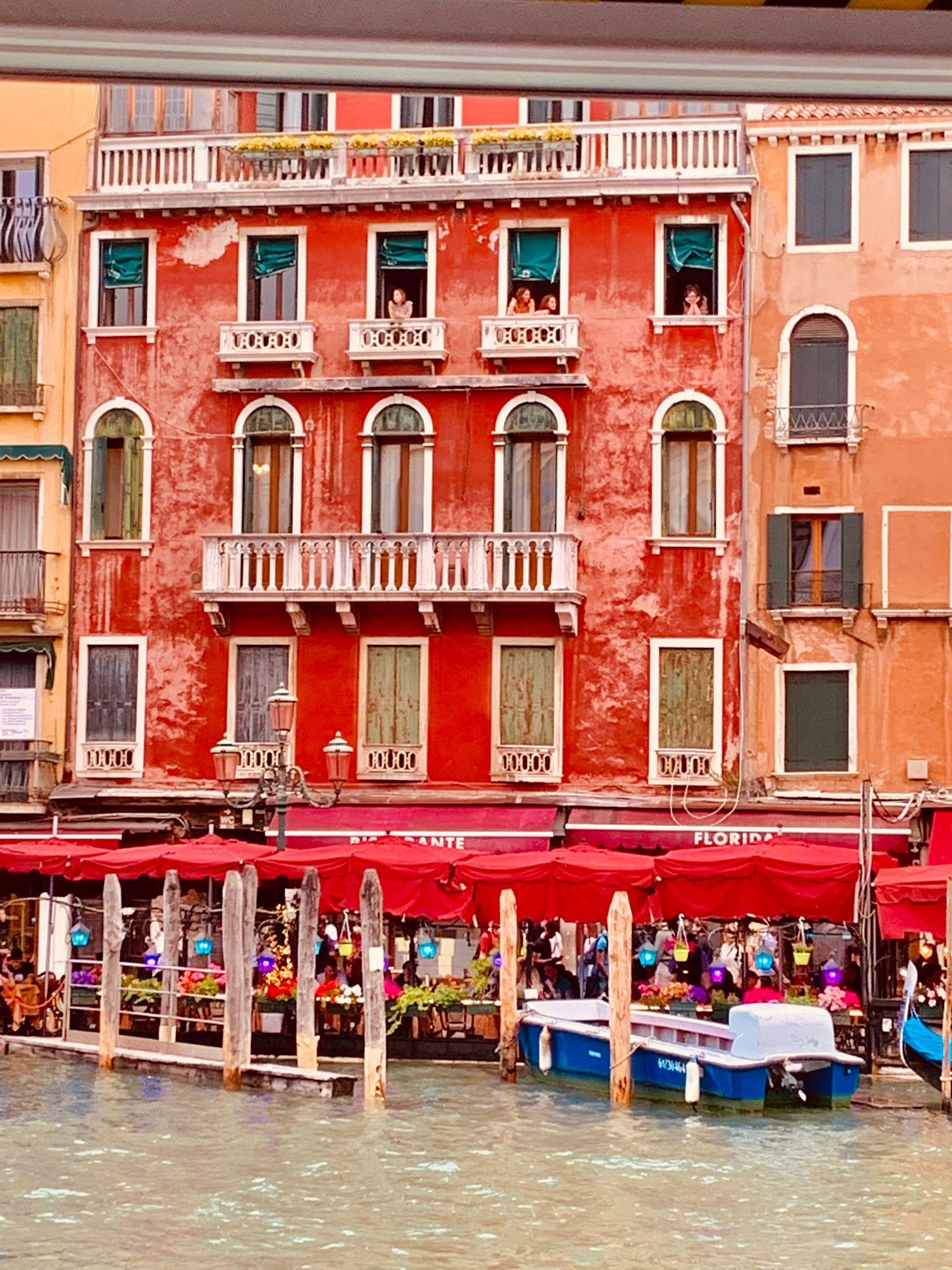
Building on waterway in Venice, Italy

Venice, Italy

Within the artistic parameters of my global education, I have come to experience Florence, Italy in the summer of 2022 and now Vienna, Austria in 2023. Florence became the ladder to my contempt sanctuary. There I was able to relinquish the prejudice that kept away progress. Surrounded by preserved artistry and a culture foreign to my own, I found the urge to expand. To expand in a way that would teach me about myself and how to evolve in my pursuits. An expansion of self and skill. I floated across waters, hiked centuries-old architectures and adapted to my changing environments, and yet I still yearned for adventure. I left Florence as someone who possessed a keen inspiration and a firm perception of self. But the state of possession has the ability to shift from one hand to another. On June 8, 2023 I left to spend 2 weeks in Vienna.

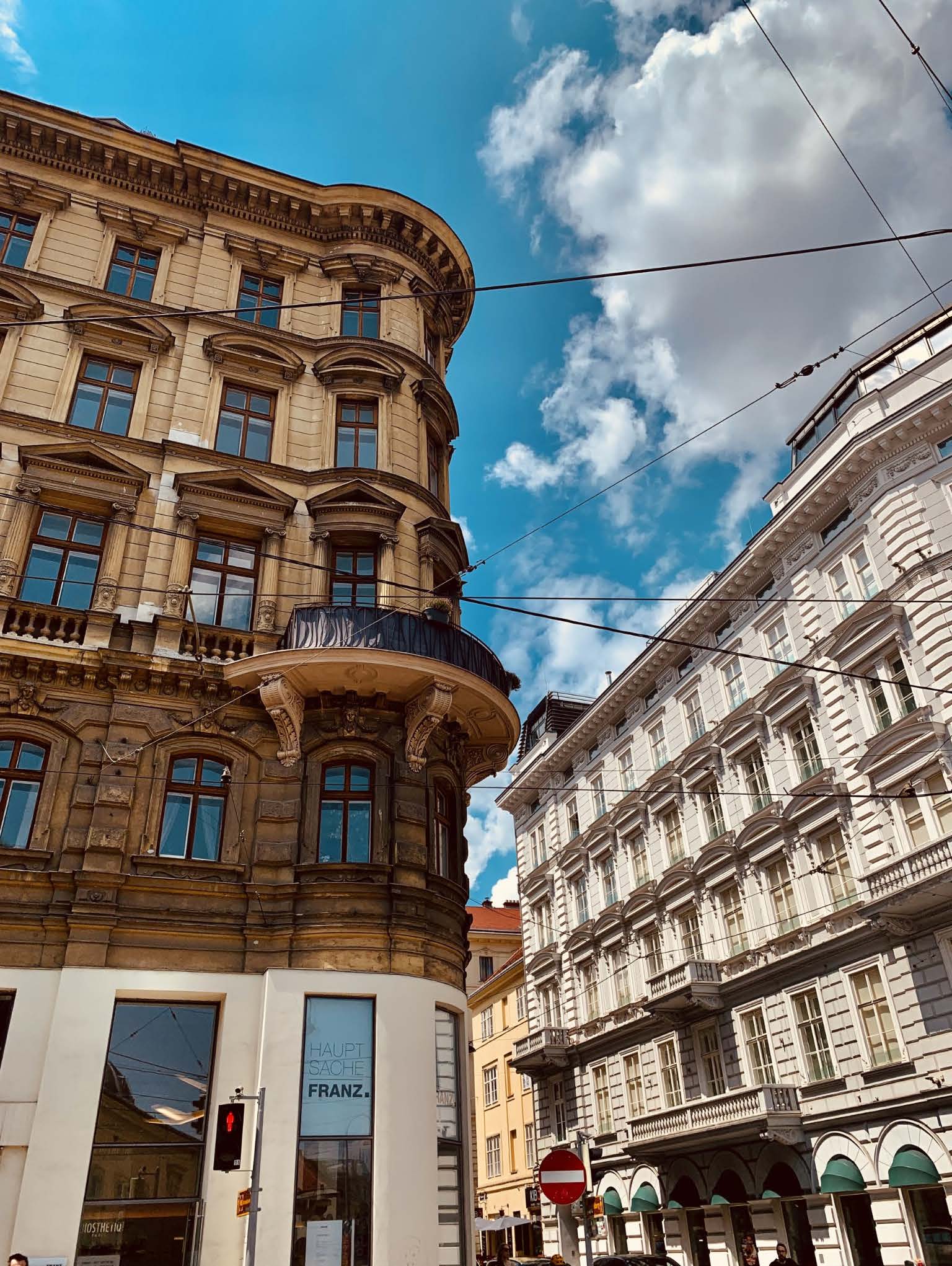
Buildings in Vienna, Austria

Vienna, Austria

I knew that a change in scenery brought much needed alterations to life and provided the opportunity for reflection. For years I had found comfort in art, as both expression and a source of happiness, and it is why I pursue it. Much like art, Vienna provided not only a space for expression but it also became an environment of creative exploration. I would visit numerous museums daily, such as the Leopold and the Secession. I rode subways into modern cities merged with historical buildings. I even walked gravesites filled with classical sculpture. But most importantly, I allowed myself to experience the aesthetic.

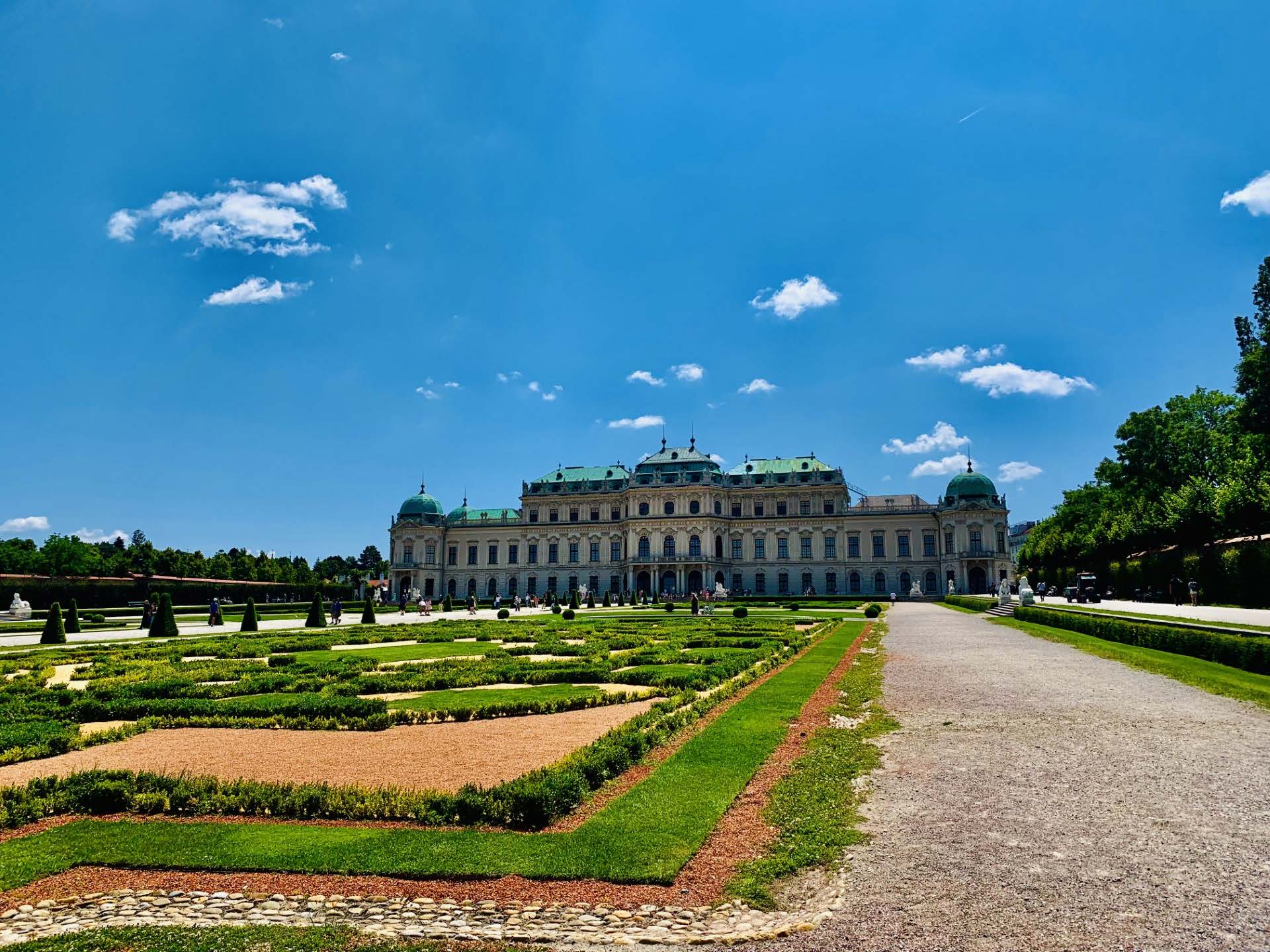
Garden view of the Upper Belvedere palace, Vienna

Upper Belvedere Palace, Vienna

Traveling gives you this opportunity to experience pleasant change. Any student should consider studying abroad as I find it as a way to make traveling more accessible and it provides greater opportunities in discovering yourself outside of your comfort zone. You start to learn more about yourself and your passions, and while in a foreign place you give yourself a sense of freedom that lies outside of a campus or a dorm. When seeking an aesthetic, flourish within it. Go into it with the hopes of learning and changing, appreciating all there is to offer.

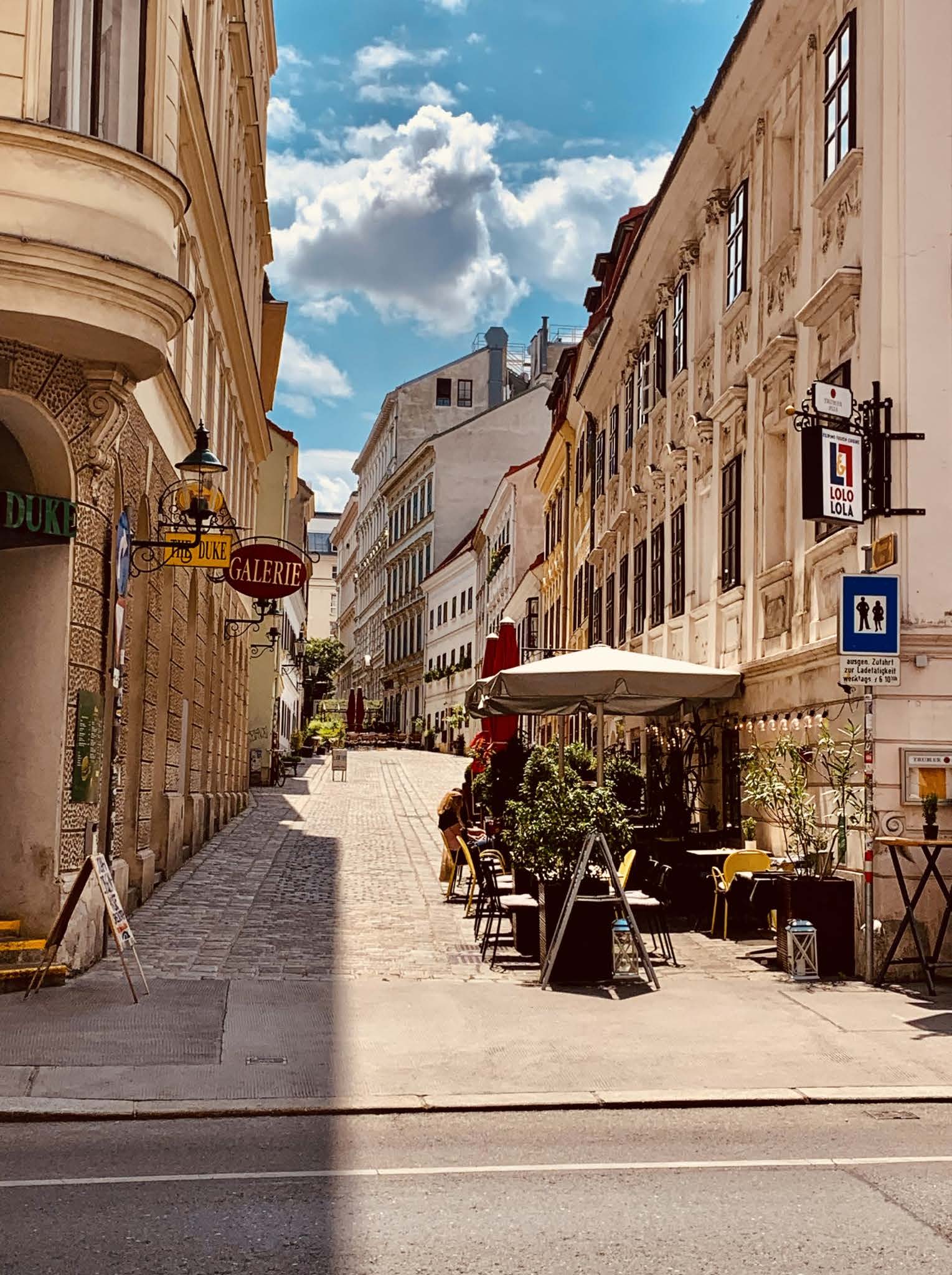
Walking street between buildings in Vienna, Austria

Vienna, Austria

Posted in Uncategorized | Leave a comment

Giselle Varre: My Identity at Home and Abroad

Written by: Giselle Varre  |  Summer 2023
Communication in Ireland

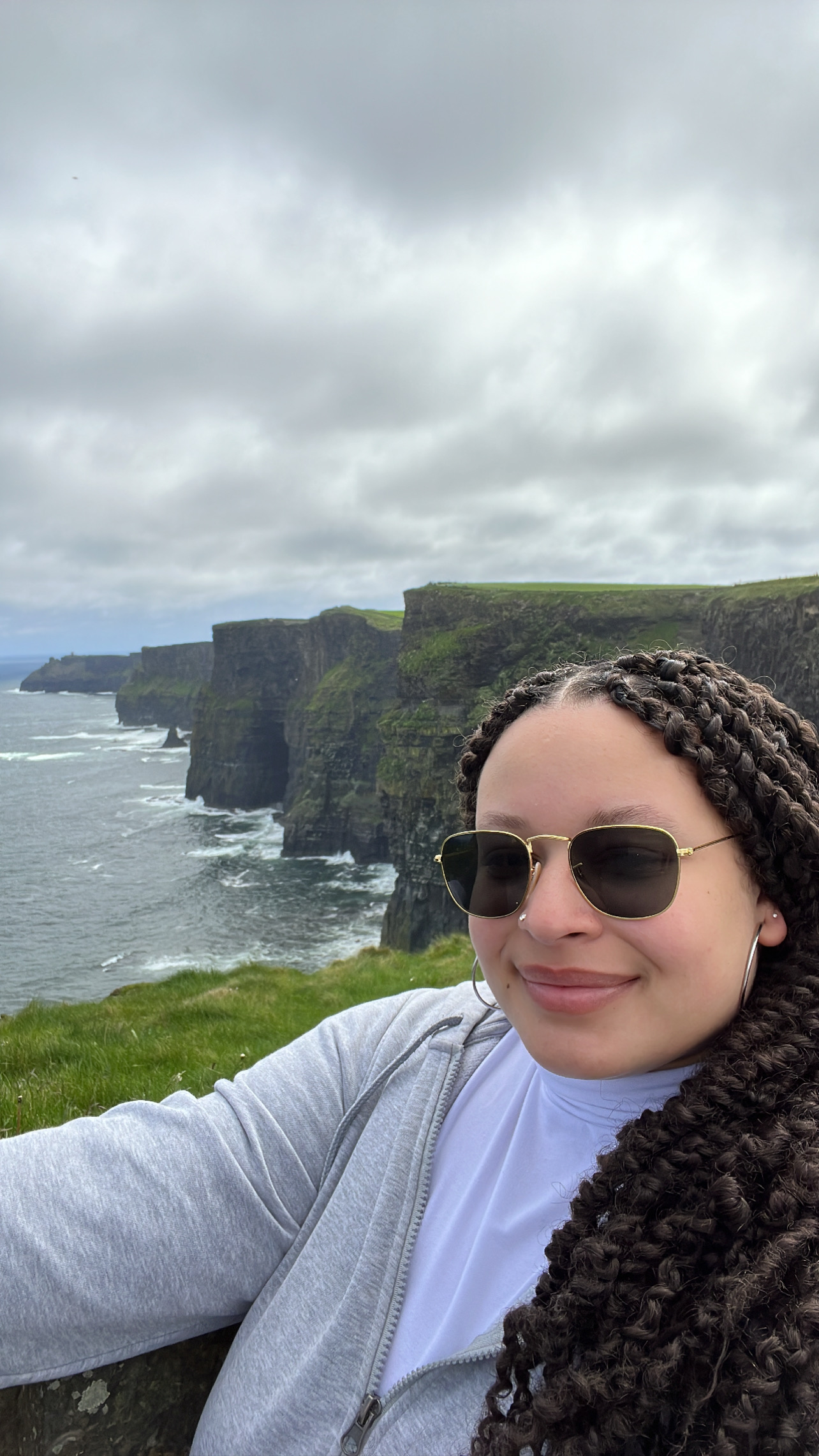
If my time in Ireland has taught me Giselle posing in front of Cliffs of Moheranything about myself, my identity at home and abroad is similar, which is good. As a Black woman, I carry that identity with pride daily at home and on campus. I expected that identity to experience little change with my time abroad, but I did expect it to expand. I would always be that proud Black girl with a few new experiences and additional knowledge. I do also hold the identity of a nurturer in my daily life. I made it my mission to care for my friends and family, and that did not change while abroad. I was prepared to look after my peers during our time abroad and assist Professor Stevenson-Holmes if needed, and I did just that. I also met some fantastic people who held that same outlook, making my experience much more fruitful.
Even when I travel in America, I prepare myself for my identity to be challenged racially or intellectually. So this hypothetical is something that I have to keep in the back of my mind so it won’t be a crippling surprise when it does happen. I did not experience any racial issues in Ireland. Still, my peers and I did make sure to read reviews before going to restaurants and pubs and did discover some bad reviews regarding race. I expected this experience abroad to help me grow as a woman of color. In addition, studying abroad was the first step in building an international network of my peers. Being abroad also helped me leave my comfort zone and navigate unfamiliar situations.

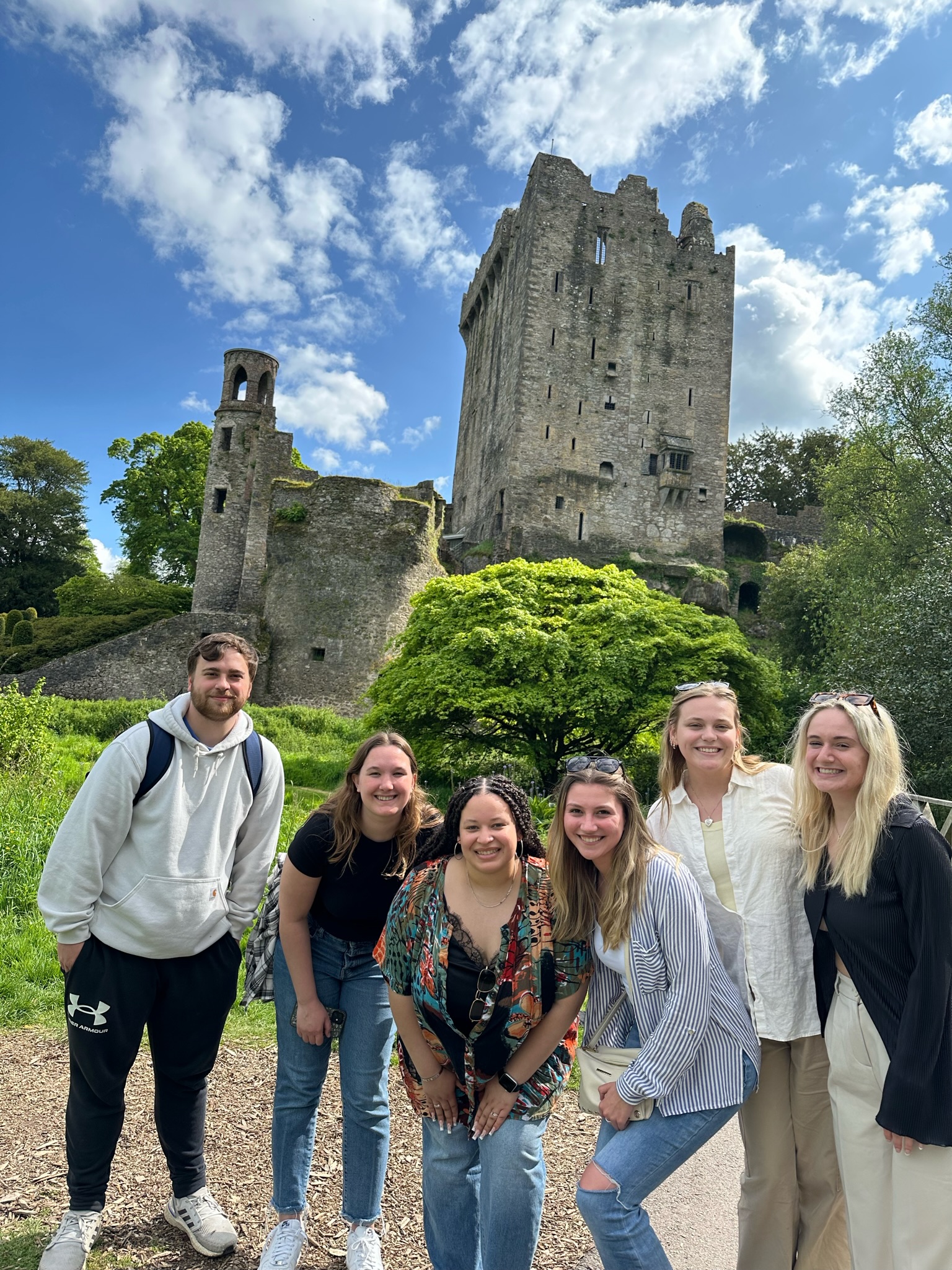
Giselle and friends posing outside Irish Castle

As people of color, we are commonly brought together by our cultures and struggles. To my surprise, I found both of these things in Ireland. Ireland has a history of struggle, from war against the British to inner conflict with British loyalists. They also have their own culture, like food, dance, and lore preceding Anglo domination. Expanding my knowledge of a European country that isn’t precisely Eurocentered was fascinating. I am also grateful that I was able to develop my Butler identity on this trip.

My peers and I often discussed the social gap that we call “the Butler bubble” on our trip. The “bubble” is commonly referred to as a colonial mindset that prevents students from experiencing other activities and groups within and outside of Butler University. We all confessed that we didn’t think we would have been friends without this experience. Most of my peers in Ireland are a part of Greek Life back at school, which I have perceived as a separate entity from the entire student body. This experience has motivated me to not only expand my horizons abroad but to expand them back at school as well.

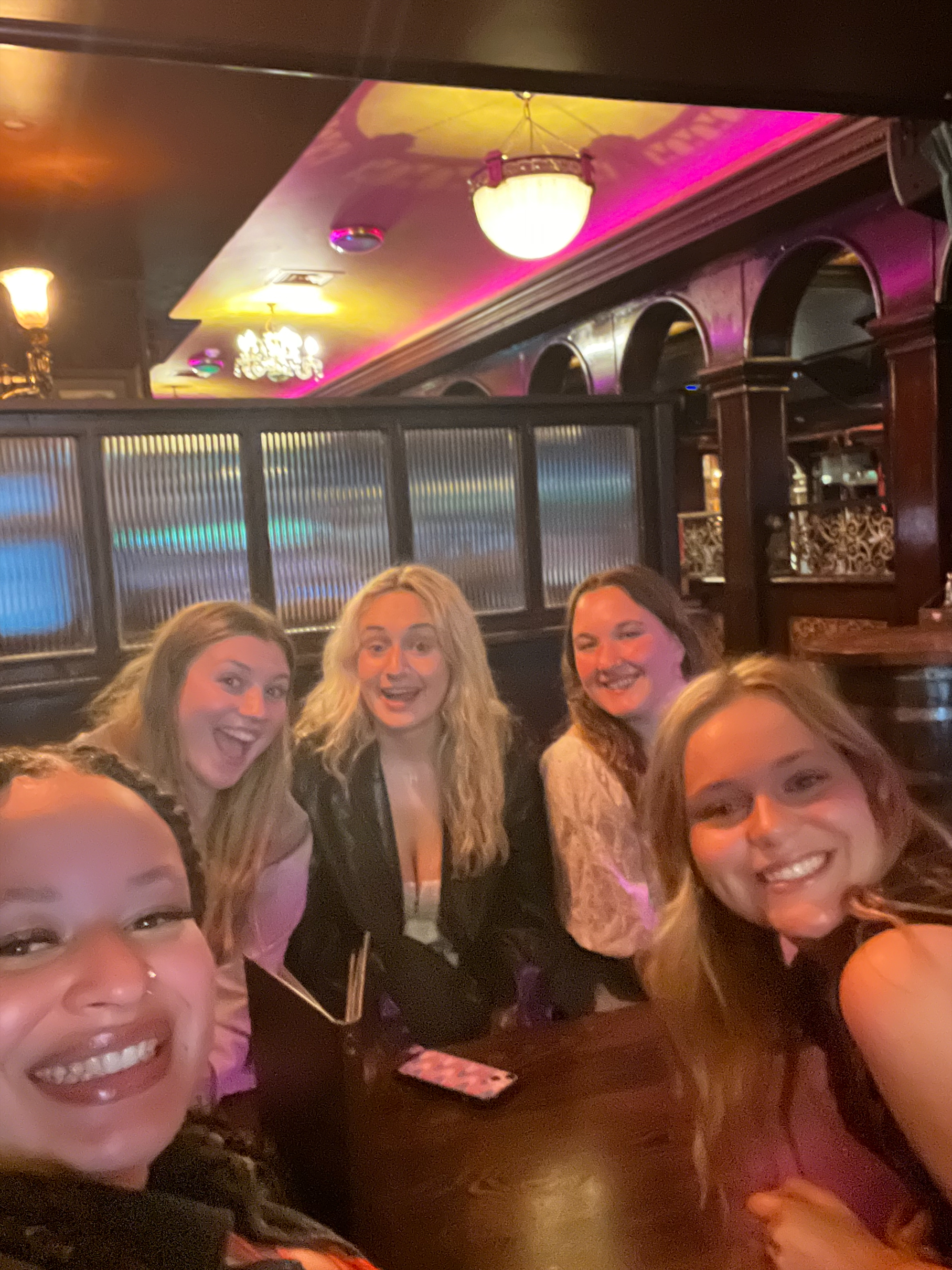
To my surprise, the location that offered Giselle and friends seated at Irish pubme the opportunity to reflect on my identity the most and meet other people were the pubs! We would break into smaller groups and go to the pubs almost every night after our group activities. Pub culture is influential in Ireland. We could enjoy live music, talk to new people, and have the opportunity to get to know each other better. Even if you aren’t a drinker, the pubs are for you. I felt most comfortable and at ease in this setting, but I also had to give some of that credit to the fantastic group of friends I made.

My biggest lesson from studying abroad with Butler was that I can sometimes let myself get in the way; I need to allow myself to be more outgoing back at home. I don’t want a world-shifting experience to motivate me to talk to people and not overthink things about approaching people outside my circle. I’ve missed so much at home by thinking about what was and was not okay, but I didn’t hold back in Ireland. Instead, I said yes to every positive experience and allowed myself to let go. I learned so much about myself and Ireland in 10 days and couldn’t be more grateful.


Posted in Uncategorized | Leave a comment

Best in Marseille, France

Written by: Amelia Dessauer  |  Spring 2023
BU Exchange at Kedge Business School

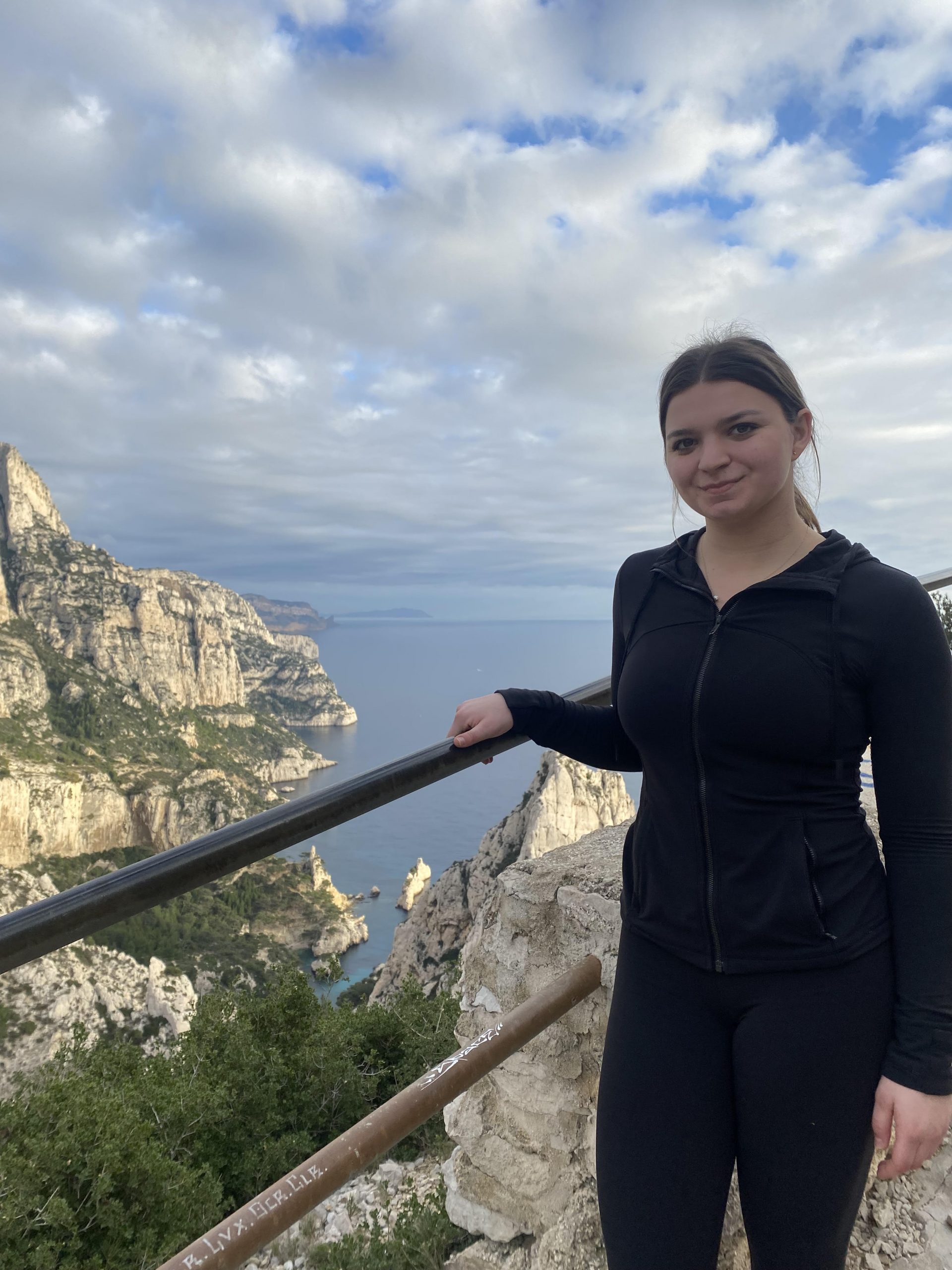
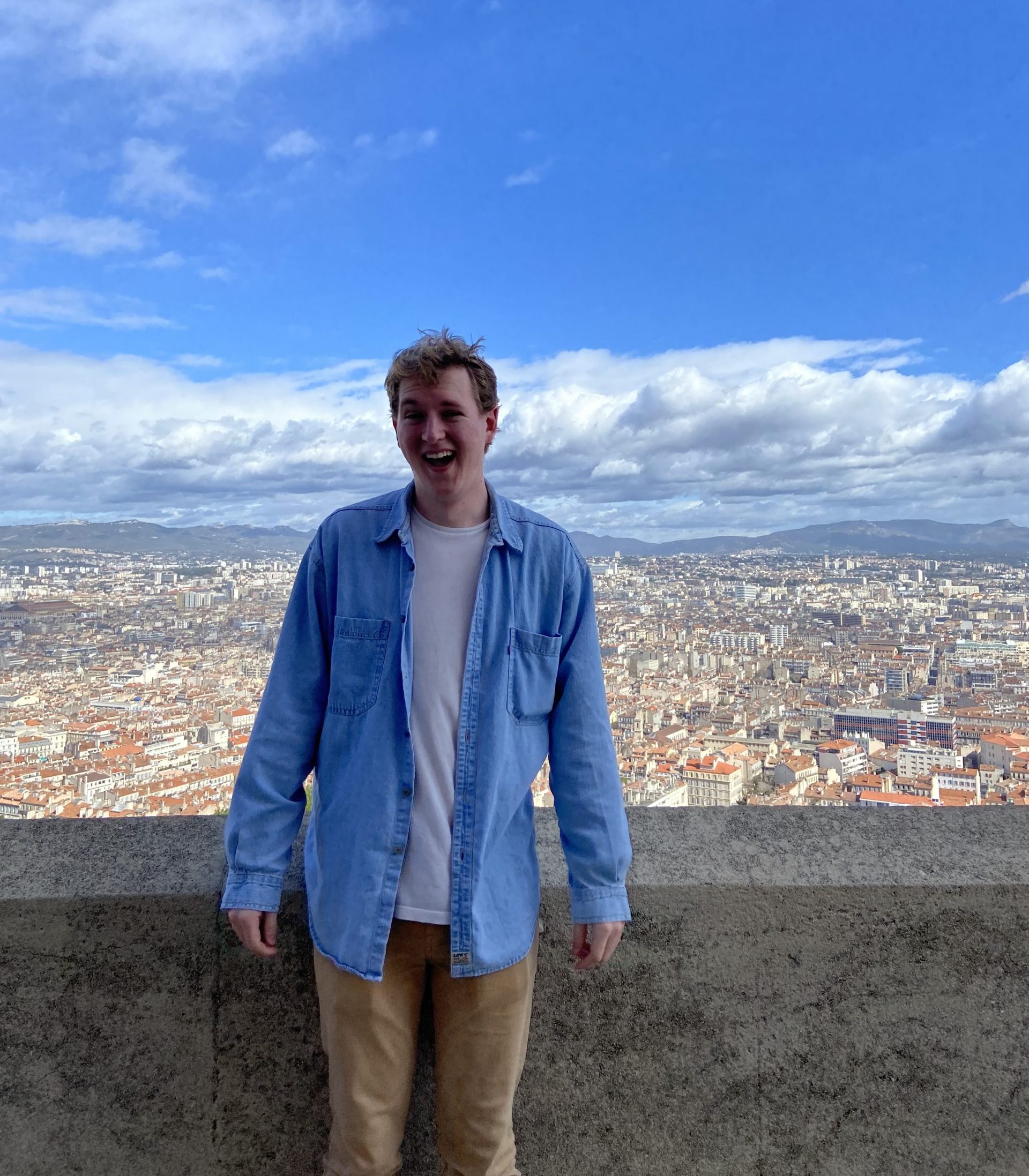
Best in Marseille, France – Amelia’s lovely blog layoutAmelia posing next railing overlooking cliffs

Marseille, located off the Mediterranean coast is known for its bustling port and beautiful, diverse landscape spanning from the mountains to the sea. Marseille is truly unique with rich cultures and elegant Greek architecture. I am going to be taking you through some of my favorite restaurants in Marseille.

Splendido

A unique trait that I have discovered in Marseille is the numerous amounts of Italian restaurants specializing in pizza. With circus inspired decor, delectable pizzas, and exceptional pasta, you cannot go wrong with Splendido. I recommend ordering one of their many pizzas made with sweet Italian San Marzano tomatoes perfected with fluffy crust. Splendido utilizes a wood-fired oven resulting in a perfect bake, a standard throughout Marseille. Steps away from vieux port, Splendido is in a fantastic location to watch the sunset over the port after a meal. I have eaten at Splendido a couple times already and plan on going back.

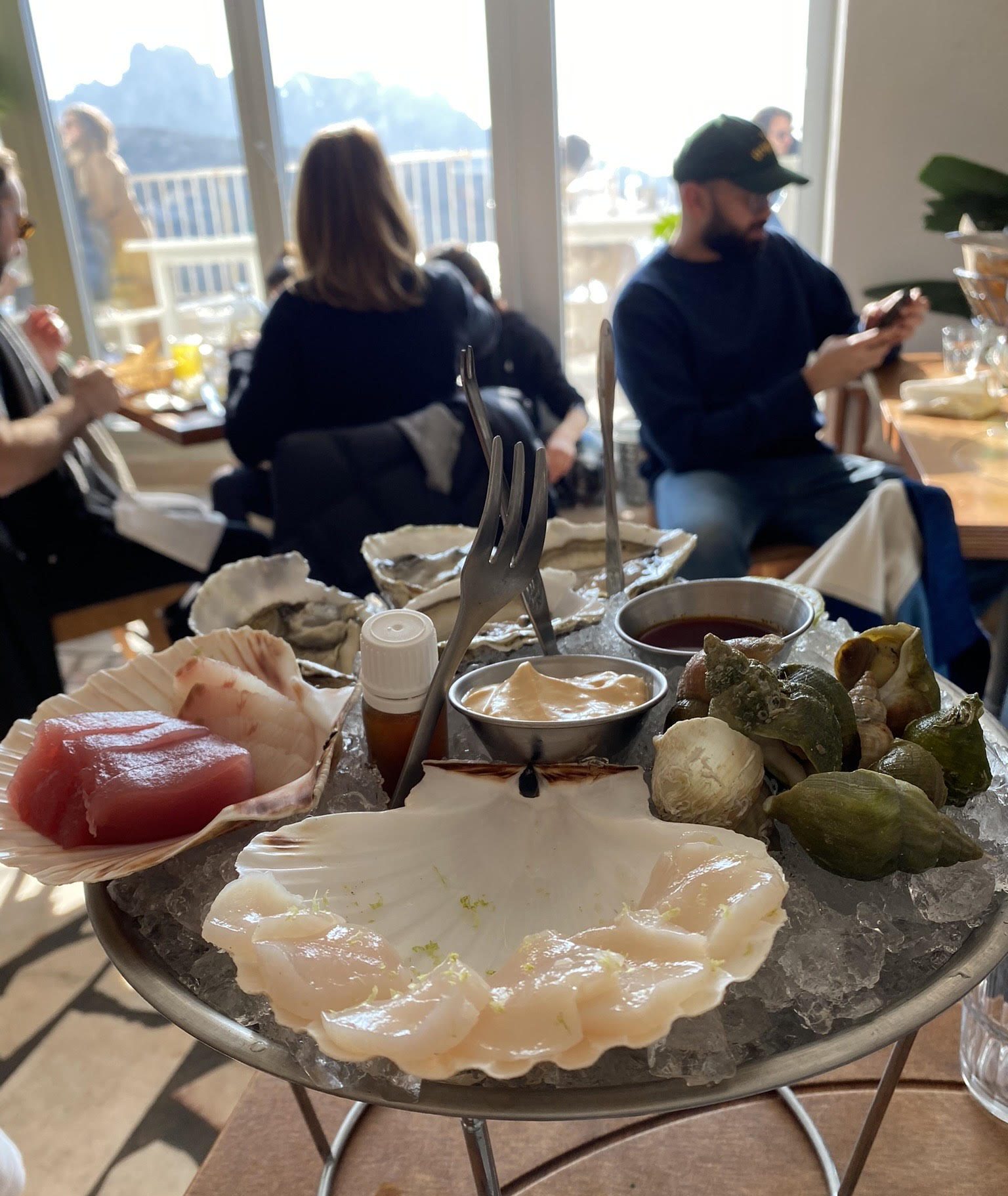
Seafood dish served on large platterTuba

Tuba Club, located about forty-five minutes out of the city on the sea, is the freshest seafood I have ever had. Starting with this beautiful plate filled with scallops, traditional French snails, tuna, and oysters I was truly impressed. Next, was the catch of the day prepared in front of you finishing off with a pumpkin desert paired with refreshing ice cream. If you are ever in Marseille, I highly recommend taking a trip to Tuba.

Cote Sushi

Becoming a sushi lover recently has made me very grateful of Marseille. There are dozens of fresh sushi options at a great price. The app, The Fork, has lent me great deals on sushi and various other types of foods. The app currently is not used in Indianapolis, but I hope the app expands soon so others can get quality food at a discount. The trend of quality food has been prevalent here in Marseille and all over Europe.

Creperie Chez Mamie

Located steps from my nearest metro station, Creperie Chez Mamie is a an exceptional creperie. I find it best as a snack on my way home from class or being out for the day. The staff is friendly and warm, and the crepes come out quick. Crepes are a traditional French food and there are many options all over the city in every area. These crepes will definitely be missed, and I hope to attempt when I come back.

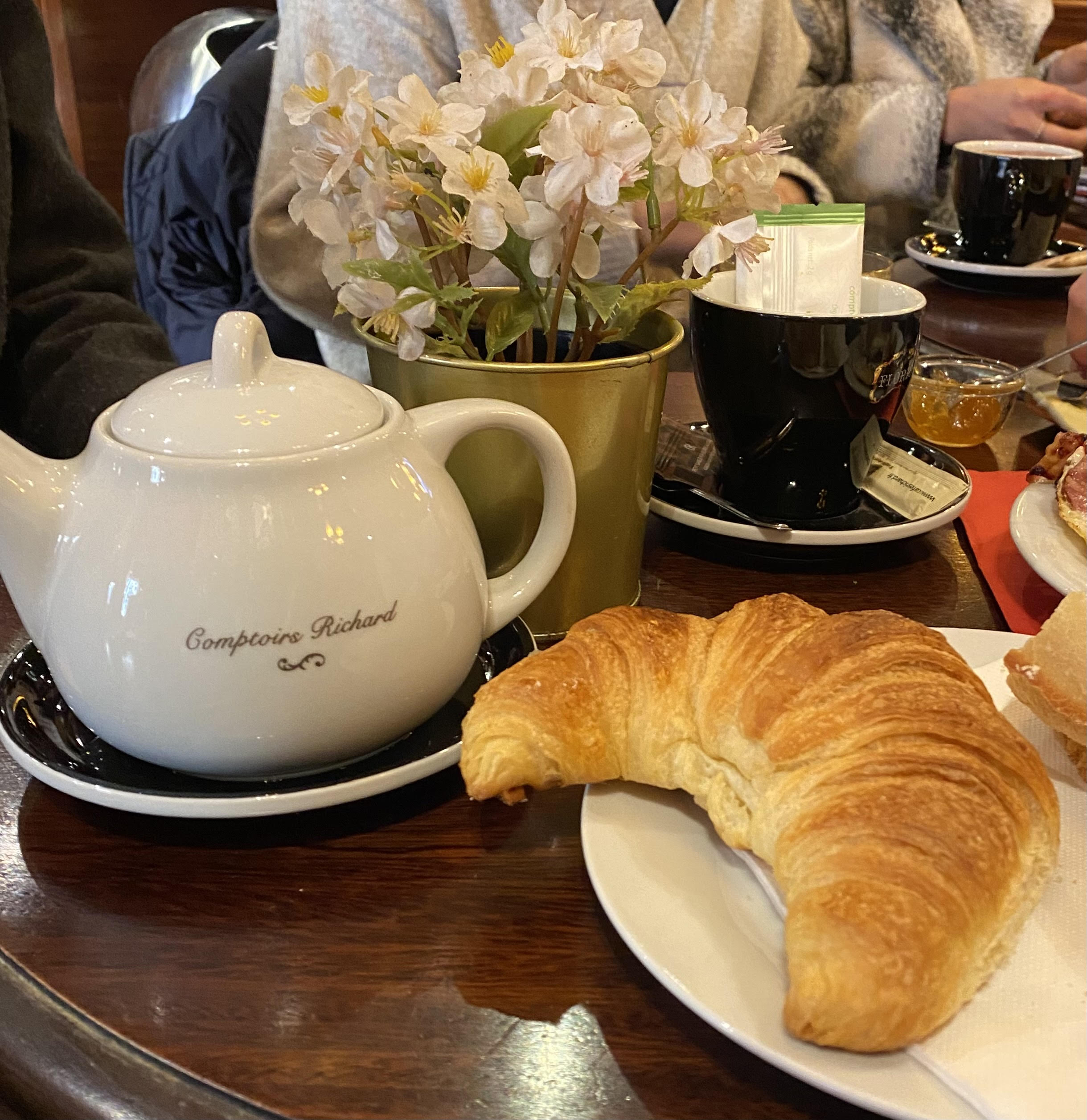
BakeriesCroissant and coffee mug on dining table

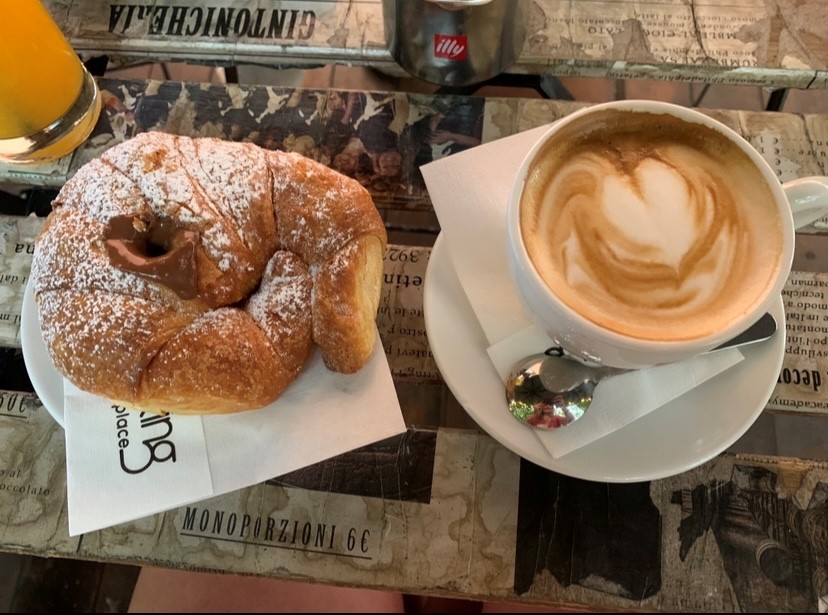
Another food that cannot be missed in Marseille and France in general are croissants. You can find a bakery on every corner with dozens of croissants, pastries, sandwiches, baguettes and many more. The croissants here are unlike any I have had before with the flaky buttery crust and soft doughy inside. Paired with an espresso or tea, croissants are a great breakfast or snack throughout the day. The French take croissants very seriously and I have come to realize why. Croissants are a must try in France!

Steak ‘n Shake

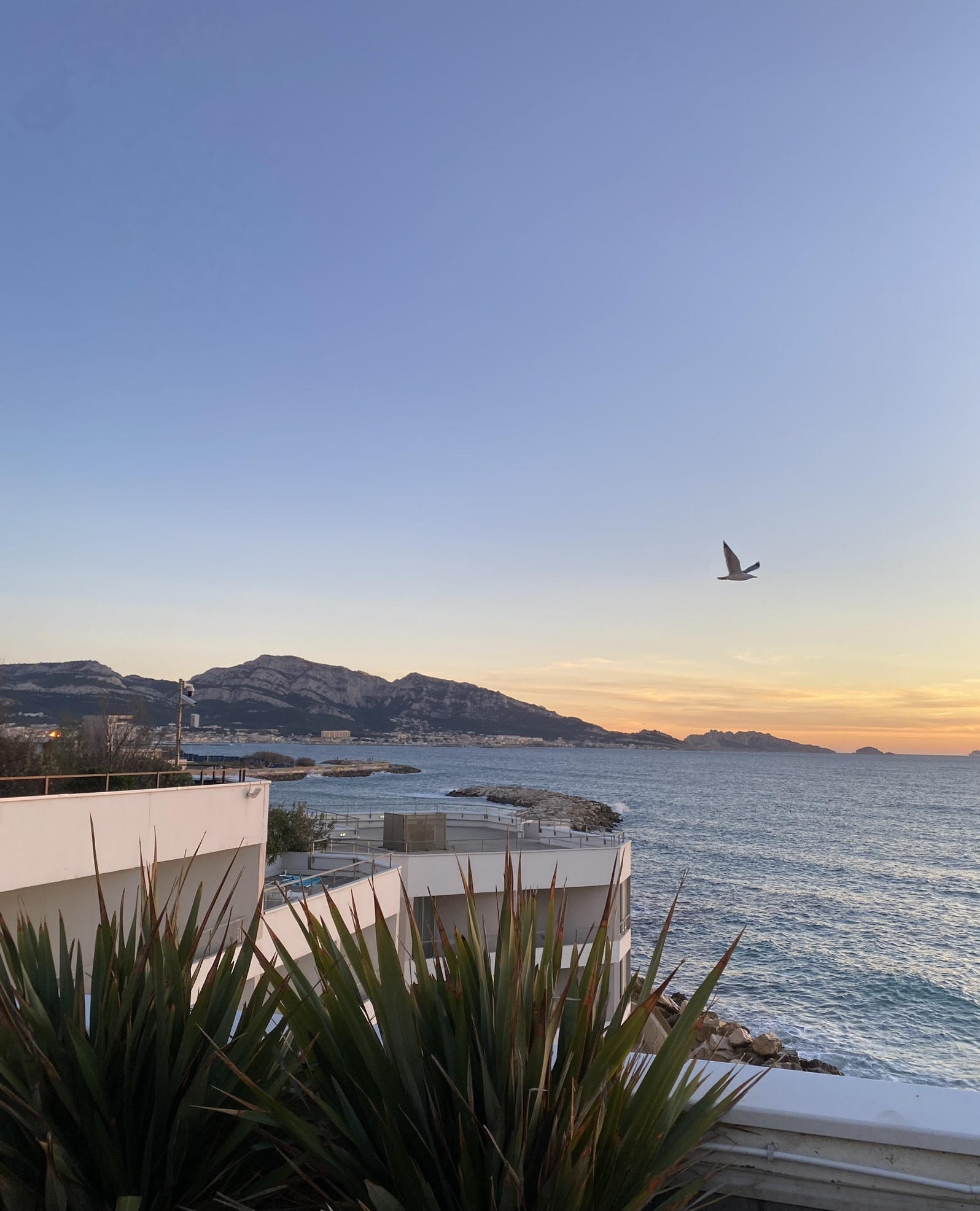
Changing pace here and surprisingly on my list is the Indiana based chain restaurant, Steak ‘n Shake. Being from Indiana, I was happily surprised to see a Steak ‘n Shake so far from home, so I had to try. I ordered a classic cheeseburger with fries and a shake, and it was amazing. The quality standard of food here is much higher and it is illustrated in the Beautiful sunset off of Marseille's coastfast food. Due to this quality, the price is higher, but it is a small price to pay for this delicious meal. As you can see in the picture on the left, I was given wooden utensils. I am always grateful to see restaurants using a more sustainable option and here in Marseille if a restaurant doesn’t use metal utensils, then wooden or bamboo utensils are utilized. Something that the US should take note on.

All in all, I am very grateful to Butler and to Kedge for allowing me to travel to a new country, gain a fresh perspective and experience new opportunities along the way. Especially with the food 🙂


Posted in Uncategorized | Leave a comment

You Don’t Have to Push Yourself 24/7 … Take a Second

Written by: Jocelin Diaz  |  Spring 2023
IFSA Study in Barcelona Plus

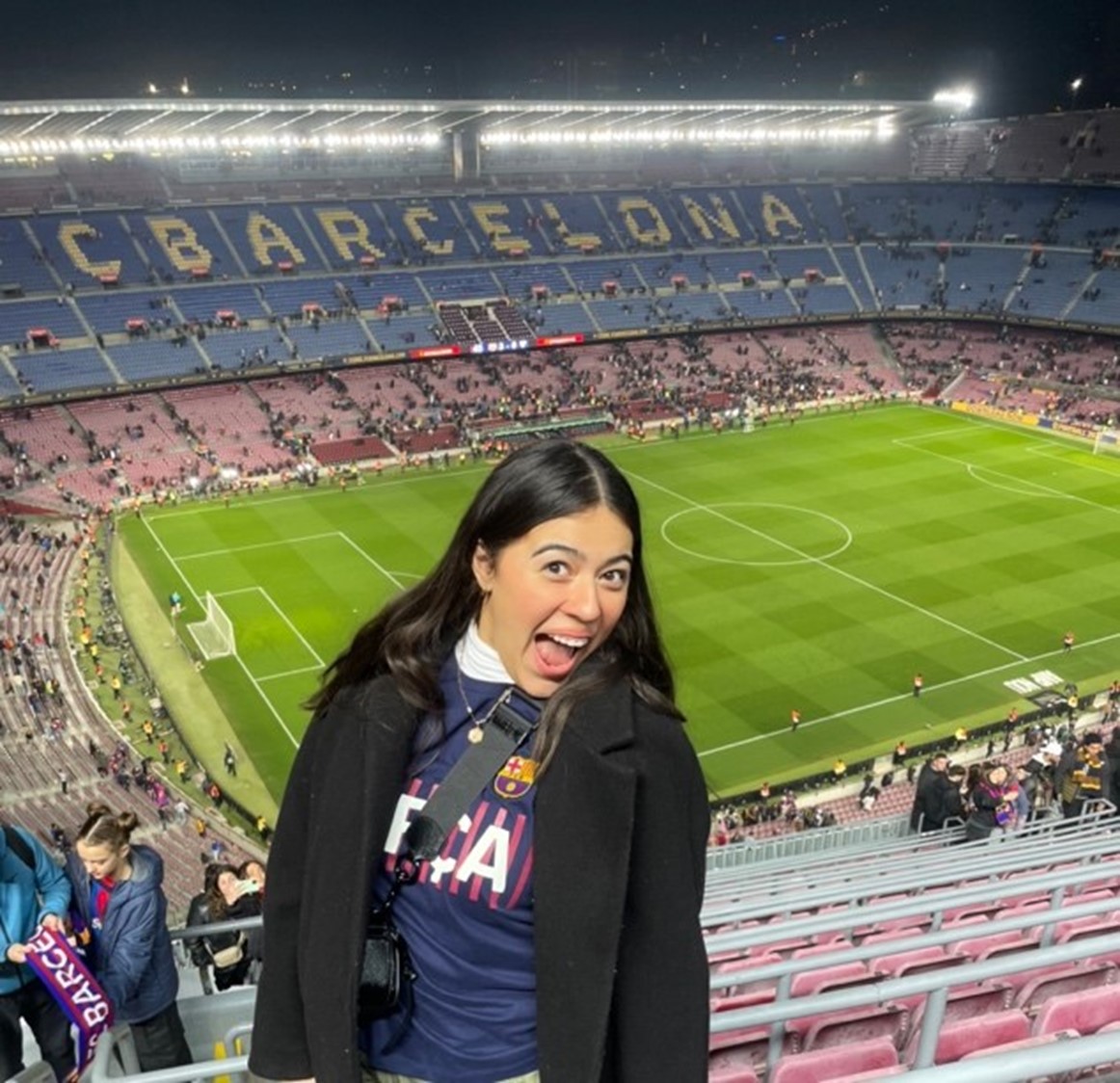
Jocelin posing with Camp Nou field behind her

My first mistake when it came to study abroad (and you will make plenty of them but that’s totally okay!!) was thinking that I would be a changed person the first day I got to Barcelona, Spain. To give a bit of background on the type of person I am: I am a super chilled, laid-back individual who is also very reserved and shy, with a hint of anxiety. Also, I have never been out of the country before. So with no major travel experience, I told myself I was going to make up for never having the opportunity to do so in my life before.  

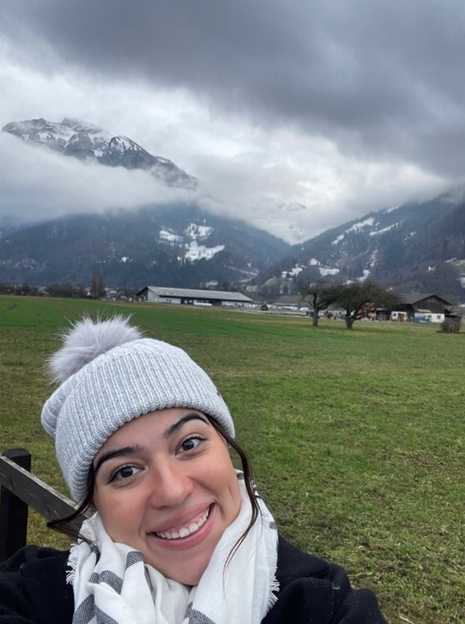
As soon as I arrived in Barcelona, I was Jocelin in Switzerland with mountains in backgroundvery much in that honeymoon stage. I explored everyday, I went out at nights, and I met so many different people. And then after the first week I began to travel all over Europe. The first month involved trips every weekend: weekend trip to Madrid, weekend trip to Switzerland, then Sevilla. Then following these weekend trips, friends began to visit from other parts of Europe and even America for days at a time (and let me tell you, hosting can be tiring, even if it isn’t your friend visiting!). While in the midst of this all, I still had school (with exams around the corner). 

Now this all sounds amazing, and it 100% was! I gained experiences like I never had in my life and will cherish forever. But the one problem with all of this is that I did not give myself the time to relax. My time in Barcelona is short, only 3 months. But I saw that short time as “There is no time to relax and take these moments for granted, so go wild!” When I look at that statement now, that is so not true! There were nights (even while I was traveling) where I would be so stressed about so many different things at the same time. Most of the time it would be things like I have homework, my internship, making flights on time, my money situation, homesickness, etc. To make things worst, I was barely getting any sleep.  

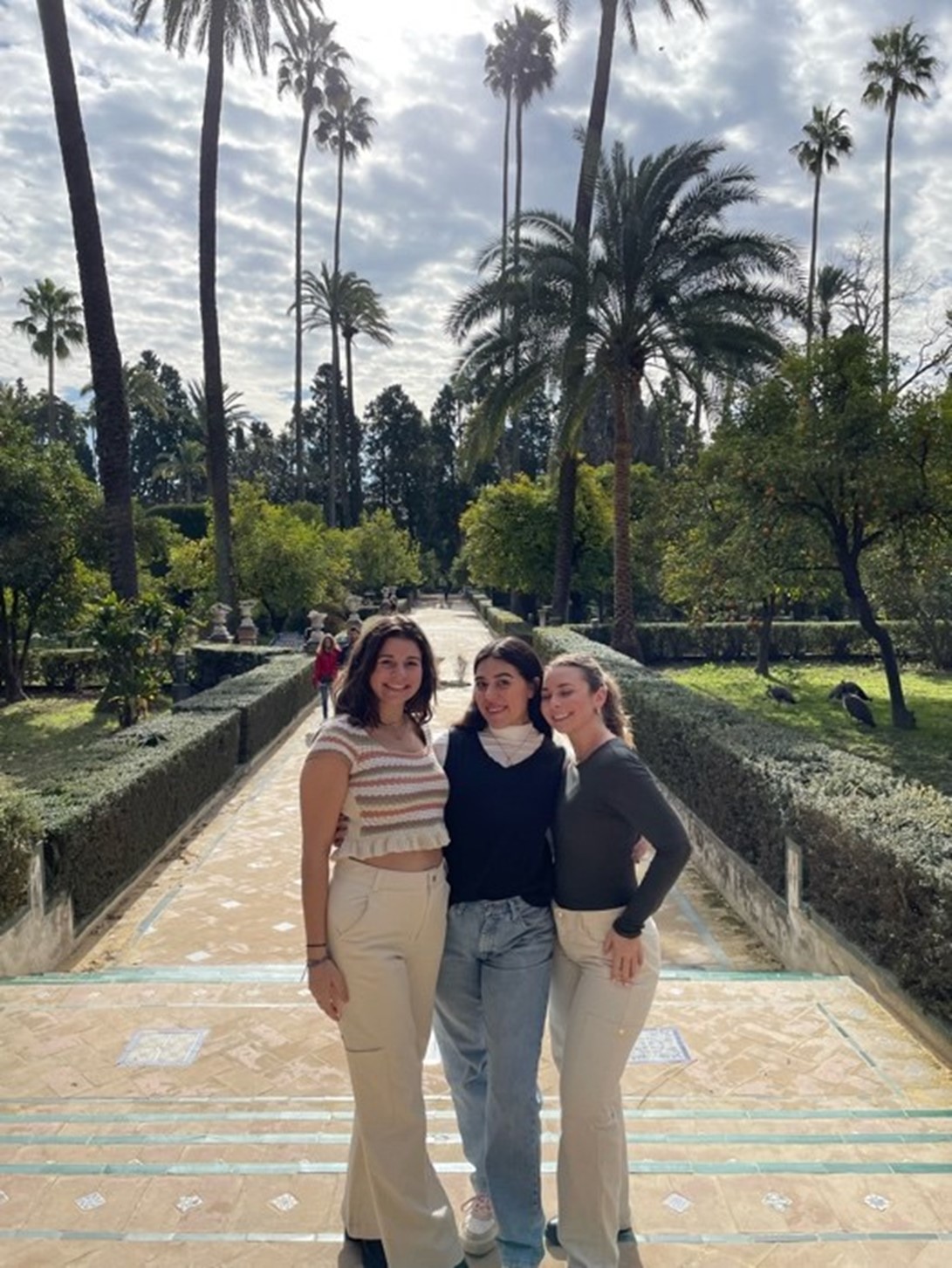
Jocelin and two friends with garden and trees behind them Finally the day hit me that I needed to chill out and take a break. And this happened because my boyfriend had visited for a week and he left to go home. Seems typical – your boyfriend visits and he goes home. But for some reason that really hit me like a rock. My homesickness HIT. I never gave myself time to relax and register that I was not home anymore or time to miss anyone. I was always go go go. But as soon as I let those feelings in (a month and half later), it was harder to push them away. I think I stayed in my apartment (obviously went to class but did not do much other than that) for almost a week after that. My relaxation that I was supposed to be giving myself time for in the beginning was catching up to me now in a not-so-healthy way. 

What I realized during that time was that it is totally okay to combine relaxation and exploring the country of Europe. It may not be easy 100% of the time, but it will definitely make it easier to give myself a good nights rest with a movie day every once in a while.  

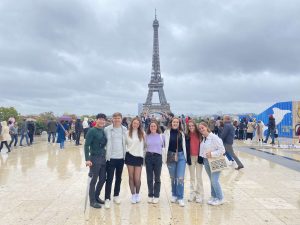
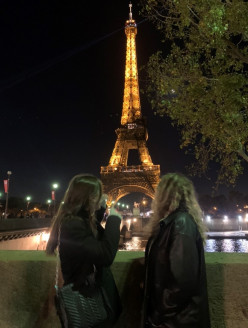
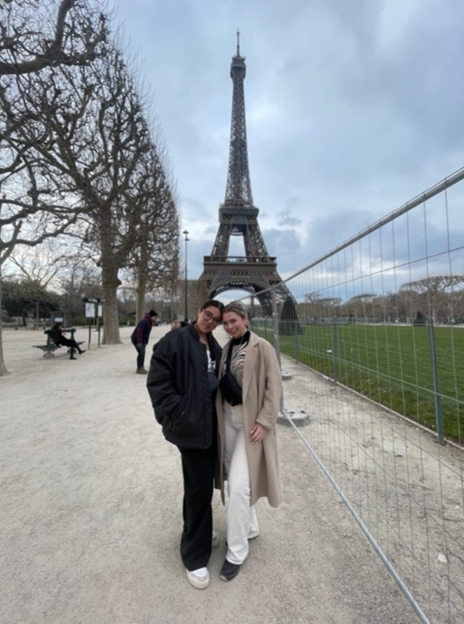
Now that my time is almost up here Jocelin and friend posing with Eiffel Tower behind themin Barcelona, I would not change a thing. After my little upset halfway through my study abroad experience, I was able to pick myself up and even spend a week in Paris, France. And since then, I have been spending my last couple weeks in the beautiful city of Barcelona. Everything that has happened, has led me to here, and again, I would not change a thing.  

My advice – surround yourself with your support system of friends, TAKE TIME TO RELAX, and explore. 


Posted in Uncategorized | Leave a comment

Inflation and Life in Buenos Aires

Written by: Maddy Simpson  |  Spring 2023
ISEP Exchange in Buenos Aires – Universidad del Salvador

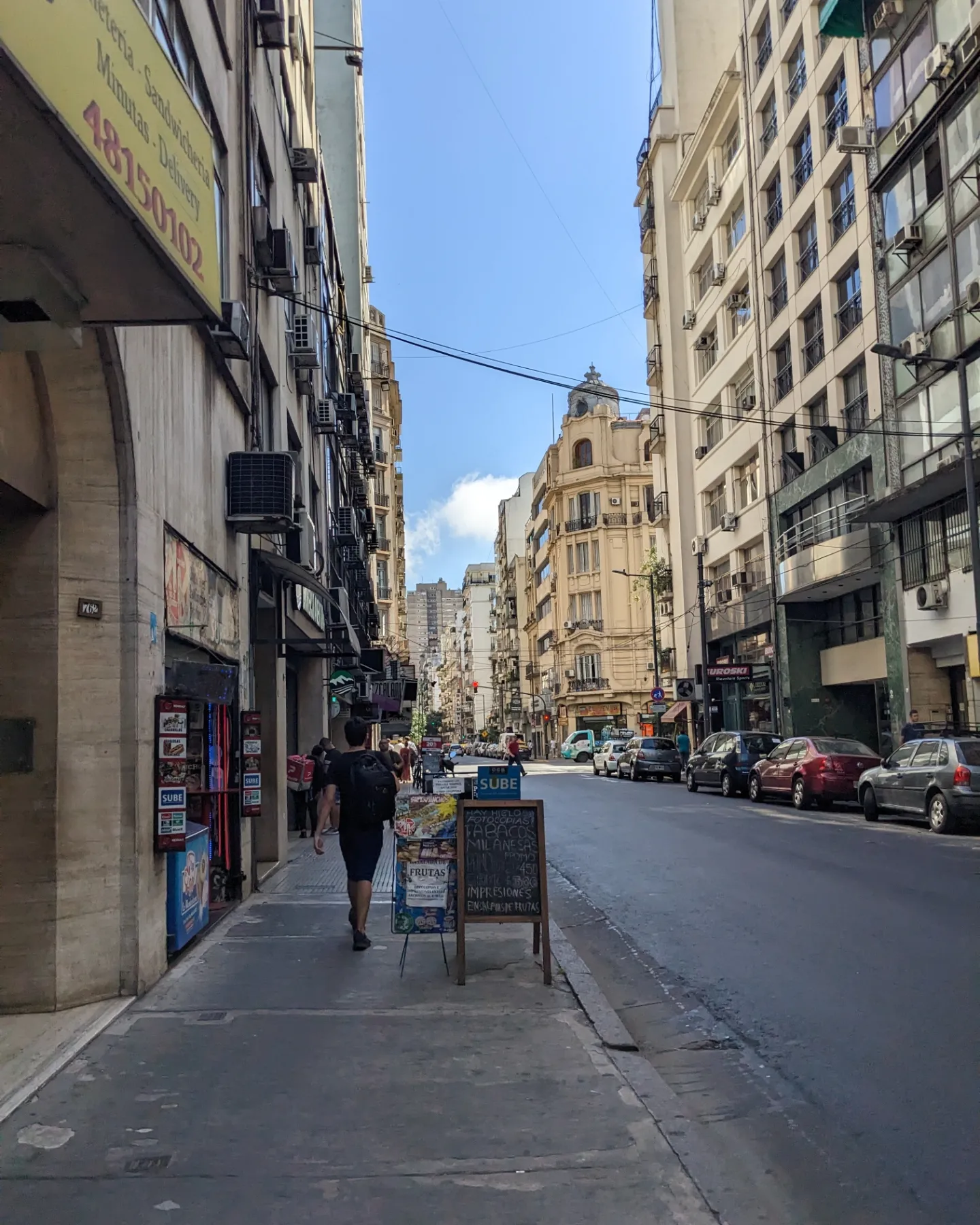
As I was preparing for my time here in Argentina, I was constantly thinking about finances. How was I going to afford to live there? Was I going to run out of money? What if I get stranded somewhere and don’t have any cash? How was I going to exchange money? 

However, after a couple of weeks here in Buenos Aires, I’ve adjusted to the different economic system. While I can’t use my debit card or Venmo like I’m used to, cash is easy to use and it’s easy to keep track of how much money I have. I’d like to acknowledge that while living in Argentina is cheaper for me because of a favorable exchange rate, that does not mean that the same is true for the Argentines who live here. Every day, Argentines face higher and higher inflation which makes budgeting difficult and makes necessary goods cost twice as much in a year. Here are some examples of how this has affected daily life in Argentina:

  1. The Exchange Rate(s)

In Argentina, there are two exchange rates. The first is the Red exchange rate. This is the official exchange rate set forth by the government’s central bank. This is the rate that you’ll see when you look it up online. The second rate is the Blue rate. This rate is an unofficial rate that changes more frequently and more accurately represents the current exchange rate. 

When I was preparing for Argentina, I was told to wait to exchange my money until I got there so that I could use the blue rate and get more pesos for my buck. One of the first things I did after I arrived at my homestay was go to the exchange shop to exchange my money. At the shop, I got 366 pesos per dollar. If I had gone to the bank to exchange my money, I would have only gotten 170 pesos per dollar. 

   2. Cash, Cash, Cash

Almost all business in Argentina is done in cash, from buying lunch to paying the guy who comes to fix the sink. Even when using services like Uber, you can opt to pay in cash. Many Argentines are reluctant to store their money in the bank because they don’t trust it. So they’ll hide their money in a safe place at home, often in US Dollars. Then they’ll take out what they need for the day, convert it, and carry on. 

   3. Prices

When you first look at prices in Argentina, you may be shocked to find that a simple Big Mac costs $1800. But don’t worry, that is a reasonable price for a good meal in Argentina. Inflation has led to higher and higher prices in Argentina with the peso valuing less and less. The cheapest product I’ve seen during my time here cost 25 pesos. Argentina has a cent (called the centavo), but inflation has made prices so high that it’s almost never used. 

Not only are prices high, but they change frequently. It’s not unusual to be handed a menu with prices crossed out and changed. A coffee that cost 540 pesos this week may cost 620 pesos next week.

   4. Installment Plans aka Cuotas

It’s not uncommon to see signs outside of stores advertising payment plans for larger items, like bedding sets or expensive new shoes. These items can cost thousands of pesos and most people don’t have the full amount on hand. So, it’s not uncommon for people to set up monthly payments to make the purchase more reasonable. 

   5. Rounding Down

Because most business is done in cash using larger bills, most stores prefer exact change. But if something comes out to 566 pesos, the store will simply round down to 560 pesos. Some stores will even give discounts if you don’t have exact change. For example, I bought something that cost 520 pesos, but I didn’t have any smaller denominations, so I only paid 500 pesos. 

While it definitely took a little getting used to, I’ve adapted to the Argentine economic system. Like all of my experience here, all it took was the first step and some practice. While I don’t know exactly what these next 3 months will be like, I’m looking forward to all the new things I’ll get to experience. My advice to you future exchange students is this: Do some research and take that first step. It’ll turn out okay.

Posted in Uncategorized | Leave a comment

Travelling Solo

Written by: Cody Estep  |  Spring 2023
ISEP Exchange in Belfast & Northern Ireland

I chose to study abroad in Europe because of the possibilities for travel. Being in Europe opens up countless possibilities for travel. Possibly the biggest change I still have not gotten used to is that sights a nd cities that used to feel so far away were now close enough to hop between over short breaks. For most of my life, I had simply accepted that France was at least a fourteen-hour flight away (not to mention the expense of crossing the ocean). Now I find myself only a short two-hour flight away from the same place. How could I not take advantage of this amazing opportunity?

However, the largest challenge I have run into has been trying to find friends to travel with. There are a number of roadblocks for travelling, not unknown to myself, that prevent people (especially locals) from travelling as much as I intended to while over here. Friends I have met have familial responsibilities and financial limitations. While I have budgeted and saved for this specific purpose, they are more accustomed to life in Europe and have also previously seen many of the locations I have been waiting to see. This feels extremely disheartening.

If I am truly honest, I never saw myself as much of a traveller. Moving to Indianapolis from my hometown in Colorado was stressful enough, let alone moving across the Atlantic Ocean. Before now, most of my travel experience came from across the US. It is incredibly intimidating to even consider exploring a brand new place alone, especially a place that doesn’t primarily speak English. But something I’ve learned throughout this experience is that nothing is insurmountable. Nothing.

All it takes is a small moment of confidence. I thought to myself, here I am in Europe. For the first time in my life with real agency and the money to go anywhere I want. I was only missing one thing: a group of friends to complete my dreams of world travel.

When you go abroad, whether you go with friends or alone, you have to think about what you want from the experience. I was thinking about this from the moment I was accepted into the program. Did I want to go along with friends from America or did I want to embark into the unknown on my own? Did I want to go to an English-speaking country or not? I considered what I wanted. I wanted to see the world. So, I packed my things and went out on my own. I never realized what a freeing experience it could be.

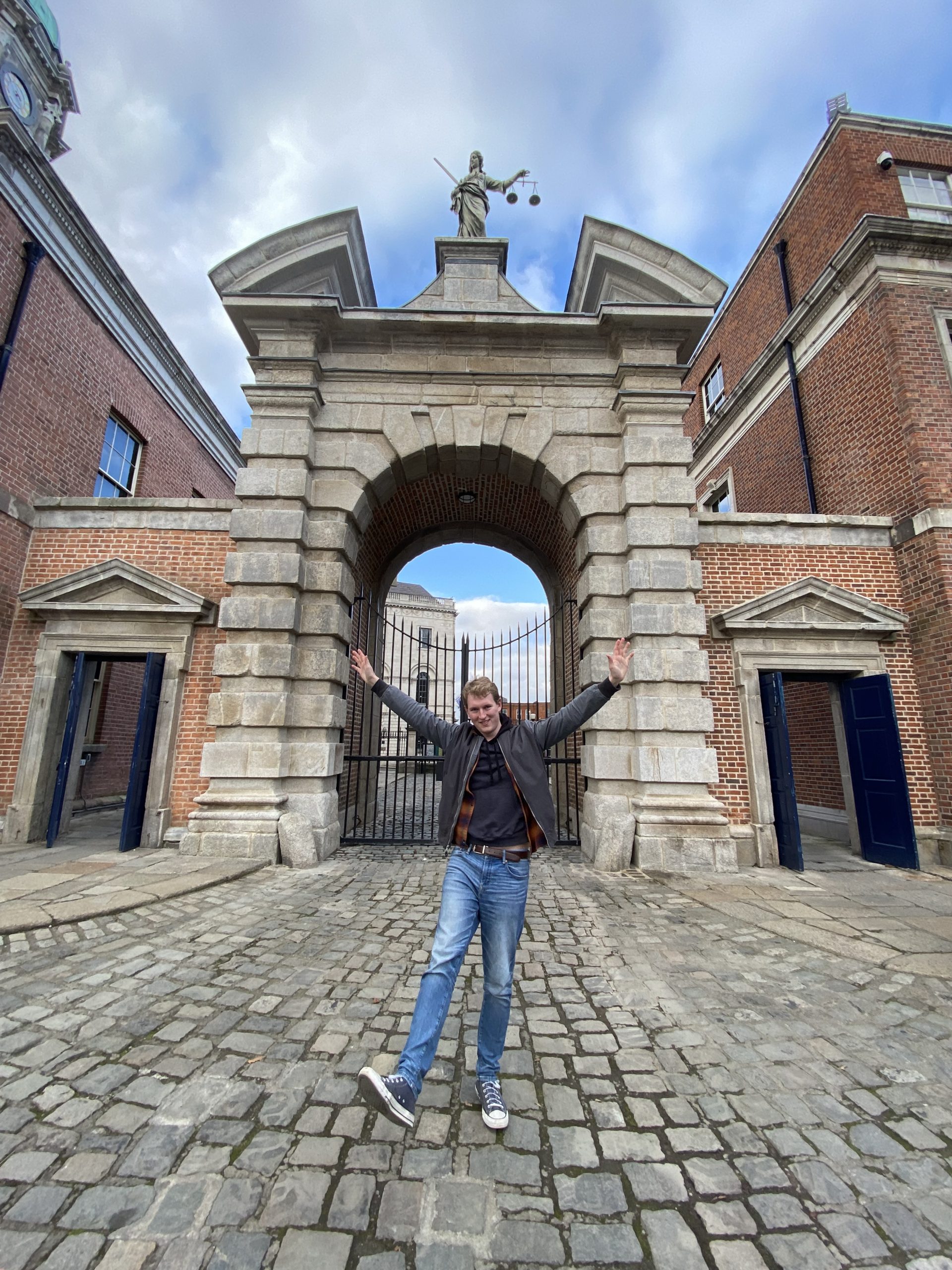
Cody in front of the Dublin CastleMaking friends abroad is hard. I mean, making new friends in any situation is hard, but possible. However, spending time with yourself can be incredibly rewarding. My first solo trip was to the Dark Hedges in Northern Ireland. It is a sight popularized by the television series “Game of Thrones.” It was only a few hours from my university, but was far more challenging to get there then I could ever imagine. After taking a train, a bus, a cab, and then grabbing a ride with a friendly local, I finally made it. At the end of the trip, all I could think about was that I did that. I have always been extremely independent but now I am halfway across the word from any support system I had built, and I had just travelled across a foreign country completely on my own. From there I began to expand my realm of travel to the South of France and Spain. Although not completely alone throughout this entire experience, I have had to learn a myriad of new skills and confidences in myself. I have made countless connections with friendly locals anywhere I go and experienced real life in a number of unique countries.

Though it maybe isn’t ideal. I certainly am not living an idealized film of a life. But then again, who does? Life is simply a series of challenges and our experience is comprised of how we respond to said challenges. These past few months I attacked each roadblock head on, not always with unbridled confidence but with the understanding that no matter what happened I would make it out with a new experience under my belt and an even better story to tell when I return home.

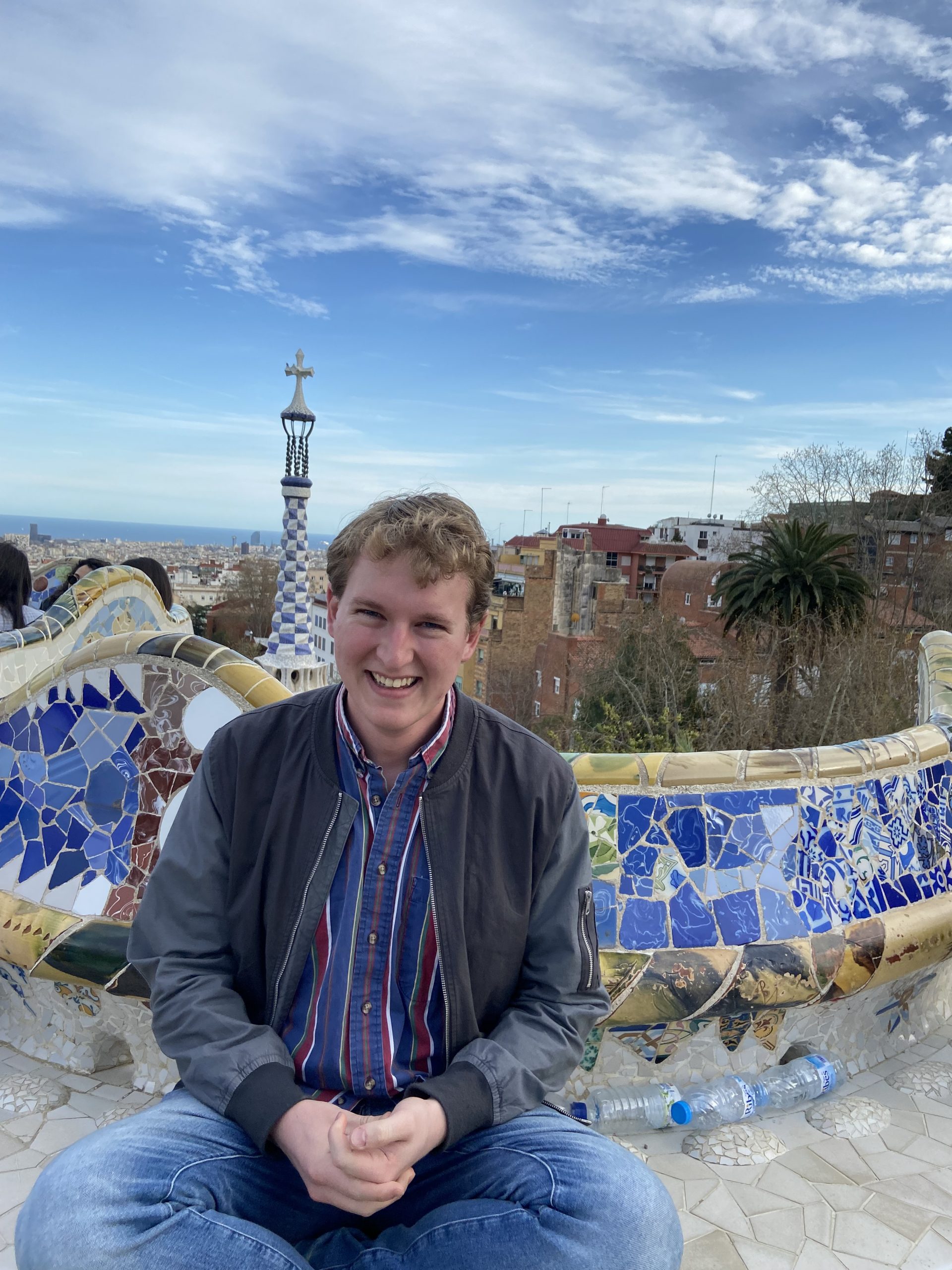
Cody smiling while in Park Guell with the city of Barcelona behind himMy point is, be afraid. It’s what drives us. The feeling of fear and passion combined is powerful within us. Its motivating more than anything else. But do not let those feelings squander your desire to do something amazing. The world is larger than I ever thought it could be. There are more people than I could, personally, ever imagine. I thought I had everything figured out, but nothing could have been more wrong. So, travel. Try new things. Take risks. You can be the wind beneath your own sails and accomplish all of your goals on your own terms. It is possible. Trust me, its worth it.

Posted in Uncategorized | Leave a comment

A Small Archeological World

Written by: Elizabeth Bocksenbaum  |  Spring 2023
ISEP Exchange at the University of Malta

When coming to Malta, I expected to appreciate the history and practice the principles I learned as an anthropology major. I knew the Island had been described as a living museum and had worked to preserve many incredible archaeological sites and historical buildings. Little did I know how my courses at the University of Malta would connect me directly to the people and narratives that heavily developed the ways in which archeology is performed globally. I also wasn’t anticipating the closeness I would have to see the historical sites and artifacts that made this Island so important in history.

Archeological site of Ħaġar Qim

Archeological site of Ħaġar Qim

Within my first week of classes, I discovered that each of my archeology professors were active participants in the ongoing digs and archaeological research throughout Malta. Not only do some of the professors actively work on the Maltese sites, but they encourage current students from the university to work on digs with them to gain field experience. Other professors produce main academic journals and excerpts that update the research of the Maltese archeological sites. Because of this close connection to the archeological sites and research on the Island, many professors will even incorporate Maltese archeological history into lectures as a main point of reference. For every archeological concept given in a history lecture, a reference to Malta is used to further explain and provide context to a specific practice.

Not only was I amazed by the direct connection to the archeological sites and research in Malta, but how fully immersive my experience was in understanding the practice and art of archaeology. Throughout my weekly lectures, I go from understanding the development of archeology, seeing how research translates into our understanding of ancient civilizations, learning how to draw and scale pottery and artifacts, to physically conserving and strengthening historical books and documents in the National Library in Valletta.

Elizabeth posing in stone archway of Archeological structure in Mellieha

Archeological structure in Mellieha

For my archaeology theory course, I learn about the foundations of archaeology and how it has developed into the ever-changing process it is today. I then take these ideas to my Ancient Civilizations of the Mediterranean course and my Ancient Israel course and attempt to understand the records and information found on groups of ancient peoples. Later in the week, I take a course on how to draw different artifacts with tools and record them into a digital archeology database. I then take all this information into my conservation placement where I work with the National Library in Valletta and help conservators conserve historical documents and books. Once my classes are done for the day, I then get to explore the different museums and historical sites on the Island and see how the content of my lectures manifests into the physical displays of archaeology. By the end of the week, I not only learn about the history of archeology and Mediterranean discoveries, but the ethnocentric perspective of how an archeologist theorizes, performs, and perceives. Ultimately gathering an anthropological insight into a very anthropological field.

In my experience, the most beautiful part about the archaeology in Malta is that it is far from being done. When Maltese archeological sites were first excavated in the mid-1800s, most of the remains found were simply thought to be just Phoenician. The idea was that remains found in the west were believed to always be newer and remains found in the east would always date older. When the use of Carbon dating was developed after World War II, the entire dating system used to identify archeological remains and sites was completely demolished and renewed. When carbon dating was applied to the remains found in these Maltese sites, it revealed the sites to date back to 3600 BCE, older than the great Pyramids of Giza in Egypt. This discovery not only changed Maltese practices of archaeological dating, but the principles used to develop archaeology as a whole.

View of road, buildings, and riverway of Valletta, Malta

Valletta, Malta

This discovery still influences the ways in which archaeology is practiced in Malta through the displays presented next to archaeological remains in museums. When walking through the National Museum of Archeology in Valletta, you can see a diverse set of artifacts and pieces of architecture on display along with signs that admit the lack of information on particular pieces. The beauty in this is the acceptance of a need for further research rather than blindly guiding guests into believing we have discovered everything there is to know about the archeological sites and artifacts. Not only is this practice displayed in the museums, but is heavily reflected in the lectures I take at the University of Malta. While there had been many discoveries in the archaeological community in Malta, there will always be more perceptions, practices, and principles to discover and consider. 

Display of various stone pieces in National Museum of Archeology, Valletta

National Museum of Archeology, Valletta

The entire experience moves full circle and brings me back to the initial excitement of coming to this Island. From the personal relations with the professors and conservationists, the physical practices of conservation and archeological illustration, to the exposure of historical sites and museums, my time in Malta has provided an immersive archeological experience that has developed the ways in which I appreciate the practice of anthropology and archeology. While the art of archaeology may begin with the physical remains and structures of the past, it continues to be fueled by the ever-changing perspectives and practices of people.

Posted in Uncategorized | Leave a comment

A Guide to an International Internship

Written by: Cassidy Davis  |  Spring 2023
IFSA Barcelona: UPF (Universitat Pompeu Fabra)Cassidy and friend posing in front of tile siding to old building. In the siding is the word "BARCELONA"

Ever since I was young, I knew I was going to study abroad. In high school, I had the opportunity to study in Mexico for 5 weeks between my junior and senior year. I lived with a host family, went to school, and committed to speaking Spanish the entire time. After this experience, I wanted to study abroad again in college. I chose to go to Butler University because almost half of the students study abroad while at Butler. I sought a program that would complement all three of my majors. As a Spanish major, I wanted to study at a university in a Spanish-speaking country. To fit my other majors in political science and international studies, I also needed to find a university that specialized in these degrees. I decided to study for a semester in Barcelona, Spain through the IFSA Barcelona program where I could take classes at the local university Universitat Pompeu Fabra. I specifically chose this program so I could continue taking Spanish classes as well as participate in an international internship. This program places students with a local organization based on our individual majors and interests. I was placed at a local non-profit organization called Homeless Entrepreneur, whose mission is to promote economic empowerment and poverty reduction via work and active citizenship. I am working as a social-policy intern and researching for a report that will be presented to the European Parliament in 2024. This is my first internship and there are a few things I wish I would have known prior to starting my position. Here are some tips for future students participating in an international internship:

1. Be patient.

I assumed I would arrive in Barcelona with an internship position ready for me when classes started. After seeing classmate after classmate being placed in their internships, I became worried that I wouldn’t be placed in an internship that fit my needs. It wasn’t until a few weeks after classes started that I was placed in my internship with another student in my program. The first few weeks were hard to get into the swing of things but as the semester went on I became more comfortable and confident with my work.

2. Don’t be scared to ask for help.A class attending a panel presentation on "Creating Positive Social Change Together"

You will not be able to do your job well if you don’t understand what is expected of you. There is no shame in asking your supervisors or fellow interns for help because everyone at your internship wants to see you succeed.

3. Research the cultural differences before you start.

In the United States, the work mentality is completely different from most areas of the world. If you text or email your supervisor, you can expect a response relatively soon. Spain has a much more relaxed work environment, and my supervisors have even told me that they do not want me to work on the weekends because this is time that I should reserve for myself.

4. Have a positive attitude.

It is extremely important to show your supervisors and peers that you are enthusiastic about working with them. Even if you aren’t placed at an internship that you think fits your interests, you can still make an effort to make the best of the situation. The semester is not going to be easy if you don’t show up to work with a positive attitude. Use this time as a learning experience!Cassidy and friend posing in front of MWC Conference Center.

5. Stay organized.

This is especially important if you are working remotely like I was for the majority of the time. It can be very easy to not do work throughout the week because you get caught up with other classes and being abroad in general. You are ultimately interning to work and to advance your skills for future opportunities and will only be hurting yourself and your team by not contributing.

Posted in Uncategorized | Leave a comment

Opportunities at My Australian Uni

Enali smiling on a pier over an Australian coastline.Written by: Enali Rogers  |  Spring 2023
BU Exchange at Flinders University

Every stop on my way to Australia, I told time by how many layers I had on. At first, I had a whole winter ensemble: two sweaters, a coat, beanie and scarf. Then a sweater and a beanie. Hours later, just a sweater. When all the layers had melted off leaving t-shirt and pants, I knew had arrived. Waves of heat reflecting off of the airport tarmac made it pretty evident that I made it to the opposite hemisphere.

My name is Enali Rogers, and I am doing an exchange in Adelaide, South Australia. A little over a month into my stay here, I have seen one koala, unfortunately no kangaroos [yet], tons of colorful birds, and an echidna (which I didn’t expect, but hey, I’ll take it.) As far as I am concerned, I wouldn’t mind staying here for longer than a semester. But alas, I have a semester… *sigh*

One thing that I am definitely going to miss about this place  
is how easy it is to go to the beach just to watch the sunset. It’s such a common thing to do here. Friends will just text and say, “Hey, I feel like going to watch the sunset. Wanna come?” And within the next 15 minutes you’re on a tram to the beach to end your day with some ice cream, the sounds of water ebbing and flowing, the soft sand under your toes and a beautiful sunset. It’s been about 5 years since I’ve been to the beach, but now I’ve been going at least twice a week.

An Australian sunset from the view of the beach.Another thing I’ll miss is the opportunity to take classes and join clubs that I never would’ve been able to experience at my much smaller home university. Along with two classes that go towards my bachelors in physics, I decided to take two fun classes. The first class is a class where I learn to draw from life. The second fun class is titled “Zombie Apocalypse: Microbes and Toxins” and the topic overview says the following:

“Adelaide has been invaded by Zombies, and most of the population is now living in hiding in the buildings at Flinders University. It is your responsibility to provide safe drinking water and safe foraged and preserved food.”

So far, I have fished out dirty water from the campus lake and “cleaned” it using a filter made from sand, gravel, cotton balls, and a coffee filter and then boiling out the rest of the bad stuff, hopefully making it drinkable for the hypothetical apocalypse civilians. (Don’t worry no one actually drank the dirty filtered lake water. That would be a hazard). I have found this class to be a fun, hands-on opportunity to learn about microbes and the prevention of such, something I never would have been able to do had I not studied abroad.A bright neon Ferris Wheel lighting up the night sky.

Experiencing the city part of Australia is only part of the visit. “You have to visit rural Australia too! It’s a different type of life and you’ll love it.” Something along these lines has been told to me multiple times, with some who have extended invitations to their hometown just so that I don’t miss out on that experience. I want more than ever to see the night sky without any light pollution. So, what better way to do so than by signing up for a speleology club (study of caves). This club does an outing every month to explore a different cave while occasionally staying overnight at different sites away from the city. Although the first outing hasn’t happened yet, I look forward to being immersed in a different side of Australia (maybe I’ll even see a kangaroo!).

I’ve had the wonderful opportunity to meet people from around the world (as nearly half of Australians have a parent that was born overseas), and had plenty of fish and chips, picked the sweetest strawberries in a little German town, and felt the cool ocean breeze and warm sunshine on my face. I am happy that I picked Australia to study abroad in and can’t wait to see what awaits in the remaining months. Six months seems like a long time, but time flies when you’re having fun!

Posted in Uncategorized | Leave a comment