Author: Maddie Koss

  • A Global Learning Experience: Gregor von Rohr’s Exchange Semester

    A Global Learning Experience: Gregor von Rohr’s Exchange Semester

    Gregor von Rohr didn’t arrive at the Lacy School of Business looking for a pause in his academic journey. He came looking for a place where he could expand it.

    Originally from Switzerland, Gregor studies political science with a strong business focus, moving between disciplines that rarely stay in separate lanes. His academic path has already taken him across institutions and borders, including the University of Zurich and an exchange semester at George Washington University in Washington, D.C., where he immersed himself in international relations and national security studies. Each experience added another layer to how he understands politics, economics, and the systems that connect them globally.

    But it was at LSB where those layers began to actively intersect.

    In International Business Environment, taught by Dr. Juan Manual Gil, Gregor stepped into a learning environment designed around real-world global collaboration. The course integrates X-Culture, an international experiential learning project that brings together thousands of students from more than 100 countries to work in virtual teams and develop internationalization strategies for real companies.

    For Gregor, this wasn’t just another group assignment – it became the defining academic experience of his exchange semester.

    Through X-Culture, he worked with peers across continents on a real business challenge: developing expansion strategies for a honey company in Africa. The experience pushed far beyond traditional case studies. It required navigating time zones, communication styles, and deeply rooted cultural differences in how teams build trust and make decisions.

    “In Switzerland, if you’re five minutes early, you’re on time,” he reflects. “But in a global team, you quickly realize those assumptions don’t always translate. Everything changes; how you communicate, how you define deadlines, even how you build relationships.”

    What stood out most to Gregor was how directly the experience reflected what he was learning in Dr. Gil’s classroom at Lacy. Concepts like internationalization, cross-cultural management, and global strategy were no longer theoretical frameworks – they were immediate, lived realities unfolding inside his team.

    His performance and engagement in both the course and X-Culture led to a significant recognition: selection for the 2026 X-Culture Global Business Week Conference in Trieste, Italy. Out of more than 500 applicants, only 150 students were chosen globally. For Gregor, the selection represents not just individual achievement, but a continuation of the applied, global learning he first encountered at the Lacy School.

    At the same time, Gregor has found that Butler offers something beyond academic rigor: a sense of community that shapes how learning feels. Compared to competitive environments he has experienced elsewhere, he describes Lacy as more collaborative – where students are encouraged not just to compete, but to engage, support, and build together.

    “People care about each other here,” he says. “It’s not just competition; it’s community. That changes how you learn.”

    That balance has influenced how he thinks about his future. Exposure to global systems, inequality, and economic structures – both in and outside the classroom – has led him to explore paths in international diplomacy or consulting, where analytical thinking and human understanding must work together.

    Outside of academics, Gregor has also extended his voice through writing as an opinion contributor for The Butler Collegian. Writing, for him, serves as another way of processing what he is learning: connecting academic theory to lived experience and global observation. It is less about reporting and more about synthesizing: understanding how ideas show up in the real world, and why they matter.

    “The real skill,” he says, “is connecting what you learn to what you see happening in the world.”

    For students considering LSB, especially those coming from international backgrounds, Gregor’s experience reflects what is possible when academic structure and global opportunity intersect.

    When asked what he would say to another student considering an exchange at LSB, his answer is immediate.

    “Just do it. Once you’re here, you realize how much is possible. You just have to step into it.”

  • Designed for the CPA and Beyond: Kitty Reddy ’25 on Her MPAcc Experience

    Designed for the CPA and Beyond: Kitty Reddy ’25 on Her MPAcc Experience

    For Kitty Reddy ’25, accounting isn’t just about numbers – it’s about purpose.

    When Kitty arrived at the Lacy School of Business from Peoria, Illinois, she wasn’t simply searching for a degree. She was looking for a place that would prepare her for the rigor of the CPA exams while helping her build a career aligned with the kind of impact she wanted to have. She found that foundation – and more – in Lacy’s Master of Professional Accounting (MPAcc) program.

    “I knew I wanted to be fully prepared for the CPA exams,” Kitty says. “And this program really focuses on understanding, not just memorizing.”

    That distinction matters. Designed intentionally around CPA exam content and outcomes, the MPAcc program doesn’t just help students pass exams; it helps them think like professionals. With a 100% placement rate, the program equips students with technical expertise, confidence, and momentum to move seamlessly into meaningful careers.

    Kitty’s journey toward accounting began as an undergraduate at LSB, where she enrolled in 2021 and quickly discovered both a passion for the field and a community that supported her growth. Immersed in a curriculum that challenged her to think critically and apply concepts in real-world ways, she built a strong academic foundation while engaging deeply on campus as a member of Pi Beta Phi, Alpha Kappa Psi, and the Lacy Business Scholars program.

    As graduation approached in May 2025, Kitty reflected on the environment that had shaped her so profoundly. Rather than looking elsewhere for graduate school, she made the decision to continue her education at Butler, beginning the MPAcc program in August 2025.

    “It felt like the natural next step,” she shares. “I already knew the faculty, the expectations, and the culture. I wanted to keep learning in a place where I felt both supported and challenged.”

    But Kitty’s professional direction was shaped by more than coursework alone. After witnessing her father undergo multiple surgeries and losing a cousin to leukemia, she felt a strong pull toward the healthcare field – not as a provider, but as someone who could make a difference behind the scenes.

    “I knew I wasn’t meant to be on the clinical side,” she says. “But I still wanted to make a difference in that space.”

    That realization led her to pair accounting with a minor in healthcare management, combining analytical skills with compassion and purpose. Her goal became clear: to work in healthcare accounting, supporting hospitals and healthcare systems through thoughtful tax planning and financial strategy.

    “I want to contribute in a way that still impacts people’s lives,” she says.

    At the Lacy School of Business, Kitty found more than academic preparation, she found a community invested in her success. Small class sizes allowed faculty to truly know her as a learner, offering mentorship that went beyond the classroom and helping her refine her goals with clarity and confidence.

    “The people here want you to succeed,” Kitty says. “You’re not just another student; you’re someone they’re investing in.”

    That environment has shaped not only her technical abilities, but her belief in herself.

    “Looking back, I’ve grown so much,” she reflects. “Not just in what I know, but in how I approach challenges and think about my future.”

    Through internships and Butler’s Meet the Firms career fair, Kitty explored a range of possibilities within accounting – from healthcare-focused firms to public tax – gaining firsthand exposure to different paths within the profession. Those experiences culminated in securing a full-time position as a Tax Associate at Crowe, where she will begin her career after completing her graduate studies and CPA exams.

    Even now, as she balances MPAcc coursework, a part-time role with Butler’s Advancement Center, and studying for the CPA exams, Kitty is seeing the value of her education in real time.

    “As I’ve started studying, I’ve realized how much of the material we’ve already covered,” she says. “I feel more prepared than I would have otherwise.”

    That preparation is intentional, and at the heart of the MPAcc program. By emphasizing understanding over memorization and application over theory alone, the curriculum prepares students not just for exams, but for long-term success in the profession.

    Some moments along that journey, however, extend beyond academics.

    During a study abroad experience in Ireland, where Kitty and her classmates examined international tax systems and global business practices, she experienced a personal milestone that made the experience even more meaningful: she got engaged. Her fiancé, John Cunningham, is also a graduate student at Lacy, underscoring just how deeply connected the community becomes.
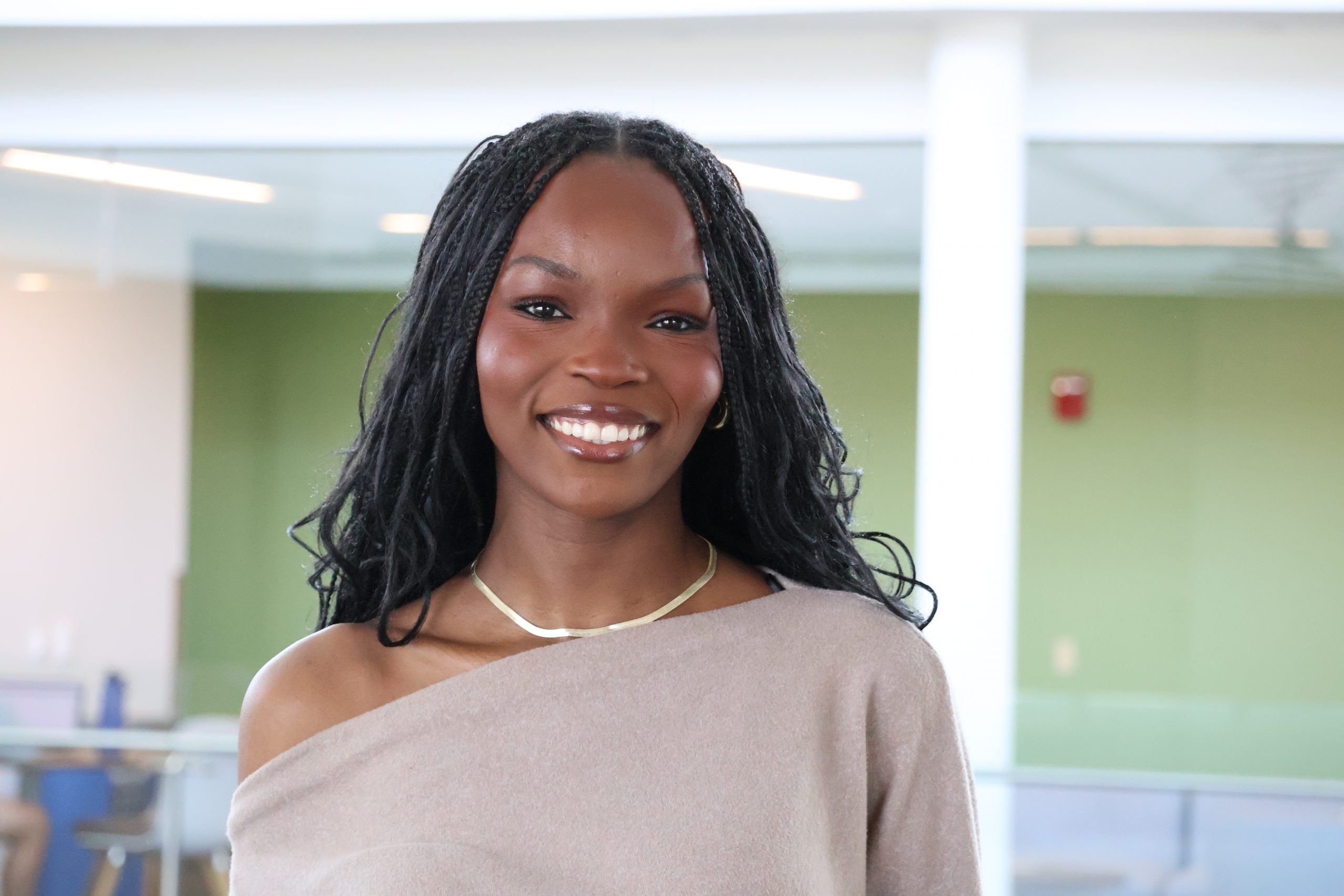
    “What made it so special was being able to share that moment in a place that was already such a big part of my growth,” Kitty says. “It felt like everything came full circle.”

    The experience expanded her perspective on global accounting and international career possibilities, while also strengthening the relationships that define the Lacy experience – with classmates, faculty, and her future.

    “At Lacy, you grow academically, professionally, and personally,” she says. “That experience showed me all of that at once.”

    At its core, Kitty’s story is one of intention. She’s not simply earning a master’s degree – she’s building a career that reflects who she is, what she’s experienced, and the impact she hopes to make.

    Her advice for students considering the MPAcc program?

    “Take advantage of every opportunity,” she says. “There are so many paths in accounting. The more you explore, the more confident you’ll feel in where you’re going.”

  • Building the Future of Small Business Ownership: Entrepreneurship Through Acquisition Conference

    Building the Future of Small Business Ownership: Entrepreneurship Through Acquisition Conference

    On Tuesday, March 10, the Lacy School of Business hosted the inaugural Indiana Entrepreneurship Through Acquisition (ETA) Indy Conference, drawing over 350 entrepreneurs, operators, investors, advisors, lenders, and community partners from across Indiana and the broader Midwest.

    With 40 speakers and two tracks of programming running from morning through evening, the event marked a milestone for a region full of legacy businesses, founders nearing retirement, and a rising generation eager to step into ownership.

    From the moment attendees arrived, the energy made one thing clear: Indiana is ready to invest in the future of these businesses.

    Before the first session even began, conversations flowed easily – first time searchers exploring their next step, small business owners thinking about transition, and operators reflecting on what it really takes to run a company after close.

    The opening keynote by Chelsea Wood of the Acquisition Lab tapped into that shared sense of purpose, emphasizing ETA’s role in preserving the small businesses that anchor communities – businesses that sustain jobs, support families, and form the backbone of local economies. Across Indiana alone, thousands of owners are approaching retirement without succession plans. ETA, as the keynote highlighted, isn’t just about buying companies; it’s about stewarding something worth preserving.

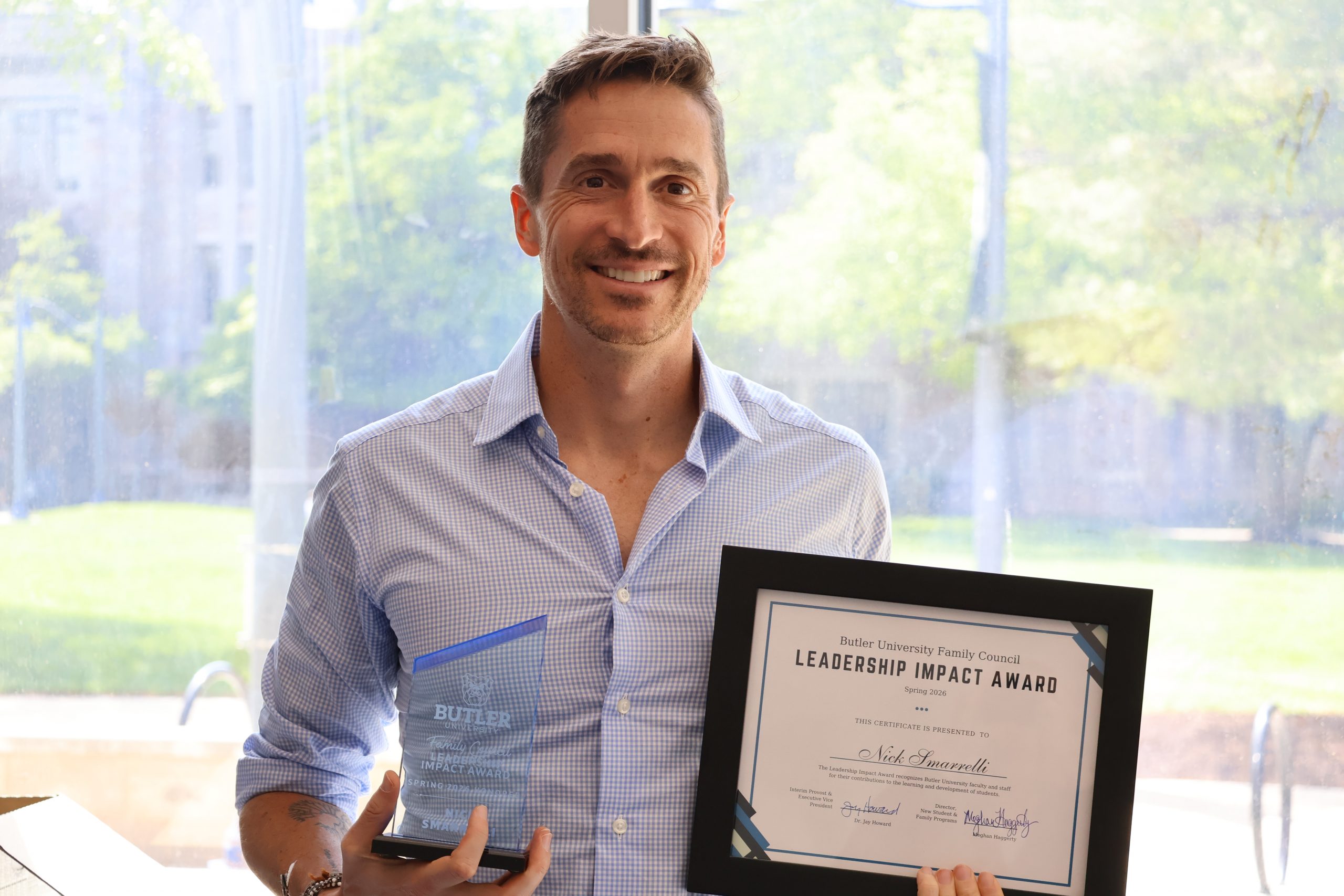
    “In Indiana alone, tens of thousands of baby-boomer–owned businesses will change hands in the next decade – many of them in just the next five years. What’s alarming isn’t the volume, but the lack of preparation. Fewer than half of owners have a written succession plan, and nearly half of transitions happen unexpectedly due to health, family, economic stress, or sudden life events,” Nick Smarrelli, director of entrepreneurship, said. “If we don’t build a stronger ETA community now – one that learns together, shares best practices, and connects capital, operators, and students – we risk losing businesses, jobs, and the local legacies that define our communities. The Lacy School of Business has both the responsibility and the platform to help unify this work across the state – not for Butler’s benefit alone, but in the best interest of Indiana’s people, employers, and future.”

    Throughout the day, panels, interviews, and hands-on presentations gave attendees a grounded look at the realities of the acquisition journey. Sessions explored how to build a thoughtful buy box, how governments and communities are supporting local ownership transitions, and how buyers can evaluate businesses beyond surface-level financials. Technical discussions on valuation and diligence helped attendees understand the difference between reported numbers and true cash flow, while other panels broke down what it takes to move a deal from handshake to a bankable, legally sound close.

    Financing emerged as a defining theme – SBA lenders, debt partners, and advisors offered candid insight into assembling a capital stack for a first acquisition and what makes a searcher stand out as credible. Operators also spoke openly about the emotional realities of ETA, from the uncertainty of the search process to the responsibility of leading a team on day one. Many attendees noted how refreshing it was to hear honest accounts of the first 100 days, culture-building, and the long-term professionalization that comes after closing.

    Between sessions, campus buzzed with conversations about deals being evaluated, industries of interest, and opportunities for collaboration. Students asked operators what life looks like after buying a business; advisors shared guidance; lenders made introductions; and owners told the stories behind the companies they built. Those moments – spontaneous, unplanned, and full of possibility – became the heartbeat of the day.

    As the final reception wound down and attendees left with full notebooks and new connections, one thing was unmistakable: the conversations begun at ETA Indy will continue – through searches launched, deals explored, and businesses passed thoughtfully to the next generation of leaders. The inaugural conference laid the foundation for a growing community rooted in stewardship, opportunity, and a shared commitment to strengthening the region’s small business ecosystem.

  • Building Indiana’s Next Generation of Innovators: First Collegiate Entrepreneurs Summit

    Building Indiana’s Next Generation of Innovators: First Collegiate Entrepreneurs Summit

    On Friday, February 27, more than 250 students from 17 universities arrived at the 16 Tech Innovation District in Indianapolis for the inaugural Collegiate Entrepreneurs Summit, a statewide gathering created to bring student innovators together, spark new collaborations, and strengthen Indiana’s entrepreneurial network.

    The summit was more than an event – it was the result of a multi-organization planning committee led by Butler University’s Lacy School of Business, 16 Tech, CICP, and INtercollegiate Entrepreneurs. For months, these four groups worked together to design a student-centered experience that could bring Indiana’s entrepreneurial community closer and create a truly statewide ecosystem.

    What began as a simple idea among a small group of campus leaders grew into one of the largest student entrepreneurship events the state has hosted, marking a significant milestone for both Indiana’s innovation community and for LSB, which served as a co‑host, challenge partner, and event sponsor.

    Throughout the day, The AMP at 16 Tech transformed into a hub of activity as students participated in workshops, founder conversations, peer discussions, and hands on sessions that explored the many pathways available to those interested in building, creating, or problem solving.

    “It was one of the few spaces where everyone shared the same drive to build something new,” said Preston Asher, a finance and entrepreneurship & innovation double major. “You could walk up to any table and immediately start talking ideas.”

    A central component of the day was the Anchor & Accelerate Innovation Challenge. More than 40 intercollegiate teams formed quickly to analyze a structured business problem, develop a market-ready concept, and present their ideas under tight deadlines. The challenge emphasized creative problem solving over polished prototypes, encouraging students to focus on clarity, feasibility, and real world application.

    LSB delivered a standout showing. Eight Butler teams participated in the challenge, and LSB students secured both first and second place overall – a major accomplishment given the number of competing institutions. First place was awarded to Jenna Burd and Lily Laffond, whose concept impressed judges for its innovation and practical potential. Second place went to Trevor Storm and Preston Asher, offering Butler a clean sweep of the top two positions and reinforcing the strength of LSB’s experiential learning approach.

    “The challenge pushed us to think fast, communicate clearly, and trust our instincts,” Preston said. “Everything we’ve learned at LSB showed up in those moments, and it felt like we were genuinely prepared.”

    Lily described the challenge as eye opening, especially around the problem her team tackled. “Our team was tasked with solving the problem of lost tribal knowledge and workforce productivity within the manufacturing sector,” she said. “We created LeanLens, an AI software tool built into industrial grade goggles. Before this, I had no idea that manufacturing makes up 27% of Indiana’s GDP. Given how archaic many systems still are, the industry is well suited for AI disruption.”

    Beyond the competition, the summit offered a rare opportunity for students to connect across campuses in a way that had never existed before. For Lily, these conversations became a highlight of the entire day. “I left the conference feeling energized with ideas,” she said. “Talking to students all over the Hoosier state about what they’re building was inspiring. The best part of a network like this is the shared commitment to helping one another succeed.”

    She also noted a clear difference in how Butler students showed up: “Given that out of 40+ teams, the top two were from Butler – that’s a testament to the program. One key distinction I noticed was the strong emphasis Butler students place on soft skills and relationship building. Rather than simply presenting financials and metrics, they prioritize building genuine rapport and connecting meaningfully with judges.”

    Leadership from INtercollegiate Entrepreneurs – the student run organization that helped spearhead the event – echoed this sentiment, emphasizing the importance of building statewide community rather than isolated campus level efforts. With students attending from Indiana, Illinois, and Virginia, the summit highlighted just how quickly this network is expanding and how crucial collaboration will be in supporting student founders in the years ahead.

    “I’ve been watching Butler’s presence in the ecosystem grow – the building of partnerships, the credibility compounding – and the summit was the moment all of it became visible at once,” Iman Noor D. Braham, an MBA candidate concentrating in finance and entrepreneurship & innovation, said.

    “Meeting students from other universities was eye opening,” Preston added. “It helped me see how strong Butler’s entrepreneurship culture really is. People kept saying they could tell we were well supported and well prepared.”

    Students left the summit carrying new ideas, new relationships, and a stronger sense of what entrepreneurship can look like in any field, whether launching a startup or driving innovation within an existing organization. “I walked away with a better understanding of entrepreneurial storytelling,” Lily said. “Venture capitalists invest in businesses, but they also invest in founders. Being able to articulate my purpose, positioning, and vision is a key differentiator.”

    The inaugural Collegiate Entrepreneurs Summit represented the beginning of something larger: a shared effort to empower student founders, elevate Indiana’s entrepreneurial ecosystem, and build a statewide community grounded in collaboration rather than competition.

    For Iman, the summit confirmed a broader shift already underway in Indiana. “Indiana is at a genuinely exciting moment,” she shared. “I’ve seen what emerging ecosystems look like in different markets, and this feels like the window where the people showing up now will shape what it becomes.”

    “I walked away with more confidence – not just in my ideas, but in the direction Indiana’s innovation ecosystem is heading,” Preston said. “It feels like there’s real momentum, and Butler is right in the middle of it.”

  • From Student to Strategist to Professor: Sara Omohundro ’16 Comes Full Circle at LSB

    From Student to Strategist to Professor: Sara Omohundro ’16 Comes Full Circle at LSB

    A decade after graduating from the Lacy School of Business, Sara Omohundro ’16 walks back into the same classrooms where she once sat as a student – only this time, she’s the one at the front of the room.

    An accomplished investor, nonprofit leader, and mentor, Sara has returned to Butler University as an adjunct professor to teach Alternative Investments. For her, it’s more than a professional milestone; it’s a full-circle moment rooted in gratitude, growth, and a desire to open doors for the next generation.

    A Chicago native, Sara chose LSB for the close-knit academic environment she couldn’t find at larger universities. She quickly discovered a place where curiosity was encouraged, professors knew her by name, and leadership wasn’t just possible – it was expected.

    “I wanted a smaller school where I could explore and really get to know the professors and my peers,” she said. “LSB checked all those boxes. I felt like I never had to leave the community here behind.”

    As an undergrad at LSB, Sara double-majored in Economics and Finance, paired with minors in Mathematics and Philosophy, and threw herself into leadership roles – from the Entrepreneurship Club to serving as President of the Equestrian Team. Those experiences didn’t just fill her resume; they taught her how to blend technical rigor with communication, problem-solving, and the confidence to take initiative.

    One of her most defining LSB experiences came through her honors thesis she completed under the guidance of Dr. William Rieber, an economics professor. Sara examined how fiscal policy shapes consumer confidence, and the project became a published undergraduate research article – an achievement that showed her not only what she was capable of, but what high-level inquiry looks like.

    “It was the first time I saw how much work goes into research and how rewarding it is to see your ideas out in the world,” she said. “LSB gave me the tools and the support to push myself.”

    After graduating in 2016, Sara stepped into the investment world through roles at the Indiana Public Retirement System and later a local venture capital firm. These experiences deepened her interest in the rapidly growing field of alternative investments – a space she now specializes in as an Investment Strategist at Goelzer Investment Management. Her work spans institutional allocations to private investments, but at its core, it relies on the blend of analytical skill and relationship-building she first honed at LSB.

    Throughout her career, Sara found ways to elevate others, especially women entering the investment field. She founded the Women Investors Network, a group dedicated to creating connection and mentorship in an industry where women remain underrepresented. She also chairs Take the Reins Youth Stable for Life, a nonprofit using equine programs to help underserved youth build life skills. These commitments reflect a philosophy shaped during her time at LSB: pair passion with purpose and use your opportunities to create more opportunities for others.

    That mindset is exactly what she brings with her back to Butler.

    In her Alternative Investments classroom, Sara focuses on real-world application, integrating her own professional experiences into assignments, case studies, and conversations. She wants students to understand not just how to analyze investments, but how to communicate insights, think strategically, and make informed decisions in dynamic environments.

    “I want students to understand that what we’re doing in class isn’t just theory. These are the conversations and decisions they might have to make in their careers,” she said. “It’s rewarding to be in the room with students as they discover what excites them, push themselves, and start to see the paths their careers might take. If they leave my class curious, confident, and ready to take initiative, then I’ve done my job.”

    Despite a demanding career and teaching schedule, Sara still finds time for the things that keep her grounded: riding and competing with her horses, Felix and Melvin, practicing Pilates, and laughing at the antics of her cat, Maggie, at home in Westfield.

    For students considering finance, Sara offers this advice:

    “Don’t be afraid to try new opportunities. Build your network. Seek mentors. And remember that your career will be shaped not just by what you know, but how you connect with others and the impact you create.”

    DISCLAIMER – This sponsored content is not an offer to buy or sell securities. Past performance is no guarantee of future returns. Investing involves risk and possible loss of principal capital. Goelzer is not a law firm or tax firm. Readers are encouraged to consult with qualified legal or tax professionals to address their individual circumstances. Goelzer works as a team with your professionals.

    Horse photos taken by Winslow Photography.

  • Finding Community in the Marketplace: Dr. Meredith Rhoads’ Journey into Marketing Research

    Finding Community in the Marketplace: Dr. Meredith Rhoads’ Journey into Marketing Research

    Marketing began long before Dr. Meredith Rhoads ever declared it as a major – it began in her father’s small furniture store in West Frankfort, Illinois. As a child, she watched her dad build relationships, serve his community, and make decisions that affected real families.

    “I had this front-row seat to what it means to run a business in a close-knit place,” the assistant professor of marketing recalled. “I didn’t know it then, but that shaped everything about how I view marketing.”

    Drawn to both creativity and strategy, she pursued an undergraduate marketing degree at Southern Illinois University Carbondale and quickly fell in love with it. But her understanding of the field expanded dramatically during her MBA program, when she began working with faculty on a research project examining older consumers and their interactions with service providers.

    “That project opened my eyes,” she said. “It showed me how marketing touches vulnerable populations and how the marketplace can either preserve or diminish dignity.”

    After graduation, Dr. Rhoads joined the new product development team at Anheuser-Busch, flexing her creative muscles while exploring new beverage concepts and emerging markets. Her work frequently took her into bars, restaurants, and community spaces to observe consumers in their own environments. “I kept finding myself in projects where I was collecting qualitative data,” she said. “I loved talking to people – getting to their motivations, emotions, and needs.”

    Those experiences revealed a clear pattern: she was most energized when she was doing research, working directly with consumers, and uncovering human-centered insights. Combined with her love of university environments, that realization led her to pursue a PhD at the University of Wisconsin.

    It was there that her research identity truly took shape. Dr. Rhoads gravitated toward questions about community – how people build it, how the marketplace affects it, and how systems can either include or exclude individuals. “I grew up in a town where people showed up for each other,” she said. “That has stayed with me. I’m drawn to understanding how community forms and how marketing can support or impede that.”

    Her work now spans several streams: how neighborhoods and city planning shape social bonds; how small local businesses act as community anchors; and how vulnerable consumers, including those with disabilities or resource constraints, navigate the marketplace. Across all her projects, she centers dignity, access, and inclusion.

    Her recent paper Service Design for Humanitarian Value, published in Journal of Service Research, captures that mission. Working with a longtime research team, she studied a diverse set of social service providers – from food banks to home meal programs to organizations serving formerly incarcerated individuals. The goal was to understand how these providers conceptualize the value they create. Rather than viewing them as a single category, Dr. Rhoads and her co-authors developed a framework outlining three layers of humanitarian value: triaging immediate needs, building long-term capacity, and empowering individuals toward independence.

    “What stood out is that poverty takes many forms: financial, social, emotional. These organizations are doing so much more than people realize,” she explained, “They’re meeting people where they are.”

    She hopes the framework helps policymakers and local leaders better allocate resources and understand shifting community needs. “Ultimately, I want my research to matter,” she said. “I want it to lead to real change.”

    That commitment to meaningful impact is also what brought her to the Lacy School of Business. After visiting dozens of universities nationwide, she knew her heart belonged back in the Midwest. Butler immediately felt different. “From the moment I stepped on campus, it felt like home,” she said. “People here care about people. They care about community.”

    In the classroom, Dr. Rhoads teaches consumer behavior, advertising, and introductory marketing. Her goal is to help students see the humanity within the discipline. “We live in a consumer society. Marketing touches everything,” she said. “I want students to understand the deep core needs that drive behavior and realize how enduring many of those needs are.”

    She weaves concepts from psychology, sociology, and anthropology into her courses, encouraging students to think critically about how markets shape lives and how businesses can create value responsibly. She also hopes to inspire the next generation of marketing researchers. “We have endless data now,” she said. “But what matters is asking good questions, questions that lead to insights that help people.”

    When she’s not teaching or conducting research, Dr. Rhoads can be found exploring Indianapolis with her four children, ages 19, 17, 13, and 10. She loves biking, yoga, and discovering local restaurants and neighborhood spots. “I’m drawn to places with heart,” she smiled. “Maybe that’s the small-town girl in me.”

    Now in her second year at LSB, she is energized by the collaborative spirit within the LSB community. “This is a place where ideas have no ceiling,” she said. She hopes her work will continue strengthening connections with local businesses, nonprofits, and policymakers. “I believe in backyard research – studying what’s right in front of us. There’s so much opportunity to make Indianapolis stronger.”

  • Building Momentum: Butler Welcomes 150+ Students for Indiana’s First Collegiate DECA State Conference

    Building Momentum: Butler Welcomes 150+ Students for Indiana’s First Collegiate DECA State Conference

    Last Saturday, Butler University’s Lacy School of Business welcomed more than 150 students from eight states and 15 college campuses for the inaugural Indiana Collegiate DECA State Career Development Conference. The event represented the culmination of four years of planning, organizing, and building an association from the ground up – making this first-ever statewide conference a significant milestone for both Indiana Collegiate DECA and for Butler, which served as host.

    The day-long conference brought students to campus for an immersive experience in professional development, competitive case events, and statewide networking. As attendees moved between sessions, they explored many of Butler’s signature spaces – from the Collegiate Gothic architecture of Jordan Hall to the history of Hinkle Fieldhouse to the quiet pathways of Holcomb Gardens. It was a fitting backdrop for a day centered on curiosity, problem-solving, and collaborative leadership.

    The conference also reflected the rapid momentum Indiana Collegiate DECA has built during its first year as a fully chartered association. Membership across the state grew by more than 40 percent, surpassing 430 students and supporting chapters at seven campuses in Indiana. This growth helped make possible a conference that not only emphasized competition, but also created a space for students to learn from industry professionals and connect with peers from across the region.

    Throughout the morning and afternoon, students participated in the Professional Development Series, which brought together speakers from across Indiana to discuss regional industries, career pathways, and the evolving business culture of Indianapolis. Non‑competitive members participated in these sessions throughout the day, while competitive members moved between workshops and their timed case events.

    A key feature of the conference was the Hoosier Case Study Event, designed in partnership with an Indiana-based company. Students were challenged to analyze a real business scenario, craft solutions, and present their recommendations under tight deadlines. The event quickly became one of the day’s most energizing opportunities, offering a realistic look at the kind of strategic thinking required in today’s professional landscape.

    The conference also offered an opportunity to recognize outstanding leadership within the collegiate DECA community. LSB is proud to share that Mark Donner, lecturer in applied business technology, was named the 2025–2026 Indiana Collegiate DECA “Advisor of the Year.” The award, presented during the conference, honored his exceptional mentorship, support of student development, and longstanding commitment to elevating experiential learning within the Lacy School of Business. His recognition added another point of pride to an already important weekend for Butler’s DECA community.

    During opening session, attendees gathered for the keynote address delivered by Scott Fussell, principal of Scott Fussell Coaching and Consulting and founder of The Shift Initiative. Fussell’s talk, “The Three Absolutes of Leadership,” centered on leading with clarity, building connections, and identifying the strengths of others. His message about authenticity and purposeful leadership resonated with students preparing to enter the next stage of their academic and professional journeys.

    For many Butler students, the conference marked a personal milestone. Eric Bedrosian, founder of Butler’s DECA chapter and the outgoing Indiana Collegiate DECA President, reflected on what it meant to see this moment come to life after years of work. “Four years in the making. One powerful day of networking, collaboration, and competition,” Bedrosian said. “What began as a vision has officially become a reality.” His remarks captured the pride of a leader who helped shape the organization from its earliest foundation.

    Jack Paulson also reflected on what it meant to help shape such a successful inaugural event. This year’s conference highlighted his leadership as he earned first place in the Sales Management & Leadership Case Study Event. Reflecting on the experience, Jack shared, “It was especially meaningful to see Butler host such a strong inaugural event and help lay the foundation for the future of Indiana Collegiate DECA.” His remarks underscored the pride he feels in both competing and helping guide the organization into its next chapter.

    Competitors from the Lacy School of Business delivered standout performances across numerous categories. First‑place finishes included Addison Altman and Zoe Meek in Business Ethics; Katie Kirch and Kate Parisi in Entrepreneurship – Starting a Business; Kelsey Babinec and Brooke Underwood in Event Planning; Jenna Burd and Trevor Storm in International Marketing; Jack Paulson in Sales Management and Leadership; and Preston Asher, who won both Corporate Finance and the Hoosier Case Study Event alongside teammates in Financial Statement Analysis. Their achievements reflected not only strong academic preparation but also the teamwork, adaptability, and communication skills that DECA events are designed to develop.

    As Butler competitors prepare for the International Career Development Conference, they carry with them the experience, confidence, and community formed during this inaugural statewide event. Hosting Indiana’s first Collegiate DECA state conference allowed the Lacy School of Business to showcase its commitment to preparing students through hands-on learning, employer engagement, and leadership development. It also signaled a major step forward for Indiana Collegiate DECA as it continues to expand opportunities for students throughout the state.

    The inaugural State Career Development Conference reflected not only the accomplishments of the past year, but the promise of what lies ahead – new partnerships, new challenges, and new opportunities for emerging business leaders to connect, grow, and make their mark.

  • Trusting the Detours: Lindsey Brooks ’24 and Her Path to Operations Leadership

    Trusting the Detours: Lindsey Brooks ’24 and Her Path to Operations Leadership

    When you meet Lindsey Brooks, you immediately sense someone who is both grounded and in motion – a person who thrives by doing, learning, stretching, and stepping into whatever the moment demands.

    Lindsey graduated with a degree in Entrepreneurship and Innovation from the Lacy School of Business in May 2024, and today, she’s the Operations Associate at King Lou Pets, a fast-growing, real-life-inspired pet nutrition company that makes super treats for dogs and cats. The Butler alum oversees warehouse flow, fulfillment, inventory, packaging, and anything else that keeps a young, nimble business running.

    “Anything that would affect how we go about our day-to-day is what I handle,” she said. “And then some other overlap things. I help with our live streams, a little bit of marketing, whatever the business needs.” It’s the exact kind of environment she’s always quietly gravitated toward: hands-on, human-sized, and full of things to figure out.

    Her journey to that spot started long before graduation – back when she was just a high schooler in Grand Rapids, Michigan, where she heard about a small, private university in Indianapolis. “I knew I did well in 30-person classes,” she remembered. “But a 500-person lecture hall? That sounded like the death of me.”

    LSB checked every box she didn’t know she had: intimate classes, a campus that felt big enough but not overwhelming. “And it was super dog friendly, which – huge animal person over here,” she laughed.

    Even still, it wasn’t until she was invited to the Lacy Business Scholars Day that everything clicked into place. “The sessions, the alumni, what the program offered – everything aligned.” She came in as an Exploratory Business major, drawn to business but not yet to a single lane. And then she won the scholarship. “That was the difference between me needing student loans and not.”

    Once at Butler, she didn’t just join campus life – she dove straight into it. Honors. Lacy Scholars. Entrepreneurship & Innovation Club. Stencil. Dawgs Serving Dogs. Club soccer. Coaching. Volunteering. “I’m someone who works better busy,” she said. “The more I have to do, the less I procrastinate. And everything I joined gave me an outlet that wasn’t academic.”

    Inside the classroom, she found the professors who helped shape her path. Early on, it was Professor Kristi Mitchell, lecturer of entrepreneurship and innovation, in First-Year Business Experience. “That class made me realize I wanted to do entrepreneurship and innovation,” she recalled. “I loved problem solving – that feeling of having a million obstacles and figuring out how to get through them.”

    Later, in Operations Management with Professor Matthew Caito, lecturer in operations management, something even more surprising happened. “I’m very black-and-white, type A – and operations just made sense to me. But it still had room for creativity. That balance felt right.” Professor Caito would also become one of the first people she turned to when she realized her first job out of college wasn’t for her. “He helped me think through what I liked, what I didn’t, what to look for, even what to say in interviews. That openness – it changed everything.”

    Which brought her to the pivot she didn’t see coming. “I always said I didn’t want to do supply chain,” she admitted. But during a rough stretch in a sales role, she knew wasn’t the right fit, she reached out to Professor Caito.

    “I told him, ‘I like talking to people, but I don’t like hounding people.’ I had no idea what was next.” He asked questions she hadn’t considered. What did she enjoy? What parts of her last job did she want to keep? Was she willing to trade the comfort of stability for the learning curve of a small business? “He basically said, ‘Worst case scenario, it’s not glamorous. Are you okay with that?’ And I realized… yes, I am.” She smiled. “Small business is exactly what I wanted. And he helped me understand how my experiences fit into that world.”

    She took the leap – from an almost Fortune 500 company to a startup – and everything changed. “You don’t have to find your perfect fit first, second, or even third,” she said. “Just getting into an area or company you like is already a win. I was freaking out back then, but now? I’m 24 and I love my job. That’s already such a blessing.” Her advice to students feeling the pressure to have it all figured out: “Take the pressure off yourself. Be open to risks. Don’t worry what it looks like from the outside. Every step is a steppingstone.”

    Looking ahead, she sees a future rooted in operations. “I love the raw materials side, I love relationships, I love the backend,” she said. Her long-term dream is clear: Director of Operations. Not just running the systems, but shaping them – sourcing new farms for ingredients, managing teams, building structure, being the person who keeps everything moving. She knows she’s ambitious. And she knows she’s in the right place to grow. “My old job had a clear track,” Lindsey said. “This job has a clear purpose. And that matters more.”

    When she reflects on her time at LSB, one thing stands above the rest: the power of a network. “They emphasized it so much – and now I’m like, okay, I get it. The bigger your network, the more potential you have.” She remembers building a LinkedIn profile in class, talking to peers in Real Business Experience, meeting guest speakers, and staying connected with professors. “After speaking at an event recently, my LinkedIn was flooded with requests. That wouldn’t have happened if LSB hadn’t taught me how to show up.”

    Her final words to current students are simple, honest, and lived: “Keep your mind open. Be willing to take risks. Every internship, every job, even the ones you don’t like, teaches you something. You’re not going to know what you want out of a career until you test things out. And that’s okay.”

  • A Day That Changes How Students See Their Future: Inside the Lacy Business Scholars Experience

    A Day That Changes How Students See Their Future: Inside the Lacy Business Scholars Experience

    The Lacy School of Business prides itself on creating moments where students can see their potential more clearly than ever before. Each year, the Lacy Business Scholars Program becomes one of those moments – a day when high‑achieving prospective students step onto campus and, often for the first time, begin to picture what their future could look like here.

    There’s a noticeable shift in the air when Scholars arrive. Some walk in with quiet confidence; others carry the kind of nervous excitement that comes with being recognized for something big. But quickly, a sense of connection forms – students realizing they’re surrounded by peers who worked just as hard to earn this recognition, families recognizing that they’re entering a community that sees their student’s potential.

    What begins as a campus visit soon becomes something far more meaningful.

    Throughout the day, the high school seniors meet the people who make the Lacy School of Business what it is: the faculty who challenge students to think globally and lead ethically; the current students who talk candidly about their experiences; and the alumni who return to share how their time at LSB propelled them to where they are now.

    The stories are different, but the themes are consistent. Hands-on learning that starts from day one. Opportunities to work with real companies on real challenges. Global programs that broaden perspectives and spark new ambitions. A community that encourages curiosity, resilience, and confidence.

    Hearing about the First‑Year Business Experience or Real Business Experience is one thing. Seeing how those programs shape students – how they strengthen their voice, sharpen their judgment, and build their professional identity – is something else entirely.

    And it’s often in those conversations that Scholars begin to lean in a little more. To imagine themselves presenting a business solution, managing an investment fund, or leading a project team. To recognize that this is a place where their ideas won’t just be heard – they’ll be expected.

    Parents and families often find their own meaningful moments during the day. In conversations with alumni and school leadership, they hear honest reflections about what makes the LSB experience transformative: the mentorship, the rigor, the support, and the confidence that emerges when students are trusted with real responsibility.

    These conversations provide something essential: reassurance. A sense that the opportunities talked about aren’t hypothetical; they’re happening every day for students who were once sitting exactly where these Scholars sit now.

    As the day comes to a close, another important realization sets in: this is only the beginning. Many Scholars will soon take part in their virtual scholarship interviews, a meaningful next step in the process that allows them to showcase who they are and what they hope to contribute. It’s more than an interview – it’s an opportunity to articulate their goals, their curiosity, and the drive that brought them here in the first place. For many, preparing for these interviews becomes the moment they realize how much they already have to offer.

    By the end of the day, something subtle but important happens. Students who arrived curious leave with clarity. They understand not just what the Lacy School of Business offers, but what it can help them become. The upcoming interviews feel less like an evaluation and more like a conversation they’re ready for – an extension of the confidence and direction they’ve gained throughout the day.

    Above all, they leave with a feeling LSB hope’s every student finds here: the sense that they are capable, supported, and ready for whatever comes next.

    At the Lacy School of Business, that’s what the Scholars Program is all about. Not just showcasing programs and opportunities, but welcoming students into a community that believes deeply in their potential – and is invested in seeing them thrive.

  • Inspiring Conversations: Lacy School of Business Introduces the Spring 2026 Research Speaker Series

    Inspiring Conversations: Lacy School of Business Introduces the Spring 2026 Research Speaker Series

    The Lacy School of Business is pleased to kick off the Spring 2026 Research Speaker Series – an ongoing celebration of the scholarship, curiosity, and intellectual leadership that drive our community forward.

    This spring lineup brings together faculty researchers who are exploring some of the most relevant questions in business today, offering students and colleagues a chance to engage with emerging insights that shape the way organizations and industries evolve.

    We invite you to join us throughout the semester to learn, connect, and be part of the ongoing exchange of ideas shaping the future.

    Friday, February 20 at 12:00 p.m.

    Speaker: Dr. Matthew Lanham, Assistant Professor of Business Technology and Analytics
    Location: Dugan Hall, Room 457
    Title: 
    Data4Good: A Ministry of Stewardship

    Abstract: This research reveals how a national, points-based analytics competition can transform traditional “case competitions” into a scalable, service-oriented learning ecosystem. Founded in 2022, Data4Good replaces winner-take-all formats with short, skill-building deliverables that accumulate toward regional champion status, so more participants earn portfolio-ready outcomes beyond a single final presentation.

    Each year, students apply analytics to mission-driven partners—captioning children’s Bible stories in low-resource languages (SIL Global), structuring clinical transcripts for healthcare (a Jesuit hospital system), supporting bereaved military families (TAPS.org), and improving the factuality of AI-generated educational content (Prediction Guard). Grounded in the biblical call to “use whatever gift you have received to serve others,” the talk frames analytic skill as stewardship and highlights how collaboration with experts, vendors, and professional societies accelerates both workforce readiness and real-world impact.

    To date, the competition has generated $141,000 in student prizes and enabled 2,253 Microsoft certifications, demonstrating how stewardship-minded design can scale high-quality outcomes. Looking ahead, Data4Good will expand participation to industry practitioners, strengthening a growing community of data stewards who serve others through analytics.

    Friday, March 27

    Speaker: Dr. Xixi Li, Assistant Professor of Marketing
    Location: Dugan Hall, Room 457
    Title: Subtler but Powerful: How Brand Prominence Influences Collaboration Intentions

    Abstract: Drawing on the stereotype content model, this research examines how and when brand prominence in luxury consumption shapes observers’ trait inferences, emotional responses, and collaboration intentions in task-oriented contexts. Results show that observers report greater collaboration intention with consumers displaying low (vs. high) brand prominence. This effect is driven by more favorable warmth and competence inferences, which in turn elicit higher benign envy.

    Importantly, general brand conspicuousness does not produce similar interpersonal effects. Moreover, the indirect effects on collaboration intentions disappear when the luxury item is perceived as undeserved.  

    Friday, April 17

    Speaker: Dr. Mario Marshall, Assistant Professor of Finance
    Location: Dugan Hall, Room 457
    Title: The Cost of Gambling Investors: Evidence from Reverse Stock Splits

    Abstract: Reverse stock splits are typically followed by sharp valuation declines, even though they leave firm fundamentals unchanged. This study provides evidence that these losses reflect the unwinding of a speculative premium embedded in prices by a class of investors who value lottery-like features, such as low nominal share prices and highly skewed payoffs. Motivated by Robert Shiller’s framework in which speculative value is capitalized into prices with varying intensity, the analysis examines how investor composition shapes the sensitivity of valuations to changes in nominal share prices.

    Using shareholder voting data from U.S. reverse stock splits, the study shows that firms with above-median opposition to reverse split proposals experience substantially larger post-split valuation losses, roughly ten percentage points more than firms with below-median opposition. These effects are significantly stronger in periods and locations associated with elevated gambling sentiment. 

    Overall, the findings suggest that reverse stock splits remove lottery-like attributes that had been capitalized into prices, and that valuation losses are larger when these attributes were priced with greater speculative intensity. The results contribute to ongoing debates over minimum price listing standards by showing that actions taken to meet these rules, such as reverse stock splits, can produce large valuation effects. At the same time, the findings suggest that investors should consider who else holds the stock, since valuation responses depend on investor composition rather than the corporate action alone.