Category: Faculty Insights

  • From Courtroom to Classroom: Professor Hilary Buttrick’s Journey in Teaching Business Law

    From Courtroom to Classroom: Professor Hilary Buttrick’s Journey in Teaching Business Law

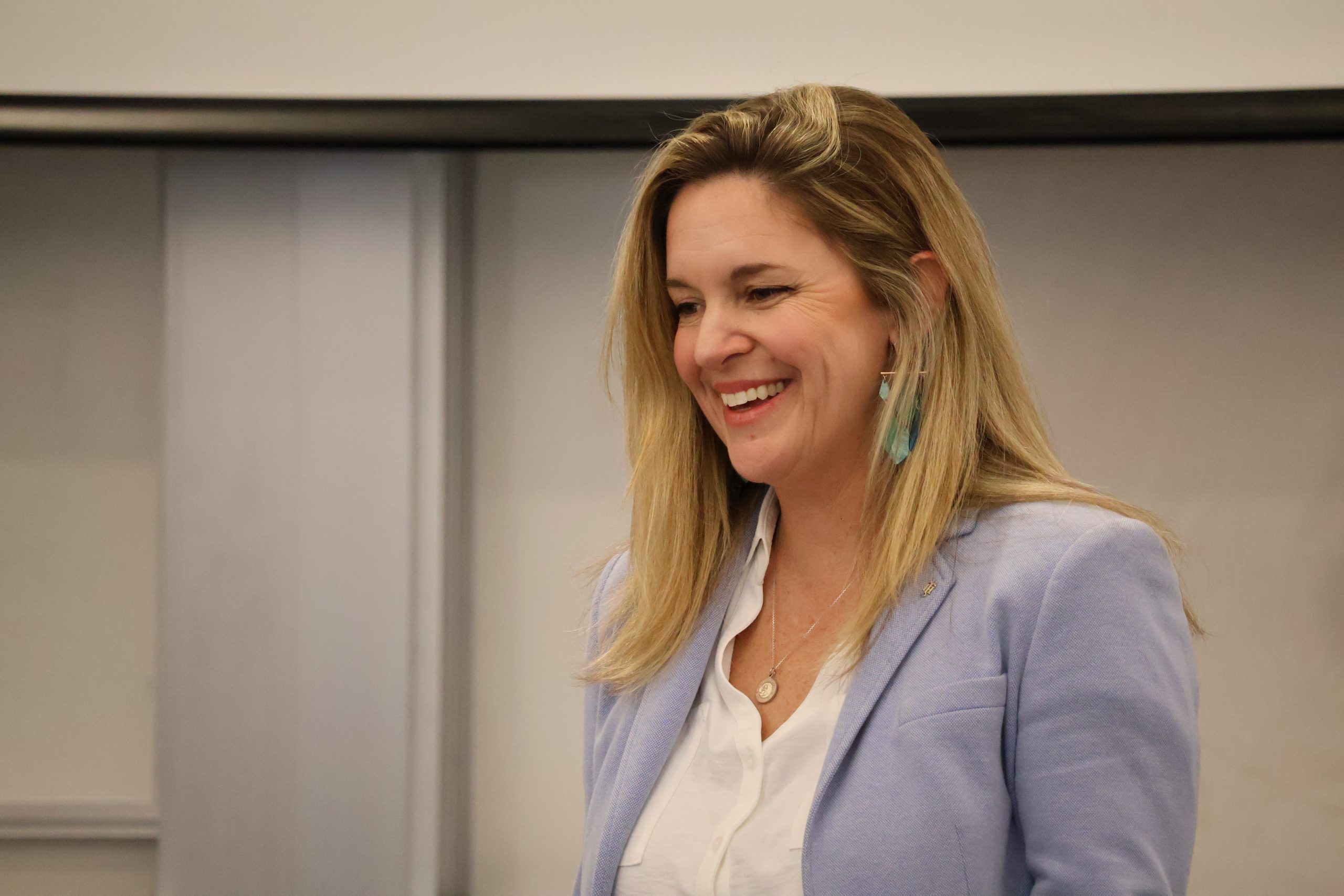
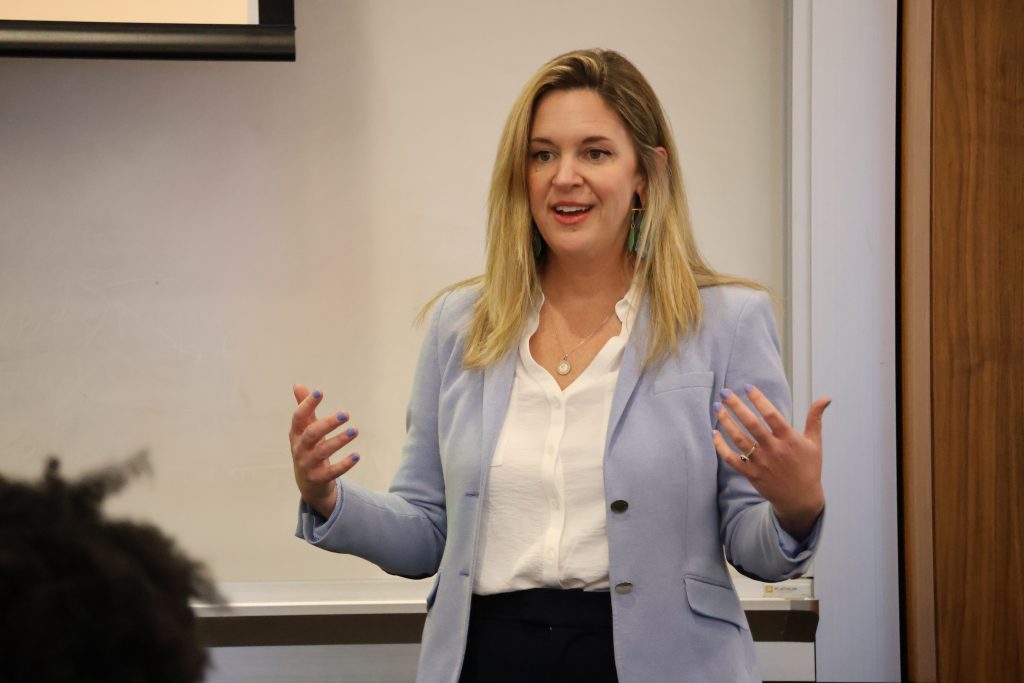
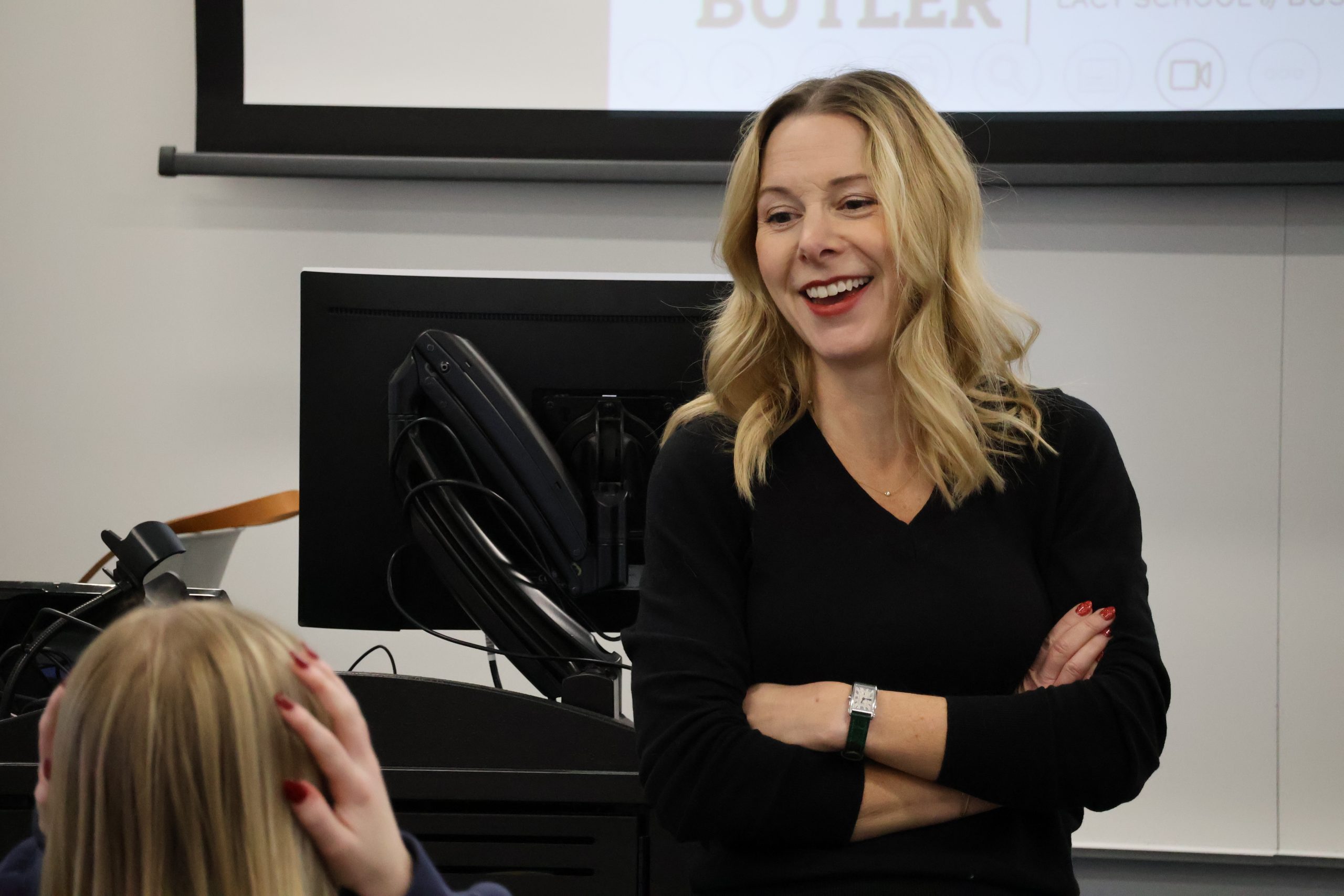
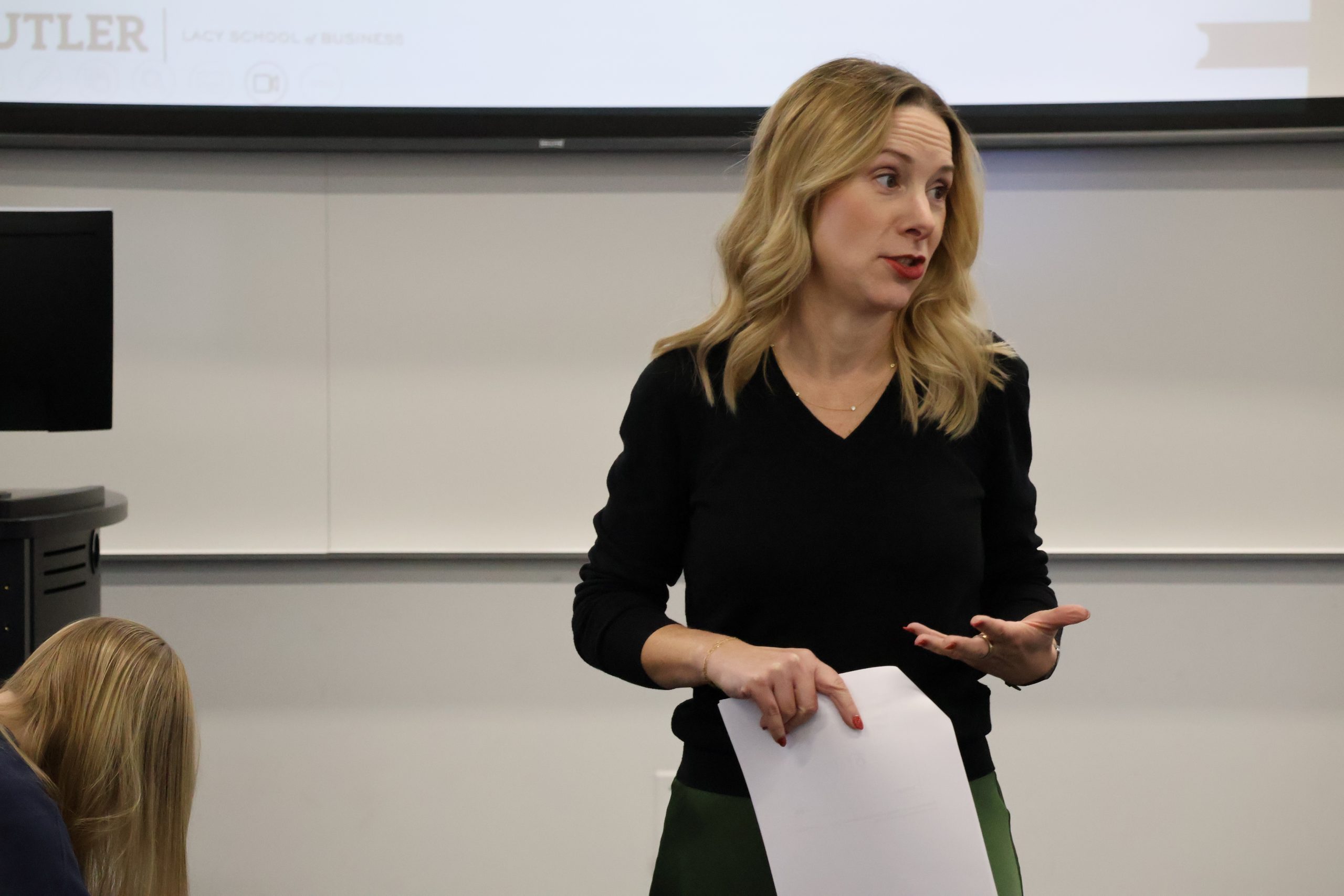
    For Professor Hilary Buttrick, the path to teaching business law wasn’t a straight line – it was a slow realization that the things she loved most had been pointing her toward the classroom all along.

    As an English major at DePauw University, she loved writing and worked as a peer tutor at the university’s writing center. But as graduation neared, she didn’t yet have a name for the career she was meant to pursue.

    “Someone suggested I look into law school,” the associate professor of business law recalled. “No one in my family had ever gone to law school, so I didn’t really know what it would be like. But it seemed like a way to leverage my strengths in writing and the skills I learned through studying at a liberal arts college.”

    Law did exactly that. It took her to Indiana University McKinney School of Law, then to a successful career in business litigation at Ice Miller. She loved the intellectual rigor, but she also felt pulled toward something more people centered. “Law is all about arguments, and it can be very contentious” she said. “But at its core, it’s about service. Clients come to you in vulnerable moments, and your job is to help them navigate uncertainty.”

    That understanding of service – meeting others where they are – became the thread that ultimately brought her to the Lacy School of Business.

    “When an opening came up to teach at Butler, right here in my backyard, I thought I was the luckiest girl in the world,” the New Harmony native said. “The energy of working with young professionals in the classroom is by far the best part of my workday.”

    Those early days weren’t without nerves, though. Moving from courtroom to the classroom required a new kind of advocacy – one that wasn’t about winning an argument but helping students learn how to build one. She quickly found her stride by leaning into what had drawn her to law in the first place: curiosity, creativity, and the willingness to see a problem from all angles.

    “Sometimes there isn’t one clear right answer,” she explained. “My goal is to help students craft the best possible argument, even for a side they don’t personally agree with. It’s about creativity, problem solving, and service.”

    Over the past decade, Professor Buttrick has watched LSB transform – growing in size, expanding its experiential learning opportunities, and pushing students to think in bigger, more interdisciplinary ways. That evolution is part of what pulled her back to LSB after a period away. “I missed my colleagues, the students, the quality of the work, and the intellectual engagement,” she said. “LSB is a special place where students are inquisitive, respectful, and motivated – and that energy is contagious.”

    As Associate Dean of Academics, Professor Buttrick’s work also includes helping students through some of their most overwhelming moments. It’s meaningful to her in a way that echoes her roots in litigation. “Sometimes students come to me with what seems like an insurmountable problem,” she said. “My role is to help them untangle it so they can thrive. Helping students develop strategies to succeed is deeply satisfying.”

    In the classroom, she brings real-world cases to life through hypotheticals, scenarios, and playful debates – inviting students to test ideas and learn by doing. The impact is real. Several students, who never considered law until taking her course, went on to apply to law school and attributed that decision to her guidance. Those moments stay with her.

    “I really believe in the potential of our students to do great things,” she said. “Preparing students to ask questions, think critically, and make well-reasoned decisions is why I teach. Watching their progress and growth over their time at Butler makes me really hopeful about the future.”

    Outside her work at LSB, Professor Buttrick stays grounded by spending time with her husband, two kids, two dogs, and two cats. She enjoys reading, hiking, traveling, and trying new recipes in search of the perfect chocolate chip cookie. “Being with my family and nurturing curiosity are what keep me energized,” she said.

    For students exploring the intersection of business and law, the professor offers simple but hard-won advice: “Ask questions. One of the greatest traps is thinking you have it all figured out and being entrenched in one perspective. Be willing to hear other ideas and change your mind – it’s how you grow.”

  • Dr. Matthew Lanham Named One of Poets&Quants’ 50 Best Undergraduate Professors

    Dr. Matthew Lanham Named One of Poets&Quants’ 50 Best Undergraduate Professors

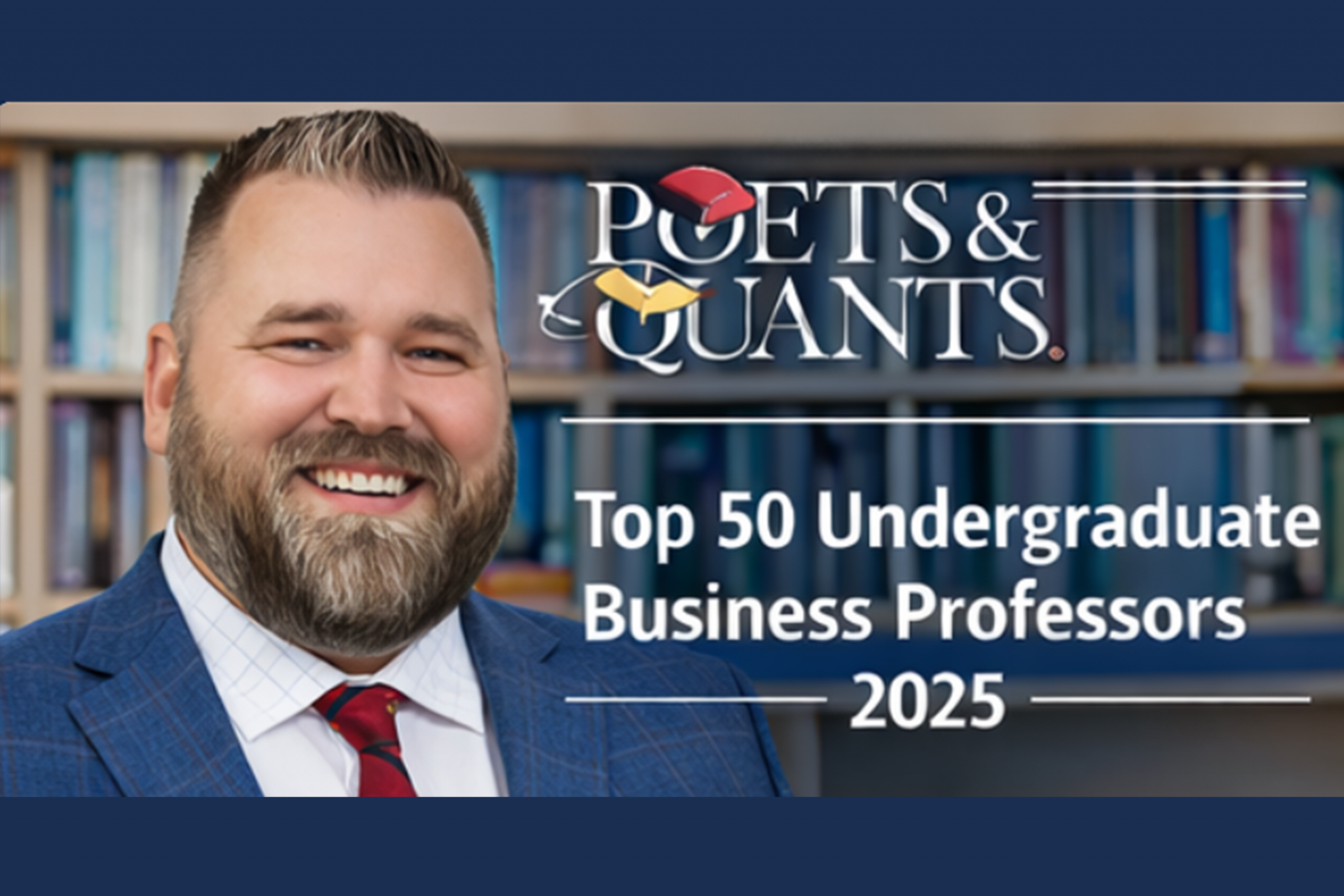
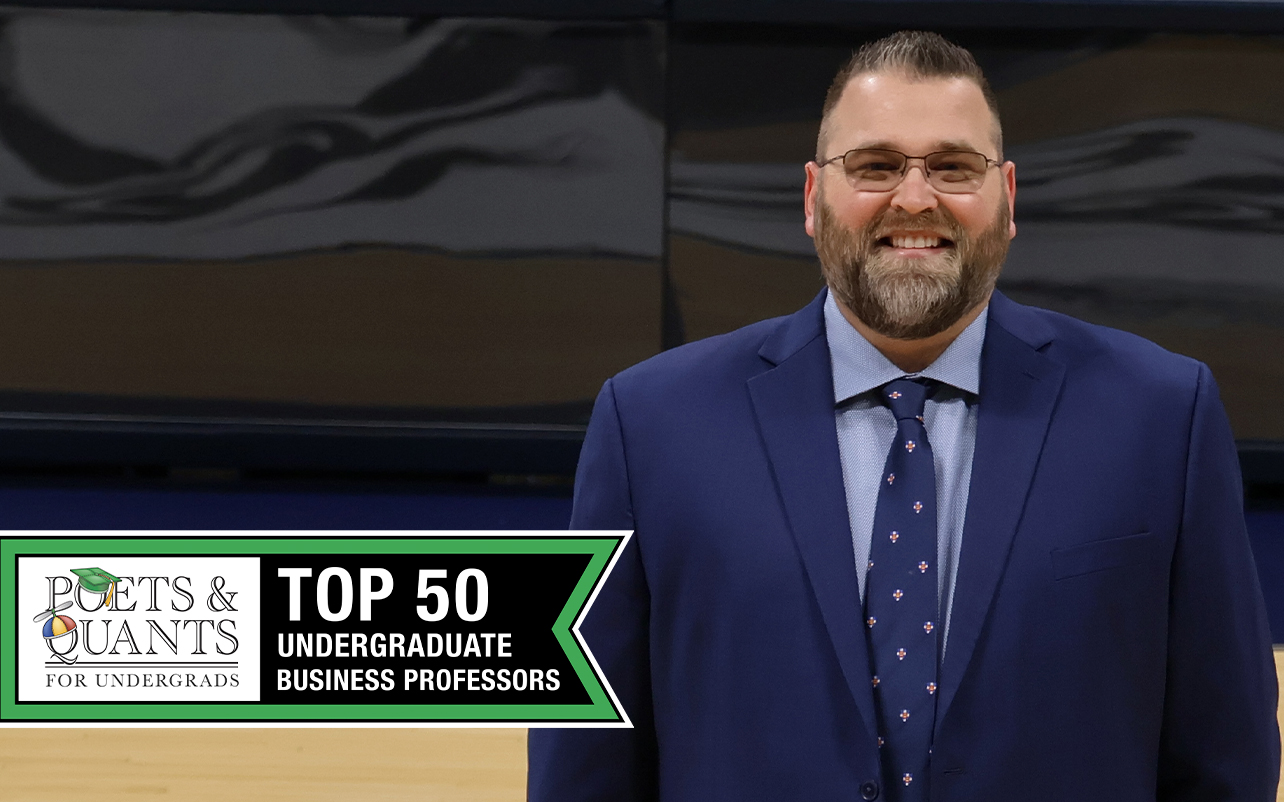
    We are thrilled to announce that Dr. Matthew Lanham, Assistant Professor of Business Technology and Analytics for Butler University’s Lacy School of Business, has been named one of Poets&Quants’ 50 Best Undergraduate Professors for 2025.

    This recognition honors faculty who demonstrate outstanding teaching excellence and a profound impact on their students’ lives. Dr. Lanham’s teaching philosophy emphasizes experiential learning, student growth, and real-world application, preparing students to think like leaders and problem-solvers.

    “Nobody deserves this award more than Professor Lanham,” Max Sanders, senior accounting major, said. “He is kind and caring, fun, and enthusiastic. You can tell when he teaches that he just wants to make us all better individuals, inside and outside of the classroom. Butler University is insanely blessed to have a professor as good as Professor Lanham.”

    Dr. Lanham joined Butler University in 2025 and teaches Predictive Analytics and Prescriptive Analytics. His research focuses on predictive-prescriptive integration and Data-for-Good initiatives, which he brings directly into his courses through team competitions and applied projects. He also founded the National Data4Good Analytics Competition, giving students worldwide the chance to work on social-impact cases while completing professional certifications.

    In addition to this national recognition, Dr. Lanham has received numerous teaching and leadership awards, including:

    • INFORMS Data Mining Society Teach Award (2025)
    • INFORMS Senior Member (2025)
    • Salgo-Noren Outstanding Master’s Teaching Award at Purdue University (2024)
    • Co-Chair of the Meeting of Analytics Program Directors
    • Two-time recipient of Purdue’s Transformative Impact Award

    Dr. Lanham’s dedication to his students goes beyond the classroom. He describes what he enjoys most about teaching business students:

    “They’re hands-on doers, eager to test ideas and take risks, and I find myself learning from them as much as they learn from me. Someday, one of them might even convince me to leave the classroom and help run a business together.”

    When asked what makes him stand out as a professor, Dr. Lanham reflects:

    “A zeal for outcomes. I care deeply that every student leaves my course with tangible evidence of growth – certifications earned, projects delivered, and confidence gained. Grades matter less to me than transformation. My approach is to coach, not just to teach, and to measure success by the lives my students change afterward.”

    Read more about Dr. Lanham and the full list of honorees on Poets&Quants.

  • Teaching Beyond the Balance Sheet: Dr. Bryan Foltice’s Approach to Finance and Life

    Teaching Beyond the Balance Sheet: Dr. Bryan Foltice’s Approach to Finance and Life

    When Dr. Bryan Foltice left behind the world of investment banking for academia, it wasn’t because he lost his edge for numbers – it was because he started questioning their meaning.

    A professional athlete turned finance professional turned professor, Dr. Foltice’s path to the Lacy School of Business has been anything but linear, yet every step seems to have led him exactly to where he’s meant to be.

    It started in Germany, where Dr. Foltice was playing professional basketball after college. “The only English channel I had at the time was CNBC,” the Associate Professor of Finance laughed.” That’s what got me curious about finance.

    That curiosity turned into a career once he moved back to the U.S., earning his Masters of Business Administration at the University of North Florida after completing a Bachelor of Science in Business Administration from Cornerstone University. But success in the fast-paced world of investment banking didn’t feel like fulfillment. “I was good at what I did, but I started asking myself, is this all there is? What kind of purpose do you find in this?”

    His mentors told him that purpose wasn’t part of the job – you just made money and found fulfillment elsewhere. That answer didn’t sit right with him. He decided to explore other options, which brought him back to Germany for a Ph.D. in finance. That’s where he realized that academia could be something long-term – something with meaning.

    When he began his academic job search, Butler University was at the top of his list. As a Michigan native, the Midwest felt like home. “But it wasn’t just that. The first week I was here, I remember thinking, everyone’s so nice. I told myself, give it two weeks, the niceness will wear off,” he said. “Eleven years later, it still hasn’t.”

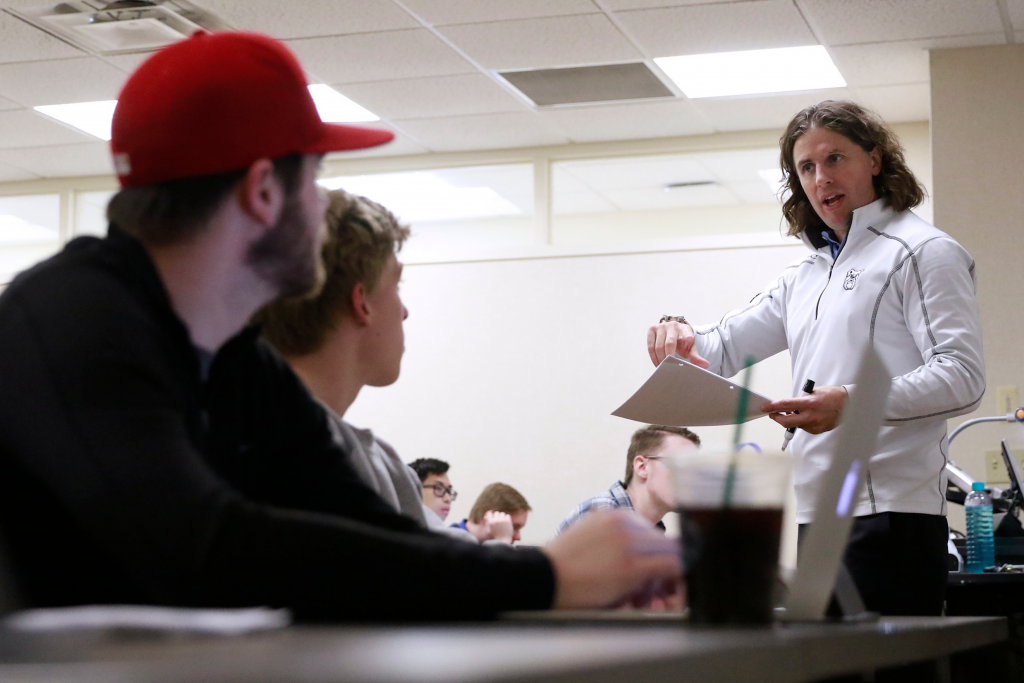
    Dr. Foltice brings a global lens and a team-player mindset to his classroom – both shaped by his time overseas.  Playing professional basketball in Germany taught him that leadership is about action, not words – that people know you care not because you say it, but because you show it. It’s a lesson that finds its way into his teaching style, where connection and empathy are just as important as numbers and models. His time abroad also reinforced that “different isn’t bad – it’s just different,” a mindset he now encourages his students to embrace, whether they study abroad or simply begin to view finance through a broader, global perspective.

    Today, Dr. Foltice teaches international finance, investment, and behavioral finance – a field he’s particularly passionate about.

    Bryan Foltice teaching in class.

    “When I was working during the financial crisis, people would yell at me for losing their money,” he said with a grin. “I realized people feel losses twice as much as they feel gains. That’s behavioral finance in real life.”

    His classroom has become a place where those real-world lessons come to life, preparing students not just to understand markets but to understand people. “If you’ve had me in class, you’ve got me for life,” Dr. Foltice said. “That’s the Foltice lifetime guarantee. Students still reach out years later to talk about jobs, careers, or personal finances. That’s the best part of this work – the relationships that last.”

    That same passion for financial literacy led to the creation of Money Strong, a personal finance initiative he co-founded with Randy Brown, an executive career mentor at LSB. The two started at Butler around the same time but didn’t meet until nearly nine years later – thanks to a few mutual connections who insisted they had to. Once they finally connected, they realized they’d been working toward the same goal from different angles. What began as a simple idea quickly became a movement.

    Dr. Foltice and Randy proposed a series of personal finance “Money Talks” that were approved for Butler Cultural Requirement credits within 20 minutes. Students packed the sessions – some even sitting on the floor. Dr. Foltice recalled how the atmosphere shifted once students realized the content applied directly to their lives. From there, the program grew rapidly, supported by a Robinhood Markets, Inc. grant and the addition of new behavioral and personal finance courses, including a one-credit financial well-being class that filled up almost immediately.

    For Dr. Foltice, the goal is simple: make financial literacy accessible to every student, regardless of major.

    “We all have to play the game of money,” he said. “So, we might as well learn the rules.” Through Money Strong, he’s helping students do just that – building confidence, knowledge, and healthier financial habits that extend far beyond graduation.

    Outside the classroom, Dr. Foltice’s philosophy of “financial wellness” extends to life itself. For him, it’s not about hitting a specific number or chasing success for its own sake. Instead, he measures a rich life through what he calls the five F’s: finances, family, fitness, fun, and fulfillment. He’s proud to be a hands-on dad to two teenage sons and prioritizes balance and health, reminding his students that while high-pressure careers can be exciting, they’re rarely sustainable long-term. And when it’s time to unwind, he’s all about karaoke – especially anything 80s rock.

    “You’ve got to have fun,” he said. “Life’s too short to take yourself too seriously.”

    After more than a decade at LSB, Dr. Foltice says what keeps him energized is seeing the ripple effect of his work.

    “When you start to see the students you taught ten years ago mentoring the students you have now – that’s when you know the impact is growing exponentially,” he said. “That’s what drives me. Doing good work, in the right way, and watching it multiply.”

  • New Faculty Join the Lacy School of Business for 2025-26

    New Faculty Join the Lacy School of Business for 2025-26

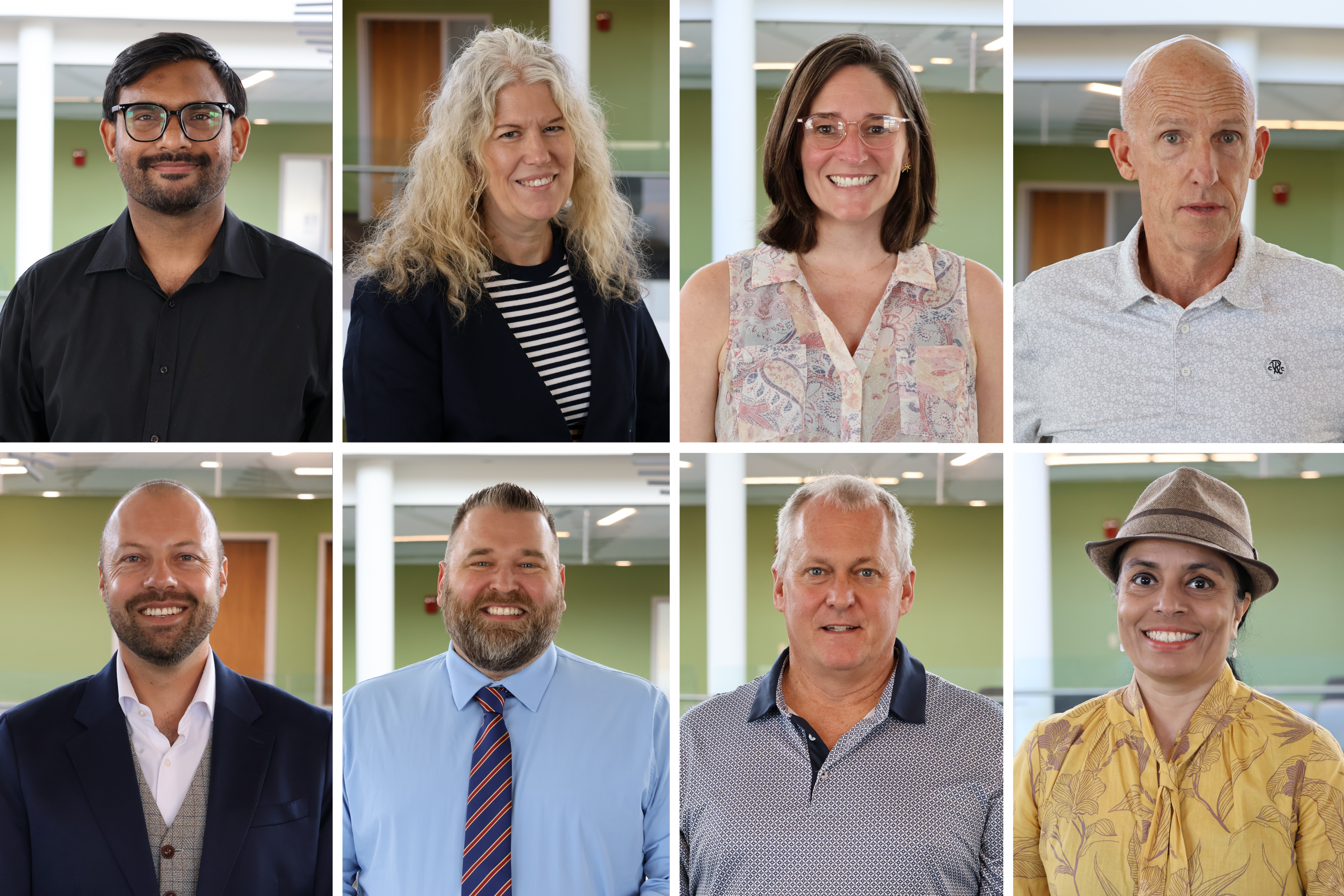
    The Lacy School of Business is excited to introduce a dynamic group of faculty members joining us for the 2025-26 academic year. Each brings a unique mix of industry experience, research expertise, and passion for teaching – further enriching the student experience at LSB. Their contributions will help us continue shaping future business leaders while tackling the challenges and opportunities of an ever-changing world.
    “Our new faculty members represent the future of the Lacy School of Business. These are the educators who will form the most meaningful connections with our students – shaping their experiences, their thinking, and ultimately, their futures,” Craig Caldwell, Dean of the Lacy School of Business, said. “One of LSB’s defining strengths is our faculty: research-active scholars who are deeply committed to student engagement. This new group brings extraordinary promise, continuing and even elevating our tradition of thoughtful, student-centered teaching and impactful scholarship.”
    Meet our new faculty members:

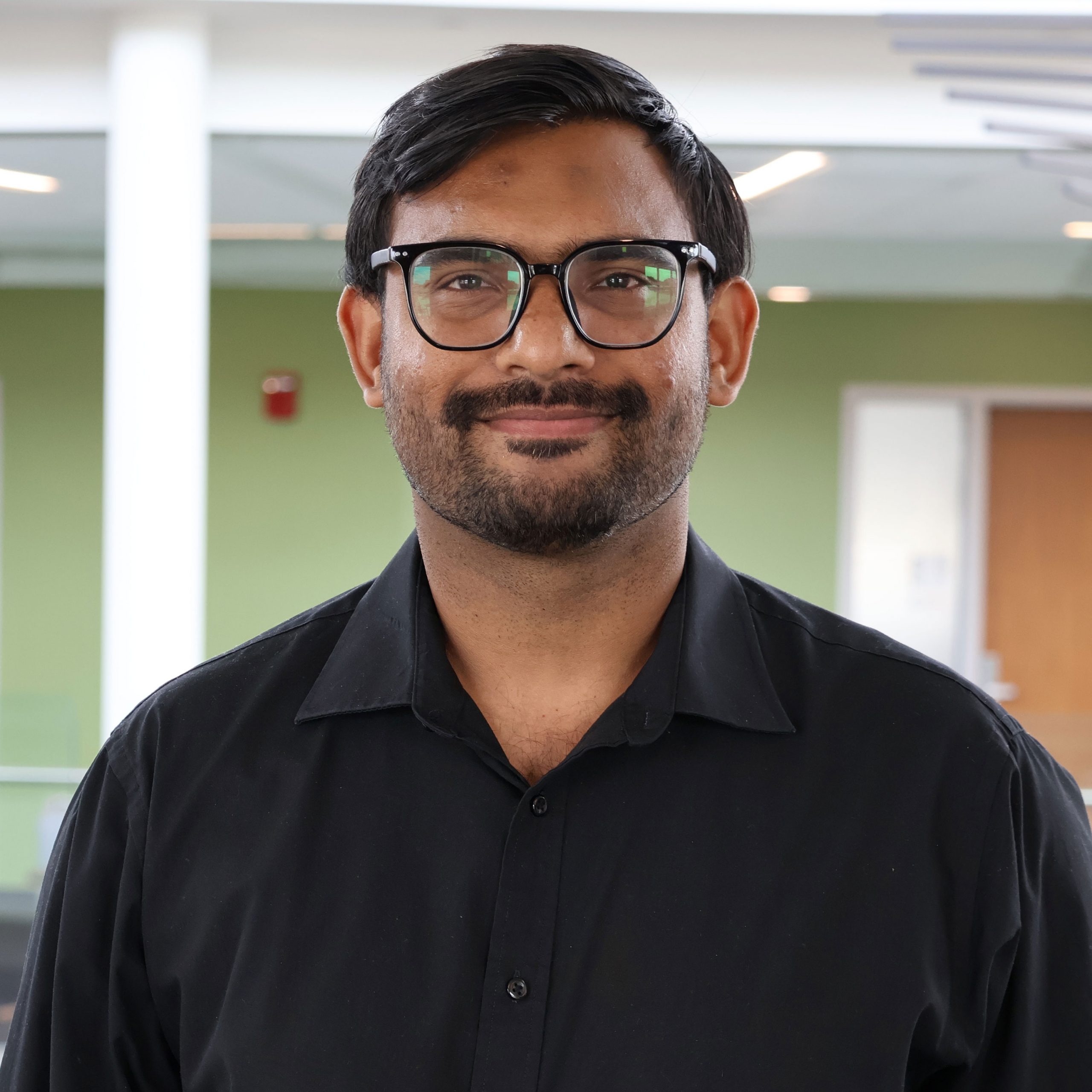
    Kanan Asif, Assistant Professor of Entrepreneurship & Innovation

    Kanan Asif’s own journey has been anything but ordinary – from growing up in a small town in Pakistan and riding a horse cart to school, to working as a tea boy in a jewelry shop, to launching startups and earning a Ph.D. in Entrepreneurship from the University of Massachusetts Lowell. That lived experience shapes how he teaches Real Business Experience (E201) at Butler: not just through lectures, but by helping students discover and develop their own unique strengths. “Learning, unlearning, and relearning every day is what keeps me inspired,” Asif says. Prior to joining academia, he worked across the nonprofit, corporate, and public sectors and began his academic career in Pakistan in 2017. His research explores entrepreneurial decision-making and the individual differences that shape how entrepreneurs think and act. When he’s not sparking entrepreneurial thinking in the classroom, he’s usually spending time with his wife and young daughter, exploring human behavior and personal growth – topics that fuel both his teaching and his life.

    Kanan Asif, Assistant Professor of Entrepreneurship & Innovation

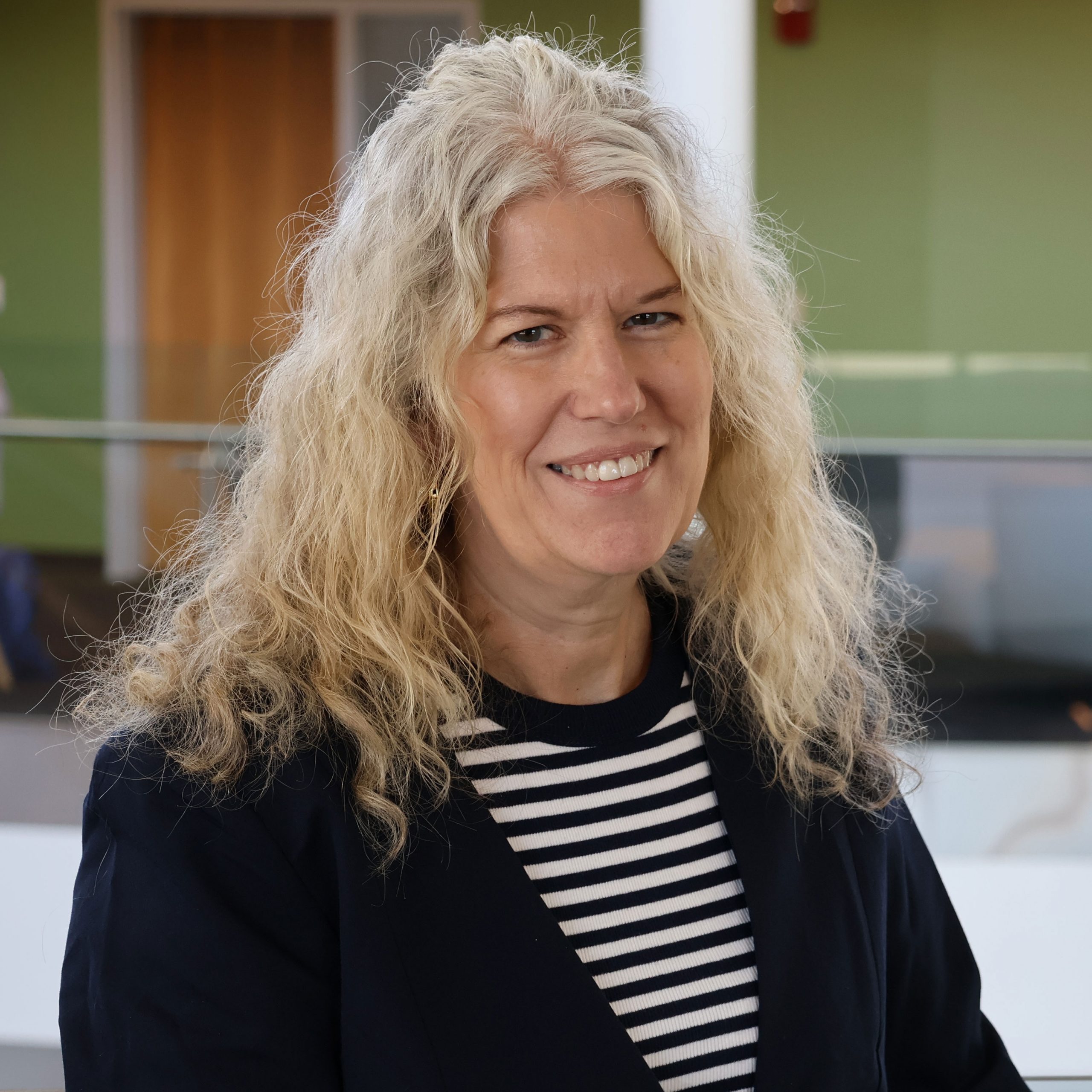
    Tanya Carson, Lecturer in Accounting

    For Tanya Carson, teaching is all about connection. After years of leading large lecture halls with hundreds of students each semester, she knew she wanted something different – smaller classes where she could bring energy to the room and create a safe space for students to collaborate, ask questions, and experience those “light bulb” moments. At Butler, she’s found her dream fit. Carson teaches Principles of Accounting (AC203) and LSB Business Internship (LSB402), where she aims to make accounting approachable, interactive, and even fun. She earned her MBA from Ball State University and holds a graduate certificate in Accounting Analytics from the University of Connecticut. A longtime Carmel resident who has always admired Butler’s campus and community, Carson says joining the Lacy School of Business is everything she hoped it would be: engaged students, the right-sized classrooms, and an atmosphere that feels magical. Outside the classroom, she enjoys hiking, camping, and canoeing, as well as cooking and baking – her specialties include broccoli cheese soup and banana chocolate bread.

    Tanya Carson, Lecturer in Accounting

    Kerri Cissna, Lecturer of Entrepreneurship & Innovation

    Kerri Cissna loves learning and dreaming alongside her students, exploring ways to upgrade antiquated systems and use business as a force for good. At Butler, she teaches First Year Business Experience (E101), bringing her passion for innovation, leadership, and purpose-driven work into the classroom. Cissna earned her Ph.D. in Global Leadership and Change from Pepperdine University, completed a postdoctoral program at Wake Forest, and holds a master’s degree from Azusa Pacific and an undergraduate degree from Warner Pacific University. A certified yoga instructor and studio owner, she integrates mindfulness and movement into her life and teaching. When she’s not in the classroom, she enjoys spending time with her journal and a cappuccino, teaching fitness classes, and spending time with her husband Greg caring for their seven cats.

    Kerri Cissna, Lecturer of Entrepreneurship & Innovation

    Joe Cripe, Lecturer in Supply Chain Management

    Joe Cripe brings his love of developing talent – from his days leading operations at adidas to coaching grade school teams – into the classroom at Butler. He teaches Operations Management (MS350), LSB Business Internship (LSB402), and Strategy Capstone (MG490), helping students connect classroom theory to the real-world goods and services they encounter every day. A proud Indianapolis native, Cripe earned his B.S. at the University of Notre Dame and his MBA from the University of Chicago Booth School of Business. Butler has always held a special place in his life: his father is an alum, he’s been a Butler basketball season ticket holder for 25 years, and he has witnessed firsthand the University’s positive impact on the community. Now transitioning from adjunct to full-time faculty, he’s excited to deepen those connections with students. When he’s not teaching, you’ll likely find him running along the canal towpath or cheering on the Dawgs.

    Joe Cripe, Lecturer in Supply Chain Management

    Juan Manuel Gil, Assistant Professor of International Business

    For Juan Manuel Gil, international business is more than strategy and markets – it’s about people, purpose, and possibility. Gil has lived and studied across Colombia, England, France, Mexico and Spain, earning his Ph.D. cum laude in Business Administration and Management from Universitat Politècnica de València and a master’s degree in international relations from the University of Bristol. At Butler, he teaches International Business Environment (IB320), inviting students to connect global strategy with deeper meaning and confidence in their ability to shape the world. His own journey includes nearly three years in a unique international community with people from 14 nationalities, an experience that taught him the power of “unity in diversity” and sparked his lifelong belief in the strength of community. Guided by Butler’s purpose-driven mission, Gil begins each class with a moment of breathing and reflection, encouraging students to slow down, think intentionally, and approach business with imagination and heart. When he’s not teaching, he’s exploring entrepreneurial imagination through research and spending time with the global community he’s built around him.

    Juan Manuel Gil, Assistant Professor of International Business

    Matthew Lanham, Assistant Professor of Business Technology & Analytics

    Matthew Lanham is passionate about helping students become independent thinkers – so much so that his favorite part of teaching is watching them grow to the point where they no longer need him. At Butler, he teaches Business Analytics (MS365), guiding students to master data-driven decision-making and turn complex information into actionable insights. Lanham earned his Ph.D. in Business Information Technology from Virginia Tech, a master’s degree in Biostatistics-Decision Science from the University of Louisville, and his undergraduate degree from Indiana University. Before joining Butler, he spent nine years at Purdue University, leading analytics programs and research. Beyond the classroom, Lanham is a devoted dad to his seven-year-old daughter, Stella – his favorite Little House on the Prairie rewatch partner – and an active member of his church, where he teaches young children on Sundays.

    Matthew Lanham, Assistant Professor of Business Technology & Analytics

    John Shassberger, Lecturer in Finance

    After serving 40 years with the Department of the Navy – 21 on active duty as commander and nearly two decades as a civilian leader – John Shassberger knew exactly what he wanted to do next: teach. His journey from the Naval Academy – where he trained and mentored young sailors – to the classroom has been fueled by a passion for getting students to think critically, engage deeply, and launch confidently into life. At Butler, Shassberger is teaching Corporate Finance (FN340) and International Finance (FN451). He earned his Ed.D. in Leadership from Oakland City University, his M.S. in Financial Management from the Naval Postgraduate School in Monterey, Calif., and his B.S. in Political Science from the United States Naval Academy. Beyond the classroom, he runs a lively family farm that keeps him, in his words, “young in body and sharp in mind” – with seven kids, twelve dogs, two horses, two cows, two mini donkeys, and six goats to help with that mission.

    John Shassberger, Lecturer in Finance

    Shubhra Sharma, Lecturer in Entrepreneurship & Innovation

    For Shubhra Sharma, teaching is about presence – 50 minutes of full focus where “aha” moments spark and the classroom feels alive. She teaches First Year Business Experience (E101), drawing on a career that spans continents, from earning a doctorate in socio-cultural anthropology at the University of Texas at Austin to completing an Executive Master’s in Luxury Management and Design Innovation at ESSEC Business School in Paris. Along the way, she’s taught at Vanderbilt, lived in New York, and traveled to seven countries – each experience adding new perspective to how she approaches entrepreneurship. Sharma believes being an entrepreneur is “like drawing the map while you’re walking the terrain,” and she loves helping first-year students begin their journey. When she’s not teaching, you might find her on the golf course (handicap 12), strength training or running outdoors, listening to her favorite 80’s playlists, or working on creative projects like co-writing children’s books with her 10-year-old niece – who proudly claims the title of Creative Director.

    Shubhra Sharma, Lecturer in Entrepreneurship & Innovation
  • Advancing Ideas: Lacy School of Business Launches Fall 2025 Research Speaker Series

    Advancing Ideas: Lacy School of Business Launches Fall 2025 Research Speaker Series

    The Lacy School of Business is excited to announce the Fall 2025 Research Speaker Series. This series highlights the innovative research and thought leadership of our faculty and visiting scholars, providing opportunities for students, colleagues, and community members to engage with cutting-edge ideas in business and beyond.

    Each session offers a chance to hear directly from researchers about their latest work, ask questions, and connect theory with practice. Whether you’re curious about global business challenges, entrepreneurship, or emerging insights across disciplines, the series is designed to spark discussion and inspire new ways of thinking.

    We invite you to join us throughout the semester to learn, connect, and be part of the ongoing exchange of ideas shaping the future of business scholarship.

    Wednesday, October 8 at 11:45 PM

    Speaker: Ki-Hoon Lee, Senior Professor and Chair of Sustainability in Business at Edinburg Napier University
    Location:
    Dugan Hall, Room 347
    Title:
    “Sustainability Research Impact in Academia and Beyond”

    Abstract: Sustainability Research addresses global challenges and planetary boundaries by developing innovative solutions, influencing policy, and informing societal change towards sustainable development. In business and management research, public concern for environmental sustainability (e.g. climate change, water scarcity, air pollution) and social sustainability issues (e.g., poverty, hunger, income inequality, gender equity) over two decades have generated ‘social license to operate’ in corporate boardrooms that exceed regulatory compliance. However, scholars suggest that the sustainability research domain is not only narrowly-focused but also highly fragmented. Scholars suggest shifting the focus of research from “what” (sustainability definition) and “why” (reasons and motivations for engagement) to a greater concern for “how” firms can implement sustainable practices. Sustainability research across disciplines to tackle global challenges can generate research impacts in academia and society. This research talk seeks academic roles to generate sustainability research impact in our business and society.  

    Friday, October 17 at 12:00 PM

    Speaker: Hessam Sarooghi, Associate Professor of Entrepreneurship and Innovation
    Location: Dugan Hall, Room 347
    Title: “Configuring Success: Legitimation Pathways in Cryptocurrency Exchanges”

    Abstract: Legitimation is central to how new ventures secure resources and gain acceptance, yet it is rarely uniform. Ventures can establish credibility by being understandable and familiar to stakeholders (cognitive legitimacy), by signaling adherence to ethical norms and regulatory expectations (normative legitimacy), or by demonstrating tangible benefits and reliability (pragmatic legitimacy). These dimensions often operate together, sometimes in complementary fashion and sometimes as substitutes. The goal of this study is to examine how such patterns shape performance outcomes to provide a more complete understanding of the consequences of legitimation.

    To this end, this study develops a configurational perspective and applies fuzzy-set qualitative comparative analysis (fsQCA) to 111 cryptocurrency exchanges. The setting is institutionally fluid and high in volatility, making legitimacy particularly salient. The analysis reveals multiple equifinal pathways to high performance: some exchanges combine pragmatic utility with normative transparency, others substitute visible leadership for broad public recognition, and still others integrate all three dimensions into coherent constellations. 

    Friday, November 14 at 12:00 PM

    Speaker: Juan Manual Gil, Assistant Professor of International Business
    Location: Dugan Hall, Room 347
    Title: “Beyond Cognition: Integrating Embodied Imagination and Spiritual Capital in Entrepreneurial Value Creation”

    Abstract: This research project challenges the cognitive reductionism that dominates entrepreneurship scholarship by demonstrating how non-cognitive dimensions – specifically embodied entrepreneurial imagination and spiritual capital – fundamentally shape entrepreneurial value creation. Current theories treat entrepreneurial imagination as sophisticated information processing, yet this cognitive emphasis fails to explain the sudden insights, intuitive breakthroughs, and transformative visions that enable entrepreneurs to create genuinely novel value. Drawing on phenomenological philosophy, this work reconceptualizes entrepreneurial imagination as an embodied, affective process rooted in sensory experience and somatic intuition rather than mental computation alone. Similarly, it reframes spiritual capital as immanent, relational knowing embedded in everyday practice rather than external ethical norms or transcendent belief systems.

    The project currently focuses on conceptual development – clarifying constructs, establishing theoretical boundaries, and building nomological networks that connect these non-cognitive dimensions to existing entrepreneurship frameworks. This foundational work extends the effectuation decision-making model while developing an integrated framework for understanding how consciousness-based entrepreneurial imagination drives value creation, drawing on phenomenology, embodiment theory, and historical organizational analysis to establish conceptual coherence before empirical investigation.

    This conceptual foundation will enable subsequent qualitative research examining how contemporary entrepreneurs mobilize embodied imagination and spiritual resources to generate transformative value in practice, followed by quantitative studies measuring consciousness development practices and their relationship to venture outcomes across diverse contexts. By progressing systematically from philosophical grounding through interpretive inquiry to empirical validation, this research line aims to transform entrepreneurship scholarship from narrow cognitive models toward holistic frameworks that honor human consciousness in its full dimensionality for creating meaningful, regenerative entrepreneurial value.

    Friday, December 5 at 12:00 PM

    Speaker: Kuhelika De, Associate Professor of Economics
    Location: Dugan Hall, Room 347
    Title: “Remittances and Business Cycles: The Role of Financial Development”

    Abstract: This paper investigates whether financial development mitigates the impact of remittance shocks on the volatility of business cycles. Employing a two-stage empirical approach, we first estimate the dynamic response of consumption to remittance shocks using country-specific structural vector autoregression (VAR) models across 92 advanced and emerging market economies. In the second stage, we perform a cross-country analysis to assess the moderating role of financial development.

    The findings indicate that higher levels of financial development significantly reduce the volatility of consumption in response to remittance shocks, even after accounting for other macroeconomic and institutional factors. This study holds important policy implications. Since financial development dampens the impact of remittance shocks on consumption volatility, policies aimed at strengthening financial institutions, improving access to credit, and promoting financial inclusion can enhance economic resilience in remittance-receiving countries.

  • Economics in Action: Dr. Kuhelika De on Research, Teaching, and Mentorship

    Economics in Action: Dr. Kuhelika De on Research, Teaching, and Mentorship

    When Dr. Kuhelika De talks about economics, her energy is contagious.

    She leans in, eyes bright, as she unpacks complex ideas like causes of business cycles or the transmission of monetary policy.

    Her enthusiasm isn’t just for theory; it’s about understanding how these ideas can inform policy to create a better society.

    She loves showing students how curiosity and guidance can spark insight and opportunity. Teaching, she believes, has the power to open doors that might otherwise stay closed.

    “Your teachers make a lasting impression,” she reflects. “Back in high school, I had a great teacher who sparked my curiosity in economics. That’s what set me on this path.”

    That early spark eventually carried her from classrooms in India to the United Kingdom, and then to the United States, shaping the path of her impressive academic journey. Dr. De earned her Bachelor’s (B.A. Hons.) in Economics from the University of Delhi, a Master’s in Economics from the University of Manchester, and her Ph.D. in Economics from the University of Georgia in 2017, with a concentration in monetary economics.

    At the University of Georgia, her doctoral advisor, Dr. William D. Lastrapes, was a defining influence in her academic career, giving her both the technical training and the research mindset she now instills in her own students. “I owe my academic success to my doctoral advisor,” she said.

    Having studied in three countries, Dr. De brings a scholarly global perspective into her classroom. She describes her experiences abroad as transformative – not just academically, but personally – as she navigated cultural differences, independence, and new ways of thinking.

    As an Associate Professor of Economics, she joined Butler’s Lacy School of Business in August 2023 after five years at Seidman College of Business, Grand Valley State University in Michigan. She was particularly drawn to Butler, noting it’s number one ranking in the Midwest region for seven consecutive years.

    Drawn by LSB’s strong reputation, small class sizes, and highly prestigious business school environment, the faculty member says the move has exceeded expectations.

    “There’s such a positive externality here,” she laughs, borrowing an economics term. “The people around me – my colleagues, the Dean’s office, senior faculty – they’ve been incredibly supportive. They push me to innovate, to grow. You want to do more, give more, because you feel so inspired.”

    While her background is extensive, Dr. De’s enthusiasm truly shines when she talks about her students.

    “Interacting with students is the best part of my job,” she says with a smile. “Professors play a role that goes beyond teaching. We’re mentors and advisors. In some ways, we come next to parents in shaping a student’s future. I am where I am because of my professors. Now, I want to be that person for my students.”

    Recently, Dr. De celebrated major milestones in her research. In 2024, she published a paper in Health Economics titled “Business Cycles and Healthcare Employment,” exploring how recessions affect employment in the healthcare industry and highlighting the real-world impact of economic fluctuations on critical industries. From a broader perspective, the study provides new robust evidence that U.S. healthcare employment is not recession‐proof.

    In August, her paper, “Inequality, Household Credit Shocks, and House Price Dynamics,” was published in the International Monetary Fund Economic Review, one of the premier journals in the field of monetary economics published by the International Monetary Fund. Using data for 42 developed and emerging markets, the study shows how income and wealth inequality amplifies the impact of credit expansions on house price fluctuations, drawing lessons from the 2008 housing crisis. In simple terms, high inequality is associated with a larger proportion of credit-constrained households. These households tend to borrow more aggressively during periods of easy credit and then cut back spending more sharply when facing mounting debt. This creates a disproportionate distribution of debt, which can destabilize the housing market and contribute to a wider recession. Her conclusion is clear: “If we don’t address inequality, we risk making our economies less stable.”

    Her research contributions have been recognized with two notable awards: the “Distinguished Early Career Scholar Award” from Grand Valley State University in 2022, and the “Research with Impact Award” from the Lacy School of Business, Butler University in Spring 2025.

    For Dr. De, the motivation behind her research goes beyond analyzing economies – it’s about improving human well-being and creating a better society. Economics, as an interdisciplinary field, allows her to examine economic fluctuations and inform policies that can promote economic stability.

    At Butler, she is already incorporating these insights into her teaching in “Principles of Macroeconomics”, “Intermediate Macroeconomics” and “Money and Banking”. In the future, the associate professor will teach “Development Economics”, again connecting global issues such as inequality, infrastructure, economic growth, and access to fair and secure jobs – what economists call “decent work” – to the United Nations Sustainable Development Goals. Her aim, she says, is not only to teach students the tools of economics, but also to instill a sense of responsibility as global citizens.

    “I love my subject, but more than that, I love my students,” she says. For the educator, the joy of being a professor lies at the intersection of research, teaching, and mentorships. “They’re creative, curious, full of ideas. Every student is gifted in their own way. My job is to help them discover what’s meant for them – and give them the tools to pursue it.”