Category: Faculty Insights

  • Advancing Ideas: Lacy School of Business Launches Fall 2025 Research Speaker Series

    Advancing Ideas: Lacy School of Business Launches Fall 2025 Research Speaker Series

    The Lacy School of Business is excited to announce the Fall 2025 Research Speaker Series. This series highlights the innovative research and thought leadership of our faculty and visiting scholars, providing opportunities for students, colleagues, and community members to engage with cutting-edge ideas in business and beyond.

    Each session offers a chance to hear directly from researchers about their latest work, ask questions, and connect theory with practice. Whether you’re curious about global business challenges, entrepreneurship, or emerging insights across disciplines, the series is designed to spark discussion and inspire new ways of thinking.

    We invite you to join us throughout the semester to learn, connect, and be part of the ongoing exchange of ideas shaping the future of business scholarship.

    Wednesday, October 8 at 11:45 PM

    Speaker: Ki-Hoon Lee, Senior Professor and Chair of Sustainability in Business at Edinburg Napier University
    Location:
    Dugan Hall, Room 347
    Title:
    “Sustainability Research Impact in Academia and Beyond”

    Abstract: Sustainability Research addresses global challenges and planetary boundaries by developing innovative solutions, influencing policy, and informing societal change towards sustainable development. In business and management research, public concern for environmental sustainability (e.g. climate change, water scarcity, air pollution) and social sustainability issues (e.g., poverty, hunger, income inequality, gender equity) over two decades have generated ‘social license to operate’ in corporate boardrooms that exceed regulatory compliance. However, scholars suggest that the sustainability research domain is not only narrowly-focused but also highly fragmented. Scholars suggest shifting the focus of research from “what” (sustainability definition) and “why” (reasons and motivations for engagement) to a greater concern for “how” firms can implement sustainable practices. Sustainability research across disciplines to tackle global challenges can generate research impacts in academia and society. This research talk seeks academic roles to generate sustainability research impact in our business and society.  

    Friday, October 17 at 12:00 PM

    Speaker: Hessam Sarooghi, Associate Professor of Entrepreneurship and Innovation
    Location: Dugan Hall, Room 347
    Title: “Configuring Success: Legitimation Pathways in Cryptocurrency Exchanges”

    Abstract: Legitimation is central to how new ventures secure resources and gain acceptance, yet it is rarely uniform. Ventures can establish credibility by being understandable and familiar to stakeholders (cognitive legitimacy), by signaling adherence to ethical norms and regulatory expectations (normative legitimacy), or by demonstrating tangible benefits and reliability (pragmatic legitimacy). These dimensions often operate together, sometimes in complementary fashion and sometimes as substitutes. The goal of this study is to examine how such patterns shape performance outcomes to provide a more complete understanding of the consequences of legitimation.

    To this end, this study develops a configurational perspective and applies fuzzy-set qualitative comparative analysis (fsQCA) to 111 cryptocurrency exchanges. The setting is institutionally fluid and high in volatility, making legitimacy particularly salient. The analysis reveals multiple equifinal pathways to high performance: some exchanges combine pragmatic utility with normative transparency, others substitute visible leadership for broad public recognition, and still others integrate all three dimensions into coherent constellations. 

    Friday, November 14 at 12:00 PM

    Speaker: Juan Manual Gil, Assistant Professor of International Business
    Location: Dugan Hall, Room 347
    Title: “Beyond Cognition: Integrating Embodied Imagination and Spiritual Capital in Entrepreneurial Value Creation”

    Abstract: This research project challenges the cognitive reductionism that dominates entrepreneurship scholarship by demonstrating how non-cognitive dimensions – specifically embodied entrepreneurial imagination and spiritual capital – fundamentally shape entrepreneurial value creation. Current theories treat entrepreneurial imagination as sophisticated information processing, yet this cognitive emphasis fails to explain the sudden insights, intuitive breakthroughs, and transformative visions that enable entrepreneurs to create genuinely novel value. Drawing on phenomenological philosophy, this work reconceptualizes entrepreneurial imagination as an embodied, affective process rooted in sensory experience and somatic intuition rather than mental computation alone. Similarly, it reframes spiritual capital as immanent, relational knowing embedded in everyday practice rather than external ethical norms or transcendent belief systems.

    The project currently focuses on conceptual development – clarifying constructs, establishing theoretical boundaries, and building nomological networks that connect these non-cognitive dimensions to existing entrepreneurship frameworks. This foundational work extends the effectuation decision-making model while developing an integrated framework for understanding how consciousness-based entrepreneurial imagination drives value creation, drawing on phenomenology, embodiment theory, and historical organizational analysis to establish conceptual coherence before empirical investigation.

    This conceptual foundation will enable subsequent qualitative research examining how contemporary entrepreneurs mobilize embodied imagination and spiritual resources to generate transformative value in practice, followed by quantitative studies measuring consciousness development practices and their relationship to venture outcomes across diverse contexts. By progressing systematically from philosophical grounding through interpretive inquiry to empirical validation, this research line aims to transform entrepreneurship scholarship from narrow cognitive models toward holistic frameworks that honor human consciousness in its full dimensionality for creating meaningful, regenerative entrepreneurial value.

    Friday, December 5 at 12:00 PM

    Speaker: Kuhelika De, Associate Professor of Economics
    Location: Dugan Hall, Room 347
    Title: “Remittances and Business Cycles: The Role of Financial Development”

    Abstract: This paper investigates whether financial development mitigates the impact of remittance shocks on the volatility of business cycles. Employing a two-stage empirical approach, we first estimate the dynamic response of consumption to remittance shocks using country-specific structural vector autoregression (VAR) models across 92 advanced and emerging market economies. In the second stage, we perform a cross-country analysis to assess the moderating role of financial development.

    The findings indicate that higher levels of financial development significantly reduce the volatility of consumption in response to remittance shocks, even after accounting for other macroeconomic and institutional factors. This study holds important policy implications. Since financial development dampens the impact of remittance shocks on consumption volatility, policies aimed at strengthening financial institutions, improving access to credit, and promoting financial inclusion can enhance economic resilience in remittance-receiving countries.

  • Economics in Action: Dr. Kuhelika De on Research, Teaching, and Mentorship

    Economics in Action: Dr. Kuhelika De on Research, Teaching, and Mentorship

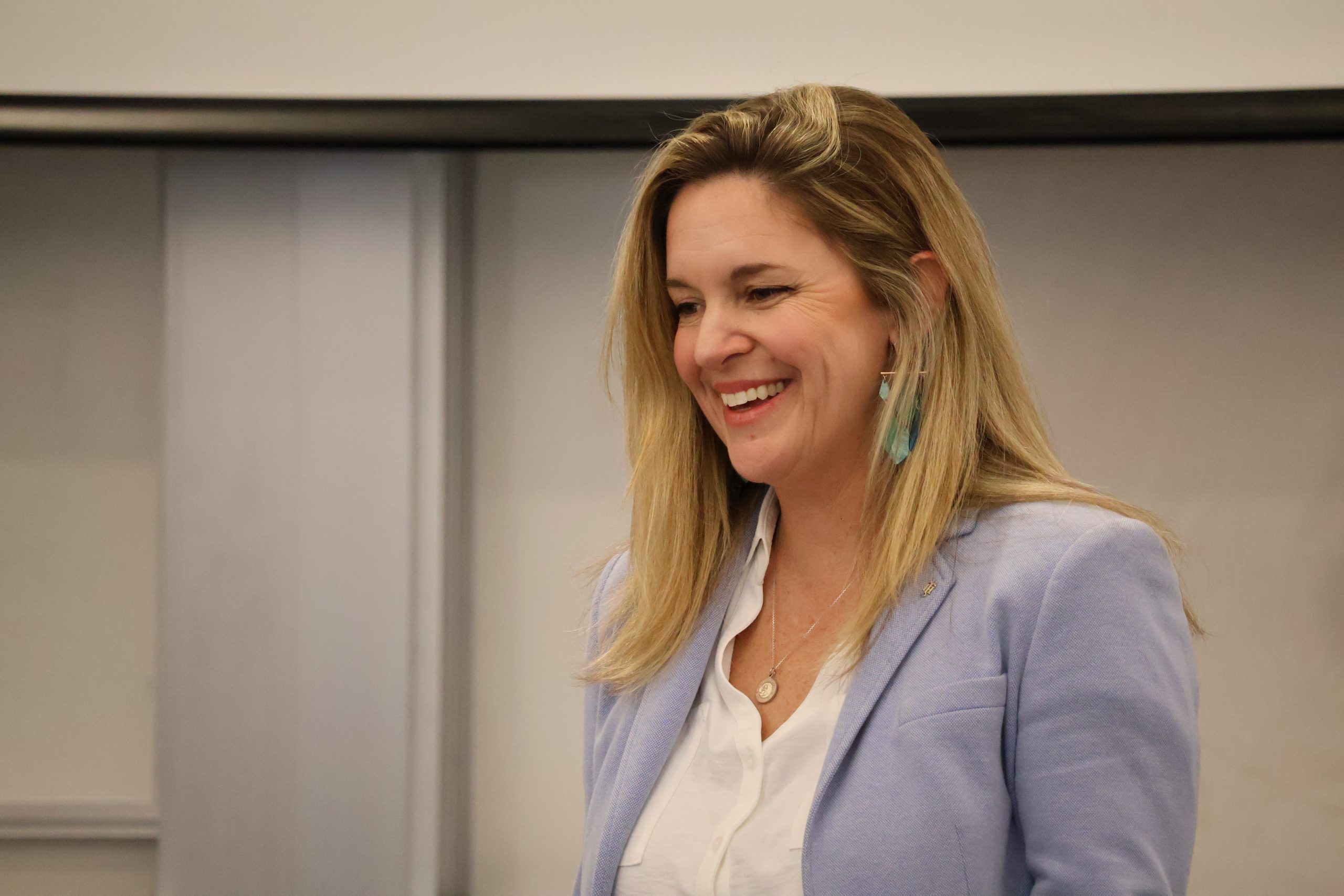
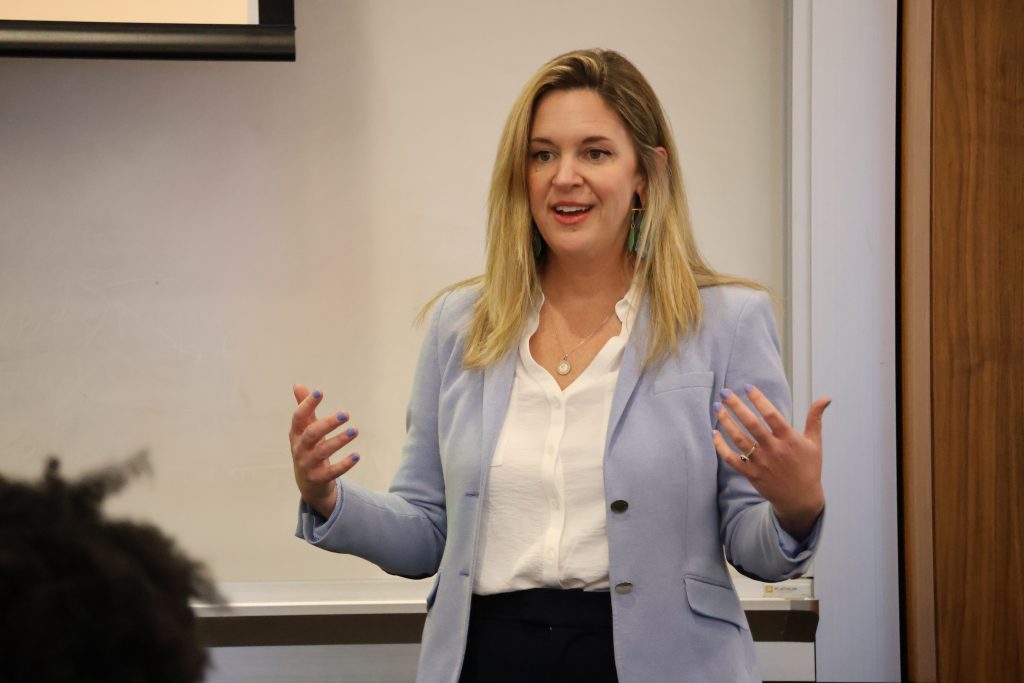
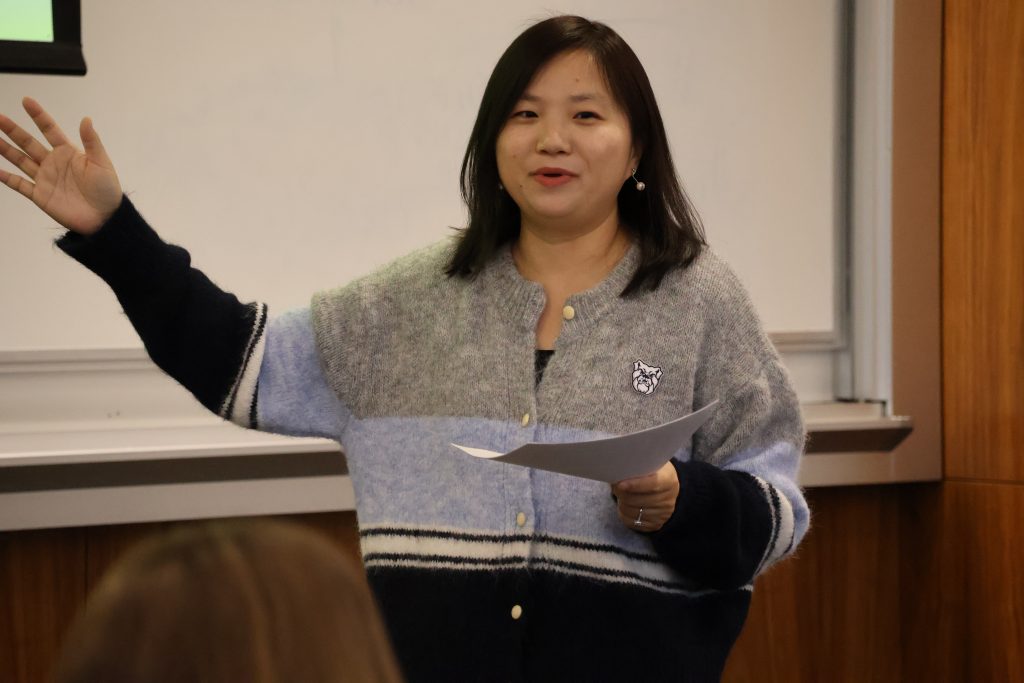
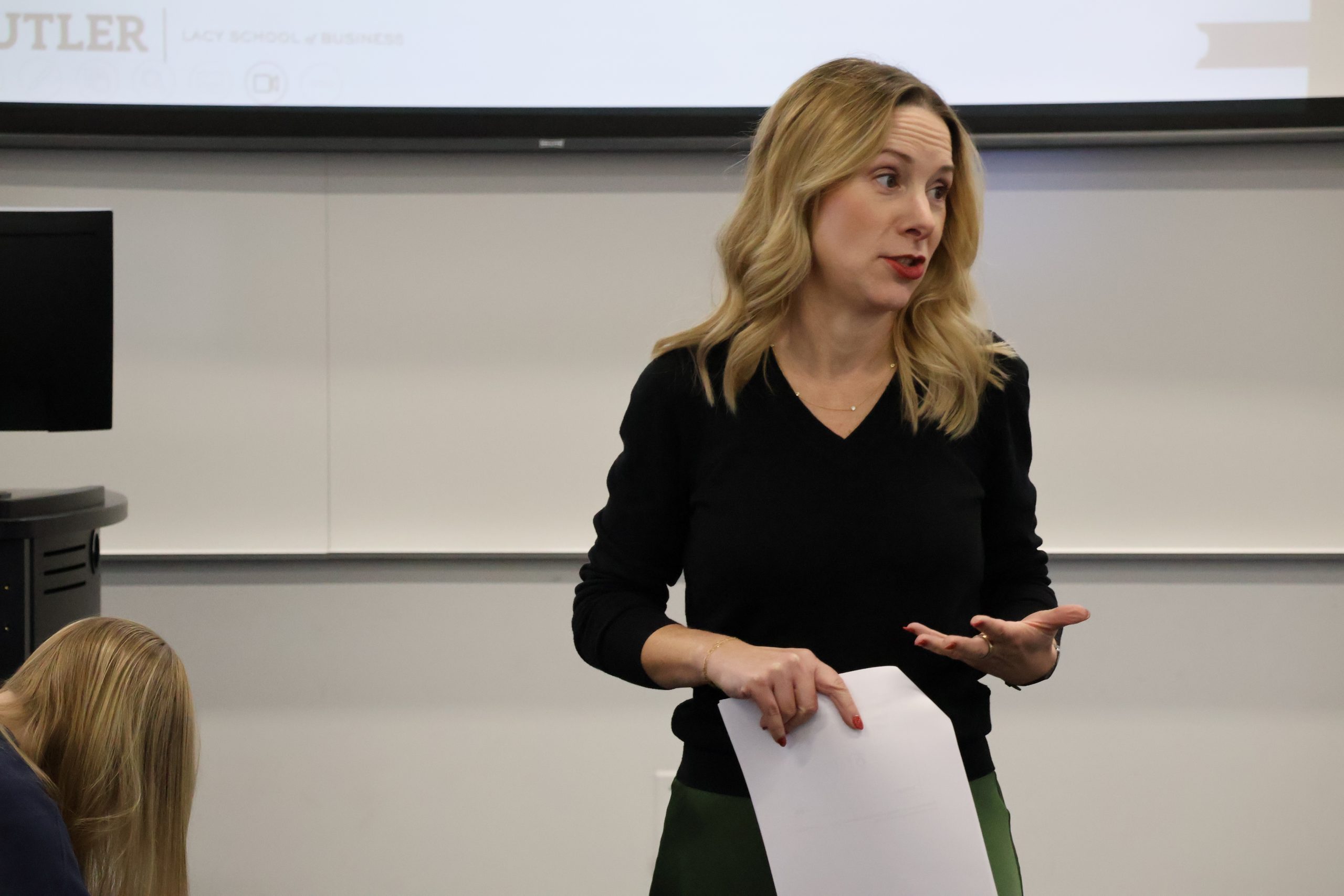
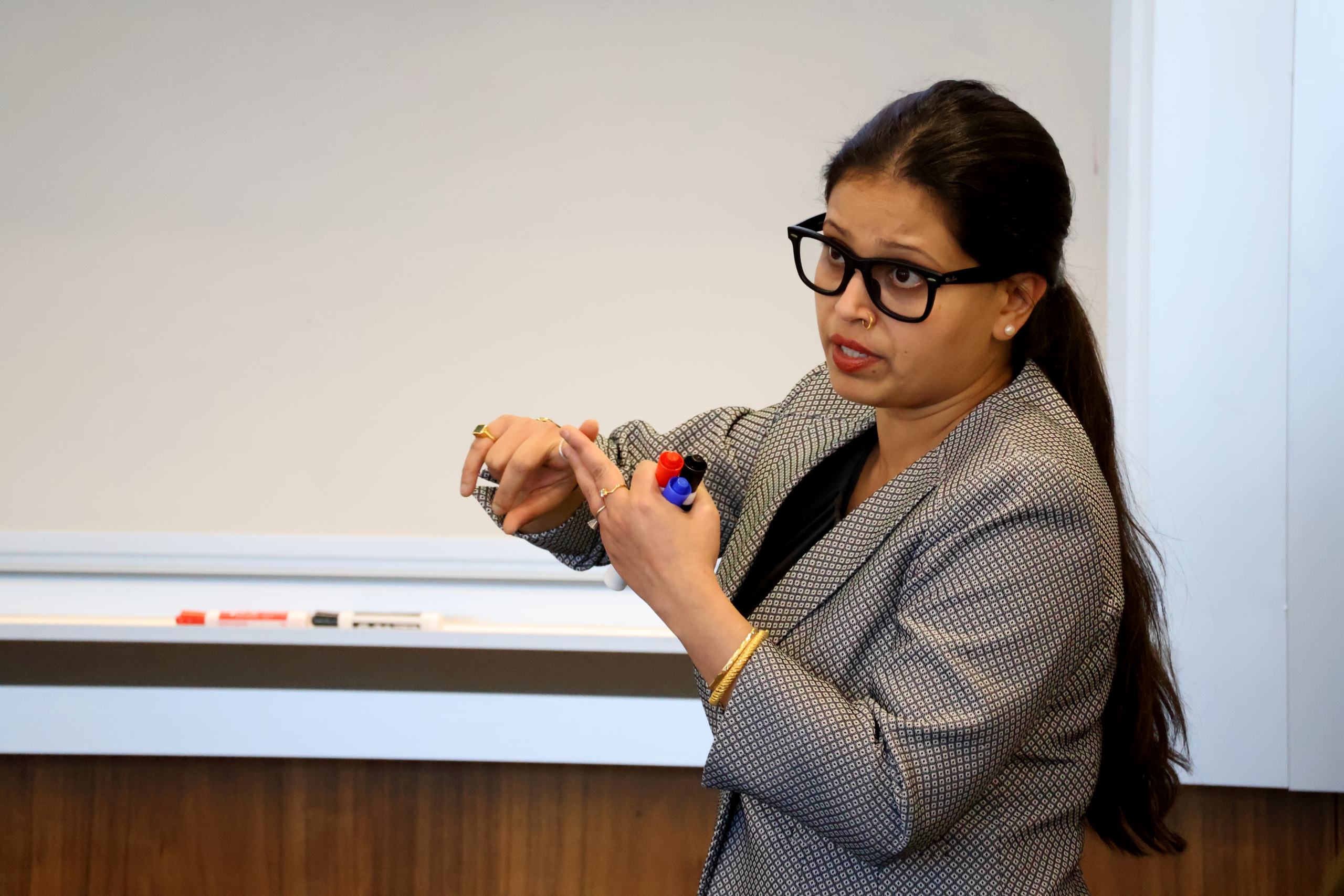
    When Dr. Kuhelika De talks about economics, her energy is contagious.

    She leans in, eyes bright, as she unpacks complex ideas like causes of business cycles or the transmission of monetary policy.

    Her enthusiasm isn’t just for theory; it’s about understanding how these ideas can inform policy to create a better society.

    She loves showing students how curiosity and guidance can spark insight and opportunity. Teaching, she believes, has the power to open doors that might otherwise stay closed.

    “Your teachers make a lasting impression,” she reflects. “Back in high school, I had a great teacher who sparked my curiosity in economics. That’s what set me on this path.”

    That early spark eventually carried her from classrooms in India to the United Kingdom, and then to the United States, shaping the path of her impressive academic journey. Dr. De earned her Bachelor’s (B.A. Hons.) in Economics from the University of Delhi, a Master’s in Economics from the University of Manchester, and her Ph.D. in Economics from the University of Georgia in 2017, with a concentration in monetary economics.

    At the University of Georgia, her doctoral advisor, Dr. William D. Lastrapes, was a defining influence in her academic career, giving her both the technical training and the research mindset she now instills in her own students. “I owe my academic success to my doctoral advisor,” she said.

    Having studied in three countries, Dr. De brings a scholarly global perspective into her classroom. She describes her experiences abroad as transformative – not just academically, but personally – as she navigated cultural differences, independence, and new ways of thinking.

    As an Associate Professor of Economics, she joined Butler’s Lacy School of Business in August 2023 after five years at Seidman College of Business, Grand Valley State University in Michigan. She was particularly drawn to Butler, noting it’s number one ranking in the Midwest region for seven consecutive years.

    Drawn by LSB’s strong reputation, small class sizes, and highly prestigious business school environment, the faculty member says the move has exceeded expectations.

    “There’s such a positive externality here,” she laughs, borrowing an economics term. “The people around me – my colleagues, the Dean’s office, senior faculty – they’ve been incredibly supportive. They push me to innovate, to grow. You want to do more, give more, because you feel so inspired.”

    While her background is extensive, Dr. De’s enthusiasm truly shines when she talks about her students.

    “Interacting with students is the best part of my job,” she says with a smile. “Professors play a role that goes beyond teaching. We’re mentors and advisors. In some ways, we come next to parents in shaping a student’s future. I am where I am because of my professors. Now, I want to be that person for my students.”

    Recently, Dr. De celebrated major milestones in her research. In 2024, she published a paper in Health Economics titled “Business Cycles and Healthcare Employment,” exploring how recessions affect employment in the healthcare industry and highlighting the real-world impact of economic fluctuations on critical industries. From a broader perspective, the study provides new robust evidence that U.S. healthcare employment is not recession‐proof.

    In August, her paper, “Inequality, Household Credit Shocks, and House Price Dynamics,” was published in the International Monetary Fund Economic Review, one of the premier journals in the field of monetary economics published by the International Monetary Fund. Using data for 42 developed and emerging markets, the study shows how income and wealth inequality amplifies the impact of credit expansions on house price fluctuations, drawing lessons from the 2008 housing crisis. In simple terms, high inequality is associated with a larger proportion of credit-constrained households. These households tend to borrow more aggressively during periods of easy credit and then cut back spending more sharply when facing mounting debt. This creates a disproportionate distribution of debt, which can destabilize the housing market and contribute to a wider recession. Her conclusion is clear: “If we don’t address inequality, we risk making our economies less stable.”

    Her research contributions have been recognized with two notable awards: the “Distinguished Early Career Scholar Award” from Grand Valley State University in 2022, and the “Research with Impact Award” from the Lacy School of Business, Butler University in Spring 2025.

    For Dr. De, the motivation behind her research goes beyond analyzing economies – it’s about improving human well-being and creating a better society. Economics, as an interdisciplinary field, allows her to examine economic fluctuations and inform policies that can promote economic stability.

    At Butler, she is already incorporating these insights into her teaching in “Principles of Macroeconomics”, “Intermediate Macroeconomics” and “Money and Banking”. In the future, the associate professor will teach “Development Economics”, again connecting global issues such as inequality, infrastructure, economic growth, and access to fair and secure jobs – what economists call “decent work” – to the United Nations Sustainable Development Goals. Her aim, she says, is not only to teach students the tools of economics, but also to instill a sense of responsibility as global citizens.

    “I love my subject, but more than that, I love my students,” she says. For the educator, the joy of being a professor lies at the intersection of research, teaching, and mentorships. “They’re creative, curious, full of ideas. Every student is gifted in their own way. My job is to help them discover what’s meant for them – and give them the tools to pursue it.”