
10 Strategies I found Useful with My Student
1. Frayer Model
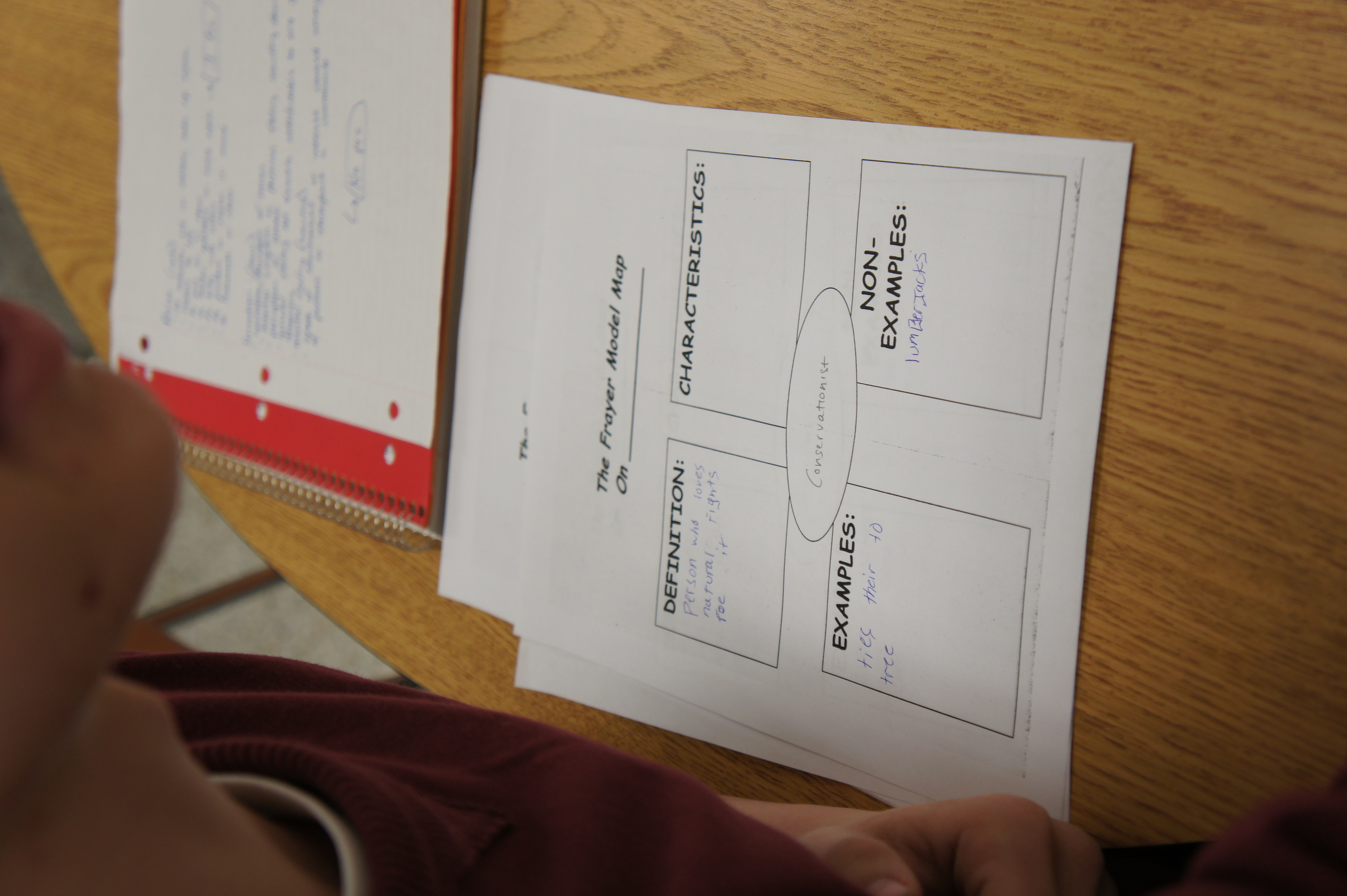
-This strategy helped my student when we were learning about a new concept because she had to define not only what the concept was, but also what it wasn’t.
2. Reading and Word Attack Strategies
Reading and Word Attack Strategies
-I used this with my student when we were reading difficult scientific texts. For example, while reading about bird bones, I asked my student to make a prediction based on the pictures and title of what the article would be about to prepare her mind before we started reading.
3. KWL Chart
-I also used this during the bird bone lesson to help assess what my student was picking up from reading the text. I looked at the L section and could see where she may have missed important parts or misunderstood a section.
4. LitFig Chart
-I noticed my student was reading most texts very literally, so I used the LitFig charts with a Taylor Swift song to help her use the same strategy when reading informational texts.
5. Bridging Snapshots
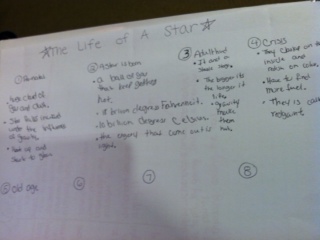
-When learning about the life cycle of stars, my student and I used this method as a way to sequence events and compare them to human life cycles.
6. Coding the Text
-We used text to self and text to world connections with everything we read. I usually start with song lyrics or a short story to get my student ready to read a more lengthy text and make text to text connections later on.
7. Reading Detective
-With texts that included multiple new vocabulary words, I would use this strategy. My student would think about what the word might mean and why it might relate to the text. After we read the text, we would go back and discuss what we learned about those words.
8. Exit Slips
-After introducing my student to potential and kinetic energy, I gave my student three criteria to assess herself with. She would put a check mark next to items she agreed with such as, “I can give an example of kinetic energy” and so on.
9. Sketch to Stretch
-Although I did not use this strategy with my student this semester, I believe it would be helpful for the student to visualize the text. I would like to try this by reading a difficult text while my students draw what comes to their mind as they listen.
10. Newspaper Model- 5W
-This strategy involves the students analyzing the who, what, when, where, and why of a text. I would like to use this in the future, perhaps when reading a book with a whole class. This could be done at the end of a chapter or before beginning a book as an anticipation guide.