Beyond Monumental Training Clinic and Health Fair – Free!

Aug 16th, 5-7:30 PM
Irsay Family YMCA
426 S Alabama Street
Indianapolis, IN 46225
Go to the Facebook link to register for free tickets:
https://www.facebook.com/events/116598025646873/

Beyond Monumental Training Clinic and Health Fair – Free!
Go to the Facebook link to register for free tickets:
https://www.facebook.com/events/116598025646873/
https://www.dietitiancassie.com/healthy-eating-at-the-state-fair/
Practical tips on State Fair Food Fun!

Some neuroscience experts think our brains focus on negative information as a way to remember pain so we can avoid it in the future and stay safe. They call this the “negativity bias.”
“Gratitude is good medicine,” says Robert A. Emmons, Ph.D., a professor of psychology at University of California-Davis and author of The Little Book of Gratitude.
“Clinical trials indicate that the practice of gratitude can have dramatic and lasting effects in a person’s life. It can lower blood pressure and improve immune function… grateful people engage in more exercise, have better dietary behaviors, are less likely to smoke and abuse alcohol, and have higher rates of medication adherence.”
Did you know you take about eight million breaths a year? Your feet can take you up a mountain, your arms can hold someone you love. Take a minute to marvel at the finely tuned machinery of your body.
Was it an old favorite, something you made, or something new and different? If you eat three meals a day, you’ll eat about a thousand meals this year! Take a minute to savor an especially yummy meal.
Did you give it your all at the gym or take a quiet moment while sitting in traffic to reflect? Take a minute to think back on one particularly awesome moment.
Is it someone who sets your heart on fire, always has a smile for you, has your back, or makes you laugh until you cry? Take a minute to smile as you think about this special person.
Every single day you wake up with 24 brand new hours. The past is history, the future is a mystery, and today is a gift. That’s why they call it the present! Take a minute to be thankful for the gift of time.
Let’s do this, and be Healthy For Good!
https://healthyforgood.heart.org/be-well/articles/thankfulness-how-gratitude-can-help-your-health

A body in motion stays in motion—until life gets in the way. Despite your best intentions, situations out of your control can hinder your ability to stay active. Even the most devoted fitness enthusiasts face challenges with exercise adherence.
To avoid a fitness relapse, it’s helpful to recognize potential barriers to exercise and develop plans to overcome them. Here are some of the biggest obstacles you may face in maintaining a physical activity regimen and strategies to avoid them.
The most common barrier to exercise is lack of time. Jobs, kids, social obligations and other responsibilities frequently add up to shrink your available time for exercise. When time is tight, physical activity is easily pushed aside.
Overcoming this obstacle requires mental shifting and planning. Human bodies are meant to move, and viewing exercise as a necessary part of a healthy human existence makes creating time for it is easier. Plan exercise into your schedule and mark it on your calendar as you would any other obligation. This way, you have to plan time to be active in advance, as opposed to hoping you’ll find a few minutes to squeeze it in.
If you still find lack of time is an issue, start with five minutes of activity daily. These five minutes will add up to modest health improvements, but more importantly, they will instill a habit of regular exercise you can build upon.
When life gets hectic and you’re feeling overwhelmed, exercise might seem burdensome. Though most people know exercise is a powerful stress-buster, it isn’t easy to act on that knowledge during high-stress times. Moreover, because exercise is a stressor on the body, intense exercise during tense periods may be unwise (not to mention unenjoyable).
To reap the stress-reducing benefits of activity and avoid relapse during chaotic times, focus on movement that is enjoyable and rejuvenating. If a high-intensity fitness class or an 8-mile run feels overwhelming, it may be. If exercise feels like an additional stressor, you’re far less likely to do it. Decide which modes of movement feel energizing and/or relaxing to you, and focus on these when stress levels rise.
When the sun is shining and the birds are chirping, it’s easy to get out and move. During rainstorms or when temperatures drop to single digits, it’s much harder. Instead of waiting for sunnier days, plan a strategy for the change in seasons. While your normal routine may take you outdoors or to the gym, your inclement weather sessions might look different. Determine a safe, warm and dry place you can move during winter months. This may be in your basement with an exercise video or walking laps at the mall. Remember that all movement counts when planning strategies that take weather into account. If you always wait for perfect weather, you’ll be inactive much of the year.
Even with a well-structured exercise routine, you will reach fitness plateaus. If a change in physical appearance or a certain number on the scale is your only reason to be active, this can quickly lead to frustration and relapse. To prevent this, create non-weight-related goals to drive your exercise behavior. Make a list of all the benefits you perceive from exercise, such as increased energy and stamina, better sleep, enhanced mood or simply the joy of moving your body. When you’re struggling through a plateau, pull out this list and reconnect with your intrinsic motivations for being active.
Sometimes you just can’t (and shouldn’t) exercise due to injury or illness. To prevent this setback from turning into a full-on fitness relapse, focus on what you can do rather than what you can’t. Sprained your ankle and can’t run? This could be the perfect time to start swimming or to focus on upper-body strength training. Have a cold and feel totally wiped? Step outside for a short walk and breathe some fresh air. The key component during illness or injury is to keep up your momentum with some kind of activity, so as not to break your regular exercise habit.
When your fitness routine starts to backslide, take inventory of what’s getting in the way and employ targeted strategies as needed. Most importantly, remember that there’s no end goal in the game of fitness and health. Rather, it is a continuous process of learning, growing and improving your health and well-being through movement.
https://www.acefitness.org/acefit/healthy-living-article/60/6436/overcoming-workout-relapses/
We know how hectic life is – working late, after-school activities, trying to cram in a gym session, and catching up with friends, or better still, your spouse! Sometimes cooking at home just isn’t an option.
What you need to know is that there are healthy options when dining out. Many restaurants now offer delicious meals and menu items that are better for you. But it still takes a little bit of effort and a splash of willpower to construct a healthy meal away from home.

Let us break it down for you with our top ten tips:
LOSE IT |
CHOOSE IT |
|
| bacon, sausage & other fatty, salty meats | skinless chicken, fish, lean meat | |
| white bread, rice and pasta | whole-grain versions | |
| cream-based or cheese soups | broth-based soup with lots of veggies | |
| deep-fried, pan-fried, extra crispy, creamed, stuffed | grilled, sautéed, roasted, steamed, baked, poached | |
| fries | baked potato or side salad | |
| refried beans | pintos or black beans | |
| sour cream, queso | guacamole, pico de gallo | |
| salty sauces like soy, teriyaki, cocktail, au jus | light sauces flavored with herbs, spices, vinegar, wine | |
| all-you-can-eat, supersize, buffet | a la carte, light menu, salad bar | |
| traditional desserts, cookies, ice cream | fresh fruit and fruit-based desserts | |
| regular soda, sweet tea, sugary cocktails | water, 100% juice, diet soda, seltzer, spritzers |
Be prepared when you go out to eat. Healthy choices can be found if you know what to look for and how to ask. Bon appetit!
Article copyright © 2016 American Heart Association.
https://healthyforgood.heart.org/Eat-smart/Articles/Dining-Out-Doesnt-Mean-Ditch-Your-Diet
2 tablespoons unsalted butter
1 large sweet onion, chopped (about 1 cup)
1 1/2 cups fresh or frozen beans (lima, edamame, fava, etc), cooked al dente
Kernels from 6 ears of corn (about 5 cups)
1 pint cherry or grape tomatoes, halved
1 tablespoon freshly squeezed lemon juice
1/4 cup feta cheese, crumbled
1/4 cup basil, sliced in chiffonade
Flaky sea salt and freshly ground black pepper, to taste
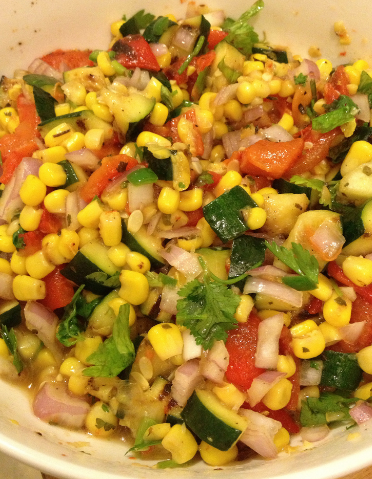
In a medium saucepan, melt the butter. Add the chopped onion and a small pinch of salt and cook, stirring, over medium heat until translucent and tender, about 5 minutes. Lower the heat, add the beans and corn and stir over medium-low heat for about 1 minute, until tender but still crisp.
Transfer cooked ingredients to a large bowl and toss with the tomatoes and lemon juice. Serve immediately with the feta, basil and black pepper sprinkled on top, or let the mixture cool, then top with the feta, basil and black pepper.
http://www.thekitchn.com/recipe-succotash-salad-recipes-from-the-kitchn-192297
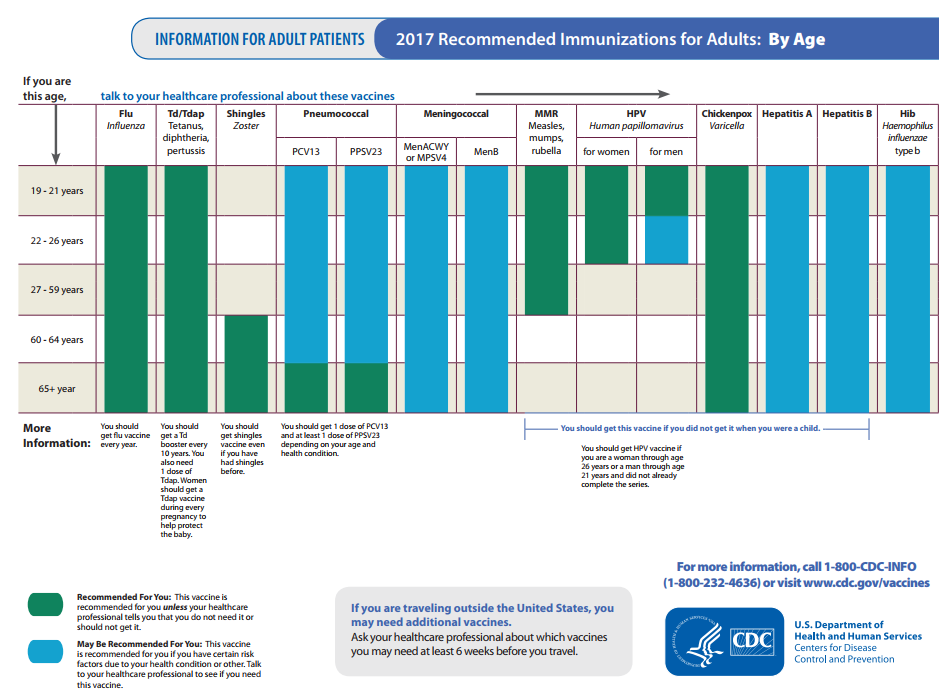
Further information regarding this schedule as well as information regarding certain health conditions and the changes that may come with those to the schedule above:
https://www.cdc.gov/vaccines/schedules/downloads/adult/adult-schedule-easy-read.pdf
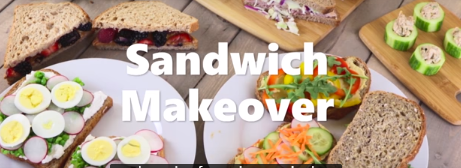
See the video linked below for new ways to add nutrition, taste, color and texture to your lunch staples.
https://healthyforgood.heart.org/add-color/videos/sandwich-makeover
Free Sunset Yoga Monday, August 14th from 7-8 PM
Come relax with CITYYOGA and enjoy a one hour evening yoga class at the Indianapolis Central Library (40 East St. Clair Street) in the East Garden. Bring your own mat. This is a free activity. In case of rain the yoga class will be held in the Nina Mason Pulliam Indianapolis Special collections on the 6th floor of the library.
https://www.visitindy.com/indianapolis-four-spots-for-free-yoga-in-indianapolis
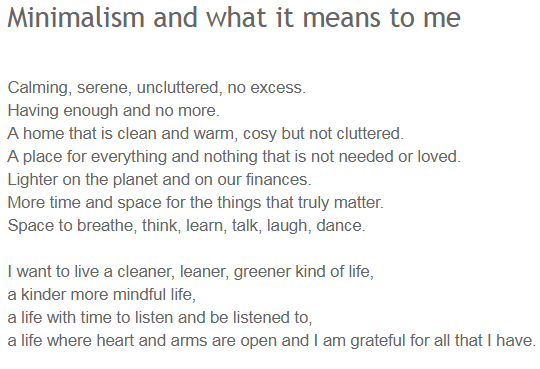
As I’ve had some life changes recently, I now face the task of de-cluttering, sifting and sorting through the things of memories, as well as things useful and not so useful. USPS, FedEx, Goodwill and Salvation Army have been visited more of late. My mind has turned to the idea of “minimalism”. Manman Lai writes:
http://simplelivingchina.blogspot.co.uk/2012/03/minimalism-and-what-it-means-to-me.html
I’ve found several great blogs sharing ideas, how-to’s and other great resources. If you have a yearning for a simpler space, clearer head and less clutter, you may want to check:
http://www.theminimalists.com/
http://minimalwellness.com/blog/
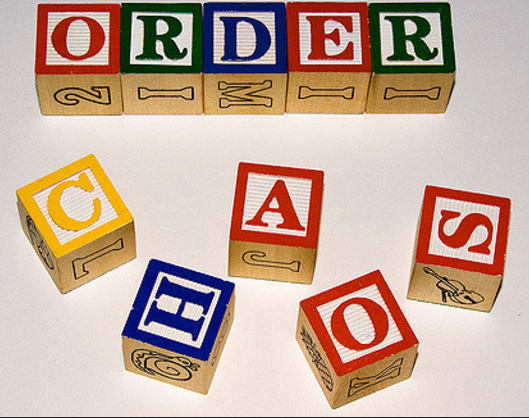
The second website includes healthful recipes as well. Kind regards!
Anna Gerlach