Pack the Parks Day

WHEN:
July 23, 2016 all-day
WHERE:
Indianapolis Public Parks
COST:
Free
Pack the Parks Day will be held on Saturday, July 23. Also, Indy Parks wants to show you and your community how much we appreciate you. Pack the Parks will be a fun-packed experience as it helps you explore all that Indy Parks has to offer.

This community celebration offers special activities give-a-ways throughout the day.

Free Admission to:
o Pools & Weight Rooms
o Eagle Creek Park + Beach
o Garfield Park Conservatory + Sunken Gardens
o Plus, Activities + Games + Prizes Activities + Games + Prizes


http://indyhub.org/event/pack-the-parks/

The Best Sunscreens for 2017

Consumer Reports just released their annual list of top sunscreens, with a few important reminders. The number on the bottle isn’t always accurate: Of the 58 lotions, sprays and sticks rated by Consumer Reports this year, 20 of them tested at less than half of the SPF listed on their label. For example, one sunscreen they tested was labeled SPF 30, but the UVB protection it actually provided was between 10 and 19.

There were some winners, though. Here are their top five sunscreens:

These are a few of the top-rated sunscreens, according to Consumer Reports.
  • La Roche-Posay, Anthelios 60 Melt-in Sunscreen Milk, $36
  • Equate, Sport Lotion SPF 50, $5
  • Pure, Sun Defense Disney Frozen Lotion SPF 50, $6
  • Coppertone, WaterBabies Lotion SPF 50, $12
  • Equate, Ultra Protection Lotion SPF 50, $8

If you can’t find one of the products listed above, Consumer Reports recommends using a sunscreen with an SPF of at least 40. It should also contain ingredients like avobenzone rather than “natural” ingredients.

Looking for a sunscreen you can spray? Trader Joe’s Spray SPF 50+ received an excellent rating, along with Banana Boat SunComfort Clear UltraMist Spray and Equate Sport Continuous Spray SPF 30. Though there are a few things to keep in mind when using a sunscreen spray.

“You have to hold the nozzle close to your skin, and don’t spray the product into the wind. You often see parents running behind kids on the beach, spraying. That’s not an effective way to apply sunscreen,” Joshua Zeichner, M.D., director of cosmetic and clinical research in the dermatology department at Mount Sinai Hospital in New York City said, in the report.

You should also rub the sunscreen in after you spray it on — which some people don’t do.

Regardless of what kind of sunscreen you choose, follow these steps to avoid getting burnt:

  • Shake the bottle. This helps to distribute the ingredients throughout the bottle.
  • Apply sunscreen BEFORE you go outside. Aim for 15 to 30 minutes before.
  • Reapply every two hours. And whenever you get out of the water, no matter how much time has passed, or if an ingredient is water resistant.

Remember to apply sunscreen to often-forgotten parts of your body like your scalp, toes, ears and more. Wear a hat when you can!

For more information, check out the full story on Consumer Reports.

http://www.today.com/health/consumer-reports-reveals-best-sunscreens-buy-2017-t111677

Spicy Watermelon with Feta

Take the opportunity to pair hot and cold together for a satisfying 4th of July treat this year.  Low calorie and delicious too!

SPICY WATERMELON WITH FETA

Saturday, July 8th Indy Criterium – Large Bike Festival/Race

The 8th annual IU Health Indy Criterium is sure to challenge the racers and thrill the spectators. Situated in the heart of Downtown Indianapolis, the Indy Crit offers cyclists a unique opportunity to race the city streets that they would rarely ride otherwise. The previous three years have drawn over 600 racers from across the Midwest!!  Be a part of the fun and excitement of Indiana’s largest criterium race!


http://www.indycrit.org/festival

Find a Fitness Meet-Up Group

At this link:  https://www.meetup.com/find/?allMeetups=false&keywords=fitness&radius=25&userFreeform=Indianapolis%2C+IN&mcId=c46201&mcName=Indianapolis%2C+IN&sort=default

you are able to find the various fitness meetup groups available in the Indianapolis area.  An example of the one of the groups is found below:

https://www.meetup.com/Zionsville-Over-50-Walking-Talking-Meetup/about/comments/?op=all

The groups are open, without fees to join, and generally advertise if there is any cost to the activities posted.  This is a casual way to introduce yourself to like-minded folks who have an interest in and are actively pursuing fitness goals like yours.


Walking Most Popular

Why is Walking the Most Popular Form of Exercise?

When it comes to simple ways to be healthy, walking is all the rage. Follow these tips getting started and learn more about fitness walking with the American Heart Association.

 sneakers

The Top 8 Healthy Food Trends for 2017

HOW YOU CAN CAPITALIZE ON POPULARITY OF HEALTHY FOOD.
By Samantha ThorensonJune 2017Vendor Bylines

The first quarter of 2017 is over, and there have been some interesting healthy food trends. Useless carbs, sodium, gluten, and unhealthy trans-fats are top of the list of what’s off the menu. Our Pinterest boards are full of mouthwatering recipes enticing us to cook up a healthy storm. On the other hand, our Instagram feeds have been awash with colorful, delicious-looking dishes that are probably more pleasing to the eye than to the palate.

Healthy foods are recognized as the best way to avoid weight gain, obesity, and expensive procedures, such as plastic surgery and its alternatives required to reverse the effects.

So, what are the top healthy food trends in America today?

1. Low-Alcohol Cocktails

Today’s generation likes its alcohol less, lighter, and with more extras than previous generations. In fact, every year we see an increase in demand for alcohol-free cocktails, also known as mocktails.

2. Sea Veggies

Vegan cooking and vegetarian dishes have been all the rage in healthy food trends for the past few years. The veggie and vegan way of life is now adopting a new sub-sector with seaweed and other nautical greens gaining popularity. Chefs are already trying out new soup and sauce recipes and adding seaweed-derived salts and oils.

3. Ancient Grains

2013 was named “International Quinoa Year” by the UN, and for good reason. Quinoa is a wheat-free full-protein seed and awesome alternative to starchy grains.

In 2017, a few other ancient grains are finding their way onto top chef menus all over the country. Farro, sorghum, and teff are some of the ancient grains recognized for their high fiber and protein content.

4. Plant Waters

Fitness experts all over have been ditching commercial energy drinks for natural alternatives.

Maple water, coconut water, cucumber, artichoke, and cactus are being hailed as the best hydration beverages for the health-conscious fitness nut. They are lower in calories, contain natural sugars and no added sweeteners, and have much lower levels of sodium compared to energy drinks.

5. Probiotic Foods

As research extends in the role of gut health to overall health, fermented foods are fast gaining favor. They are natural probiotics that promote the gut ecosystem necessary for good bacteria to thrive. From 2014, there has been a 50 percent increase in the number of probiotics products and prebiotic supplements. Sales are at an all-time high and indications are they will continue to rise.

6. Anti-Inflammatories

Inflammation is a huge concern for the health conscious. One’s diet, lifestyle, and environment may bring on systemic inflammation. And this may lead to health issues, such as cardiovascular disease, acne, cancer, depression, and autoimmune conditions.

When it comes to foods and ingredients that fight inflammation, turmeric leads the pack. Animal proteins are great sources of healing amino acids and anti-inflammatory fats. Grains containing sorghum, millet, rice, amaranth, and quinoa are great for fighting inflammation.

7. Power Bowls

Bowl foods have been gaining popularity for the last few years, and the trend seems ready to grow further this year. Power combinations of whole grains, veggies, and protein look colorful and appetizing while also adding a powerful mix of vitamins, fiber, and other nutrients.

The trick is to be careful with or completely avoid the additives and flavorings, as these may mess up the healthy trends. Some salads have upwards of 1000 calories per serving, and power bowls could easily go the same route.

8. Biodynamic Food

Organic foods have been trending for the past few years, and now biodynamic foods are taking center stage.

This is a step up from organic foods. Wellness influencers are already talking about how the moon cycles influence crop and animal health. Biodynamic farming has been in practice since the 1920s and solid scientific research proves it produces healthier plants, better eggs, and more nutritious seeds.


Lightening: Myth vs Fact

Lightning Myths and Facts

Myth: If you’re caught outside during a thunderstorm, you should crouch down to reduce your risk of being struck.
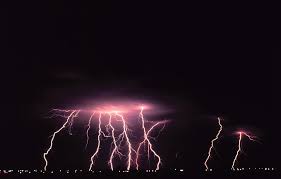
Fact: Crouching doesn’t make you any safer outdoors. Run to a substantial building or hard topped vehicle. If you are too far to run to one of these options, you have no good alternative. You are NOT safe anywhere outdoors.

See our safety page for tips that may slightly reduce your risk.

Myth: Lightning never strikes the same place twice.
Fact: Lightning often strikes the same place repeatedly, especially if it’s a tall, pointy, isolated object. The Empire State Building is hit an average of 23 times a year

Myth: If it’s not raining or there aren’t clouds overhead, you’re safe from lightning.
Fact: Lightning often strikes more than three miles from the center of the thunderstorm, far outside the rain or thunderstorm cloud. “Bolts from the blue” can strike 10-15 miles from the thunderstorm.

Myth: Rubber tires on a car protect you from lightning by insulating you from the ground.
Fact: Most cars are safe from lightning, but it is the metal roof and metal sides that protect you, NOT the rubber tires. Remember, convertibles, motorcycles, bicycles, open-shelled outdoor recreational vehicles and cars with fiberglass shells offer no protection from lightning. When lightning strikes a vehicle, it goes through the metal frame into the ground. Don’t lean on doors during a thunderstorm.

Myth: A lightning victim is electrified. If you touch them, you’ll be electrocuted.
Fact: The human body does not store electricity. It is perfectly safe to touch a lightning victim to give them first aid. This is the most chilling of lightning Myths. Imagine if someone died because people were afraid to give CPR!

Myth: If outside in a thunderstorm, you should seek shelter under a tree to stay dry.
Fact: Being underneath a tree is the second leading cause of lightning casualties. Better to get wet than fried!

Myth: If you are in a house, you are 100% safe from lightning.
Fact: A house is a safe place to be during a thunderstorm as long as you avoid anything that conducts electricity. This means staying off corded phones, electrical appliances, wires, TV cables, computers, plumbing, metal doors and windows. Windows are hazardous for two reasons: wind generated during a thunderstorm can blow objects into the window, breaking it and causing glass to shatter and second, in older homes, in rare instances, lightning can come in cracks in the sides of windows.

Myth: If thunderstorms threaten while you are outside playing a game, it is okay to finish it before seeking shelter.
Fact: Many lightning casualties occur because people do not seek shelter soon enough. No game is worth death or life-long injuries. Seek proper shelter immediately if you hear thunder. Adults are responsible for the safety of children.

Myth: Structures with metal, or metal on the body (jewelry, cell phones,Mp3 players, watches, etc), attract lightning.
Fact: Height, pointy shape, and isolation are the dominant factors controlling where a lightning bolt will strike. The presence of metal makes absolutely no difference on where lightning strikes. Mountains are made of stone but get struck by lightning many times a year. When lightning threatens, take proper protective action immediately by seeking a safe shelter – don’t waste time removing metal. While metal does not attract lightning, it does conduct it so stay away from metal fences, railing, bleachers, etc.

Myth: If trapped outside and lightning is about to strike, I should lie flat on the ground.
Fact: Lying flat increases your chance of being affected by potentially deadly ground current. If you are caught outside in a thunderstorm, you keep moving toward a safe shelter.

Myth: lightning flashes are 3-4 km apart
Fact: Old data said successive flashes were on the order of 3-4 km apart. New data shows half the flashes are about 9 km apart. The National Severe Storms Laboratory report concludes: “It appears the safety rules need to be modified to increase the distance from a previous flash which can be considered to be relatively safe, to at least 10 to 13 km (6 to 8 miles). In the past, 3 to 5 km (2-3 miles) was as used in lightning safety education.” Source: Separation Between Successive Lightning Flashes in Different Storms Systems: 1998, Lopez & Holle, from Proceedings 1998 Intl Lightning Detection Conference, Tucson AZ, November 1998.

Myth: A High Percentage of Lightning Flashes Are Forked.
Fact: Many cloud-to-ground lightning flashes have forked or multiple attachment points to earth. Tests carried out in the US and Japan verify this finding in at least half of negative flashes and more than 70% of positive flashes. Many lightning detectors cannot acquire accurate information about these multiple ground lightning attachments. Source: Termination of Multiple Stroke Flashes Observed by Electro- Magnetic Field: 1998, Ishii, et al. Proceedings 1998 Int’l Lightning Protection Conference, Birmingham UK, Sept. 1998.

Myth: Lightning Can Spread out Some 60 Feet After Striking Earth.
Fact: Radial horizontal arcing has been measured at least 20 m. from the point where lightning hits ground. Depending on soils characteristics, safe conditions for people and equipment near lightning termination points (ground rods) may need to be re-evaluated. Source: 1993 Triggered Lightning Test Program: Environments Within 20 meters of the Lightning Channel and Small Are Temporary Protection Concepts: 1993, SAND94-0311, Sandia Natl Lab, Albuquerque NM.

Lightning Trivia

  • Cape Canaveral Air Force Station/Kennedy Space Center has documented lightning traveling almost 90 miles outward in the thunderstorm anvil.
  • How far can you see lightning? According to Cape Canaveral/Kennedy Space Center, up to 100-km flashes.
  • Lightning Causes Forest Fires. Can Forest Fires Cause Lightning? Yes, smoke and carbon micro-particles, when introduced into the upper atmosphere, can become the initiators of static. Sufficient atmospheric static can spark discharge as lightning. Reports of massive lightning storms in coastal Brasil, Peru and Hawaii have been linked to burning of sugar cane fields. The late 90’s Mexican forest fires resulted in unusual lightning activity in the USA High Plains area (Lyons, et al.) So too can dust in an enclosed grain elevator create a static discharge. Recent reports (Orville, et al) show the Houston TX petrochemical industry, discharging copious amounts of hydrocarbons into the upper atmosphere, may be responsible for higher-than-normal lightning activity in that area. (National Lightning Safety Institute)