Before most first-year students have even settled into campus life, they’re handed a challenge: Here’s a real company. Here’s a problem. Now go figure out what to do about it.
That’s the heartbeat of the First-Year Business Experience (FBE), a course that throws students into the world of business from day one, letting them learn by building, creating, presenting, and discovering. It’s the class that nudges them out of the familiar and into the mindset of someone who asks hard questions, digs for answers, and thinks like a business professional from the start.
Teams begin the semester by diving into a publicly traded company – an intentional decision that gives students access to real data and real insight.
“We choose publicly traded companies because students can dig in and find real research,” Brenda Geib-Swanson, Lecturer of Entrepreneurship & Innovation, said. “They don’t know what they don’t know yet, so exploring everything – from marketing to logistics to organizational structure – opens their eyes to how businesses actually operate.”
This year, every company touched the logistics industry: shipping, fuel, warehousing, and the many layers of supply chain work that shape how products move through the world. For many students, it’s the first time they’ve seen how interconnected business truly is.
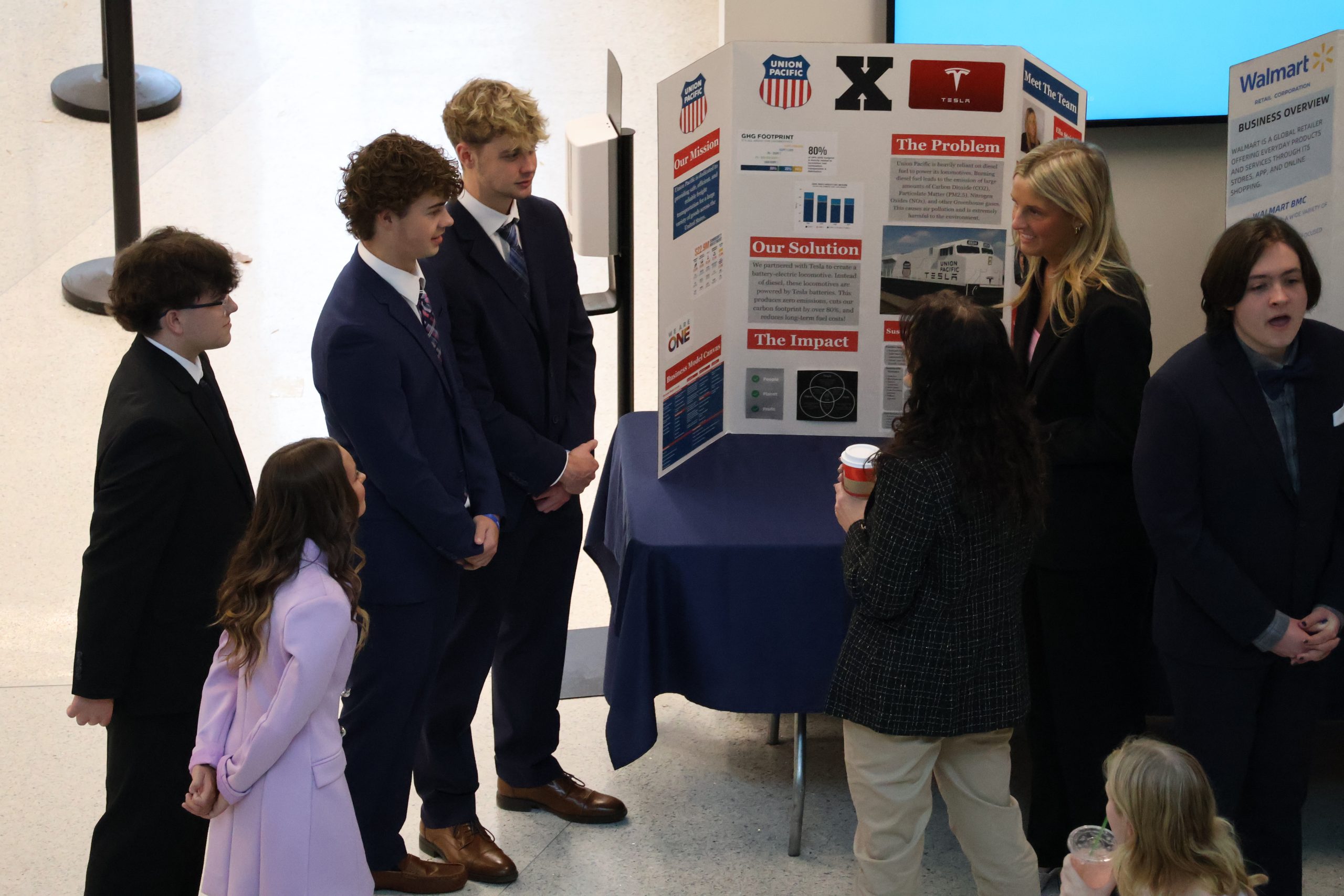
The turning point of the semester comes during the final four weeks, when teams enter what Professor Geib-Swanson calls the “sustainability sprint.” After uncovering a sustainability issue within their chosen company – whether it’s emissions, waste, inefficiency, or something less obvious – they begin ideating a bold, research-backed solution. They sketch, test, revise, and refine, often discovering that the solution they start with is not the one they end up championing.
“Sustainability is a hot topic, and we want them to think creatively,” Professor Geib-Swanson said. “This is where they practice ideation, problem solving, business writing, and business presenting. Even if they won’t become entrepreneurs, they still need those skills.”
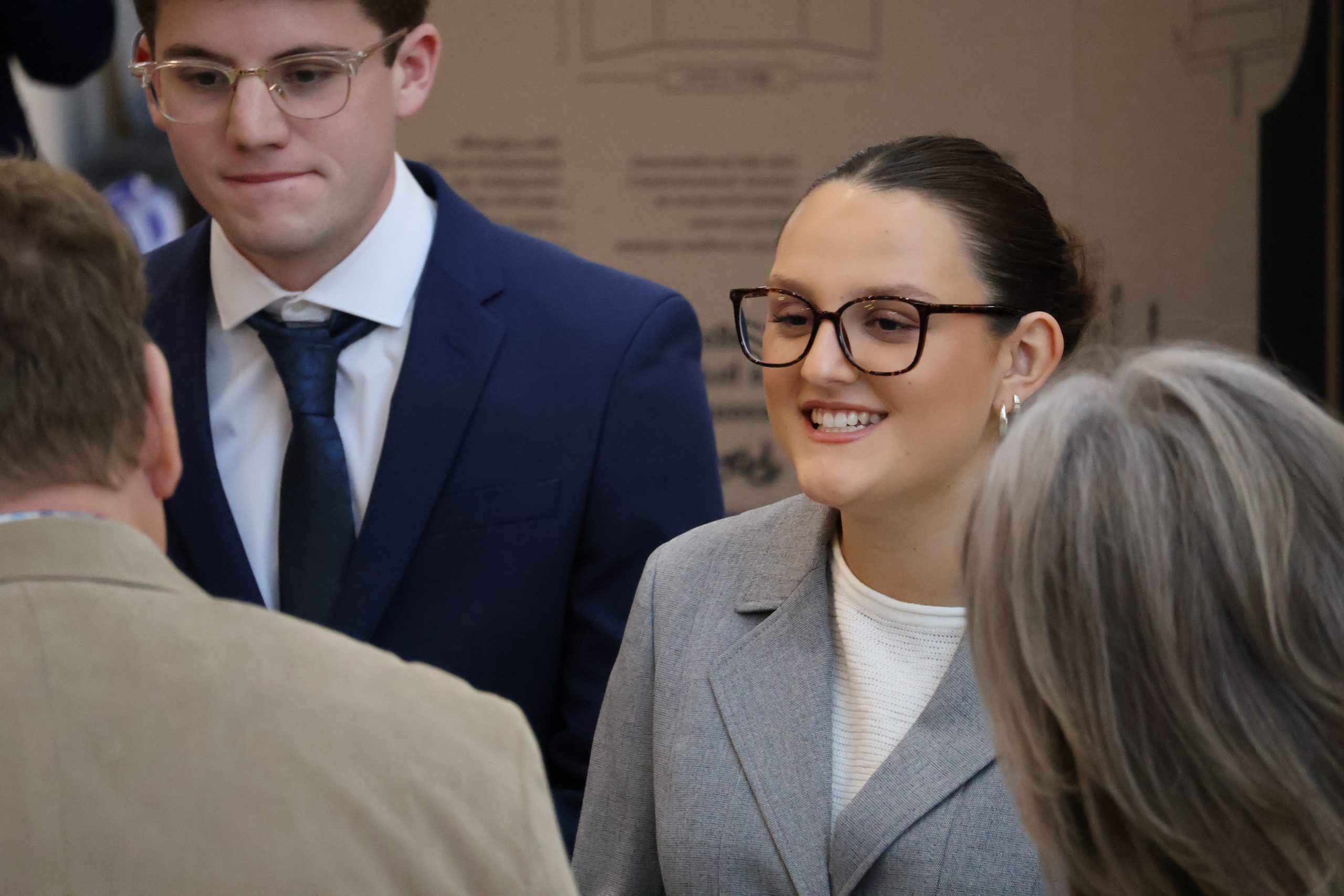
For first-year exploratory business student Charlotte Potts, the sprint revealed a challenge she didn’t expect to enjoy. “I’m not a numbers person, so the toughest part was getting them right,” she said. “But I ended up handling the cost-benefit analysis, and seeing everything come together – and actually be accurate – felt really rewarding.”
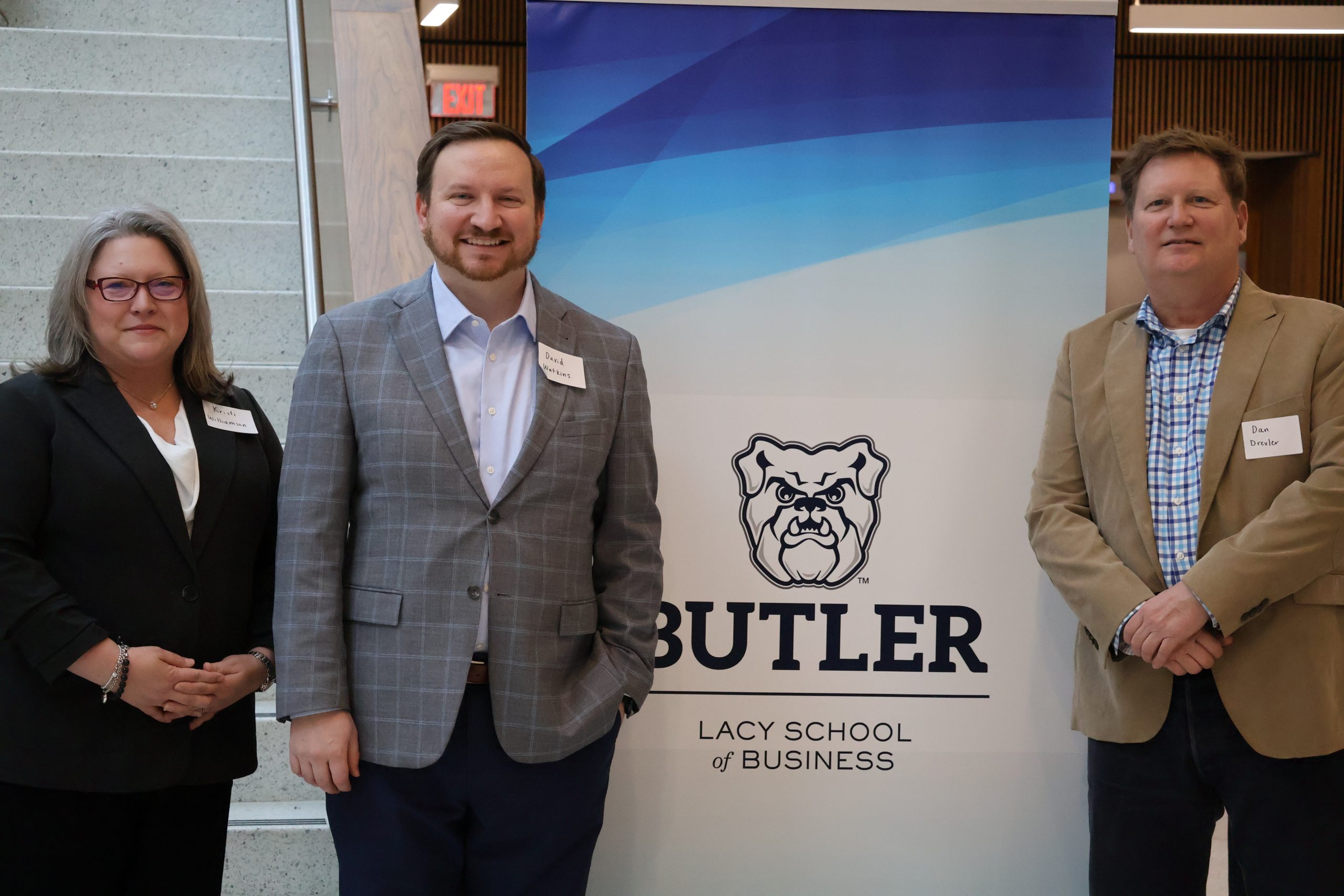
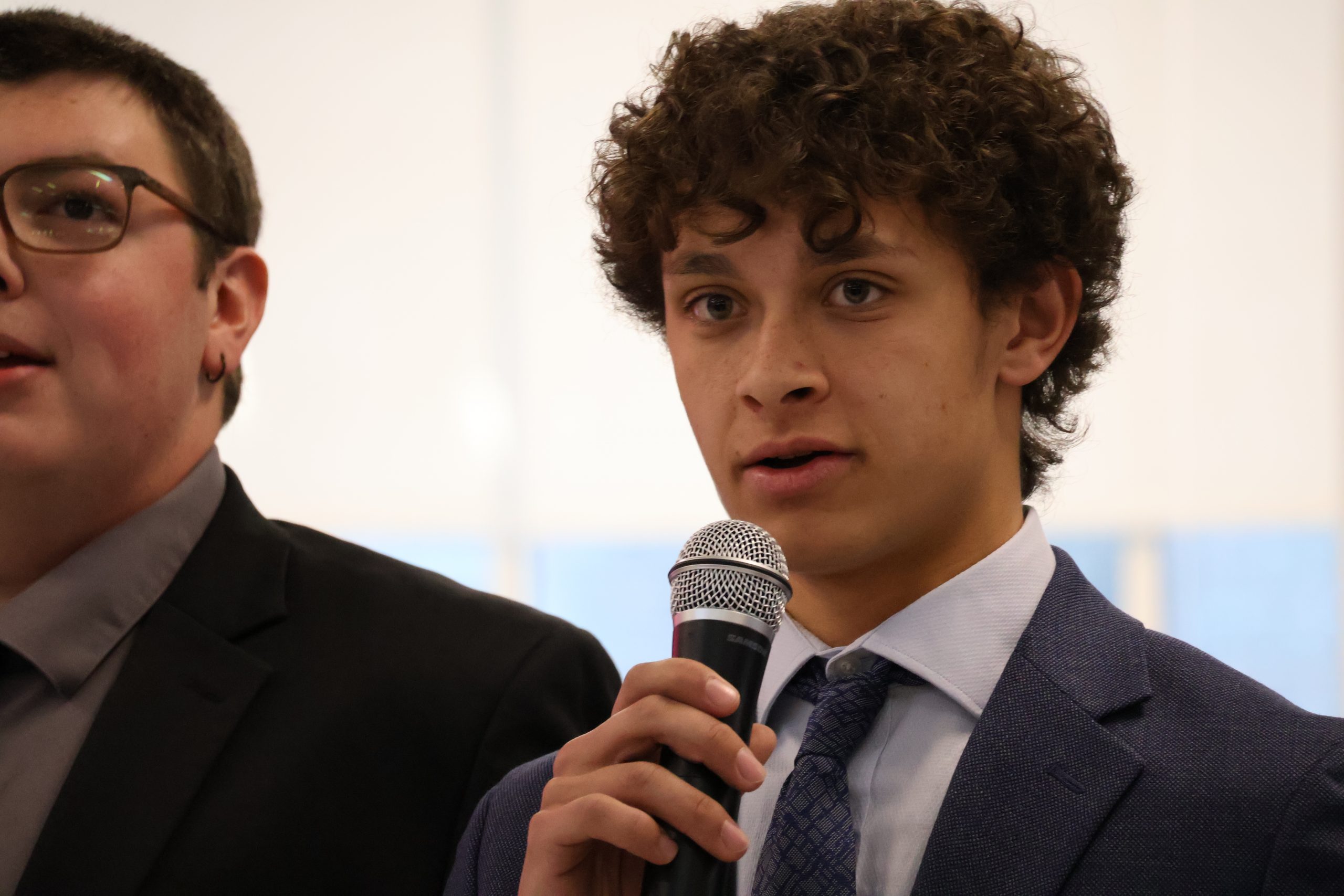
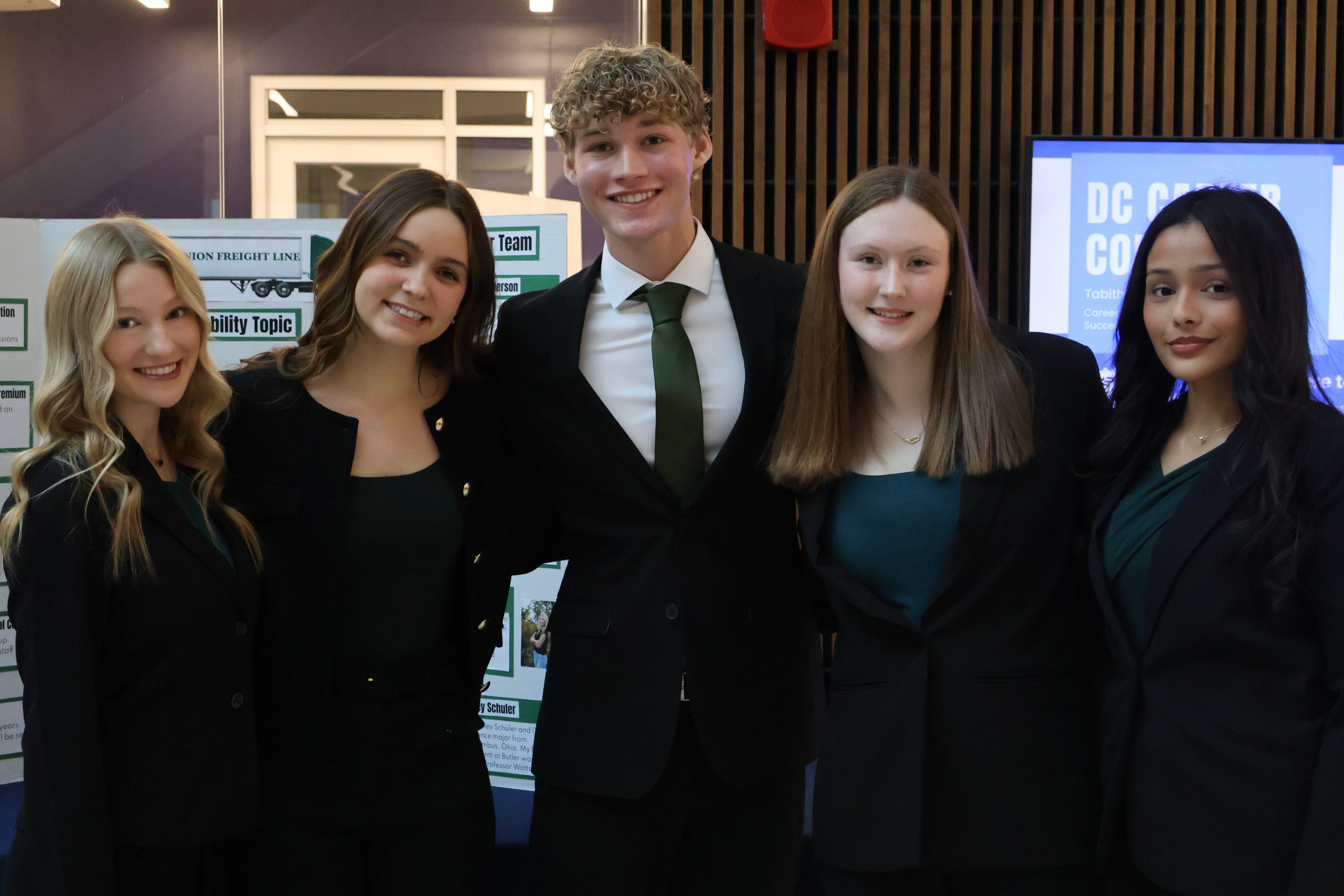
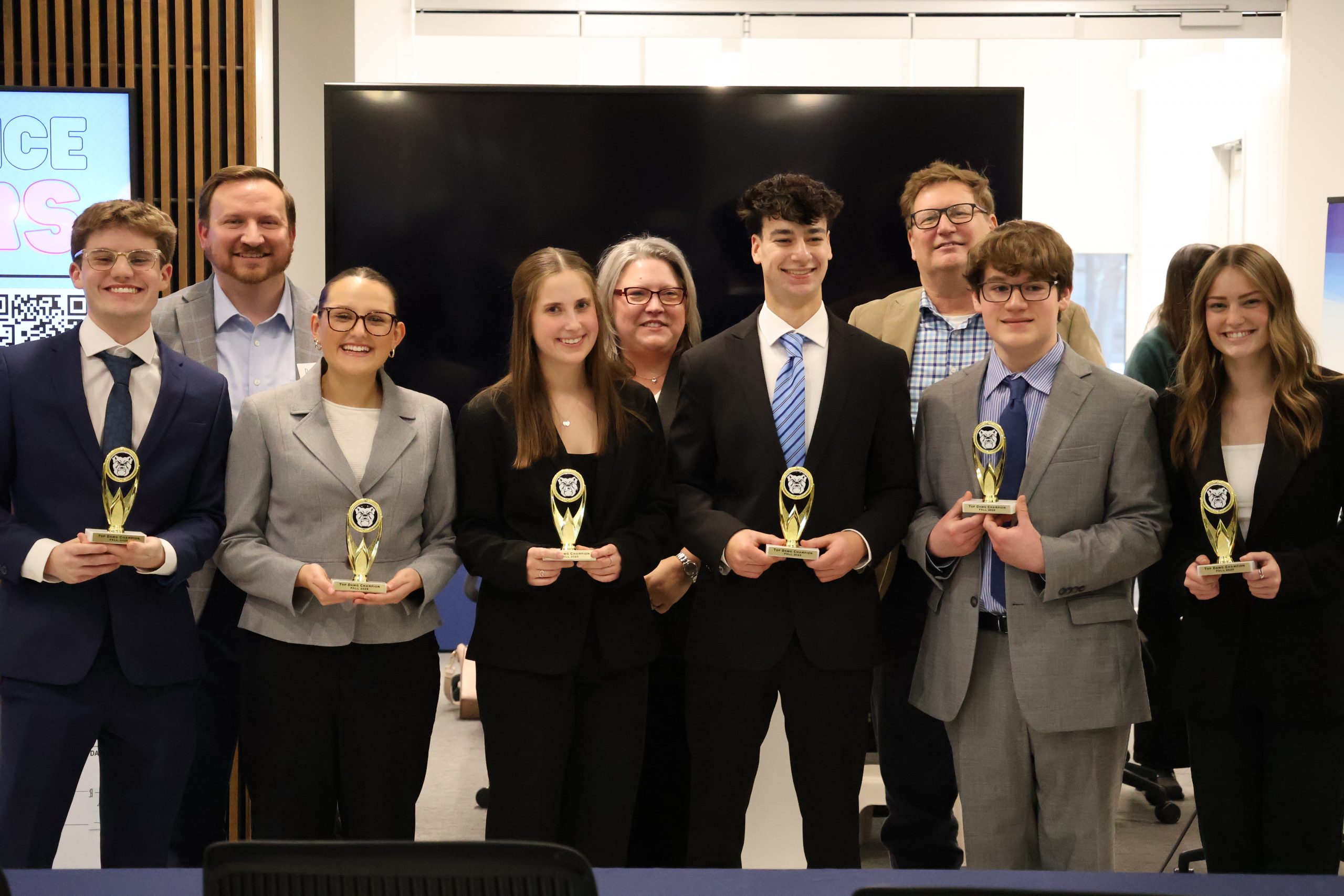
By the end of the sprint, every team produces a research poster, a one-minute elevator pitch, and a full 4–7 minute presentation. Each class section votes on a winner, and those teams advance to one of the most anticipated traditions of the semester: the Top Dawg First-Year Competition, where section winners pitch to a panel of business professionals. The ultimate Top Dawg earns an automatic A and bragging rights that last long past finals week.
“It’s really fun,” Professor Geib-Swanson said. “The energy, the ideas, the excitement – students surprise us every year with how far they take this project.”
By the end of the semester, the transformation is unmistakable. Students who walked in unsure of what business school might look like leave with real experience in ideation, creativity, innovation, and complex problem solving. They’ve researched real companies, uncovered meaningful sustainability challenges, and learned how to communicate their ideas clearly and confidently. They’ve stretched themselves, surprised themselves, and discovered something essential about who they are and who they’re becoming.
For many, Top Dawg is the defining moment – the culmination of a semester of hard work, curiosity, and creativity. For others, it’s simply the spark – the moment they realize they are capable of thinking like a business leader long before they’ve completed their first year.
“It’s important to be open to learning as much as you can. You’ll get out of this what you put into it,” Charlotte said. “Problem-solving, teamwork, communicating – these are skills I know I’ll use in future classes and in my career.”