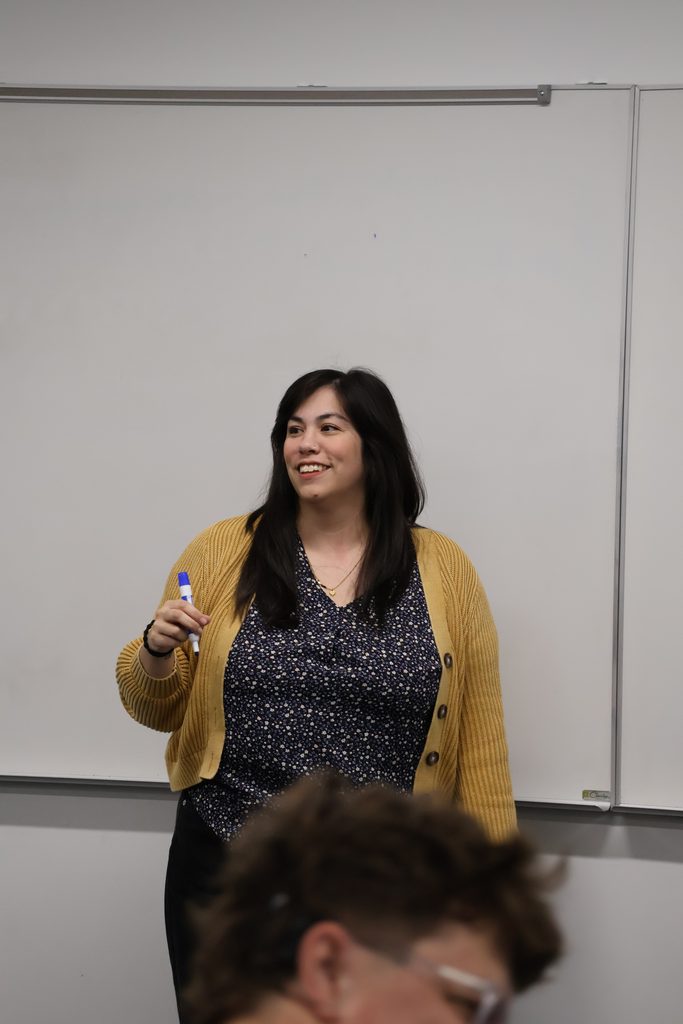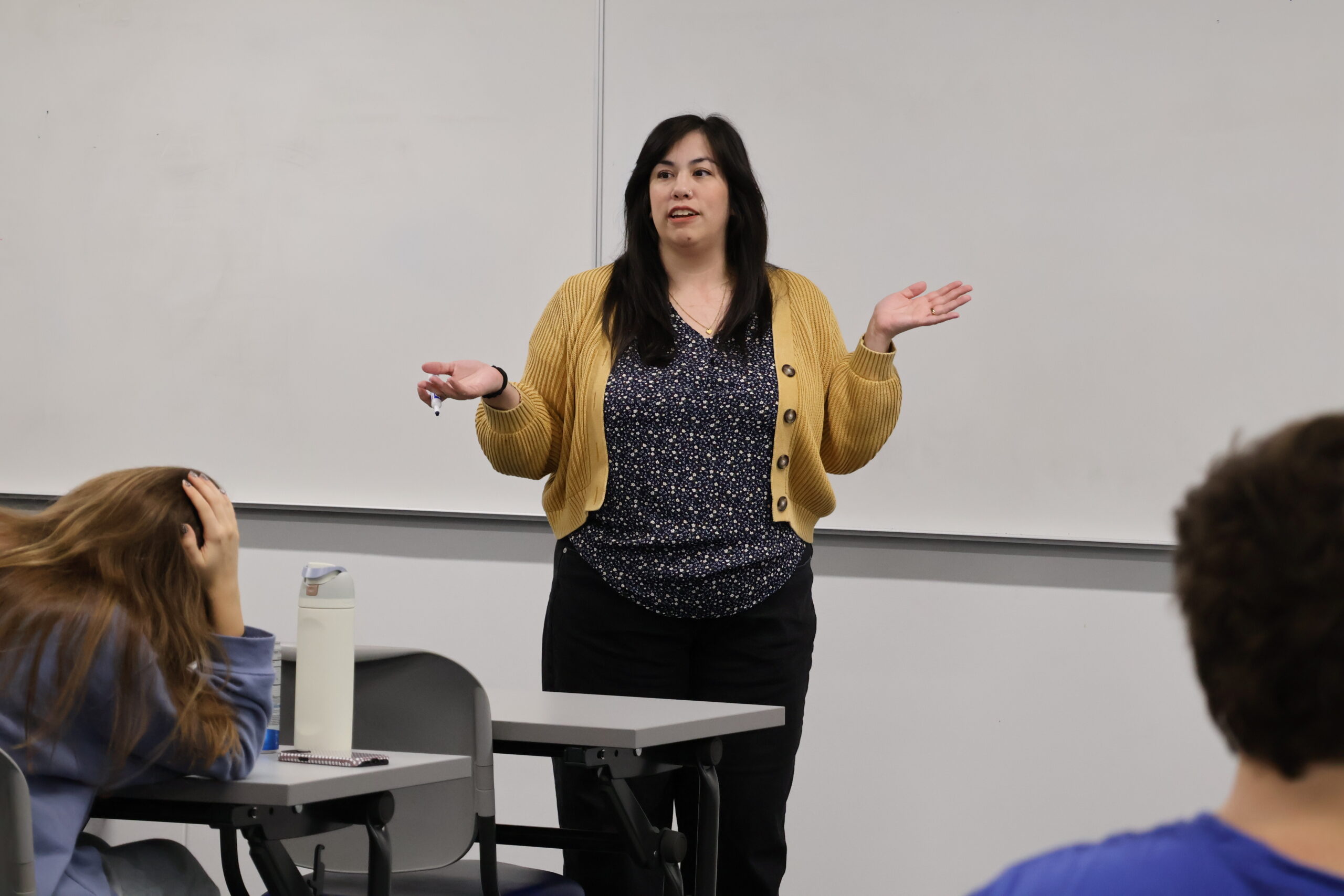
For Dr. Lauren Rukasuwan, the path to becoming an accounting professor wasn’t exactly a straight line from the beginning.
In fact, she has a name for it: her “failure story of college.”
Today, Dr. Rukasuwan serves as an assistant professor of accounting at the Lacy School of Business. But as an undergraduate, she wasn’t entirely sure what she wanted to do. She started at North Carolina State University, navigating large lecture halls and classes with more than 300 students, still trying to find her direction.
It was her brother who eventually pointed her toward accounting.
“He was like, ‘It’s a stable field. You can get a job. Just go major in accounting,’” she recalls.
So, she did.
After earning her bachelor’s degree from the University of North Carolina at Charlotte and a master’s degree from East Carolina University, Dr. Rukasuwan began her career at KPMG as a Senior Tax Associate. But she soon discovered that her interests leaned less toward public accounting and more toward the classroom.
She found herself drawn to teaching, the opportunity to connect with students, and the ability to make a technical subject feel approachable. That realization eventually led her to pursue a Ph.D. at Texas Tech University and, ultimately, a career in higher education.
Along the way, one experience helped shape the kind of educator she wanted to become.
At East Carolina University, Dr. Rukasuwan experienced something she hadn’t found in her earlier college years: a smaller classroom where professors knew their students, relationships developed naturally, and learning extended beyond the lecture. With roughly 25 students in a class, she had opportunities to work alongside faculty, serve as a teaching assistant, and build meaningful connections.
As someone who describes herself as naturally introverted and a little shy, that environment made a difference.
It also helped her recognize the value of an education where students aren’t just faces in a lecture hall. They’re individuals whose growth, questions, and experiences matter.
It’s a philosophy she carries with her at Butler.
But while teaching brought Dr. Rukasuwan to academia, it was a desire to make a broader impact that helped shape her research.
During her doctoral studies in 2020, she began exploring the history of diversity, equity, and inclusion in the accounting profession. Against the backdrop of a national conversation about racial inequality, one of her professors encouraged her to examine a book exploring the history of exclusion within the predominantly white-collar profession.
What she found stayed with her.
Even decades after the book was written, the numbers surrounding representation in accounting hadn’t shifted as much as they should have.
For Dr. Rukasuwan, the question became bigger than who was entering the profession. It was also about who was staying, who was advancing, and who was being given the same opportunities to succeed.
“I wanted to do research that had more of a human impact to it than just, ‘Other accountants are going to find this interesting,’” the North Carolina native says. “I wanted to do something that maybe would make the world a little better.”
Accounting, after all, is a profession built around defining, interpreting, and communicating information. Those decisions influence organizations, industries, and communities. When only certain perspectives are represented in the rooms where those decisions are made, important viewpoints can be overlooked.
“Having more diverse people in the room is always better,” Dr. Rukasuwan says.
Her research also looks beyond recruitment to the experiences that shape someone’s career once they enter the profession. She examines the role of mentorship and sponsorship in helping professionals navigate their careers.
The distinction, she explains, is significant.
Mentors are often the people you turn to behind the scenes: the ones who offer advice, answer questions, and help you work through challenges, Dr Rukasuwan says. Sponsors, on the other hand, take an active role in advocating for you. They recommend you for opportunities, introduce you to important connections, and put their own credibility behind your potential.
In a profession where relationships and networks can play a significant role in career advancement, that kind of advocacy can make all the difference.
Without someone willing to speak up for you, talented professionals can find themselves at a disadvantage compared with peers who have those relationships and opportunities, Dr. Rukasuwan says.
It’s a reminder that professional success isn’t always determined by technical ability alone. Sometimes, it’s also about who recognizes your potential and is willing to help others see it, too.
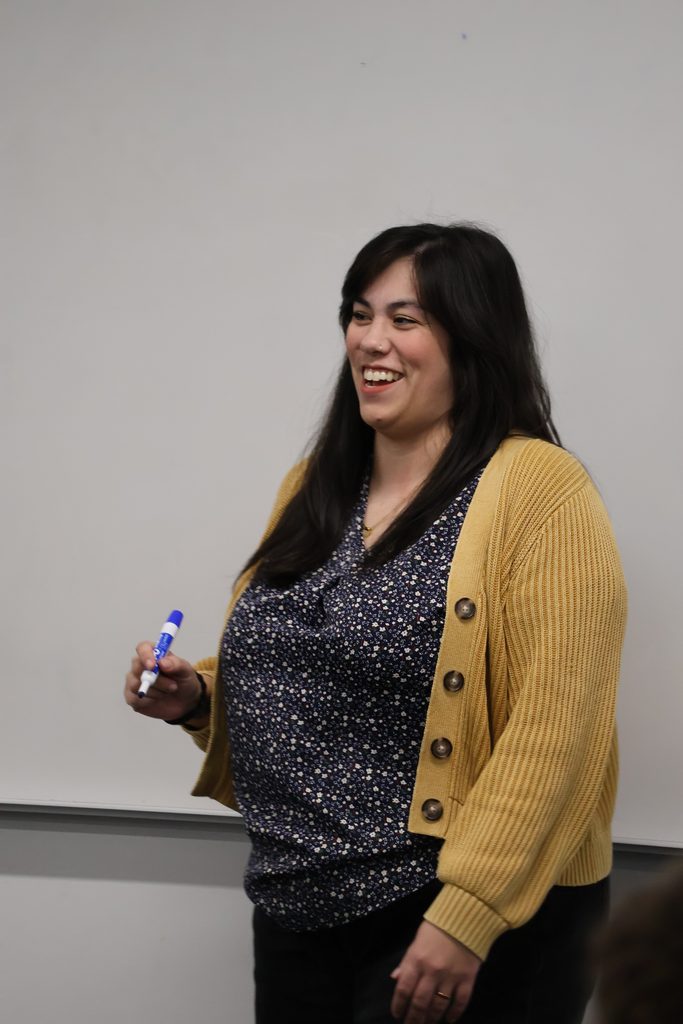
That commitment to making the profession more inclusive is also reflected in Dr. Rukasuwan’s recent research.
In “The Hitchhiker’s Guide to an Inclusive Accounting Profession: Navigating the Shifting Sands of DEI,” she and her co-authors explore how individuals and organizations can continue advancing inclusion amid changing social and political pressures.
The work brings together perspectives from accounting academics, legal scholars, and professionals, bridging conversations that don’t always happen across those different areas of the field.
Rather than focusing exclusively on formal organizational initiatives, the research considers the ways individuals can influence workplace culture through everyday decisions.
For the assistant professor of accounting, meaningful change doesn’t always have to begin with a company-wide program or policy. It can start with someone questioning an unfair performance evaluation, challenging an assumption, or recognizing when a colleague is being treated differently.
“I honestly think that individuals are where the change happens anyways,” she says.
It’s an approach that puts responsibility and opportunity in the hands of the people who make up an organization. And it’s a message she hopes professionals will carry into their own workplaces.
Dr. Rukasuwan will share this research at Butler Research Sound Bites on Nov. 13, offering an opportunity to introduce the ideas to a broader audience and encourage conversations beyond the academic community.
At the Lacy School of Business, she brings these same perspectives into her work with students.
She teaches undergraduate financial accounting, managerial accounting, and accounting information systems, along with graduate-level accounting courses. While accounting is an inherently technical discipline, she wants students to understand that its value extends far beyond formulas, financial statements, and regulations.
“Accounting is the language of business,” she says. “Whether students eventually work in finance, marketing, economics or another area of business, understanding that language gives them a common foundation to communicate, collaborate, and make informed decisions.”
And while the technical knowledge is essential, Dr. Rukasuwan also encourages students to think critically about the systems and norms they will encounter in their careers.
Her advice? Take the opportunities that come your way. Don’t underestimate the value of a connection, and make the effort to get to know the people you work alongside.
She also encourages students not to accept every workplace norm simply because “that’s how it’s always been done.”
If something doesn’t feel right, question it. If an opportunity to make a difference presents itself, take it.
One of the most rewarding parts of teaching at LSB, Dr. Rukasuwan says, is getting to see students grow over time. She teaches students at different stages of their academic journeys, sometimes seeing the same individuals progress from their sophomore accounting courses all the way into the master’s program.
“There’s something special about watching the concepts finally click and seeing students recognize just how much they’ve learned,” she says.
It’s a reminder that education is about more than delivering information. It’s about helping people discover what they’re capable of.
And when she’s not in the classroom or working on research, she enjoys cooking, with Thai curry among her favorites, and spending time with her husband and their two young sons.
Her journey into accounting may have started with a practical suggestion from her brother. But the work she’s doing today is driven by something much bigger: the belief that a stable, rewarding profession should be accessible to more people, that talent deserves opportunity, and that sometimes the most meaningful change starts with one person willing to speak up for another.