
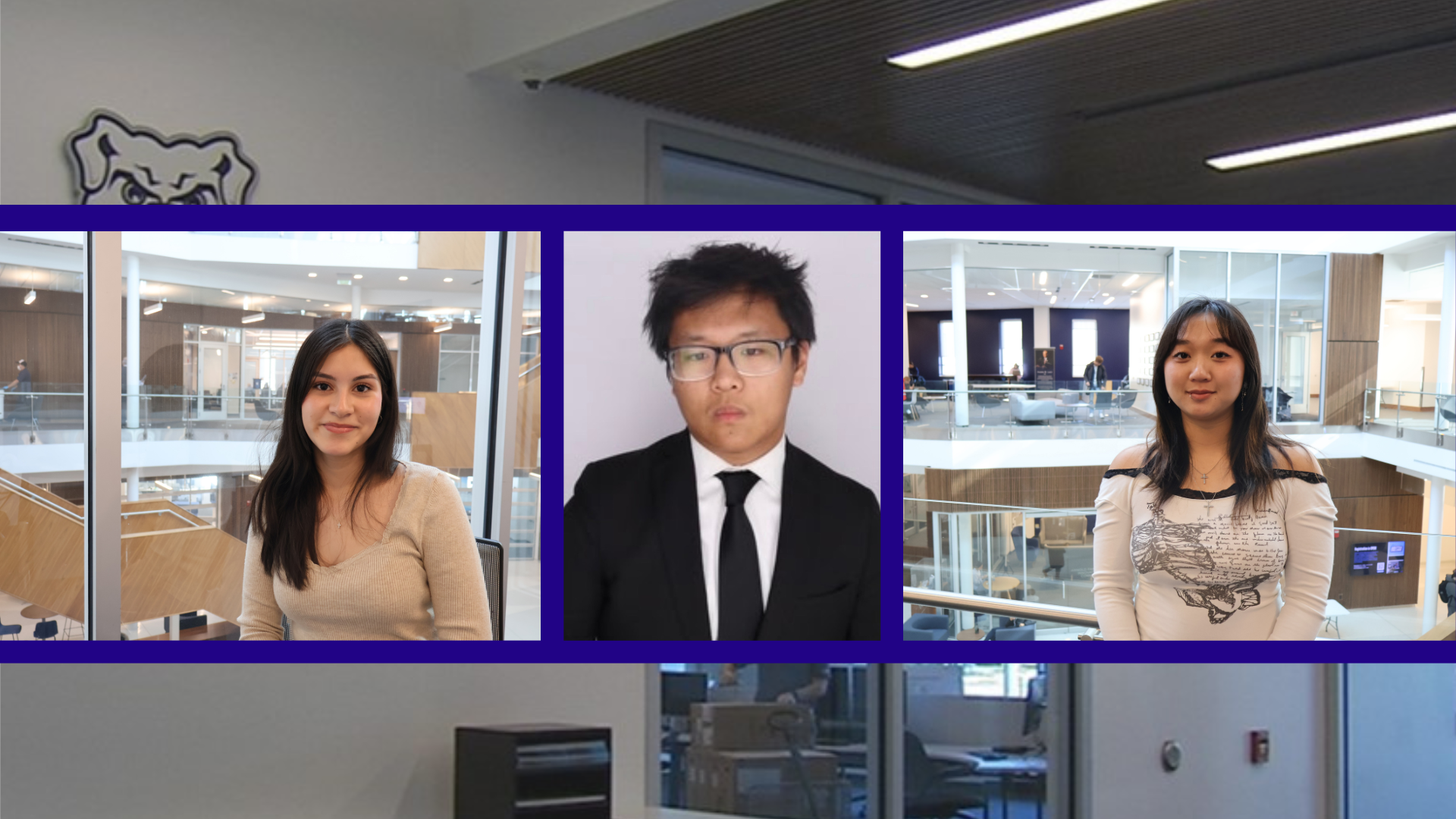
Written by Brad Seehausen
Marketing and Communications Intern, Lacy School of Business ’26
Pursuing a higher education is no easy task. Intense workloads, late-night studying, and balancing a tight schedule require an immense amount of skill and discipline. For first-generation college students, one could add “graduating on time” and “figuring out how to apply for financial aid” to that list among many others. Despite the added challenges, these first-generation students at Butler University have defied the odds to find success in the Lacy School of Business.
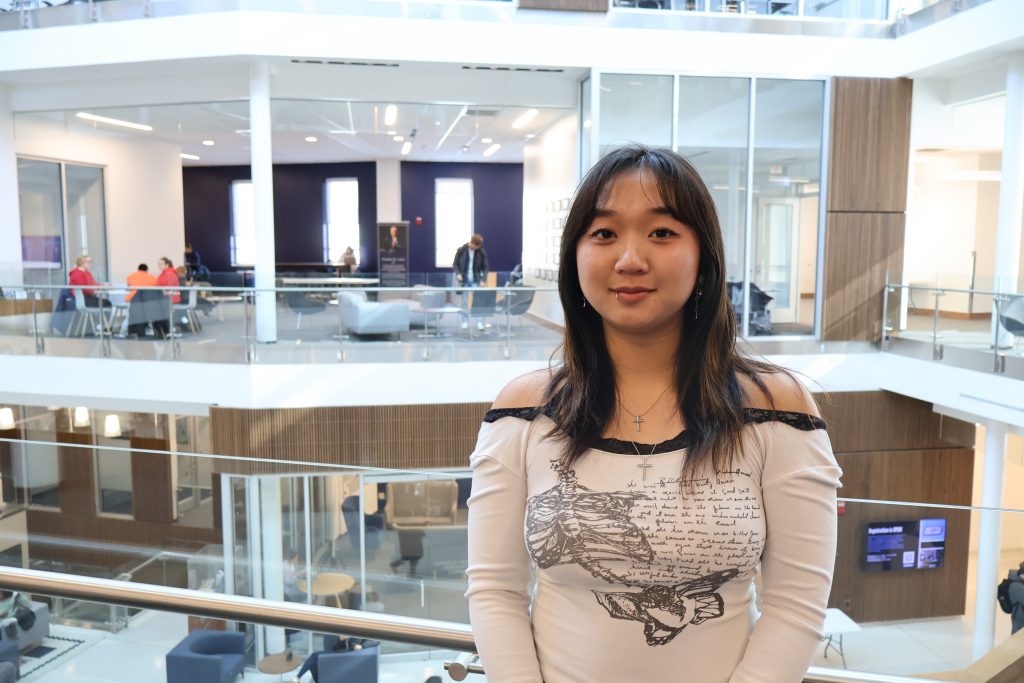
Hailing from Woodstock, Illinois, Tiffany Hoang, a junior healthcare and business major, is the daughter of two Vietnamese immigrants who came to the U.S. before she was born. “I was the first person in my whole family to have an American name,” she mentioned. “Me being able to go to school shows that their hard work and efforts to immigrate have paid off because I’m able to have an education here in America.”
For Tiffany, pursuing higher education was an easy decision to make. “I thought I basically had to go to college. It was an automatic thought when I was younger,” she clarified. “And when I eventually figured out that I wanted to do healthcare management as my profession, I knew I would have to go to college for that.”
As the firstborn in her family, Tiffany said that she’s always had to figure out processes for herself when it comes to her educational journey. However, she aims to spin the narrative for other first-generation students. As a Student Orientation Guide for new students, she had the opportunity in the 2025 fall semester to welcome Butler University’s first round of admitted Founder’s College students, many of whom were first-generation. “I knew exactly what it was like for them. I felt like I could be a really good mentor because I went through what they did. I just wanted them to see me as a friend who could answer their questions, even after orientation,” Tiffany said. In addition to being a Student Orientation Guide, Tiffany has taken up numerous leadership roles in various organizations on campus, taking full advantage of the opportunities that have presented themselves to her.
For many first-generation students, elevating their life comes through being educated, but this is not without its challenges. “There are burdens that first-gen students face, whether it be finances or the feeling of not belonging,” said first-year Citlaly Duran Caballero, an international business major from Indianapolis.
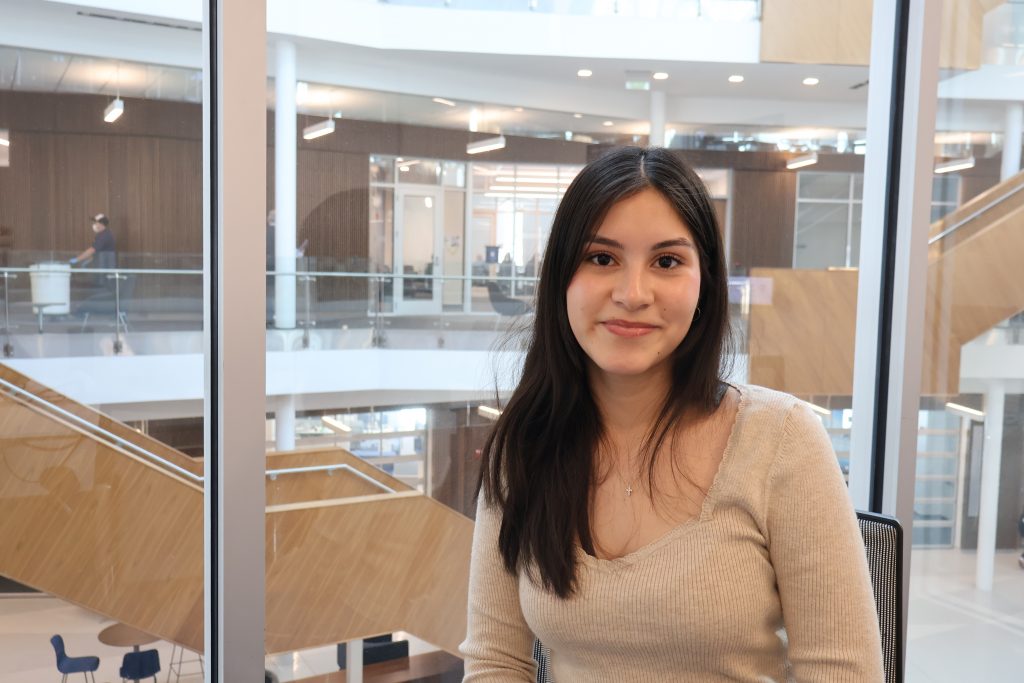
A daughter of two immigrants from Mexico, Citlaly got her first introduction to the business world when she attended Ben Davis University High School, a public early college school in Indianapolis. There, she was able to take various business and accounting courses, which are passions of hers that she carried with her as she entered Butler. In her first year, Citlaly has already gotten involved with LSB, immersing herself in the First Year Pitch Competition as well as being involved in social media outreach for the International Business club on campus. She is also a part of First-Generation Dawgs, a student support group for first-generation students of all majors.
Citlaly, while acknowledging the hardships that she’s faced in her path through college, promotes a different perspective. “Being a first-generation student, you have the opportunity to choose freely in regards to your career. There are no prior notions of how to dictate that choice. When I told my parents I wanted to do international business, they just told me how amazing it was,” Citlaly expressed when asked about the roles of her parents while navigating college life.

Alvin Weng, another Indianapolis native as well as a sophomore accounting major, shares a common perspective with his first-generation peers. As the son of Chinese immigrants (and self-made entrepreneurs through the restaurant business), Alvin learned about the importance of hard work at an early age, as he helped his parents run numerous restaurant projects. “My dad never really took weekends off, and my mom always wanted me to learn the importance of the dollar. So, when I was 10 years old and wanted to participate in a Karate tournament, my parents had me work to be able to attend. It was based on work ethic,” Alvin commented.
Coming into college, Alvin likened his experience to “a shot in the dark” when it came to applying for financial aid assistance, college applications, and finding scholarships. “Figuring it out for myself was very difficult. But with the way I was raised, I was taught the importance of hard work, and that it wins in the end.” Many may see struggling as a disadvantage, but Alvin offers that it has only broadened his perspective, giving him a competitive edge. “People don’t see you scrape, scrape for money, for anything you have. It teaches you to use the resources you have.”
The sophomore has definitely taken advantage of his resources during his time at LSB. As a part of Butler’s 4 + 1 Accounting Program, Alvin plans on getting his CPA and has aspirations to work in a larger accounting firm, supported by his professors at LSB. In the meantime, Alvin is the founder of Revamp Vintage, which is a thrift store where he buys and sells vintage clothing items.
It’s evident that these students didn’t let their upbringing hold them back from pursuing their goals, both within the business realm, as well as outside of it. With 15% of LSB students being first-generation students, there are various resources that Butler offers such as the Career and Professional Success office as well as mentorship programs, among many other opportunities, that establish a foundation that allows first-generation students to get a head start in business.
Through leadership roles in business clubs to accelerated Master’s programs, there is an outstanding connection that cannot be denied – life as a first-generation student can be hard, but many may be better for it. This success is a testament to both Butler’s ability to curate and materialize the potential within these students, as well as the drive and ethic of the students who are working to better their future.
Comments
One response to “More than a Degree: How Butler’s First-Generation Students Overcome the Odds to Find Success”
Brad! What an awesome reflection of each of these student leaders’ experiences! Thank you for writing this important article! And thank you for lending your voice as a first-gen student yourself.