Category: Uncategorized

  • Penelope Boston – J. James Wood Lecture

    Penelope Boston

    The Astrobiology of the Subsurface: Caves from Earth to Mars and Beyond

    Thursday, November 1, 7:30 PM, Reilly Room, Atherton Union

    The subsurface of Earth as visible in caves and mines, is home to a vast array of extremely unusual microorganisms.  It is one of the many extreme environments on Earth that Penelope Boston and other astrobiologists are studying both to understand them in the context of fundamental biology and also to use them as templates for what we might find as lifeforms on other planets and moons.  Some organisms “eat” rock and produce mineral traces of their presence, some live in very extreme temperatures, gas environments that are very poisonous to us but not to the creatures who live there.  Some microbes can hide out in geological materials for long periods of time.  Putting all these pieces together help us to prepare for the hunt for life on other planets in the Solar System, and on exoplanets around other stars.

    Dr. Penelope Boston is Director of the NASA Astrobiology Institute at NASA Ames Research Center in California and holds a PhD from the University of Colorado, Boulder in Microbiology and Atmospheric Chemistry.
  • Russ Mittermeier – J. James Wood Lecture

    “Biodiversity Conservation: A Global Priority”

    Monday, October 1, 2018  7:30 PM

    Schrott Center for the Arts, Butler Arts Center 

    BCR Credit and Co-Curricular Event

    Biodiversity is the sum total of life on Earth, a living legacy to future generations. A biologist and lifelong conservationist with more than 45 years in the field, his quest to save biodiversity hotspots has taken him across 169 countries, leading him to discover more than 20 species new to science. Dr. Russell A. Mittermeier is the Chief Conservation Officer for the Global Wildlife Conservation, and Chair of the ICN/SSC Primate Specialist Group.

    In this presentation, Dr. Mittermeier discusses why we should be concerned about other life forms with which we share our planet, how we set priorities for conservation action, and where we have succeeded in achieving our objectives.


  • Daniel H. Wilson – J. James Wood Lecture

    “Sci-fi Destroys the Future… Science Builds It”

    Tuesday, April 17, 2018  7:30 PM

    Atherton Union, Reilly Room 

    BCR Credit and Co-Curricular Event

    Science fiction has a strong influence on real-world research and development, often shaping the look and behavior of new inventions. But, every new technological advance also works to shape authors’ sci-fi imaginings. From dystopia to utopia to boring old reality, how does the exchange of ideas between Hollywood and academia help prepare humankind to imagine new and amazing futures?

    Daniel H. Wilson is a Cherokee citizen and author of the New York Times bestselling Robopocalypse and its sequel Robogenesis, as well as seven other books, including How to Survive a Robot Uprising, A Boy and His Bot, and Amped. He earned a PhD in Robotics from Carnegie Mellon University, as well as Masters degrees in Artificial Intelligence and Robotics. His most recent novel, The Clockwork Dynasty, was released on August 1st, 2017. Wilson lives in Portland, Oregon.


  • Jordan Ellenberg – J. James Woods Lecture

    “How Not to Be Wrong: The Power of Mathematical Thinking”

    Tuesday, December 5, 7:30 PM

    Schrott Center for the Arts

    BCR Credit and Co-Curricular Event

    The math we learn in school can seem like a dull set of rules, laid down by the ancients and not to be questioned. In this talk, Jordan Ellenberg shows us how wrong this view is: Math touches everything we do, allowing us to see the hidden structures beneath the messy and chaotic surface of our daily lives. It’s a science of not being wrong, worked out through centuries of hard work and argument.

    Drawing from history as well as the latest theoretical developments, Ellenberg demonstrates that profound mathematical ideas are present whenever we reason, from the commonplace to the cosmic. And, he shows how to use this knowledge in our lives, whether you’re a business looking to discover the power of big data, a corporate audience out to improve logic and understanding within your organization, or a college crowd with an appetite for the latest research by one of America’s rising scholarly stars.

    The Vilas Distinguished Achievement Professor of Mathematics at the University of Wisconsin at Madison, Ellenberg is the author of two books: How Not to Be Wrong: The Power of Mathematical Thinking, and The Grasshopper King, which was a finalist for the New York Public Library Young Lions Fiction Award. Recently, he served as a consultant (and actor, briefly!) for the film Gifted. Ellenberg has held an NSF-CAREER grant and an Alfred P. Sloan Fellowship, and in 2013 he was named one of the inaugural class of Fellows of the American Mathematical Society.

  • Margaret Lowman – J. James Woods Lecture

    “Life in the Treetops- Exploration of Tropical Rainforest Canopies”

    Thursday, November 9, 7:30 pm

    Atherton Union, Reilly Room

    BCR Credit and Co-Curricular Event


    “I climb trees for a living,” says Margaret Lowman, better known as “Canopy Meg” (www.canopymeg.com). Dubbed the “real-life Lorax” by National Geographic, Lowman has earned an international reputation as a pioneer in forest canopy ecology, canopy plant-insect relationships and devising ingenious canopy access methods to explore this “eighth continent”, home to about half of life on earth.

    Lowman will speak about her discoveries of biodiversity in forest canopies and take the audience on a global tour to some of the forest canopy hotspots wehre she conducts long-term research and educational programs.

    Equipped with degrees in biology and ecology and a Ph.D. in botany, Lowman developed her childhood interest in building tree forts into mapping canopy biodiversity worldwide and spearheading the construction of North America’s first canopy walkway. Over the years, she has used science education to influence government policy and encourage environmental stewardship. Included among her many outreach initiatives are large-scale, distance-learning programs; newspaper columns; science books for both technical and public audiences; and nature camps for disadvantaged youth. Since 2010, she has been based at the North Carolina Museum of Natural Sciences where she is director of their new Nature Research Center and professor at North Carolina State University. She also serves as executive director of the non-profit TREE Foundation.

    “One of the biggest issues facing the next generation is keeping our kids linked to nature,” says Lowman, a sentiment reflected in her latest book, It’s a Jungle Up There (2006), written with her two sons.


  • J. James Woods Lecture – Dr. Luke Lavis February 8, 7:30 pm

    The Chemistry of Color

    Wednesday, February 8, 7:30 PM
    Atherton Union, Reilly Room


    BCR Credit and Co-Curricular Event


    Synthetic colors are everywhere: in our homes, clothing, and food. Luke Lavis draws on his extensive experience as a lead research chemist in charge of his own group at the Howard Hughes Medical Institute’s Janelia Research Campus to discuss how scientists are revisiting the chemistry of color. Lavis describes new ways to create, enhance, and use color dyes to advance biological research.

  • J. James Woods Lecture – Dr. Beth Shapiro November 30, 7:30 pm

    Beth Shapiro
    How to Clone a Mammoth
    Wednesday, November 30, 7:30 PM
    Atherton Union, Reilly Room

    BCR Credit and Co-Curricular Event

    Could extinct species, like mammoths and passenger pigeons, be brought back to life? Is it possible to clone extinct species using the same or similar technologies that created Dolly the sheep in the 1990s? What are the chances that the science fiction of “Jurassic Park” will someday become science fact? In this lecture, Beth Shapiro, ancient DNA scientist and author of “How to Clone a Mammoth,” will discuss the real science behind the emerging idea known as “de-extinction.” From deciding which species should be restored, to sequencing and editing their genomes, to anticipating how revived populations might be overseen in the wild, she will walk through the process of resurrecting extinct species, considering the technical, ethical and ecological challenges of de-extinction as well as its potential benefits. While she argues that it may never be possible to bring back an identical copy of a species that has gone extinct, de-extinction technology is likely to provide a new solutions to revitalize and stabilize contemporary ecosystems, with benefits to the preservation of existing biodiversity.

  • J. James Woods Lecture – Carl Jones, Indianapolis Zoo Prize Winner, October 17th

    CARL JONES

    Monday, October 17, 7:30 PM

    Schrott Center for the Arts

    “Lessons from the Dodo: Saving Species and Rebuilding Ecosystems in Mauritus”

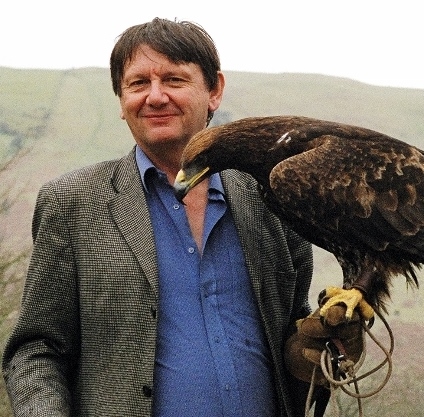
    Carl Jones w-eagle (640x492)

    Conservation pioneer, leader and hero, Professor Carl Jones will stop at nothing to save species on the brink of extinction. Jones’ four decades of legendary work have directly revitalized multiple endangered animal populations and habitats, perhaps most famously, the Mauritius kestrel. With only four birds left on Earth, Jones’ innovative techniques not only changed the fate of those individuals, but ensured a thriving population now nearing 400. His lasting legacy and inspiring victories earned him the 2016 Indianapolis Prize.

    In this presentation, Jones offers insights on restoring a number of species, including birds, reptiles and mammals, in addition to the ecosystems of Mauritius. He will highlight his journey to save the Rodrigues fruit bat, pink pigeon, echo parakeet and more from disappearing forever.  Discover his innovative approach to rebuilding Mauritian habitat using ecological replacements for extinct animals, and what it means for the future.

    Jones’ vision, action and determination prove that saving a threatened species is possible.


  • J. James Woods Lecture – Nina Jablonski September 22

    Nina Jablonski

    Why Skin Color Matters

    Butler University, Atherton Union

    Reilly Room

    Thursday, September 22, 2016 – 7:30 p.m.

    Jablonski

    Nina Jablonski traces the evolution of human skin color in response to the environment and explores what skin color means in modern life, health, and society.  A professor of Anthropology at Pennsylvania State University, Jablonski has received a Guggenheim Fellowship and other major honors for her scholarship and social action against racism.

    All Woods Lectures are free & open to the public – no tickets required.


    For accessibility information or to request disability-related accommodations, please visit

    http://www.butler.edu/event-accommodations/.


    Like us on Facebook!

    Check us out on Facebook