Winter Car Survival Kit


Everyone should carry a Winter Survival Kit in their car. In an emergency, it could save your life and the lives of your passengers. Here is what you need:

  • a shovel
  • windshield scraper and small broom
  • flashlight with extra batteries
  • battery powered radio
  • water
  • snack food including energy bars
  • raisins and mini candy bars
  • matches and small candles
  • extra hats, socks and mittens
  • First aid kit with pocket knife
  • Necessary medications
  • blankets or sleeping bag
  • tow chain or rope
  • road salt, sand, or cat litter for traction
  • booster cables
  • emergency flares and reflectors
  • fluorescent distress flag and whistle to attract attention
  • Cell phone adapter to plug into lighter

Video – How To Make A Winter Car Kit

Winter Survival Kit

How To Make A Winter Car Kit – View/Download Video

Kit tips:

  • Store items in the passenger compartment in case the trunk is jammed or frozen shut.
  • Choose small packages of food that you can eat hot or cold.

911 tips:

  • If possible, call 911 on your cell phone. Provide your location, condition of everyone in the vehicle and the problem you’re experiencing.
  • Follow instructions: you may be told to stay where you are until help arrives.
  • Do not hang up until you know who you have spoken with and what will happen next.
  • If you must leave the vehicle, write down your name, address, phone number and destination. Place the piece of paper inside the front windshield for someone to see.

Survival tips:

  • Prepare your vehicle: Make sure you keep your gas tank at least half full.
  • Be easy to find: Tell someone where you are going and the route you will take.
  • If stuck: Tie a florescent flag (from your kit) on your antenna or hang it out the window. At night, keep your dome light on. Rescue crews can see a small glow at a distance. To reduce battery drain, use emergency flashers only if you hear approaching vehicles. If you’re with someone else, make sure at least one person is awake and keeping watch for help at all times.
  • Stay in your vehicle: Walking in a storm can be very dangerous. You might become lost or exhausted. Your vehicle is a good shelter.
  • Avoid Overexertion: Shoveling snow or pushing your car takes a lot of effort in storm conditions. Don’t risk a heart attack or injury. That work can also make you hot and sweaty. Wet clothing loses insulation value, making you susceptible to hypothermia.
  • Fresh Air: It’s better to be cold and awake than comfortably warm and sleepy. Snow can plug your vehicle’s exhaust system and cause deadly carbon monoxide gas to enter your car. Only run the engine for 10 minutes an hour and make sure the exhaust pipe is free of snow. Keeping a window open a crack while running the engine is also a good idea.
  • Don’t expect to be comfortable: You want to survive until you’re found.
http://readywisconsin.wi.gov/winter/HowToMakeAKit.asp

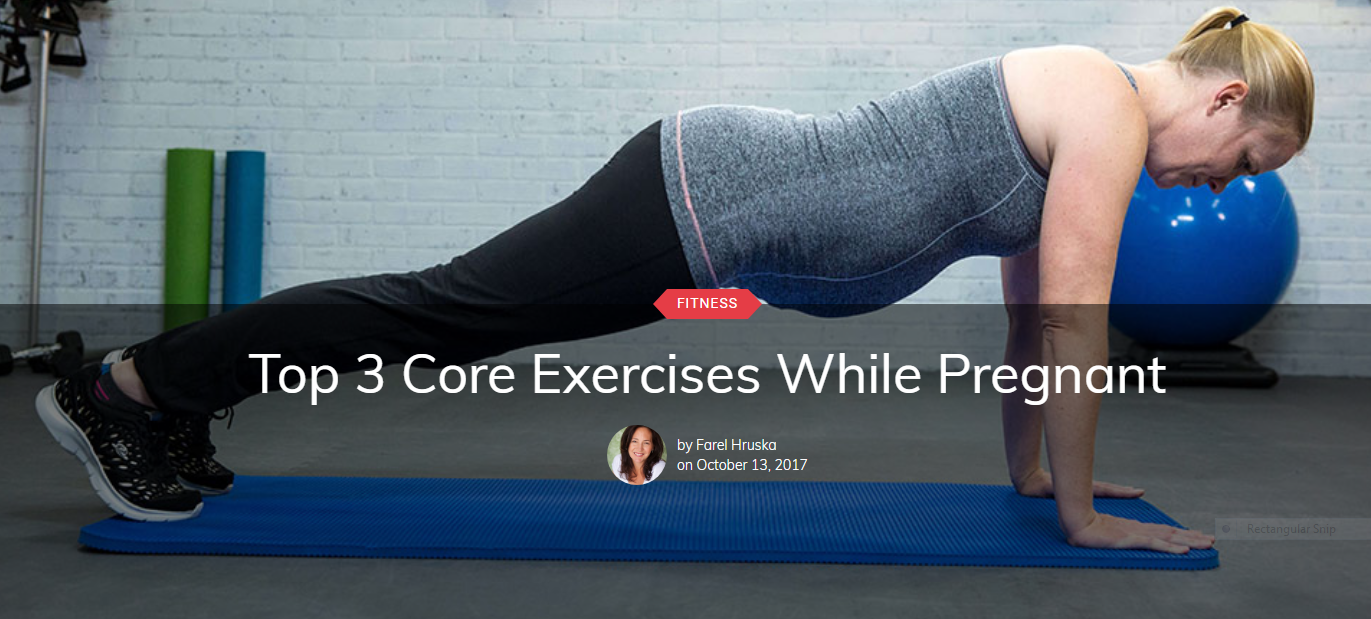
Core Strengthening Through Pregnancy

While research indicates that prenatal exercise is not only ok; but it is also recommended, myths and misconceptions about physical activity and pregnancy persist in the minds of pregnant women, personal trainers and the general public. One of the biggest points of fear in the world of prenatal fitness is core strengthening exercises. From anxiety about hurting the baby to fear of damaging a pregnant woman’s core musculature to ignoring the core altogether because of the misconception that it is ineffective during pregnancy, many women don’t train the abdominals well or with function is mind. This is a big MISS in a prenatal fitness routine.

Let’s define “core” before we continue. Our abdominal musculature goes far beyond your “six-pack.” Think of your core as a 3-dimensional cylindrical unit, with muscles that run in several directions. These muscles include: the transverse abdominus, obliques, rectus abdominus and erector spinae, with the diaphragm at the top and the pelvic floor at the bottom of the cylinder. This 3-dimensional unit acts as the support for the spine.

With the forward shifting of weight as a baby grows, the strength of a pregnant woman’s core musculature is critical to maintaining a neutral spine, and ultimately, helping to decrease muscle fatigue and pain. Without good trunk strength, the weight of the growing baby can pull the pelvis forward, causing a sway back (lordosis). This prolonged position can lead to a very uncomfortable malalignment in the spine. Increasing core strength during pregnancy will aid in getting the pelvis back into a neutral position. According to the American Congress of Obstetricians and Gynecologists, “…more than 60% of all pregnant women experience low back pain. Strengthening of abdominal and back muscles could minimize this risk”.

For specific workout details see:  https://www.acefitness.org/education-and-resources/lifestyle/blog/6603/top-3-core-exercises-while-pregnant

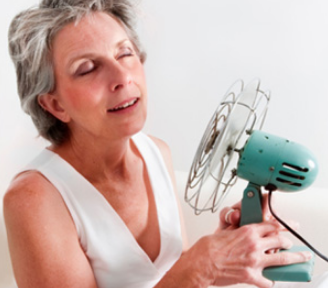
Healthy Horizons Lunch ‘N Learn: Feeling Hot, Hot, Hot?

An estimated 6,000 American women reach menopause every day.  Symptoms experienced prior to and after menopause have been shown to negatively impact a woman’s quality of life and productivity at work.  During this presentation, common symptoms and strategies to treat them will be discussed.

Bring your lunch and join us Wednesday, November 8 from noon–1:00 PM in Pharmacy Building, Room 205. Veronica Vernon, PharmD, will present. RSVP to healthyhorizons@butler.edu by Friday, November 3.


Lighten It Up – Fall Jokes

  • How do you mend a broken pumpkin? — With a pumpkin patch!
  • What do you get when you drop a pumpkin? — Squash.
  • If money really did grow on trees, what would be everyone’s favorite season? — Fall.
  • Why do birds fly south in the Fall? — Because it’s too far to walk.
  • Why did Humpty Dumpty have a great fall? — To make up for his miserable summer.
  • What has ears but can’t hear a thing? — A cornfield.
  • What did one leaf say to another? — I’m falling for you.
  • What is a tree’s least favorite month? — Sep-Timber!
  • What did the little tree say to the big tree? — Leaf me alone.
  • What runs around a farm but doesn’t move? — A fence.
  • Why do trees hate tests? — Because they get stumped by the questions.
  • Why did the scarecrow win a medal? — He was outstanding in his field.
  • Why shouldn’t you tell a secret in a cornfield? — Because the corn has ears.
  • How do trees get onto the internet? — Easy, they just LOG on.

Spirit & Place Festival: The Power of Food

The Power of Food: Seven Short Stories

When and Where:
Sunday, November 5, 2017 2:30 PM – 5:00 PM
at Shortridge High School
The Historic Caleb Mills Auditorium, 3401 N. Meridian St., Indianapolis, IN

Special Venue Instructions: Free parking on 34th and Pennsylvania Streets in front of the auditorium entrance. ADA accessible entrance and additional parking lot on the north side of the school. Use Door #11.

Power of Food

Presenter(s):
Brandon Crosby

Cost:
Free

Event Description:

Food is our power, our fuel, our tradition, our community. Listen to seven personal stories about the power of food from seven ordinary people you’ve never heard from before, but should. 

Whether a celebratory feast or a simple family dinner, food has the ability to bring people together and create a sense of community. This event will explore food’s power by highlighting a Learning Garden with school-led tours. Participants are also invited to hear everyday Indy residents share their food stories in a competitive format where the audience will vote on the most powerful story. Followed by a reception to mingle with storytellers and various organizations focused on healthy eating and increasing food access in the city.

Garden tours from 2:30—3pm, storytelling from 3—4pm, and reception from 4—5pm.

Walk-ins welcome, but RSVPs encouraged by Nov. 4.

Presented by The Kitchen Community, Shortridge High School, Growing Places Indy, Flanner House, and Green Bean Delivery.

IndyGo: 18, 19, 28, 38, & 39


What If You Hate To Exercise

Senior tennis

If you dread working out, you’re not alone. But you don’t have to exercise until you’re soaked in sweat or every muscle aches to make a big difference to your health. Think about activities that you enjoy and how you can incorporate them into an exercise routine:

  • Listen to music or an audiobook while lifting weights.
  • Window shopping while walking laps at the mall.
  • Get competitive while playing tennis.
  • Take photographs on a nature hike.
  • Meet new people at a yoga class or fitness center.
  • Watch a favorite movie or TV show while on the treadmill.
  • Instead of chatting with a friend over coffee, chat while walking, stretching, or strength training.
  • Walk the golf course instead of using a cart.
  • Walk or play fetch with a dog. If you don’t own a dog, offer to take a neighbor’s dog for a walk or volunteer at a pet shelter or rescue group.
  • Go for a run, walk, or cycle when you’re feeling stressed—see how much better you feel afterwards.
  • Find an exercise buddy, someone whose company you really enjoy, and try activities you’ve never tried before—you may find something you love. At worst, you’ve spent time with a good friend.

https://www.helpguide.org/articles/healthy-living/exercise-and-fitness-as-you-age.htm

Put Safety First When Cleaning Outside During the Fall

Between putting away outdoor furniture, raking, and cleaning out gutters, outdoor clean-up in the fall can be risky if you’re not careful.

With more than 500,000 ladder-related injuries and more than 42,000 medically-treated raking-related injuries each year, it’s important to focus on safety when cleaning up outside to prepare for winter, according to the US Consumer Product Safety CommissionOff Site Icon (CPSC).

The American Academy of Orthopaedic SurgeonsOff Site Icon (AAOS) recommends following these ladder safety tips to prevent injuries:

  • Avoid ladders in bad weather – Using a ladder in the rain, snow, ice, or wind makes it more dangerous.
  • Be careful when climbing – Asking someone to hold the ladder is better than falling off of it. Always stay centered on the ladder and use hand rails when possible.
  • Choose the right ladder – Some jobs need a step stool instead of a ladder. Other jobs need an extension ladder, especially for high places, such as gutters and rooftops.
  • Follow the one-to-four ladder rule – Make sure the bottom of the ladder is one foot away from the wall for every four feet tall that the ladder is.
  • Inspect your ladder – Check the ladder for loose screws, hinges, or rungs, and clean any liquids off that could make it slippery.
  • Re-position the ladder, as needed – Do not over-reach or lean too far to grab something while on the ladder.
  • Set-up the ladder correctly – Place your ladder on a firm, level surface. Be cautious of soft ground, muddy spots, or uneven flooring.

The AAOS also recommends additional safety measures for safe fall cleanup:

  • Use a comfortable rake – Pick a rake that feels like the right height and weight so you’re not uncomfortable.
  • Wear the right shoes – Avoid slippery, leather-soled shoes and make sure your laces are tied.
  • Care for equipment – Have leaf blowers and any other equipment serviced before the first time you use it each season.
  • Move items carefully – Be careful when moving boxes or other things on shelves because it can be easy to lose your balance.

Even if a chore seems simple, it can cause an injury if you’re not prepared. Take your time and be ready before jumping into your fall chore list.

https://www.premierphysiciannet.com/Health-and-Wellness/Newsletter/Moving-Ahead/Articles/Put-Safety-First-When-Cleaning-Outside-During-the-Fall/

Sneaking More Vegetables In

sneaking more vegetables into meals

We all know we need to be eating more veggies. Some of us love them and eat them at every meal. And then there are those of us who can’t stomach the thought of chomping on something green that looks like a tree. And no, we’re not talking about four-year-olds — we mean adults, too!