
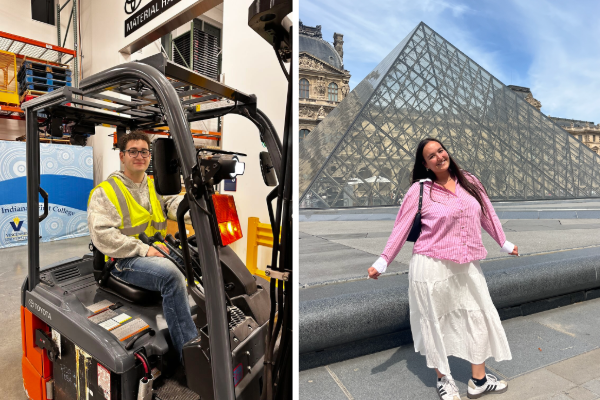
On a Friday night, while his friends were making plans to go out, Miguel Fernandez was sitting on Zoom.
On the other side of the screen were teammates in Thailand, China and South Carolina. Together, they were tackling a challenge many professionals encounter only after entering the workforce: developing an international expansion strategy for a real company.
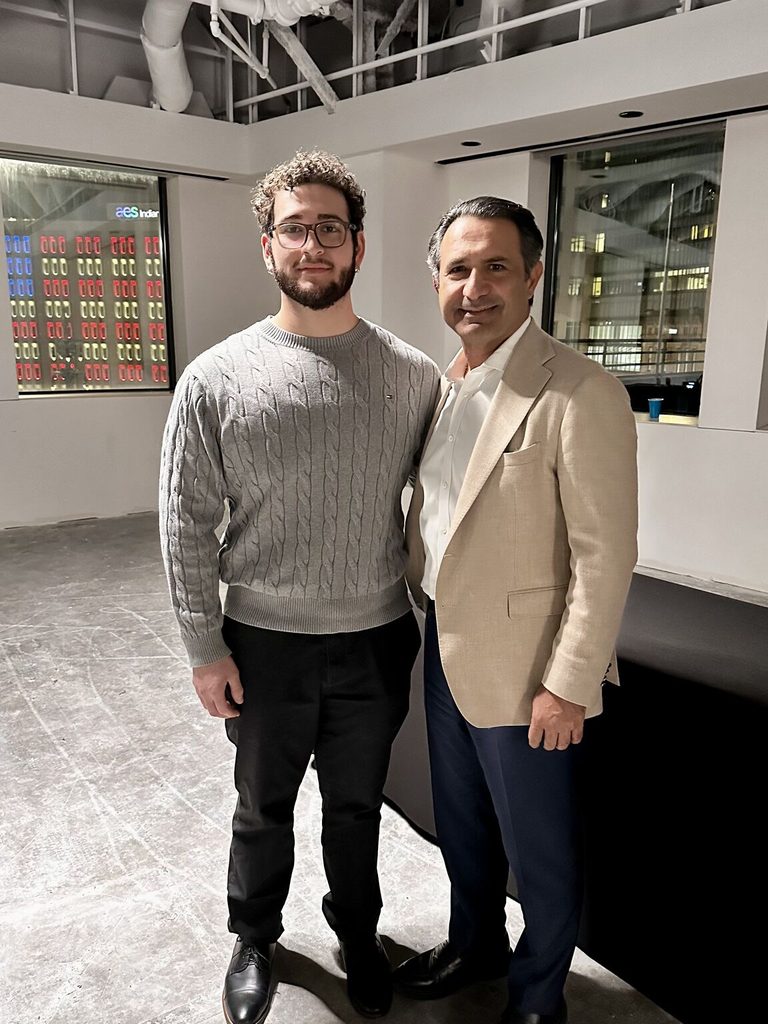
For Miguel, a senior at the Lacy School of Business, it was a glimpse into the realities of global business long before graduation.
This wasn’t a typical group project. It was X-Culture, a global business consulting challenge embedded in Dr. Juan Manuel Gil‘s International Business Environment course.
Students are placed on international teams with peers from universities around the world and tasked with developing market-entry and growth strategies for real companies facing real business challenges.
This year, 6,165 students from 162 universities in 53 countries participated, forming more than 1,000 virtual teams. Two Lacy School of Business students earned recognition among the program’s Top 10 teams for their respective client companies, placing them among the competition’s highest-performing participants worldwide.
For Miguel, the challenge centered on EnglishHelper, an AI-powered English literacy platform seeking opportunities for international growth.
Excitement about working with students from around the world quickly gave way to the realities of global collaboration.
Messages sometimes sat unanswered for hours. Meetings landed on Friday nights. Communication styles varied widely.
“Some of my teammates told me what they thought straight up without sugar coating,” Miguel says. “It showed me that what’s considered ‘normal’ communication can be very different depending on where you’re from.”
Learning to navigate those differences became as valuable as the project itself.
Working with teammates across multiple countries, Miguel helped develop a three-phase expansion strategy for Costa Rica that included partnerships with the National Institute of Learning, the Ministry of Public Education and, eventually, private schools and workforce training providers.
The experience also pushed him beyond his typical coursework. As a Finance and Economics major, Miguel found himself contributing to marketing and creative materials for the team’s proposal.
“I don’t get to do a lot of creative things,” he says. “That’s why I found it interesting.”
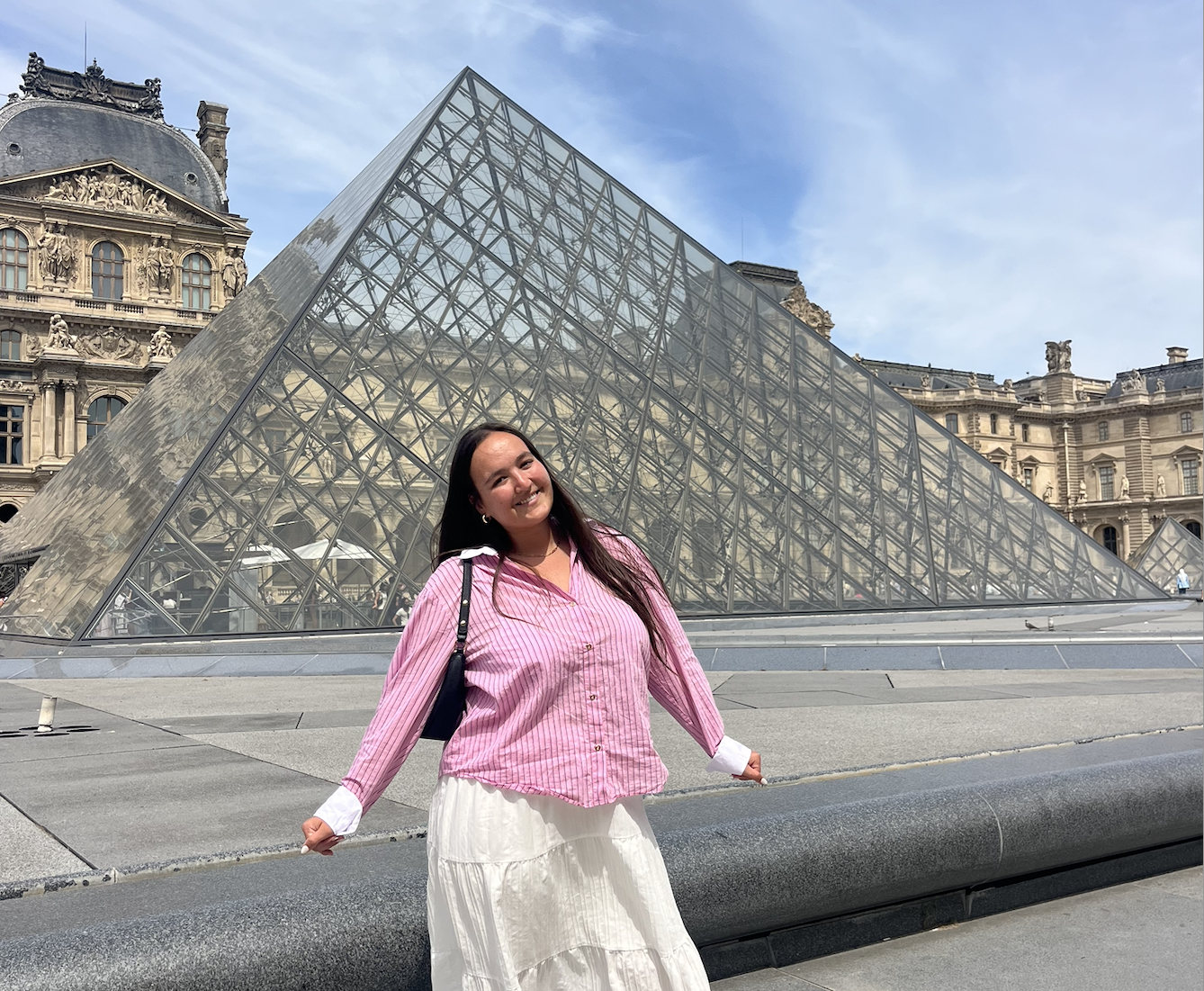
For Caroline Forster, the challenge looked different but required many of the same skills.
Her team worked with Nature’s Nectar, a Zambian social enterprise that produces certified organic honey and beeswax while partnering with more than 2,500 smallholder farmers. Their task was to identify opportunities for international expansion while preserving the company’s environmental mission and unique hive-to-jar traceability system.
Before the project began, Caroline expected the time-zone challenges. What she didn’t anticipate was how quickly concepts from class would become reality.
“My teammates from Thailand and other Asian countries were very on top of it,” the senior International Business major says. “The students from the U.S. were much more laid back.”
Different expectations around communication, leadership and decision-making required constant adjustment. As the team researched target markets, competitors, logistics and pricing strategies, they were also learning how to collaborate effectively across cultures.
Their final proposal ultimately earned Top 10 recognition among submissions for their client company.
“I kept thinking, ‘Wait, this is crazy. This is real,’” Caroline says.
That moment of realization is exactly what Dr. Gil hopes students experience.
“In business, when we think about the future and strategy, we have to base it on two things: data and evidence, and also intuition and ideas about what trends might emerge,” Dr. Gil says. “The best strategies are grounded in evidence but flexible enough to anticipate what’s next.”
More importantly, he wants students to experience what happens when the neat frameworks of a textbook meet the complexities of real people, real companies and real business challenges.
“You get frustrated, and you plan things and it doesn’t work,” Dr. Gil says. “This gives them the best international, global and real experience and what they will face.”
For the Assistant Professor of International Business, that is precisely the point.
Today’s graduates are increasingly expected to work across cultures, time zones and communication styles, and sometimes in virtual environments. X-Culture gives students the opportunity to practice those skills while still in the classroom, turning international business from a subject they study into an experience they live.
For Caroline, the project fundamentally changed how she viewed the course.
“You can take an international business course and still not have an international experience,” she says. “This was different because we were taking what we learned in class and applying it in the real world, working directly with people from other countries.”
Dr. Gil’s work with X-Culture was also recognized with the program’s Best Professor Award, an honor he sees as a reflection of what his students accomplished.
The impact of the experience extends beyond a single semester.
Earlier this year, Butler exchange student Gregor von Rohr advanced from X-Culture coursework to the program’s 2026 Global Business Week Conference in Trieste, Italy. Working directly with Barilla Group on an international consulting challenge, his team ultimately won the competition.
Together, those outcomes demonstrate what’s possible when classroom learning intersects with global business practice.
For Miguel, the experience reinforced how interconnected today’s world has become and how important it will be to understand different perspectives throughout his career.
“I’m always looking to learn and make people comfortable,” he says. “I feel like this is very beneficial to be able to connect with different clients depending on where they come from.”
And he believes the lessons extend far beyond international business.
“Even if you’re not looking into international business,” he says, “I feel like the world is so interconnected.”
That’s exactly what students discover through experiences like X-Culture.
At the Lacy School of Business, global business isn’t something students wait to experience after graduation. Through real companies, international teams and hands-on consulting projects, they begin doing it now.
Sometimes that means developing a market-entry strategy for a company on another continent.
Sometimes it leads to international competitions and global conferences.
And sometimes it starts with a Friday night Zoom call that reminds you the world is much closer than you think.