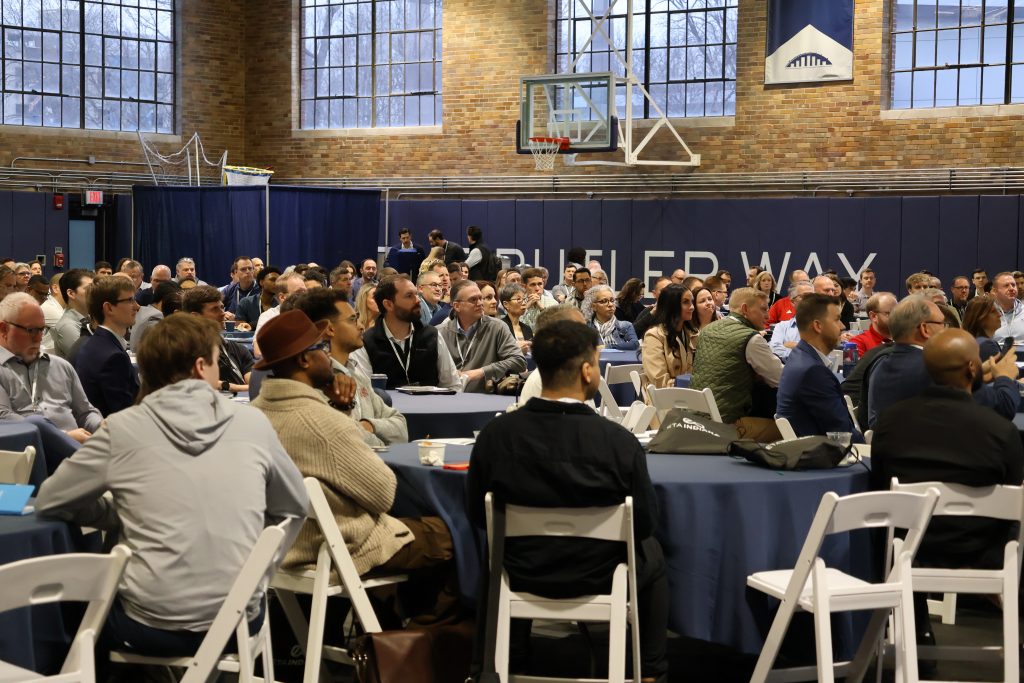
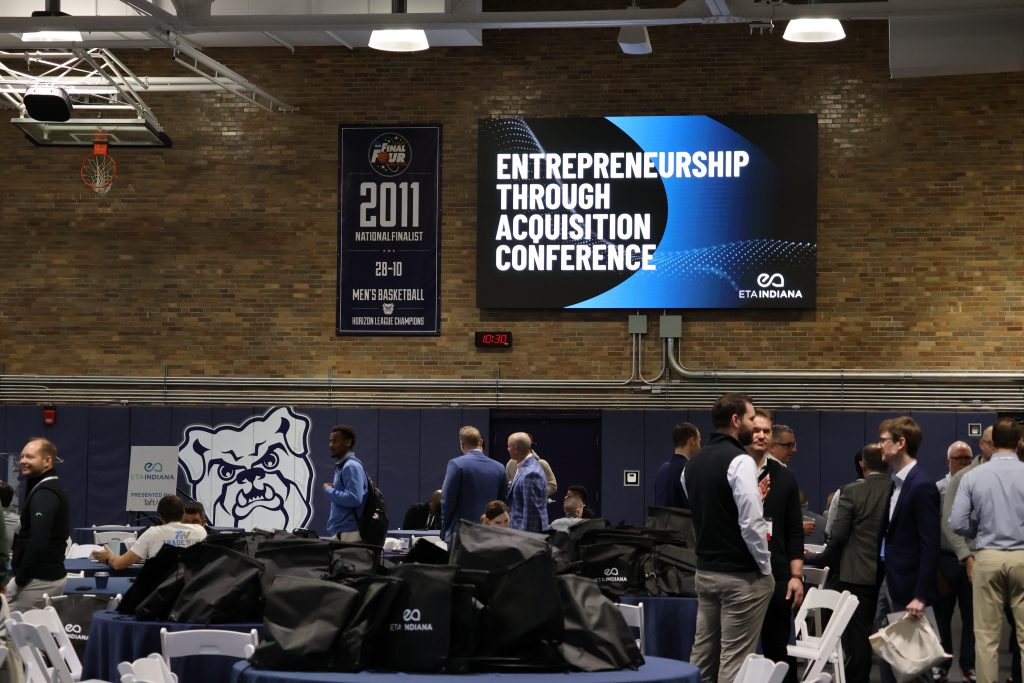
On Tuesday, March 10, the Lacy School of Business hosted the inaugural Indiana Entrepreneurship Through Acquisition (ETA) Indy Conference, drawing over 350 entrepreneurs, operators, investors, advisors, lenders, and community partners from across Indiana and the broader Midwest.
With 40 speakers and two tracks of programming running from morning through evening, the event marked a milestone for a region full of legacy businesses, founders nearing retirement, and a rising generation eager to step into ownership.
From the moment attendees arrived, the energy made one thing clear: Indiana is ready to invest in the future of these businesses.
Before the first session even began, conversations flowed easily – first time searchers exploring their next step, small business owners thinking about transition, and operators reflecting on what it really takes to run a company after close.
The opening keynote by Chelsea Wood of the Acquisition Lab tapped into that shared sense of purpose, emphasizing ETA’s role in preserving the small businesses that anchor communities – businesses that sustain jobs, support families, and form the backbone of local economies. Across Indiana alone, thousands of owners are approaching retirement without succession plans. ETA, as the keynote highlighted, isn’t just about buying companies; it’s about stewarding something worth preserving.
“In Indiana alone, tens of thousands of baby-boomer–owned businesses will change hands in the next decade – many of them in just the next five years. What’s alarming isn’t the volume, but the lack of preparation. Fewer than half of owners have a written succession plan, and nearly half of transitions happen unexpectedly due to health, family, economic stress, or sudden life events,” Nick Smarrelli, director of entrepreneurship, said. “If we don’t build a stronger ETA community now – one that learns together, shares best practices, and connects capital, operators, and students – we risk losing businesses, jobs, and the local legacies that define our communities. The Lacy School of Business has both the responsibility and the platform to help unify this work across the state – not for Butler’s benefit alone, but in the best interest of Indiana’s people, employers, and future.”
Throughout the day, panels, interviews, and hands-on presentations gave attendees a grounded look at the realities of the acquisition journey. Sessions explored how to build a thoughtful buy box, how governments and communities are supporting local ownership transitions, and how buyers can evaluate businesses beyond surface-level financials. Technical discussions on valuation and diligence helped attendees understand the difference between reported numbers and true cash flow, while other panels broke down what it takes to move a deal from handshake to a bankable, legally sound close.
Financing emerged as a defining theme – SBA lenders, debt partners, and advisors offered candid insight into assembling a capital stack for a first acquisition and what makes a searcher stand out as credible. Operators also spoke openly about the emotional realities of ETA, from the uncertainty of the search process to the responsibility of leading a team on day one. Many attendees noted how refreshing it was to hear honest accounts of the first 100 days, culture-building, and the long-term professionalization that comes after closing.
Between sessions, campus buzzed with conversations about deals being evaluated, industries of interest, and opportunities for collaboration. Students asked operators what life looks like after buying a business; advisors shared guidance; lenders made introductions; and owners told the stories behind the companies they built. Those moments – spontaneous, unplanned, and full of possibility – became the heartbeat of the day.
As the final reception wound down and attendees left with full notebooks and new connections, one thing was unmistakable: the conversations begun at ETA Indy will continue – through searches launched, deals explored, and businesses passed thoughtfully to the next generation of leaders. The inaugural conference laid the foundation for a growing community rooted in stewardship, opportunity, and a shared commitment to strengthening the region’s small business ecosystem.