Some trips expand perspective. Others signal where an institution is heading.
When Indiana’s trade and energy delegation traveled to South Korea this spring to discuss investments tied to a Korea–U.S. economic framework valued at roughly $350 billion, Butler University’s Lacy School of Business was at the table. Not as observers, but as contributors to conversations shaping the future of supply chains, energy infrastructure, manufacturing, semiconductors, and global investment.
Dr. Jane Siegler joined the delegation as the only representative from Butler University and the only business school voice in a group otherwise composed of engineers, policymakers, and corporate leaders. That distinction mattered because the central question throughout the trip was not simply about energy or infrastructure. It was about how global business actually works and who has the expertise to help organizations navigate increasingly complex international supply chains and investment networks.
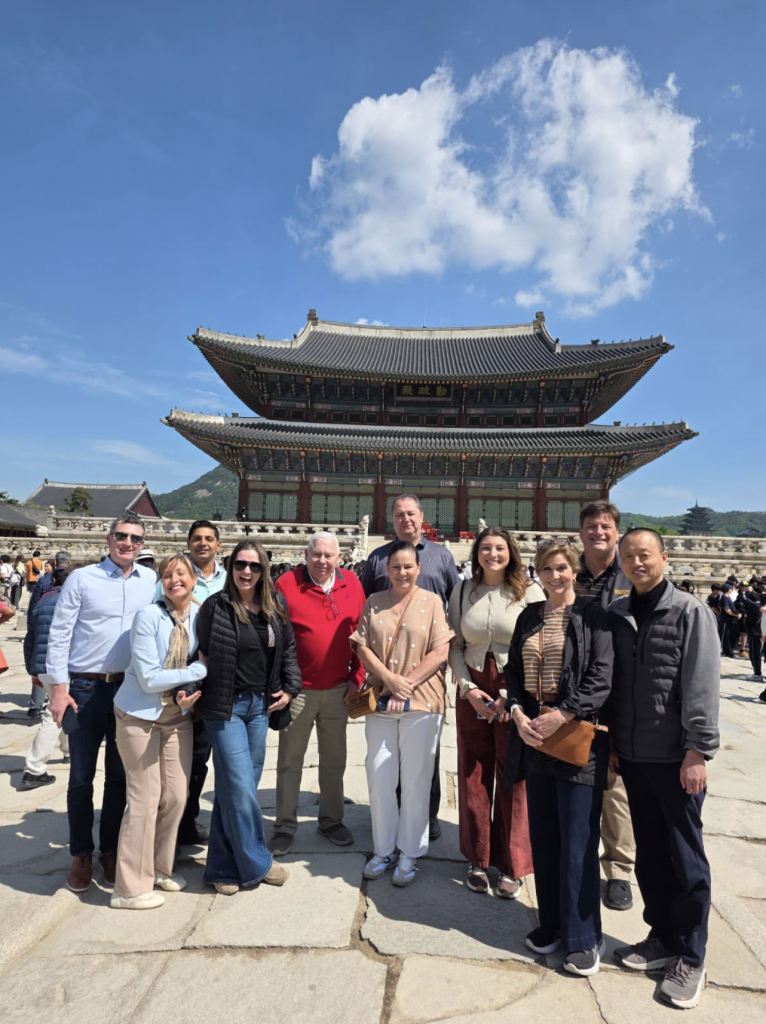
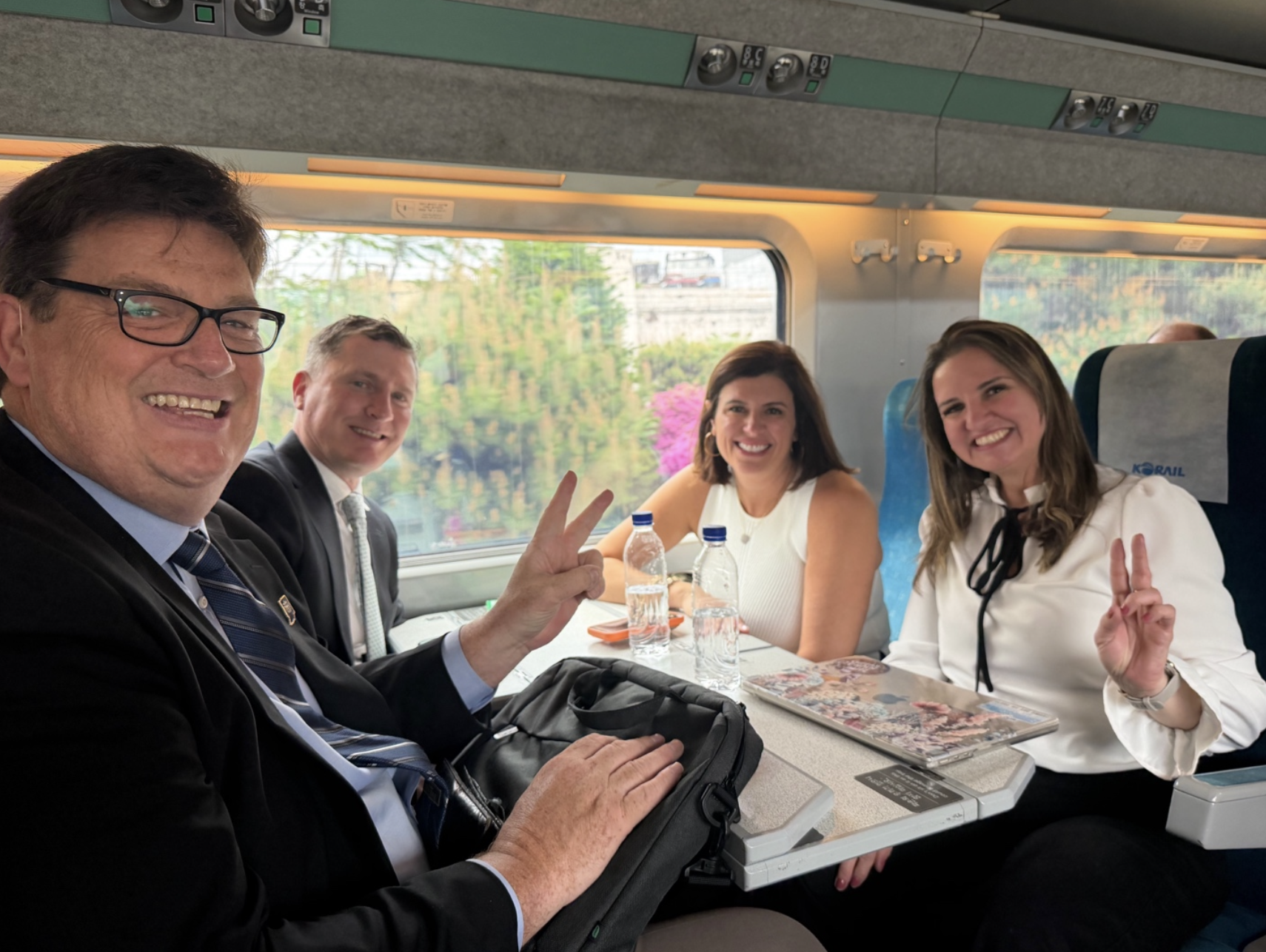
Over the course of the week, as the delegation moved between executive meetings in Seoul and industrial visits across Korea, one theme surfaced repeatedly: supply chains are no longer back-office operational concerns. They are strategic systems shaping where investment flows, how infrastructure gets built, and which regions emerge as global economic hubs.
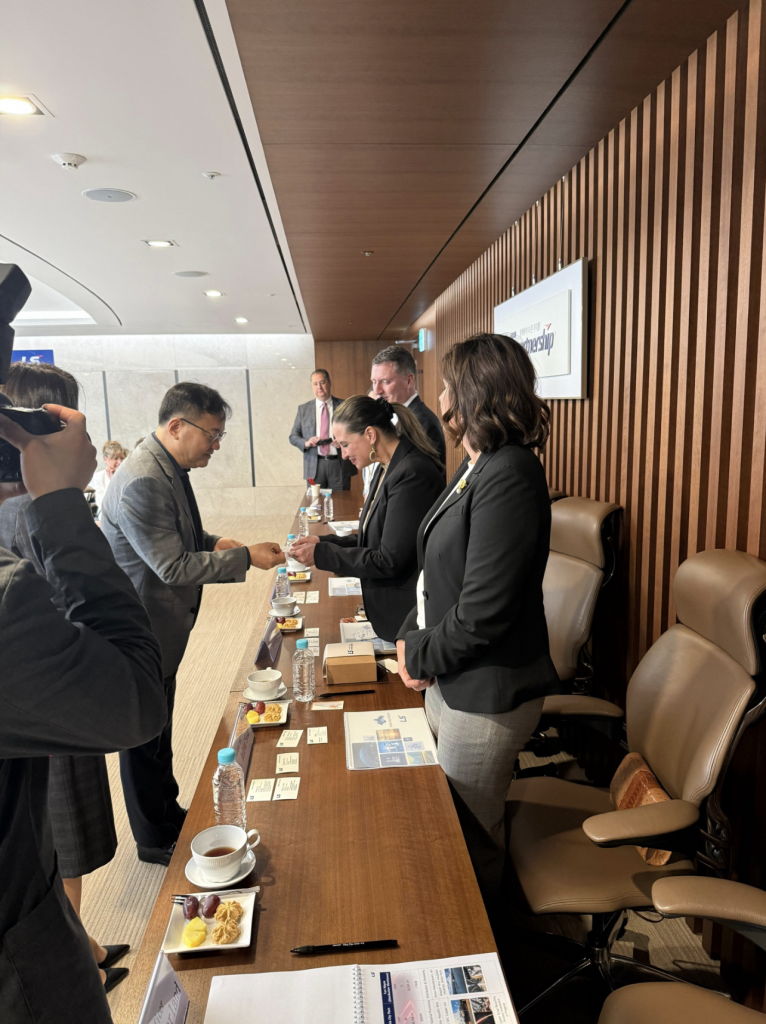
Executives consistently emphasized the importance of deeper supplier-network visibility and multi-tier supply chain coordination as critical capabilities for large-scale international investment. One of the defining moments of the trip came inside the headquarters of LS Group, one of Korea’s largest conglomerates. During a meeting with the delegation, Vice Chairman and CEO Roehyun Myung underscored the importance of multi-tier supply chain visibility in determining whether international investment efforts succeed and where it ultimately lands. It was not a scripted talking point. It was a business priority discussed at the highest levels of global industry.
For Dr. Siegler and the Lacy School of Business, the moment reinforced something important: these are the same concepts already embedded in Butler’s growing focus on supply chain analytics and experiential business education. The challenges being discussed in Seoul boardrooms are the same kinds of challenges that LSB students are learning to analyze in the classroom.
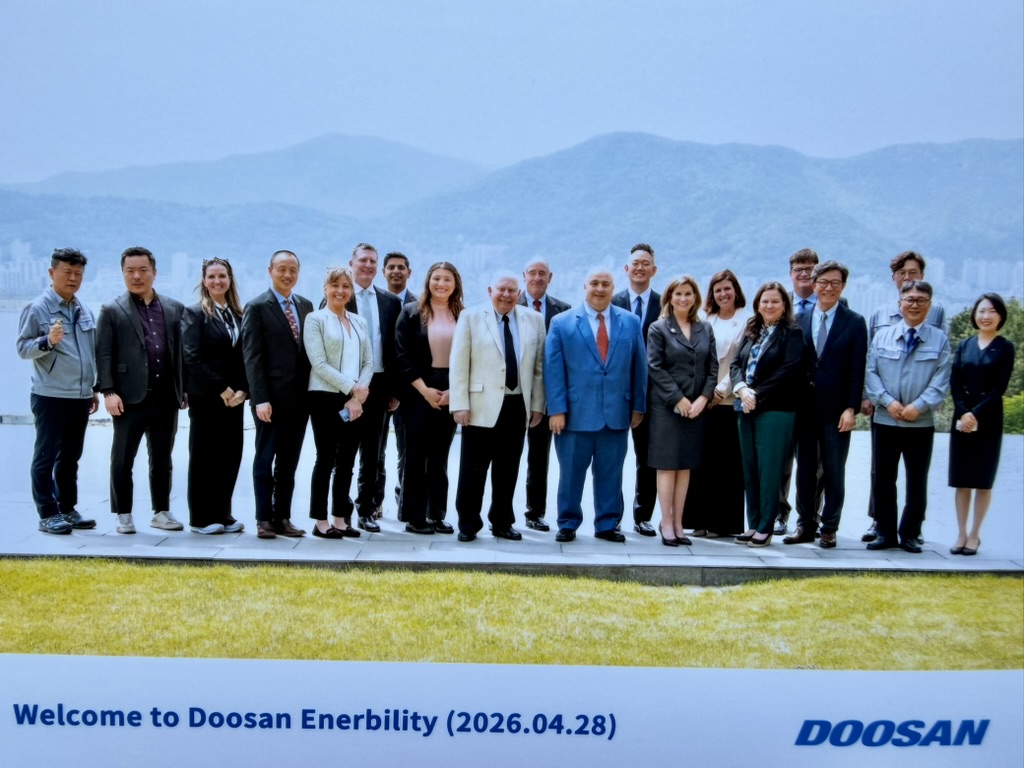
At Doosan Enerbility’s manufacturing complex in Changwon, the delegation stepped into one of the world’s most advanced vertically integrated industrial operations, producing everything from raw materials to large-scale energy infrastructure. Walking the factory floor offered a firsthand view into the complexity of modern manufacturing, global logistics, and industrial coordination, including hydrogen reactors already in production for next-generation AI infrastructure projects. For Dr. Siegler, the experience was not simply observational. It immediately became applied material that will translate into classroom discussions, case studies, and experiential learning opportunities grounded in real companies, real operational systems, and real timelines.
What made the trip especially significant is that the conversations did not end in the meeting rooms. Discussions throughout the delegation are already evolving into active projects and partnerships involving supply chain mapping, executive engagement, and Korea–Indiana collaboration initiatives connected to manufacturing and investment strategy.
Early in the week, a conversation with Doris Anne Sadler, president of the World Trade Center Indianapolis, began shifting Lacy’s role from participant to contributor. The discussion centered on a proposed “Doing Business in Indiana – Seoul Symposium,” designed to connect Korean suppliers with major companies operating in Indiana across sectors such as semiconductors, energy, automotive manufacturing, and advanced infrastructure.
Behind that initiative is a highly complex challenge: identifying the right suppliers across multiple layers of global supply networks and aligning them with the operational needs of Indiana-based firms. That work depends on sophisticated supply chain mapping and analytics, precisely the kind of expertise increasingly associated with the Lacy School of Business.
By the end of the trip, those early discussions had evolved into a working plan positioning Lacy alongside the World Trade Center Indianapolis and key Korean partners in supporting the technical supply chain mapping work behind the initiative.
For the school, this represents something larger than a single project. It reflects a growing role for the Lacy School of Business at the intersection of business, policy, analytics, and global economic development. It also demonstrates the increasing relevance of applied business education in solving real-world problems that governments, manufacturers, and international partners are actively working to address today.
The impact of these experiences extends directly back into the classroom. Students benefit through updated case materials, stronger industry connections, exposure to active global business challenges, and future opportunities for experiential learning tied to real-world projects and partnerships.
The trip created meaningful relationships with Korean industry leaders, global energy and infrastructure firms, international trade organizations, government agencies, and Indiana-based companies and institutions. Those connections are already opening new opportunities for collaboration, executive engagement, experiential learning, sponsored projects, and future international initiatives that can benefit both Lacy students and the broader Indiana business community.
Most importantly, the trip reinforced a larger reality: the future of business education belongs to institutions capable of connecting classrooms to the real systems shaping the global economy. Increasingly, the Lacy School of Business is not simply studying those systems. It is actively engaging in them.