Oct
31
2012
Miss Bowers
This week in our math journals, we have been working to take a big jump of 10 from a single digit number using a hundreds chart. On Monday, I presented students with a journal problem and gave them little instruction. They utilized strategies that we have practiced before, like drawing pictures and using bead strings, but nobody utilized the hundreds charts that were laying out. While students were able to come to the correct answer, their strategies were not efficient.
On Tuesday, we explored the chart together looking at patterns that we noticed. One student brought up the tens place being the same if you look down the column, so we investigated further and realized this happens because each number in a column is ten apart! This knowledge allowed students to solve their journal problem much fast because they took a big jump of ten using the chart.
Tomorrow, we will begin to explore the number line as another math tool to use when solving problems.
Oct
31
2012
Miss Estridge
Yesterday, we took some to connect our current project with this week’s readers workshop study on perspective.
At the end of the day, after packing up, we all met together on the big rug to read a book about a shark’s food chain. We have read a couple books about food chain’s in general, but this was our first time looking specifically at the food chain of a shark. The book was excellent because it started with plankton, all the way at the very bottom of the food chain and then moved up, all the way to the top with the great white shark! We talked about plankton, mussels, lobsters, octopi, sea lion, and then sharks.
In the book, it stated that the great white shark doesn’t have any real predators that try to eat it. However, one of our students shared that, in some countries, people cut off the fins of sharks. After hearing this, we took some time to consider what a person’s perspective usually is when thinking of sharks. Then we took some time to consider what a shark’s perspective might be of humans, now knowing that some humans are predators of sharks. It was interesting to see the kids take some time to think about the fact that, these huge “dangerous” animals who are often times viewed as scary by humans, might actually be afraid of us.
One of our students has suggested that we build a large food chain of a shark to show other people in our school what a shark eats. My goal is that this study of a sharks food chain will lead to a greater understanding of how one animal impacts other animals and its ecosystem. Eventually, my dream would be for that understanding to transfer over to how each individual in OUR ecosystem (our school/classroom) impacts others!
Oct
31
2012
Mrs. Argus
-
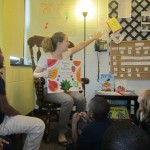
-
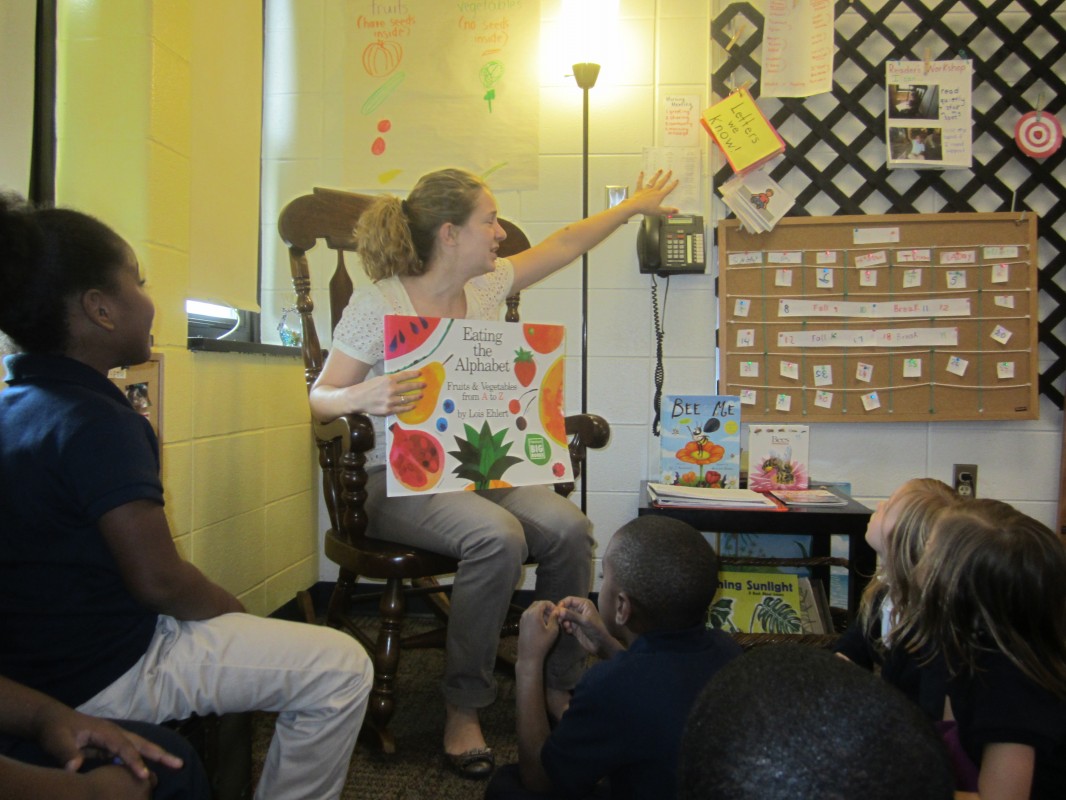
Miss Bickel, our Butler friend, reads a book about plants from the garden.
-
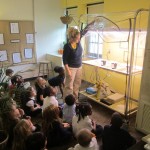
-
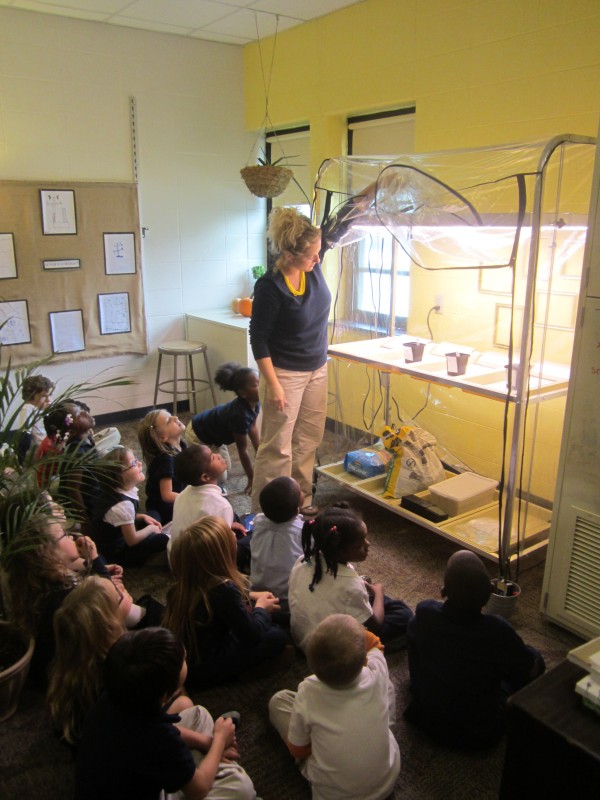
We take a look at the grow lab.
-
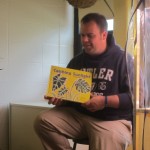
-
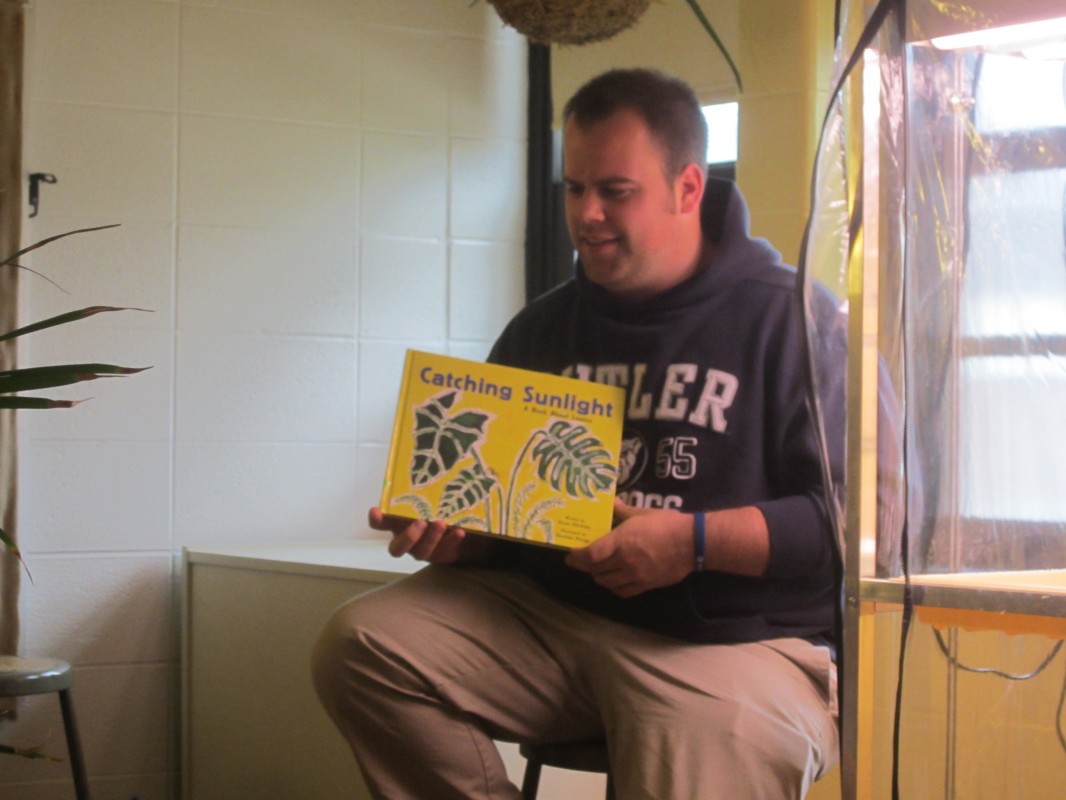
Mr. Henderson reads about Photosynthesis.
-
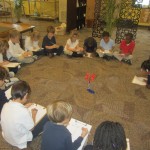
-
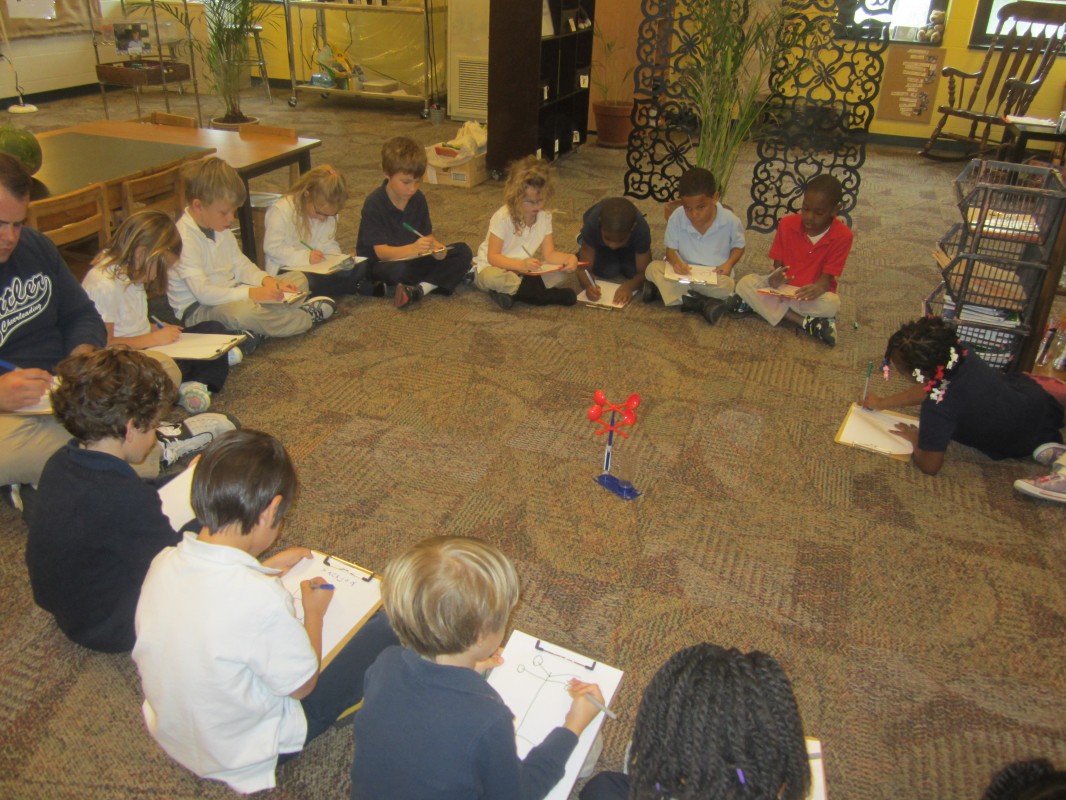
Friends do an observational drawing of the anemoneter.
-
-
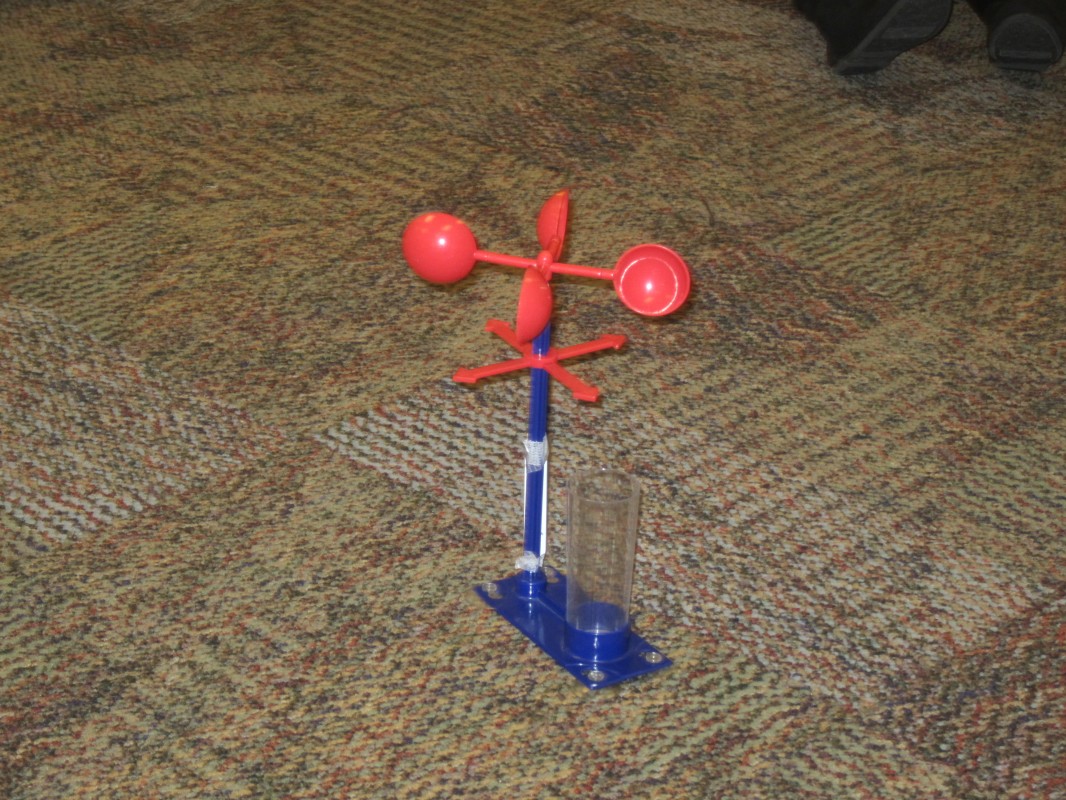
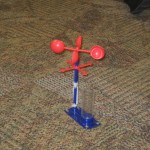
The anemometer.
-
-
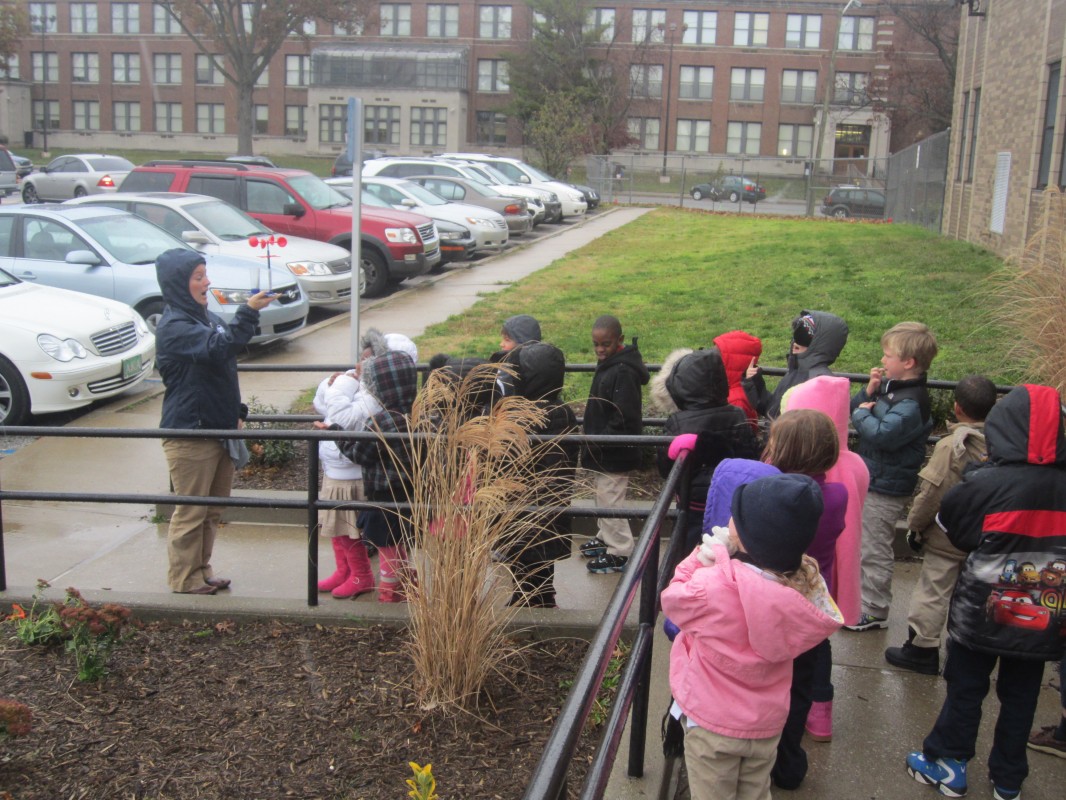
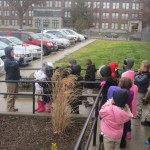
We try out the anemometer in the wind and rain!
Last week, we came up with many questions about plants and how they grow. This week, we decided to investigate two of those questions with an experiment.
Question #1- Can plants grow in sand?
Question #2- Can plants grow without soil?
In our new grow lab, we have three pots with lima beans inside them. We talked about how our first pot is our control group, the regular lima bean in classic potting soil. The second has a seed in sand. The third has a lima bean in a paper towel. We will monitor the growth each day to see what grows, and which grows the strongest/tallest/fastest. We also read a book with Mr. Henderson about the importance of light on plants and Photosynthesis. We learned that leaves are like little kitchens that make food for the plant. Photosynthesis (the cooking of the food) is done by using light. Our grow lab has an artificial light that will be on while we are at school. It will also turn on for a short while during the evening, to give our plants lots of adequate light.
We have also begun talking about weather and the effects it may have on our garden. We wrote a letter to Mrs. Bucher’s class on Monday asking for them to teach us a little bit about weather. Yesterday, several friends came over to our class and brought a new tool to show us- an anemometer. This tool measures wind speed, it also had a thermometer and rain gauge on it. To learn more about it and how it worked, we took it outside- wow did it move! The wind was so fast the anemometer top spun around and around. We also paid attention to how quickly the temperature dropped from inside to outside. We will continue to observe the weather and talked about its changes in November. We even created a weather graph to start tracking the weather in November!
Tags: capable, garden, project, scientific method
Oct
31
2012
Ms. Hargrove
Lately, we have been learning about Project Approach and its three phases. As a class we experienced first hand what it is like to be a part of this learning process. We started phase one simply by defining what a shape is, in our own words. We made a miniature booklet describing shapes and where we see them in our daily lives. Next we explored our own environment and studied the shapes around Butler Campus. This brought us to the transition between phase one and two, creating a web with the class. Following the creation of the web we separated into groups based on our interests. We continued our investigations through fieldwork, interviews, and experiments to further our understanding of shapes and their functions in society. Continuing on to phase three we created panels with our groups to share and celebrate amongst each other. We discovered the power a child can hold in his or her learning by being their own driving force in their exploration of inquiry. This experience was crucial to our understanding of the project approach and provided us with knowledge for our future teaching!
Written By: Leah Bry, Gabby Powell, and Ellie Pochyly
Oct
31
2012
Mrs. Clark
I know you have all heard, but next Tuesday we are going to The Children’s Museum to help with a mysterious leak! We are going to use our science skills to help solve the mystery. In preparation for this, we have been talking a lot about different science tools and terms that we will be using. So far this week, we have talked about magnifying glasses and pipets! These are both important tools that we will be using. For example, we used the magnifying glasses to observe the mysterious stain that the Children’s Museum sent us. We made predictions and connections as to what we thought it might be.
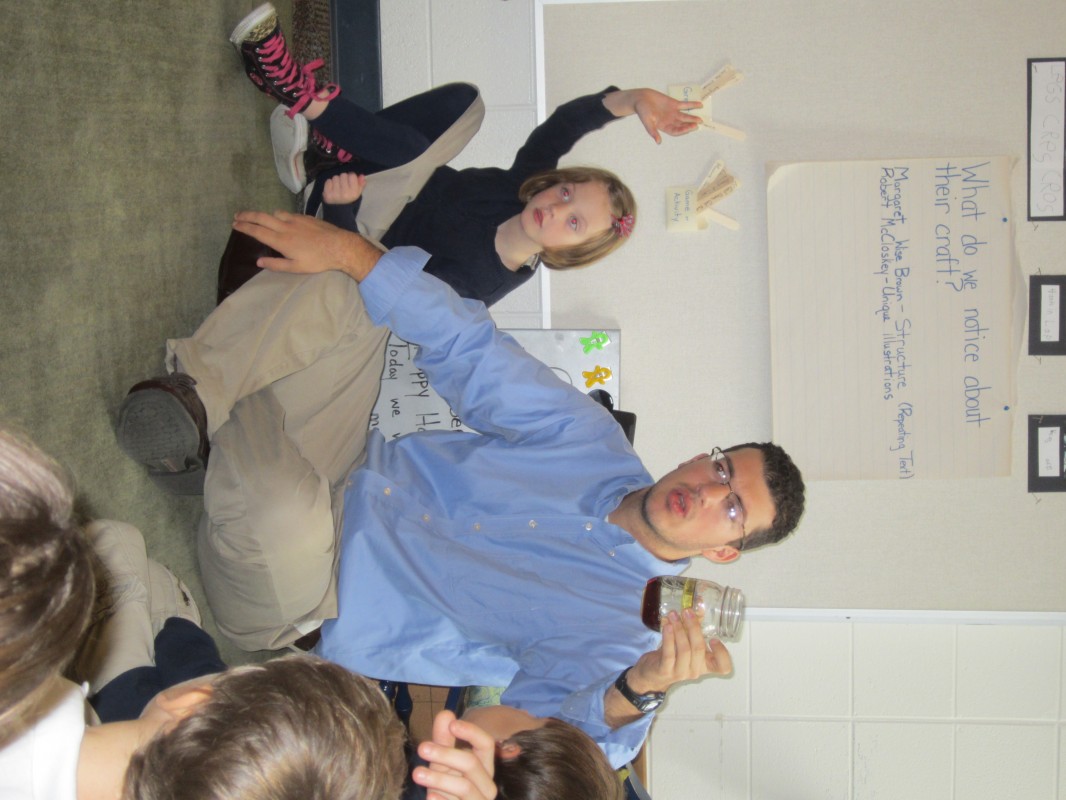
The tools are new to us, but we also added a new concept today: density. This morning, Mr. Ward set out a jar filled with maple syrup, water, and oil and asked the kids what they noticed. Oliver responded with, “The maple syrup is heavier so it sinks to the bottom. The water is lighter than the syrup so it’s on top and the oil is the lightest so it sits on top!” This began a conversation about density! This is a harder topic to truly explore, but over the next few days we will be looking at density and what it means to us as scientists.
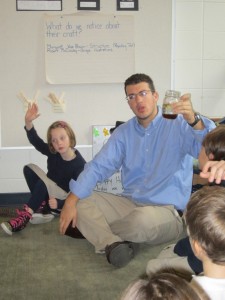
Mr. Ward is holding our jar with the maple syrup, water, and oil. Do you notice the same thing that Oliver noticed?