Faculty

Poetry Lunch Hour

All Butler students, faculty, and staff are invited to the Poetry Lunch Hour held twice a month at the Efroymson Center for Creative Writing.

The casual meeting gathers poetry readers from a wide range of backgrounds and experiences for a lunchtime discussion. The last meeting examined selected poems of Maurice Manning. Poetry majors and teachers as well as poetry novices all contributed to a lively conversation with a variety of opinions.

poetrylunch

Join Mindy for the next lunch hour tomorrow, Friday, February 20th at 12:30 at the ECCW. Selected work from Claudia Rankine’s Citizen will be discussed, but purchase of the book is not required. Lunch is provided. RSVP to Mindy at mdunn1@butler.edu.

A Celebration of Andy Levy

IMG_3338

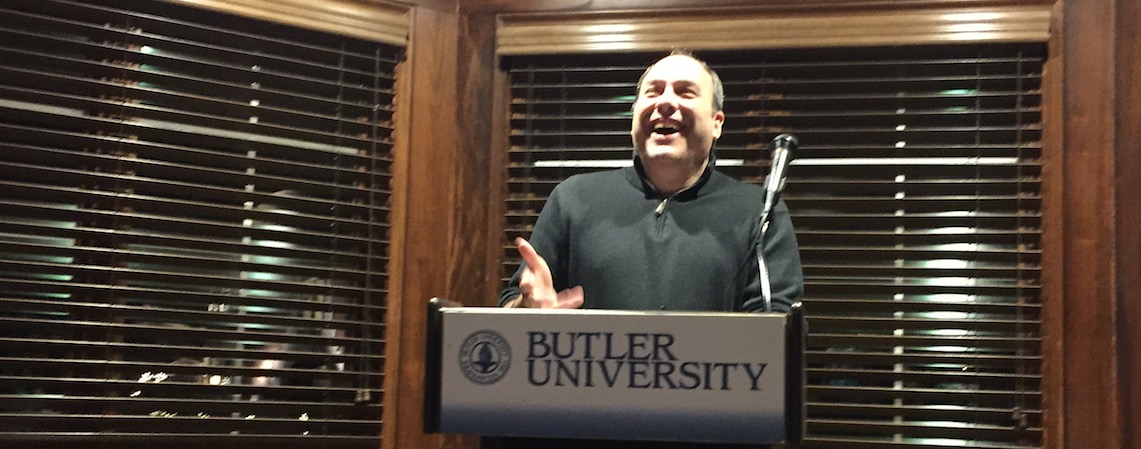
Last Thursday, the Efroymson Center for Creative Writing was filled with supporters and fans of Butler Professor Andy Levy. Levy’s most recent book, Huck Finn’s America: Mark Twain and the Era That Shaped His Masterpiece, has earned national recognition and rave reviews, but Thursday’s event was more than a celebration of the successful book.

In his introduction of Levy, colleague Dan Barden explained the evening was “a party for our friend. A celebration of Andy Levy.” Levy was lauded for his genius as a writer, success as a teacher, and value as a friend. Preceding a short but captivating reading from the book, Levy delivered a beautiful thank you to the Butler community. He began by saying, “Butler is all over this book.” The idea for the book began in his days as a Teacher-in-Resident twenty years ago. Levy said the heavily researched book was written all over the campus and frequently discussed in class and with students, many of whom are thanked or footnoted in the book. He further stated, “I will never again write a book without the involvement of my students.”

Before he left the podium, Levy asked for a round of applause for his young son, Aedan, for no other reason than for being a cool kid. The rest of the evening emulated a true celebration with food, laughter, drinks, and conversation about Levy being not just a talented writer and dedicated teacher, but also an overall cool man.

A Celebration of Andy Levy

IMG_3338

Last Thursday, the Efroymson Center for Creative Writing was filled with supporters and fans of Butler Professor Andy Levy. Levy’s most recent book, Huck Finn’s America: Mark Twain and the Era That Shaped His Masterpiece, has earned national recognition and rave reviews, but Thursday’s event was more than a celebration of the successful book.

In his introduction of Levy, colleague Dan Barden explained the evening was “a party for our friend. A celebration of Andy Levy.” Levy was lauded for his genius as a writer, success as a teacher, and value as a friend. Preceding a short but captivating reading from the book, Levy delivered a beautiful thank you to the Butler community. He began by saying, “Butler is all over this book.” The idea for the book began in his days as a Teacher-in-Resident twenty years ago. Levy said the heavily researched book was written all over the campus and frequently discussed in class and with students, many of whom are thanked or footnoted in the book. He further stated, “I will never again write a book without the involvement of my students.”

Before he left the podium, Levy asked for a round of applause for his young son, Aedan, for no other reason than for being a cool kid. The rest of the evening emulated a true celebration with food, laughter, drinks, and conversation about Levy being not just a talented writer and dedicated teacher, but also an overall cool man.

Mentor Screening

MV5BOTMwMDg4NTU0N15BMl5BanBnXkFtZTgwNjA5MzgxMzE@__V1__SX1854_SY875_

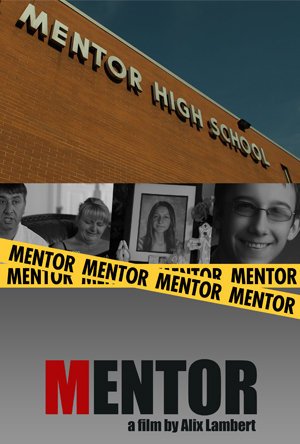
January 27th at 7:30, Butler University will screen Mentor, a powerful documentary by Butler Visiting Professor Alix Lambert. Lambert’s film takes viewers into the town and school of Mentor, a community with a “fit in or get out” mentality. Mentor, Ohio was voted one of the top 100 cities in the United States, but in the five years leading up to this honor, five students at Mentor High School died by suicide after relentless bullying. The independent documentary caught the attention of actress Ellen Page who recently tweeted, “If there is something 2 watch right now it’s ‘s film Mentor. So important and needs to be seen and shared.”


[youtube]https://www.youtube.com/watch?v=IBRnJITof44[/youtube]

Watch the trailer of the movie Filmmaker says is “both heartbreaking and soberly resolute in its inquiry into the institutional forces and ‘culture of conformity’ that fail young members of our communities.”

Although Mentor is set in one town, Lambert hopes viewers see bullying as systemic in all communities. “I’m not picking on Mentor,” Lambert says. “I chose an extreme example to show something that happens everywhere.”

Lambert chose to focus on the two families who brought law suits against the Mentor school district. Viewers will notice the film doesn’t name or center on the bullies themselves. This is because Lambert successfully presents the argument it was not just a handful of individuals that led to these suicides; it was the entire community. “Blaming a person or small group of people,” she says, “lets everyone – me, you – off the hook.” In her TED talk Lambert says, “Anytime we allow ourselves to be lured into the trap of believing a perpetrator caught equals problem solved we lose the ability to attack society’s problems at its root cause.”

[youtube]https://www.youtube.com/watch?v=9RMaD0_k7hc[/youtube]

Although she is far more comfortable behind the camera than in front, Alix presented a TED talk because she felt this idea of systemic problems was so important.

Lambert calls on everyone to be responsible to systemic bullying, but to do what you can. “I’m a filmmaker, so I make a film,” she says. “If you are a parent, go to the school and make sure there is bullying plan in place.” She believes everyone can do small things are important. “It begins with connecting with each other,” Lambert says.

The solution can begin with watching this film. It can begin a much needed conversation. Because independent documentaries aren’t usually shown in mainstream theaters nor have the resources to promote, most people don’t have the chance to see important films like Mentor. Butler is honored to share with the community the film TrustMovies calls “more important than Leviathan and a much stronger film than Bully.” The free screening will be January 27 at 7:30 p.m. in the Howard L. Schrott Center for the Arts.


Upcoming: Huck Finn’s America Book Party

mark_twain2


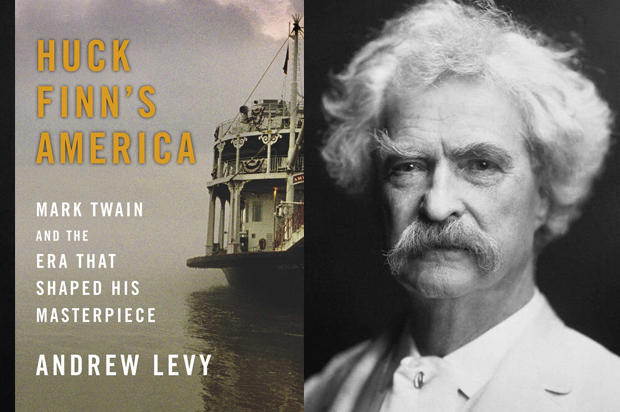
[Mark Twain’s Huckleberry Finn] is taught more than any other American classic, is often discussed either as a carefree adventure story for children or a serious novel about race relations, yet Levy argues convincingly it is neither. Instead, Huck Finn was written at a time when Americans were nervous about youth violence and “uncivilized” bad boys, and a debate was raging about education, popular culture, and responsible parenting — casting Huck’s now-celebrated “freedom” in a very different and very modern light. – From Simon and Schuster

conversations@efroymson kicks off the spring semester series with a book party celebrating the release of Andy Levy’s third book, Huck Finn’s America: Mark Twain and the Era that Shaped His Masterpiece. A favorite creative nonfiction professor in Butler’s MFA program, Levy practices what he teaches in his newest book.

Nonfiction student Susan Lerner says, “Levy uses research to show us a new way of understanding Huck Finn. In his workshop, Andy Levy taught me that creative nonfiction is supposed to do just that: expose the writer’s thinking so as to give the reader new lenses through which to look at a subject. I can’t wait to read Huck Finn’s America.

As a professor Levy challenges his students to consider what is creative nonfiction. He explains how his Huck Finn’s America, which has been called part literary theory, part history, part biography, and all persuasive, is creative nonfiction. “This book is a hybrid of creative and critical modes– there are long narrative passages, components one would link to “biography,” a couple of small pieces of memoir, and a scholarly argument with documentation particularly ascendant at the beginning and end of the book,” Levy says. “I picked and chose among the genres available to me. The book is a kind of hybrid– that’s essentially a creative act in itself.”

Already beloved and highly recommended by his students, Levy believes writing this book has only made him a better professor. He says, “It increases the range of my experiences as a writer, my knowledge of process from beginning to end.  It’s more hours working, considering writing problems, how to get out of them;  more considerations of issues of structure, style, audience.  This is also a book about a writer writing a book– a distinctive writer and a distinctive book.  I learned a lot about his process, too, and that was wonderful.”

Huck Finn’s America is gaining buzz and earning rave reviews everywhere including Publisher’s Weekly where it made the top 10 list.

NPR calls Levy’s text “a richly researched, copiously annotated, fascinating argument that in all the debates over the book’s treatment of race and despite its position as both a widely banned book and a widely assigned book, we tend to miss some of the most important things it teaches.”

Buffalo News writes, “Levy argues persuasively [and] has steered the conversation of Huck Finn in a fresh, profitable direction, toward an intensive scrutiny of its roots. … Levy’s work reminds us that a fresh reading of Huck Finn might be a key to teaching us that we should not repeat the past, that we are capable of stifling our saddest echoes.”

Dozens more positive reviews exist, but Levy keeps a bigger perspective amid the praise. “Some of [the praise] is validation, excitement.  Some of it is embarassment– if the review is really nice, I usually won’t finish reading it, and I often take a certain perverse pleasure in a bad review,” he says. “And some of it is detachment– it’s all external validation, or criticism, or indifference, and we all know from personal experience that we’re not happier if we live for that.”


andylevysmallThe book party is January 22nd at 7:30PM in the ECCW sunroom. It will include a brief reading, book signing, and lots of celebrating. Huck Finn’s America: Mark Twain and the Era that Shaped His Masterpiece will be available for purchase.


MFA Alumni Edits Book of Indy Writing Talent


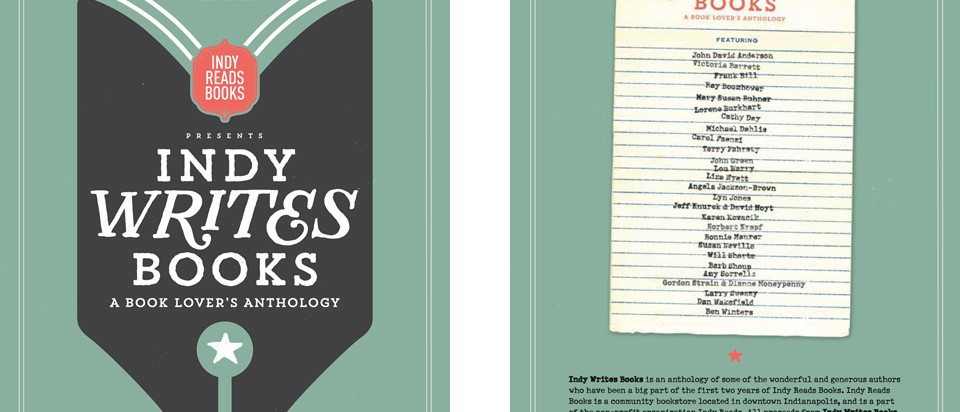
IndyReads-Covers5Indy Writes Books: A Book Lover’s Anthology is a new collection of multiple genres written by talented and generous authors who have ties to Indianapolis’ Indy Reads Books bookstore. Among its impressive list of contributors are  Butler MFA professors Michael Dahlie, Susan Neville, and Ben H. Winters. It is edited by Butler MFA alumnus, Zachary Roth.

n39302397_30848726_2160217_400x400Zach Roth earned an MFA from Butler in 2014. He is Lumberjack Ben Affleck, copywriter, book maker, storywriter, music blogger, and swell fella. He is editor-in-chief at Axolotl magazine, copywriter and social media marketing manager at Brybelly Holdings. Although is dance card is completely filled, he graciously discussed the Indy Writes Books project with me. He can be found on twitter at @compactdiscs.

How did you get involved in the Indy Writes Books Project?

I got involved with Indy Reads through my work designing books for Pressgang [the small press associated with Butler’s MFA program]. There’s a greater vision for our Pub Lab slash Bryan [Furuness] and Rob’s [Stapleton] office space slash Pressgang HQ, one that involves connecting MFA students learning the particulars of book design with community members with good causes who need a little help designing books. Bryan hooked Andrea Boucher up with Scholastic, which she did a crazy good job with, and I was hooked up with Travis DiNicola and Indy Reads.

What is your role?

I am co-editor and interior designer for Indy Writes Books, so I basically was responsible for everything between the covers. I line-edited work, did more copyediting than I ever wish to again, I arranged all the pieces with a very imprecise alchemy in a way that I think flows nicely. I also made all the decisions on how the words themselves would look on the page, which ranged from fun activities like font and layout research, to the endless minutiae of individually adjusting the tracking between single words of paragraphs so there wouldn’t be an orphan line 4 pages later. I have so much more appreciation for a sexy book interior now (see: Booth).

Was there any anxiety about editing the work of some big names in writing?

Not really. I’ve had a good deal of interaction with other authors through Booth and Pressgang (and my lit mag, Axolotl, plug), and I felt anonymous enough that if I messed anything up, nobody would know how or where to find me. I do distinctly remember having to make a significant cut to Ben Winters’ story. It was a loose thread, but one that pervaded the first 8 pages. I was shaking in my boots, but he never commented on it when he returned his final version. Conversely, due to a copy/paste that didn’t capture line breaks, I actually messed up Mike Dahlie’s story, which he did notice, and I was thoroughly embarrassed.

What are you most proud of in the book?

Anti-climax: The table of contents. I saved that thing until last, because it was going to be disgusting. Not only did I have like six genres, I had dozens of authors, some who had several pieces that appeared peppered in throughout the text. How would I organize that in way that made sense to more people than me? How would I format and execute the design? Early renditions were super ugly, or cluttered, or long. I leaned on Booth and a copy of Unstuck that I stole from the Pub Lab lending library and have yet to return, but the rest was just two evenings spent obsessing and tinkering until my Eureka! moment. It’s a silly thing to be proud of for sure, but the ToC comes early enough in the book to leave a bad impression upon a browsing reader if it looks like hot garbage.

How were the authors selected?

Travis, with his myriad connections through Indy, did most of the author selection. I don’t know his exact plan, but his first choices were authors who appeared at Indy Reads or supported it in some measure. The book is as much a celebration of Hoosier authors as it is a tiny portion of the bookstore’s history. He also really wanted to feature every genre he could. There’s capital-L literature, meta-fiction, mystery, young adult, poetry that celebrates language, narrative, and history. There’s such great nonfiction. There’s a play. There’re puzzles. There’s an illustration and translations from Spanish. The only thing I can take a little bit of credit for is demanding Susan Neville contribute during my thesis defense. Her essay “The Dead” is incredible and I’m stoked she shared it with us.

What do you think this book says about the Indy writing scene?

That it’s not just living and breathing but thriving. If you want to come here and take part, there will be a place for you and there will be support, regardless of your mode.

What are your favorite pieces from the anthology?

The anthology introduced me to a lot of great pieces, but what I really appreciate in retrospect was that it stretched me, forced me to work intensely close with stuff way out of my aesthetic. It’s easy to form your own little echo chamber when you choose what you read.

I think everything Liza Hyatt did kicks ass. Her 4 poems are all so different in style, too. I lead off the anthology with “Household Gods” not just because it was about books, but because it was strong and (in keeping with the theme of the anthology) transformed books into timeless objects of worship. That last stanza, man. “If they survive fire and flood, they will be destroyed/ by time’s slow acid. I keep them immortal/ by spending time at their hearth, learning by heart,/ giving them to students and children,/ everyone in pain, in wonder.”

I adored the simple conceit of Ben’s “Between the Lines,” and the very dark twist it takes. It’s a fast, breezy read, and so charmingly disarming up until that point. And then his main character (and us as readers) comes to understand what Hyatt means with that last line, “everyone in pain, in wonder.”

Having had my middle school mind blown by Watchmen, I have a soft spot for superheroes, so John David Anderson’s “El Estocada” really resonated with me. It’s maybe not the most developed narrative, but the characterization is so human, for superhumans.

I love Frank Bill’s stories. They’re dark and gritty and violent and idiosyncratic with this voice that’s very clipped and fragmented in a lovely way. Dahlie’s “The Pharmacist from Jena” echoes the violence, but the effluent narrator couldn’t be more different. I think I have an unfair bias toward that story, though, because I was able to read it wholly in Mike’s voice, which makes it so much better.

I’m not much of a nonfiction guy, but as I said before, Susan Neville’s essay “The Dead” is so desperately good. Achingly good. I also found myself really appreciating Darolyn Jones’ “Sitting at the Feet of My Flanner House Elders.” It definitely draws inspiration and clarity from places you wouldn’t expect.

Did you discover a new favorite author from reading the book?

LIZA HYATT. I probably have to read more John David Anderson and Frank Bill, too.

Are you still involved in other areas of Indy Reads?

Nope. I was just the book guy. I’d definitely be open to helping them out in the future though. It’s a great cause, and Travis was so easy to work with. Very passionate. Fingers crossed that when the book sells out I’ll get tapped to do the sequel.


Has this interview with Zach made you realize you must own this book? You can pick up a copy of the anthology at Indy Reads Books at 911 Mass Ave or order a copy of the book here. All proceeds from Indy Writes Books support Indy Reads’ adult literacy programs in Central Indiana.